

Bruce E. Fleming
I was born and raised on the Eastern Shore of Maryland, and have taught for over three decades at the U.S. Naval Academy, Annapolis, on Maryland's Western Shore: of course we're talking about the Chesapeake Bay here--that's what Eastern and Western Shore mean, at least for us Marylanders. So when I came to try and make sense of my life some years ago, I figured I'd lived about half my life and it had centered on Maryland, so I called it "Journey to the Middle of the Forest: A Maryland Half-Life." (I returned to my childhood in the book of linked poems "The Past Is Not Another Country.")
In the meantime I have lived in a lot of places. I went to college at Haverford College, outside of Philadelphia, as a philosophy major (my favorite writer was Wittgenstein, who thought he'd showed why philosophy was no longer necessary, so I definitely had a bit of an attitude about it all), then wrote the novel "Twilley" (that I began when I was 19 and finished the summer I turned 20) living with my brother, who died at age 40 of AIDS, in suburban Washington, D.C. And I returned to Wittgenstein in my version of his for me so-seminal "Tractatus" in "The New Tractatus: Summing Up Everything."
I have to confess that all my life, I resisted formal education (which is either paradoxical or not, depending on your point of view, given that both my parents had been professors at what is now Salisbury University on the Eastern Shore, my father of biology and my mother of music) and only tried classrooms again some years later--first at the University of Chicago, which I didn't much like (I'm sure it's my character failing), where I got an M.A. in comparative literature and then, after a stint as a student at the University of Munich, at Vanderbilt, where I finished up a Ph.D. in the same subject (if it is a subject: for me it was French and German literature and what art might be).
I then had a Fulbright in what was then West Berlin (the basis for "Women, and Berlin), taught for two years at the University of Freiburg, and then for two years at the National University of Rwanda, where the civil war erupted three years later. I combined death and AIDS for my book set in Rwanda, re-released in a Kindle edition from Plain Editions as "Tonight in Kigali" (after a first printing in a different version as "Kigali, Rwanda").
So what sense, given my strained relationship with academia, does it make that I've spent more than three decades teaching English? It works for me because the Naval Academy isn't what most people would call a college (though all the students get a B.S. at the end, even English majors, before they become Naval and US Marine officers--including SEALs). I love the gym, and I love working out. This comes out in "Running is Life" and in my attraction to the Naval Academy, which isn't very intellectual but is very athletic. I've become the unofficial bard, and perhaps harshest critic, of this institution, in works such as "Annapolis Autumn: Life, Death and Literature at the U.S. Naval Academy" and in my book on how the military is different from the civilian world that it exists to defend in "Bridging the Military-Civilian Divide." I also write poetry about teaching poetry to my students there in "Ekphrasis Annapolis: Poetry Class at the U.S. Naval Academy." (Ekphrasis is the word for poems about artworks, so this is sort of double ekphrasis: poems about teaching poems!) And then there's my sort-of murder mystery about the stresses and strains of USNA, "Sailor Men in Battle Fair" (the corpse is an English professor, what else?).
I've always loved long plays, so I wrote two. One appeared as "Homage to Eugene O'Neill," but its original title sums it up better: "A Chamber Melodrama." I also re-imagined Plato's dialogue about love, The Symposium, as a Thanksgiving dinner loosely based on characters from Salisbury and my childhood, "The Thanksgiving Symposium."
I write about men and women and sexuality ("Sexual Ethics," as well as in my novella about Berlin and my Rwanda novel, and in later poems), about what happens when people argue ("Art and Argument"), and for more than a decade was a professional dance critic {"Sex, Art, and Audience.") I have three children from two marriages (I write about that too: how can somebody love another person to distraction and then not?) and live with my family outside Annapolis. I've been blessed in being able to follow up thought processes wherever they lead, unlike most academics confined to narrow specializations, and have made it my life's mission to relate art to real life. This works in the classroom, and in what I write about: how we interact with the world. Fiction, poetry, plays, military theory, aesthetic theory, dance criticism, views of life as a whole
In words on the page, I can express things that the everyday round of social interaction makes impossible ("Saving Madame Bovary: Being Happy With What We Have," and in the earlier "Aesthetic Sense of Life") so I love the act of writing, which for me is a way of figuring things out. I also love seeing how others have done this, so this means I love reading, and going to museums and concerts. But I'm as physical as I am mental: I love working out, and being with young people who want to make a difference, and watching the seasons change and my children grow up. Art and literature don't make another world: they help us to understand the world we live in. At least they have for me.
Favorite authors currently include P.G. Wodehouse, Trollope, Balzac, Maupassant, Samuel Huntington, and F.S. Hayek. Favorite choreographer, ever and always: Balanchine. Favorite painter: Fantin-Latour (he's both precise and melancholy: maybe that's me?). Favorite composer: Mozart, of course, and Brahms--beautiful, structured, with an underlying sense of "yes, but." That's maybe me too. Authors I've outgrown include Proust (now seems stifling; once seemed the be-all and end-all), Gertrude Stein (I was obsessed by Stein for many years; see my collection of Modernist short stories "The Autobiography of Gertrude Stein" and the avant-avant-garde "A Structure Opera" inspired by her so-called operas), and Evelyn Waugh (somebody that negative absolutely had to end up, like Huysmans, author of the ultimate "fin-de-siecle" novel "Against the Grain," "at the foot of the cross" (as one critic put it).
Best James Bond is, of course, Sean Connery. Early Truffaut is charming; late Trauffaut is lugubrious. "Die Hard" (the first) is a perfect movie, as is "Speed." For a while, Godard seemed, well, God: who else would put the camera on the cream swirling in a cup of coffee for so long (in "Masculin/ Feminin")? Favorite actresses: Kate Hepburn (of course), Wendy Hiller, Harriet Andersson. I may have had a guy-crush on Marcello Mastroianni when I was 20 but geesh, does that now seem odd. The guy didn't even work out! (I love the weight room). I've worked as a print model too, so I'm comfortable with showing off. That's the classroom too, by the way, and if you can't strike an attitude on the page, nobody will read you.
Life is still a discovery for me, and writing is my way of processing the discoveries. I love art because nobody can force you to like it: I won't be insulted if a given work of mine, or all, fail to help you see yourself or the world, because I'll never know. It's just words on the page. But sometimes words on the page can do precisely that, and thinking that my attempts to understand my world makes others to understand their world makes the solitude and silence of writing almost seem worth it.
Popular items by Bruce E. Fleming
View all offers-
Art and Argument: What Words Can't Do and What They Can
Fleming, Bruce E.
Item prices starting from
View 12 offersUS$ 23.43
-
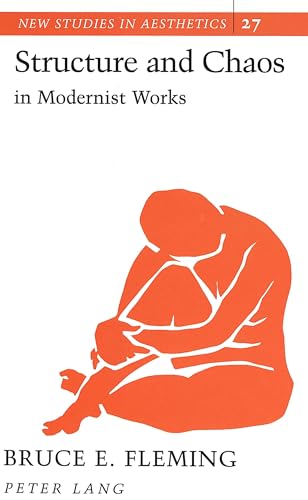
Structure and Chaos in Modernist Works (New Studies in Aesthetics)
Fleming, Bruce E.
Item prices starting from
View 3 offersUS$ 17.01
Also find
Used -
An Essay in Post-Romantic Literary Theory: Art, Artifact, and the Innocent Eye (Studies in Art and Literary Theory Volume 1)
Fleming, Bruce E.
Item prices starting from
View 3 offersUS$ 74.96
-
Caging the Lion: Cross-Cultural Fictions (New Studies in Aesthetics)
Fleming, Bruce E.
Item prices starting from
View 1 offerUS$ 67.67
Also find
Used -
Sex, Art, and Audience: Dance Essays (New Studies in Aesthetics)
Fleming, Bruce E.
Item prices starting from
View 1 offerUS$ 291.80
Also find
Used -
Modernism and Its Discontents: Philosophical Problems of Twentieth-Century Literary Theory (New Studies in Aesthetics)
Fleming, Bruce E.
Item prices starting from
View 10 offersUS$ 46.71
-
Disappointment: Or the Light of Common Day
Fleming, Bruce E.
Item prices starting from
View 11 offersUS$ 83.26
-
Annapolis Autumn: Life, Death, And Literature At The U.S. Naval Academy
Bruce Fleming
Item prices starting from
View 13 offersUS$ 8.79



Showing 8 of 26 titles