

Douglas C. Jones
Douglas Clyde Jones (1924–1998)
“Slowly, but with infinite grace,” The Washington Post once enthused of Fayetteville (Washington County) Arkansas, author Douglas Clyde Jones, “[he] is creating a masterful fictional history of America.”
Over the course of three decades, Jones, a career military officer turned award-winning novelist, wrote more than a dozen books—including his bestselling The Court-Martial of George Armstrong Custer (1976)—that dealt with everything from the American Revolution and the opening of the Western frontier to the Spanish-American War, assorted Native American conflicts, and the Great Depression.
His tales, most of which were either set in Arkansas or featured Arkansan protagonists, were spirited and sprawling, his historical backdrops vividly portrayed, and his characters brutal or benevolent in measures consistent with their times and circumstances.
New and previously unpublished works are being made available through his family's company, Jones Publications, and Amazon. The works include many short stories, his background stories on families in published novels, his own back stories of his life, his own opinion pieces on all parts of history, and two full novels both of which revolve around WWII.
Born in Winslow (Washington County) on December 6, 1924, Douglas C. Jones was the only son of auto mechanic Marvin Clyde Jones and Bethel (Stockburger) Jones. Following moves to Fort Smith (Sebastian County) and then to Kansas City, Missouri, Jones’s parents divorced when he was twelve, and he and his two sisters went to live with their mother in her hometown of Fayetteville.
He graduated from Fayetteville High School in 1942 and was drafted into the U.S. Army, serving in the Pacific during World War II and finally being stationed at Okinawa, Japan. After the war, he returned to Fayetteville, where he attended the University of Arkansas (UA) in Fayetteville (UA) from 1945 to 1949, graduating with a bachelor’s degree in journalism.
While still a student at the university, he met his future wife, Mary Alice Arnold. They were married in the early morning hours of New Year’s Day, 1949, after Jones—who played standup bass in a jazz band—finished performing at a party in Eureka Springs (Carroll County). The couple eventually had three daughters and a son.
Following graduation, Jones went back into the army. Over the next two decades, he was stationed in a variety of locales, including Germany; Fort Benning, Georgia; the Korean Demilitarized Zone (DMZ); and, in the early 1960s, Madison, Wisconsin. In Madison, he earned a master’s degree in the history of mass communications from the University of Wisconsin (1962–1964). His master’s thesis—focusing on 1867 treaties establishing reservations for the Kiowa, Comanche, Plains Apache, Cheyenne, and Arapaho Indian tribes—later became his first published book, The Treaty of Medicine Lodge (1966).
Meanwhile, Jones was transferred to Washington DC, where he worked at the Pentagon as public information officer for the Department of Defense. But in the summer of 1968, after being promoted to the rank of lieutenant colonel, and with U.S. public support for the Vietnam War waning, Jones resigned his commission and began teaching journalism at the University of Wisconsin.
He stayed on there for six years (1968–1974), not only teaching but also developing his talents as an artist. His paintings and drawings focused on Native American and Western subjects. For some time, Jones had also been brewing an idea for a novel, speculating on what might have happened to Lieutenant Colonel George Armstrong Custer had he survived Montana’s 1876 Battle of the Little Bighorn. But it was not until Jones’s last summer in Madison, just prior to his returning to Fayetteville, that he was put in contact with a New York literary agent. He spent most of the next two years composing The Court-Martial of George Armstrong Custer, which was adapted into a 1976 TV movie starring James Olson and Brian Keith.
The following is an outline of his life and achievements.
Education
Ft. Smith, Ar. & Kansas City, Mo. Fayetteville, Ar (High School)
BA Journalism University of Arkansas 1949
MS. Mass Communications University of Wisconsin 1962
US Army
WWII Pacific (drafted )
Served in Okinawa
Commissioned in Infantry 1949
Retired from Army as Lt. Colonel in 1968
Held staff positions in;
1st Infantry Division, Germany
1st Cavalry Division, Korea
24th Infantry Division, Korea
Commanded Combat Ready Rifle Companies in all three of these Divisions ,1 in Germany and 2 in Korea after the War.
Pentagon Service Army General Staff
Office of Chief of Information, Department of The Army
Office of Secretary of Defense
Chief of News Branch,
Service Education
Basic and Advanced Infantry, Ft. Benning, Ga. Information School, Ft. Slocum, NY
Ground General School, Ft. Riley, Ks. Command and General Staff School, Ft. Leavenworth, Ks.
Nuclear Weapons Employment and Effects School, Ft. Benning, Ga. & Ft. Leavenworth, Ks.
Art Work:
Pencil, charcoal, chalk, ink, acrylic and oil
Predominately American Indian of the 19th Century,
Specifically the Southern Plain Tribes of, , Kiowa and Comanche. Other minor works of Apache, Blackfoot, Flathead, Pawnee, Sioux and scenic settings.
Art Shows
Washington D.C., Madison, Wi., Tulsa, Ok.
Faculty Member University of Wisconsin, Madison 1968-1974
School of Journalism and Mass Communications
Developed and taught course in History of Mass Communications and Journalism in US from 1763-1963, which was inclusive of all aspects of national history, political, cultural, and military.
Ad Hoc Advisor to Chancellor (on communications)
Retired 1974 to Northwest Arkansas
Published Books: All but 6 are out of print:
Winding Stair, Elkhorn Tavern, Barefoot Brigade, Roman ...Penguin
Come Winter, Sometimes, ...U of Arkansas Press
The Treaty of Medicine Lodge, Univ. of Ok. Press 1966 (master thesis)
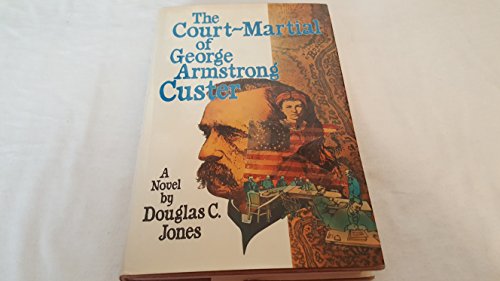
The Court Martial of George Armstrong Custer, Scribners 1976
Spur Award, Western Writers of America
Hallmark Hall of Fame Movie
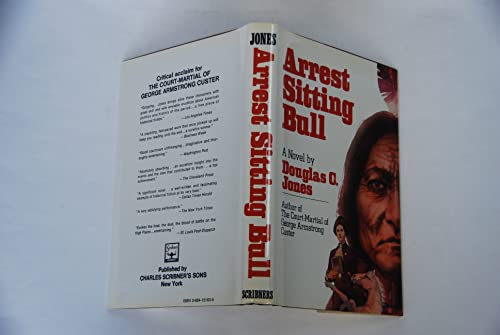
Arrest Sitting Bull, Scribners 1977
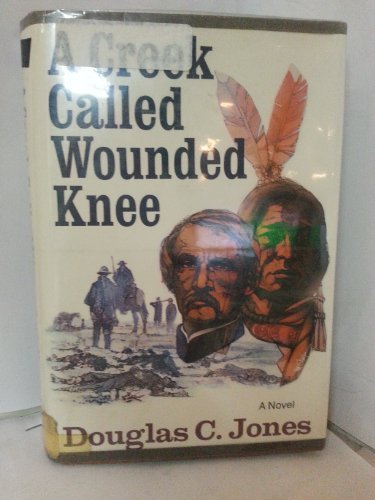
A Creek Called Wounded Knee, Scribners 1978
Winding Stair, Holt, Reinhart, Winston 1979
Elkhorn Tavern, Holt, Reinhart, Winston 1980
Friends of American Writers Best Novel of the Year Award
Weedy Rough, Holt, Reinhart, Winston 1981
The Barefoot Brigade, Holt, Reinhart, Winston 1982
Season of Yellow Leaf, Holt, Reinhart, Winston 1983
Gone the Dreams and Dancing, Holt, Reinhart, Winston 1984
Spur award, Western Writers of America
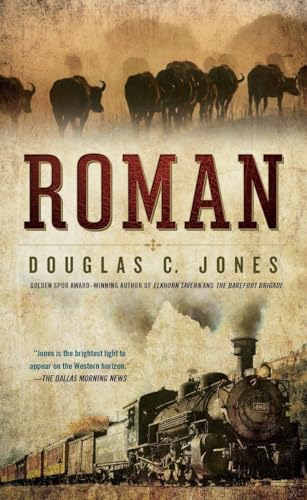
Roman, Henry Holt 1986
Spur Award, Western Writers of America
Hickory Cured, Henry Holt 1987
Remember Santiago, Henry Holt 1988
Come Winter, Henry Holt 1989
Search for Temperance Moon, Henry Holt 1990
This Savage Race, Henry Holt 1992
Owen Wister Award for contribution to western literature
Western Writers of America’s Lifetime Achievement Award
Shadow of the Moon, Henry Holt 1994
A Spider for Loco Shoat, Henry Holt 1996
Sometimes There Were Heroes. U of A Press 2000 ( posthumously )
Died 08/30/1998 Springdale, Ar.
Popular items by Douglas C. Jones
View all offers-
-
THE COURT-MARTIAL OF GEORGE ARMSTRONG CUSTER
Jones, Douglas C.
Item prices starting from
View 146 offersUS$ 5.45
-
-
-
-
-
-



Showing 8 of 24 titles