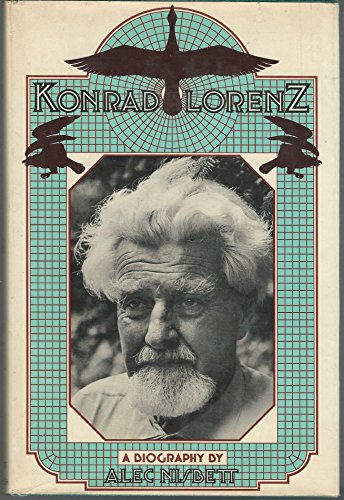
Alec Nisbett
At university, Alec read mathematical physics for three years before departing to join the BBC, where he gravitated to its Science and Features Department to make films for Horizon and other science series.
Throughout his career, his programme research covered fields ranging from biological insect control, tropical biology, ethology, ecology, geology, anthropology, psychology, anatomy and the human eye, via Nature’s own engineering inventions, evolution, environment, though to new engineering materials, car safety, air safety and the investigation of aircraft fires, civil engineering, superconductivity, computer graphics, plus food irradiation, biosensors, viruses, malaria and cancer.
Two further medical programmes had profound beneficial effects on UK life expectancy. For the five BBC1 and BBC2 screenings of Smokers’ Luck, almost half its viewers were smokers, and of those almost half gave up immediately – of which group a special Audience Research survey confirmed that half of those – still a vast number – were still not smoking one year later.
Killer in the Village, shot mainly in America before AIDS was given its name, became cult viewing in the UK gay community. It subsequently appeared that HIV/Aids spread more rapidly in European and other countries where such major documentaries were not shown until later years.
The two widest groups of topics covered by his films were:
1. Weather and climate – including ice ages, blizzards, hurricanes, tornadoes, tsunamis, El Niños, plus extremes of weather photography – and
2. Astronomy, observational cosmology, astrophysics, particle physics, cometary encounters and the early history of the Hubble Space Telescope.
He led many co-productions with overseas broadcasters: KRO Hilversum, BRT Brussels (in Flemish), SR1 Stockholm, MTV Helsinki, RAI-1 Rome, RM Productions Munich, NDR Hamburg, ZDF Mainz, SFB Berlin, BR Munich, NHK Tokyo, ABC Australia, OECA Toronto, Westinghouse TV New York, WNET13 New York, Time Life Films, WTTW Chicago and, from its first series onward, lots with the Nova series from WGBH Boston.
Alec’s films featured the accomplishments of 24 Nobel Prize winners and five recipients of the even more prestigious Fundamental Physics Breakthrough Prize, the majority of both of which were awarded after the films about them had been shot and aired.
His own awards for production, direction and writing included two awarded at medical film festivals, two science writers’ Glaxo Travelling Fellowships, a UK Technology Press Award, another from the British Association for the Advancement of Science plus s a Prix Futura awarded at a festival in Berlin. He also contributed a lengthy range of Horizons to series nominated five years in a row as BAFTA’s best factual series – of which three won the top award.
Alec Nisbett lives in northwest London, close within the southern limit of the last ice age but one.
Popular items by Alec Nisbett
View all offers-
-
The use of microphones (Media manuals)
Nisbett, Alec
Item prices starting from
View 22 offersUS$ 4.41
-
-
-
The technique of the sound studio: for radio, television and film (The Library of communication techniques)
Nisbett, Alec
Item prices starting from
View 6 offersUS$ 11.29
Also find
Used -
The technique of the sound studio: For radio, recording studio, television, and film (Library of communication techniques)
Nisbett, Alec
Item prices starting from
View 10 offersUS$ 20.57
Also find
Used