

William Grange
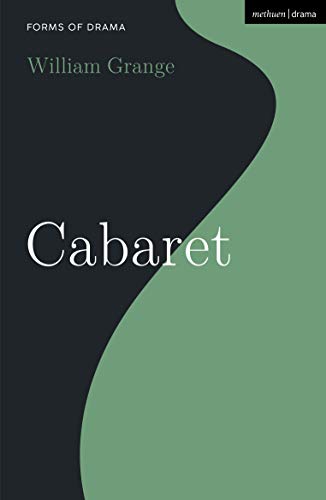
William Grange is Professor of Theatre in the Johnny Carson School of Theatre and Film at the University of Nebraska. His most recent book is "Cabaret," which you see displayed on this page. In addition to authoring other books on this page, Dr. Grange has also written dozens scholarly essays, book chapters, journal articles, reviews, and encyclopedia entries. He has received several international awards for his research and teaching: Guest Professor at the University of Heidelberg, the Distinguished Chair in Humanities and Cultural Studies at the University of Vienna, and a Fulbright Professorship at the University of Cologne. At those universities he taught in the German language, but at the University of Nebraska he teaches almost exclusively in English. His research efforts have twice earned him the University of Nebraska Vice-Chancellor’s Award for Research in the Humanities, while Nebraska students and the University parents’ organization have awarded him distinctions of teaching merit at both the undergraduate and graduate levels.
An Equity actor for over four decades, the Actors’ Fund in New York has cited Dr. Grange for meritorious service to the American acting profession. He has played leading roles in several productions, including Caldwell B. Cladwell in the award-winning musical “Urinetown,” Prof. Henry Higgins in “My Fair Lady” with Gwynne Geyer, Capt. von Trapp in “The Sound of Music” with Lindsey Alley, El Gallo in “The Fantasticks!” and the carnival owner Schlegel in “Carnival!” and was a member of the original Light Opera of Manhattan company in New York, appearing in numerous Gilbert and Sullivan productions while still a graduate student at Columbia University. He was also a founding member of the Alabama Shakespeare Festival, playing Polonius in “Hamlet,” Duncan in “Macbeth,” Cleante in “Tartuffe,” Amiens in “As You Like It,” Leonato in “Much Ado About Nothing,” and Balthasar in “Comedy of Errors.” With student film directors in the Johnny Carson School he has played several oddball characters in thesis films, ranging from despondent police detectives, to murderous CIA agents, to philosophical fishermen.
Popular items by William Grange
View all offers-
A Primer in Theatre History: From the Greeks to the Spanish Golden Age
Grange, William
Item prices starting from
View 14 offersUS$ 18.94
-
Comedy in the Weimar Republic: A Chronicle of Incongruous Laughter (Contributions in Drama and Theatre Studies)
Grange, William
Item prices starting from
View 18 offersUS$ 17.18
-
Cultural Chronicle of the Weimar Republic
Grange, William
Item prices starting from
View 11 offersUS$ 29.50
-
Historical Dictionary of German Literature to 1945 (Historical Dictionaries of Literature and the Arts)
Grange, William
Item prices starting from
View 11 offersUS$ 23.77
-
-
The A to Z of German Theater (The A to Z Guide Series)
Grange, William
Item prices starting from
View 16 offersUS$ 29.18
-
Hitler Laughing: Comedy in the Third Reich
Grange, William
Item prices starting from
View 6 offersUS$ 46.21
-




Showing 8 of 13 titles