

Michael Salcman
Michael Salcman (b.1946) was born in Pilsen, Czechoslovakia and came to the United States in 1949. He grew up in Brooklyn and started writing poetry at Midwood High School. He attended the combined six-year program in liberal arts and medical education at Boston University (B.A. & M.D. 1969), was a Fellow in neurophysiology at the National Institutes of Health and trained in neurosurgery at Columbia University's Neurological Institute. Salcman served as Chairman of neurosurgery at the University of Maryland and president of the Contemporary Museum in Baltimore. He is the author of almost 200 scientific and medical papers as well as six medical and scientific textbooks, most recently the revised two-volume Kempe's Operative Neurosurgery, translated into Spanish, German, Portuguese and Chinese editions. Special Lecturer in the Osher Institute at Towson University, Salcman lectures widely on art and the brain. His art essays have received two Pushcart nominations and appear in Little Patuxent Review, Creative Non-Fiction, World Neurosurgery and Neurosurgery. His course How The Brain Works was available on the Knowledge Network of the New York Times.
Michael Salcman's poems appear in many journals such as Alaska Quarterly Review, Arts & Letters, Barrow Street, Carolina Quarterly, Clarion, Ekphrastic Review, Free State, Harvard Review, Hopkins Review, Hudson Review, New Letters, Notre Dame Review, Ontario Review, Pangyrus, Paterson Literary Review, Poet Lore, Poetry East, Raritan, and Solstice; and have received six nominations for a Pushcart Prize and one for a Best of the Web Award. His work has been heard on NPR's All Things Considered and in Lee Boot's Euphoria (2008), a documentary film on the brain and creativity. Poems have been commissioned by the Williams College Museum of Art and the Baltimore Museum of Art and set to music by composers Lorraine Whittlesey and Richard Wilson. Salcman has given readings at the Library of Congress and the National Academy of Sciences, the Pratt Library of Baltimore, the Academy of Medicine in Atlanta, the Writers Center in Bethesda, Gettysburg College and Newcastle University (UK), and at the Bowery Poetry Club, the Cornelia Street Cafe, the Village Temple, Columbia University and the Century Association in New York City.
Salcman's poetry has been praised for its musicality and emotional intensity as well as its cultural depth and intelligence by a wide range of contemporaries including Dick Allen, David Bergman, Michael Collier, Daniel Hoffman, Thomas Lux, D. Nurkse, and Grace Schulman. He is the author of four poetry chapbooks, the most recent Stones In Our Pockets (Parallel Press, 2007), and the editor of Poetry in Medicine (Persea Books, 2015), a popular anthology of classic and contemporary poems on doctors, patients, illness and healing. Salcman has published four poetry collections: The Clock Made of Confetti (Orchises Press, 2007), nominated for The Poet's Prize and a Finalist for the Towson University Prize in Literature; The Enemy of Good Is Better (Orchises, 2011); A Prague Spring, Before & After (2016), winner of the 2015 Sinclair Poetry Prize from Evening Street Press; and Shades & Graces: New Poems (Spuyten Duyvil, 2020), the inaugural winner of the Daniel Hoffman Legacy Book Prize. In nominating Salcman's first book for the Poets' Prize, Dick Allen wrote: "T.S. Eliot famously praised poets "who feel their thoughts as immediately as the odour of a rose" and until Michael Salcman our recent poetry has been overdue the new arrival of such a poet."
Recently retired from medical practice, Michael and his wife Ilene live in Baltimore with a very demanding cat (Claude "Claws" Monet); they have two children who are presently out of the house, and three brilliant and beautiful grandchildren. They are avid sailors on the Chesapeake Bay but the cat is not.
Popular items by Michael Salcman
View all offers-
-
-
-
-
-
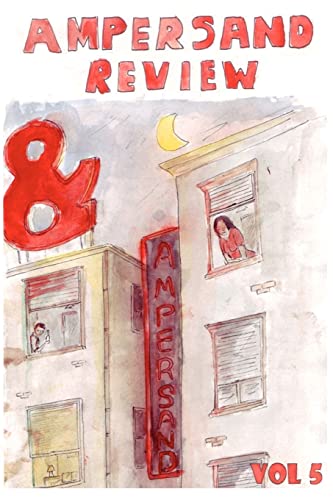
Ampersand Review
Books, Ampersand; Picard, Caroline; Ramey, Emma; Wexelblatt, Robert; Goebel, Luke; Katz, Christopher; Salcman, Michael;...
Item prices starting from
View 3 offersUS$ 18.00
Also find
New -
Necessary Speech: New & Selected Poems
Salcman, Michael
Item prices starting from
View 16 offersUS$ 20.59
-
The Enemy of Good is Better
Salcman, Michael, M.D.
Item prices starting from
View 6 offersUS$ 13.75




Showing 8 of 17 titles