

David Michael Kleinberg-Levin
I am Dr. David Kleinberg-Levin (known, in earlier years as David Michael Levin). I graduated from Phillips Academy, Andover and went on to study philosophy at Harvard University, graduating in 1961. I spent a year as Fulbright Exchange Fellow at the Sorbonne in Paris and undertook research, mostly on Fichte and Schelling, at the university in Freiburg im Breisgau. In 1967, I received my Ph.D. from Columbia University, writing a dissertation on Husserl's phenomenology under the guidance of Aron Gurwitsch of the New School for Social Research. I taught in the Humanities Department at MIT (1968-1972), and then joined the Philosophy Department at Northwestern University, from which I retired in 2005. I presently enjoy living in New York City, partaking of its rich intellectual and cultural life, going the rounds of the art galleries and the art museums, and enjoying concerts, modern dance, and performances at the Metropolitan Opera. I love hiking in the mountains and wilderness, love feeling a part of nature; but I am equally drawn to the cultural life of the city. Since retirement in 2005, two of my books have been published that touch on matters dear to my heart, one published in 2005 (Gestures of Ethical Life) on the question of measure in Hölderlin and philosophers after him, notably Benjamin, Adorno, Heidegger and Levinas, and the second one published in 2008 (Before the Voice of Reason), a contribution to the ongoing critique of reason, retrieving the voices of nature and of other people, voices to which I am indebted, and which accordingly make a claim on my responsibility to care for them, by virtue of the fact that those voices helped me to acquire the voice I call "my own". Since moving to New York City, I have also written some brochures for gallery exhibitions--one on oil paintings and one on photography. Before I left New York to begin teaching at Northwestern, I was doing a good deal of writing on art gallery exhibits, dance and opera. I am now resuming such occasional writing, eager to do more. But I have recently completed three books on the fate of the utopian "promise of happiness" in the language of literature. The first of these, Redeeming Words: A Critical Theory Approach to Wallace Stevens and Vladimir Nabokov, drawing significantly on Kant, Hegel, Heidegger, Benjamin, and Adorno, was published in 2012 by Lexington Books (Rowman & Littlefield). The second volume is Redeeming Words: Language and the Promise of Happiness in the Stories of Döblin and Sebald, was published in 2013 by The State University of New York Press. The third volume, published in 2015 by Bloomsbury Press, London, is Beckett's Words: The Promise of Happiness in a Time of Mourning. Having completed this trilogy, I am now returning to Heidegger, writing a book on perception in the context of Heidegger's hermeneutical phenomenology--in particular, I am writing on seeing and hearing as "ontological organs," capacities the ontological potential of which needs to be, and can be, developed.
Popular items by David Michael Kleinberg-Levin
View all offers-
Gestures of Ethical Life: Reading Hölderlin's Question of Measure After Heidegger (Meridian: Crossing Aesthetics)
Kleinberg-Levin, David Michael
Item prices starting from
View 30 offersUS$ 10.89
-
Before the Voice of Reason: Echoes of Responsibility in Merleau-Ponty's Ecology and Levinas's Ethics (SUNY series in Contemporary French Thought)
Kleinberg-Levin, David Michael
Item prices starting from
View 18 offersUS$ 40.03
-
Critical Studies on Heidegger: The Emerging Body of Understanding (SUNY series in Contemporary Continental Philosophy)
Kleinberg-Levin, David Michael
Item prices starting from
View 41 offersUS$ 34.42
-
The Listening Self: Personal Growth, Social Change and the Closure of Metaphysics
Levin, David Michael
Item prices starting from
View 42 offersUS$ 12.36
-
Reason and evidence in Husserl's phenomenology (Northwestern University studies in phenomenology & existential philosophy)
Levin, David Michael
Item prices starting from
View 10 offersUS$ 14.45
-
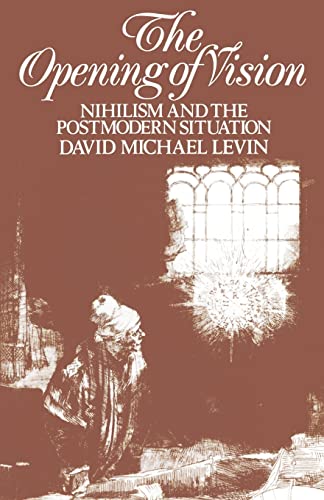
The Opening of Vision: Nihilism and the Postmodern Situation
David Michael Levin
Item prices starting from
View 46 offersUS$ 14.00
-
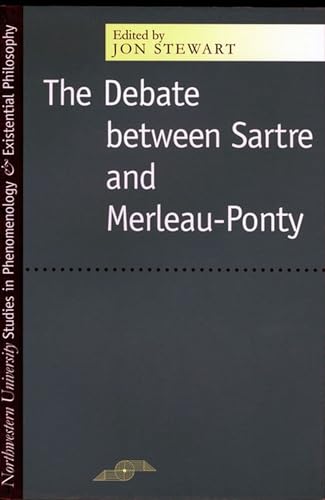
The Debate Between Sartre and Merleau-Ponty (Studies in Phenomenology and Existential Philosophy)
Stewart, Jon
Item prices starting from
View 30 offersUS$ 20.00
-
The Body's Recollection of Being
David Michael Levin
Item prices starting from
View 44 offersUS$ 21.99



Showing 8 of 15 titles