Reese Erlich
Most of these online biographies are deadly boring recitations of all the media where the author had appeared, followed by some self-serving mention of awards received. This bio is no exception.
I stumbled into the wonderful world of journalism without premeditation. I had been attending the University of California at Berkeley in 1967 when I was suspended for organizing anti-Vietnam War demonstrations. I found part-time work as a late-night typist at Ramparts, then the country's premiere investigative reporting magazine. The editors promoted me to reporter so I could learn journalism the old fashioned way — by making lots of mistakes and getting yelled at. Eventually I learned how to write journalistically.
By 1986 I had been freelancing for the Christian Science Monitor newspaper, which had recently formed a radio network. The very patient producers at Monitor Radio trained me as a radio reporter. I later learned television journalism the same way, by on-the-job training.
Despite never having taken a class in journalism—and a vow by administrators at UC Berkeley never to allow me back on campus—I eventually taught journalism for a total of 10 years at UC Berkeley Extension, San Francisco State University, and California State University, Hayward (now Cal State University East Bay). These days I work full time as a freelance print and broadcast journalist, and book author.
Boring Stuff
As promised, here comes the typical, boring bio information. Notice how everything is cleverly written in the third person in order to make the author look more important.
Erlich is the author of five books on foreign affairs:
Inside Syria: The Back Story of Their Civil War and What the World Can Expect (Foreword by Noam Chomsky), paperback, September 2016.
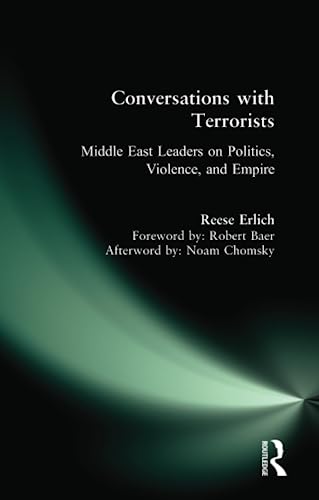
Conversations with Terrorists: Middle East Leaders on Politics, Violence and Empire, September 2010.
Dateline Havana: The Real Story of US Policy and the Future of Cuba, January 2009.
The Iran Agenda: The Real Story of US Policy and the Middle East Crisis, September 2007.
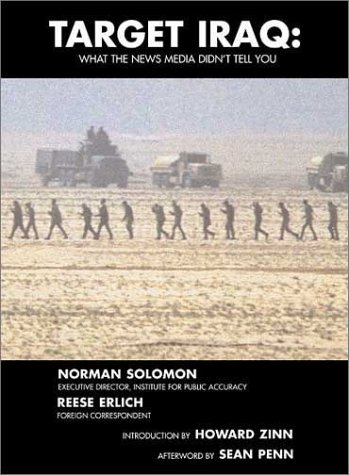
Target Iraq: What the News Media Didn't Tell You, co-authored with Norman Solomon, became a best seller in 2003.
Journalism
Reese Erlich reports for National Public Radio, Latino USA, and Radio Deutche Welle. (Don't forget that he also writes for Foreign Policy, VICE News, and The Progressive.)
His Jazz Perspectives series airs on public radio stations in the United States and online at www.jazzcorner.com/innerviews. He writes an arts and culture column for the East Bay Monthly.
Awards
Erlich shared a prestigious Peabody Award in 2006 as a segment producer for Crossing East, a radio documentary on the history of Asians in the US. In 2004 Erlich’s radio special “Children of War: Fighting, Dying, Surviving,” won a Clarion Award presented by the Alliance for Women in Communication and second and third place from the National Headlines Awards. His article about the U.S. use of depleted uranium ammunition was voted the eighth most censored story in America for 2003 by Project Censored at Sonoma State University. In 2002 his radio documentary, “The Russia Project,” hosted by Walter Cronkite, won the depth reporting prize for broadcast journalism awarded by the Northern California Chapter of the Society of Professional Journalists.
The San Francisco Board of Supervisors declared Sept. 14, 2010, to be “Reese Erlich Day” in honor of his investigative journalistic work. The resolution read, in part, “Investigative reporters are under attack in the U.S. and around the world. Mr. Erlich exhibits the finest qualities of such reporters willing to comfort the afflicted and afflict the comfortable.”
Popular items by Reese Erlich
View all offers-
Target Iraq: What the News Media Didn't Tell You
Solomon, Norman; Erlich, Reese; Zinn, Howard; Penn, Sean
Item prices starting from
View 29 offersUS$ 5.03
-
The Iran Agenda: The Real Story of U.S. Policy and the Middle East Crisis
Erlich, Reese; Scheer, Robert
Item prices starting from
View 46 offersUS$ 6.84
-
Conversations with Terrorists
Erlich, Reese; Robert, Baer
Item prices starting from
View 26 offersUS$ 5.57
-
-
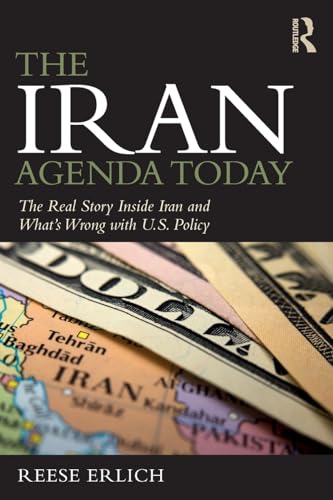
The Iran Agenda Today: The Real Story Inside Iran and What's Wrong with U.S. Policy
Erlich, Reese
Item prices starting from
View 37 offersUS$ 14.00
-
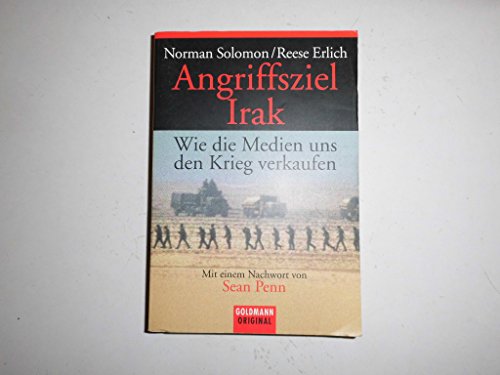
Angriffsziel Irak. Wie die Medien uns den Krieg verkaufen.
Erlich, Reese; Solomon, Normon
Item prices starting from
View 16 offersUS$ 3.87