Sara Day
Author of:
Not Irish Enough: An Anglo-Irish Family's Three Centuries in Ireland (New Academia Publishing, 2021), recommended as an "astute and arresting study" and "a family history with a difference" that "sheds new and compelling light on three centuries of tumultuous Irish history."
Coded Letters, Concealed Love: The Larger Lives of Harriet Freeman and Edward Everett Hale (New Academia, 2014), a dual biography that reveals the previously hidden 25-year extramarital relationship between two extraordinary Americans.
Sara Day grew up in a conservative English county family in England, hampered intellectually by the reactionary 1950s attitudes in those families to higher education for girls--initially limited horizons that were dramatically broadened after she first arrived in the United States in 1964. After a brief return to London, where she began her publishing career, she returned to the States with her new husband in 1969, finding her way into a long career in historical interpretation as researcher, curator, writer and editor--and finally settling in Washington, DC, where she now lives. Her work has resulted in eleven books, six exhibitions, and innumerable lesser projects. These include:
Being sole initial researcher for Philadelphia's massive bicentennial exhibition, A Rising People, in 1973 with unlimited access to the extraordinary collections of the Historical Society of Pennsylvania, the Library Company of Philadelphia, and the American Philosophical Society.
Fluent in French, while living with her family in Geneva, Switzerland, in the early 1980s, she researched and wrote articles on local history and culture, several of which were published in the Tribune de Geneve.
Eleven years of full-time employment with the Library of Congress, beginning in the late 1980s, during which she curated or wrote the text for two major exhibitions, The American Journalist (1990) and 1492: An Ongoing Voyage (1992). Moving to the Library's Publishing Office, she edited and co-authored books, exhibition catalogs, and resource guides, including works on American Indian and American women's history and culture (Many Nations, 1996, and American Women, 2001) and edited James Hutson's Religion and the Founding of the American Republic (1998).
As a freelance writer-researcher and independent scholar since the early 2000s, she was chief researcher, managing editor, and collaborator for historian Robert Remini's The House: The History of the House of Representatives (2006) and researched and wrote Women for Change (2007) about American women reformers.
Focusing thereafter on her own scholarship, she has produced two major groundbreaking books:
Coded Letters, Concealed Love: The Larger Lives of Harriet Freeman and Edward Everett Hale is based on the thousands of surviving love letters between those two Unitarians, archived at the Library of Congress since 1969. The Rev. Edward Everett Hale of Boston was previously celebrated in three biographies, none of which revealed his 25-year extramarital relationship with his wealthy parishioner, amanuensis, and unattributed co-author. This dual biography required breaking the code used to conceal the reality of their relationship and extensive research to reveal the extraordinarily brave woman, a serious amateur scientist and early conservationist, who agreed to protect her famous and ambitious lover's interests and reputation and disguise her own contributions, particularly once he became chaplain to the U.S. Senate. Day's book talks at the Boston Athenaeum, the Library of Congress, and elsewhere can be found online, as can her well-illustrated blog for Oxford University Press about her quest for the Hale-Freeman story, and her interview on Cape Cod's NPR station.
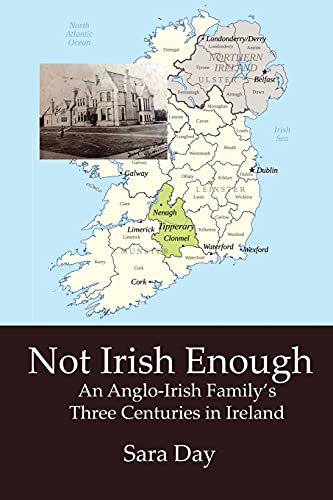
Not Irish Enough: An Anglo-Irish Family's Three Centuries in Ireland is the product of decades of thought and research, both in the United States and Ireland. It was born of the author's lifelong fascination with her Protestant landowning ancestors' history in Ireland, culminating in the burning of her grandparents' house in North Tipperary near the end of the Irish War of Independence in 1921. The book reaches back to the arrival of the first member of the family from England in the seventeenth century, and moves forward through 300 years of family and Irish history to seek answers to the gnawing question of why it ended as it did.
Popular items by Sara Day
View all offers-
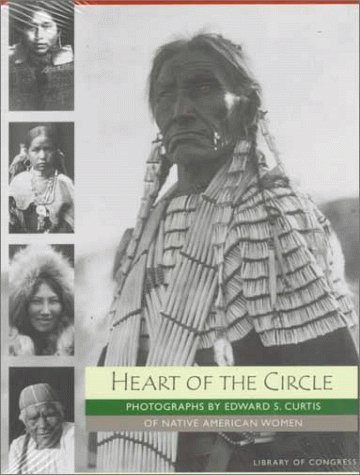
Heart of the Circle: Photographs of Native American Women
Curtis, Edward S.; Bisbort, Alan; Day, Sara; Library Of Congress
Item prices starting from
View 10 offersUS$ 2.59
-
-
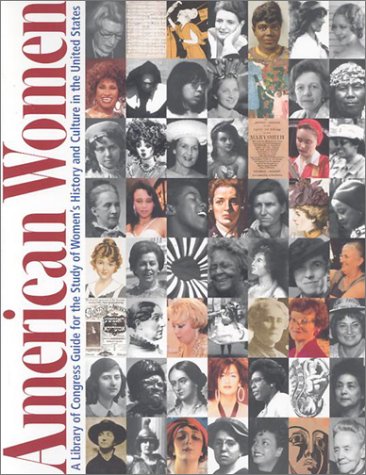
American Women: A Library of Congress Guide for the Study of Women's History and Culture Inthe United States
Sheridan Harvey; Janice E. Ruth; Barbara Orbach Natanson; Evelyn Sinclair; Sara Day
Item prices starting from
View 10 offersUS$ 7.69
-
Wild Flowers: a collection of U.S. Commemorative stamps
Day, Sara
Item prices starting from
View 23 offersUS$ 7.06
-
Coded Letters, Concealed Love: The Larger Lives of Harriet Freeman and Edward Everett Hale
Day, Sara
Item prices starting from
View 34 offersUS$ 6.99
-
Not Irish Enough: Anglo-Irish Family's Three Centuries in Ireland
Day, Sara
Item prices starting from
View 35 offersUS$ 10.00
-
Religion and the Founding of the American Republic
Hutson, James H.
Item prices starting from
View 19 offersUS$ 6.98
-