Jonathan David Whitcomb
My first books were in cryptozoology/true-life adventure genre, followed by my instructional nonfiction "Beat That Kid in Chess."
Each person in each of my nonfiction cryptozoology books is real, notwithstanding most eyewitnesses of apparent living pterosaurs are anonymous. I take the side of each individual, believing at least in the possibility that each is telling me the truth about an actual encounter. After an interview, if credibility is sufficient, I often publish the account, usually without the person's name.
I was surprised by that first phone call in 2003; it was from Texas. Paul Nation had been to a remote island in Papua New Guinea twice, searching for a nocturnal flying creature that he and his associates believed to be a giant pterosaur. His account of the testimonies of native eyewitnesses intrigued me. A few days later, after viewing the home videos he had sent me, I was thrilled at those native testimonies. I had no idea that one year later I would be climbing up a jungle trail on that same island and talking with some of those same natives. But it happened: In late 2004, I searched for the same legendary flying creature for which my first book was later named: "Searching for Ropens."
I was one of several American cryptozoologists who explored small portions of the vaste tropical wildernesses of Papua New Guinea, searching for the elusive nocturnal flying creatures. Expeditions from 1994 through 2004 resulted in mostly indirect evidence for living pterosaurs, but Paul Nation's 2006 expedition on the mainland---that made cryptozoological history, for he videotaped the bioluminescent glow that had made the creatures famous amoung natives.
After Paul Nation's return to the United States, I flew from California to Texas and interviewed him in his living room. He gave me a digital copy of his video footage of the two pulsating lights, which video was eventually given to a missile defense physicist for analysis (Cliff Paiva of California). Although Paul's amateur video camera was insufficient for recording any clear form or features of the nocturnal creatures, the lights were shown to be truly mysterious: not from fireflies nor camp fires nor meteors nor car headlights nor airplane lights nor flashlights nor camera artifacts nor any paste-on hoax. Nothing was found by the physicist that would cause any doubt in the hypothesis that the two lights were caused by two large bioluminescent flying creatures.
Even before my 2004 expedition, I began publishing web pages about eyewitness accounts of apparent pterosaurs in the southwest Pacific. Most astonishing was the response to that publicity: For seven years, many emails and phone calls from eyewitnesses of apparent living pterosaurs in the United States of America. Really!
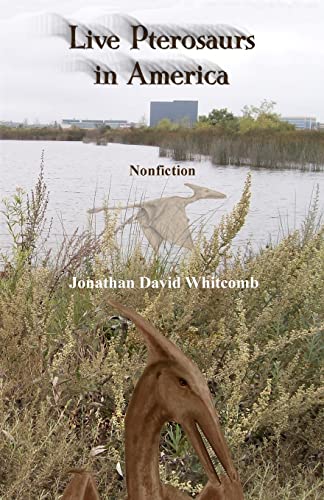
My second nonfiction book on these eyewitness accounts is now in its second edition: "Live Pterosaurs in America." I will continue to speak up for the honor and honesty of the eyewitnesses, for human experience should be valued above the dogma of tradition: the Western indoctrination into universal extinctions of all species of dinosaurs and pterosaurs.
Popular items by Jonathan David Whitcomb
View all offers-
The Girl who saw a Flying Dinosaur: Patty Carson and other children, and teenagers and adults, have seen a living pterosaur, sometimes called a "pterodactyl"
Whitcomb, Jonathan David
Item prices starting from
View 6 offersUS$ 9.08
-
Live Pterosaurs in America: Sightings of Apparent Pterosaurs in the United States
Whitcomb, Jonathan David
Item prices starting from
View 1 offerUS$ 12.96
Also find
Used -
Searching for Ropens and Finding God: The quest for discovering modern pterosaurs ("flying dinosaurs")
Whitcomb, Jonathan David
Item prices starting from
View 6 offersUS$ 14.88
-
Live Pterosaurs in America, second edition: Eyewitness Reports of Pterosaurs in the Contiguous United States
Whitcomb, Jonathan David
Item prices starting from
View 6 offersUS$ 14.86
-
Live Pterosaurs in America: Not extinct, flying creatures of cryptozoology that some call pterodactyls or flying dinosaurs or prehistoric birds
Whitcomb, Jonathan David
Item prices starting from
View 4 offersUS$ 19.00
-
Searching for Ropens and Finding God: Walking by faith and working with people of other faiths, in a quest for the discovery of modern living pterosaurs
Whitcomb, Jonathan David
Item prices starting from
View 6 offersUS$ 20.08