Stan Trauth
Stan Trauth was born in St. Louis, Missouri, but his family moved to Bull Shoals Lake outside Mountain Home, Arkansas when he was seven. Stan grew up fishing and exploring the rocks around the lake, finding lizards and snakes. His defining moment in college occurred when he held a spotted salamander in a natural history class. He knew at that moment that he wanted to be a herpetologist. He received bachelor’s and master’s degrees from the University of Arkansas, Fayetteville, and a Ph.D. from Auburn University. Today, Dr. Trauth is senior faculty member and professor of zoology in the Department of Biological Sciences at Arkansas State University in Jonesboro. He is a past-president of The Herpetologists’ League (2012-2013) and the Arkansas Academy of Science (2006). He served as Editor-in-Chief of the Journal of the Arkansas Academy of Science for 15 years (1993-2007) and was a co-founder of the on-line journal Herpetological Conservation and Biology (HCB).
From 1999 to 2003, Dr. Trauth observed a female slimy salamander, which he called Four Spot, with her eggs on a particular rock, 334 feet from the entrance to an old mineshaft near Hot Springs, Arkansas. Never before had he documented the same salamander laying eggs in the same spot for five consecutive years. This mine and the female slimy salamanders using it were featured in Sir David Attenborough’s natural history documentary Life in Cold Blood (2008).
Later, Stan was consulted by Disney Productions for a film about a newt, a type of salamander. Sadly, plans for the newt movie were ultimately shelved, but the experience motivated Trauth to create his own story about a female slimy salamander, Sally in Salamandria.
Stan’s other passion is studying alligator snapping turtles, which he showed Mike Rowe how to trap, measure, and release in an episode of Dirty Jobs (2009).
Popular items by Stan Trauth
View all offers-
Salamandria
Trauth, Stan; Trauth, Joy
Item prices starting from
View 1 offerUS$ 70.20
Also find
Used -
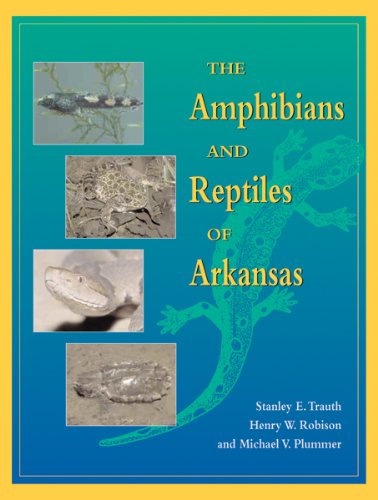
The Amphibians and Reptiles of Arkansas
Trauth, Stanley E.; Plummer, Michael V.; Robison, Henry W.; McAllister, Chris T.
Item prices starting from
View 13 offersUS$ 34.37
Also find
New -
The Amphibians and Reptiles of Arkansas
Stanley E. Trauth; Henry W. Robison; Michael V. Plummer
Item prices starting from
View 5 offersUS$ 50.00