John G. Deaton
I shall make this first-person singular. My childhood consisted of a dysfunctional family and an abusive older brother. I was teaching students at the University of Texas at Austin, at the age of forty-five or forth-six when, presenting material to the anatomy class about how an unmistakable finding of child abuse is the occurrence of multiple fractures at different stages of healing, I found something that changed my own life. (The finding of multiple fractures at different stages of healing means that one fall or other "accident" could not have produced the changes! Which are therefore pathognomic for child abuse.) My abuse did not consist of that severe an injury, but the point of my story is that, while reading about abuse, I realized that I had suffered it! Until then, despite medical training and raising a family with my wife, it had just never occurred to me that I suffered that. After O.J. Simpson had killed his wife and Ron Goldman, books appeared, and I read them. In one, in particular, Nicole Brown Simpson told of the methods of abuse that O.J. rendered to her, and it was on my part an overwhelming identity with her! In those things she suffered, though my injuries were less severe, I realized it was identical to what had happened to me! People who have been abused always find themselves in the narratives of others who have been abused. I finally had the courage to confront a relative I was still frightened of, an older brother, and I believe my healing began at that moment in 1996.
So, along the way, I became a writer without understanding that the most common background for a true writer is an unhappy childhood. I will not burden you here with all the things in my life that I am ashamed of, but one of these was my addiction to Seconal while training to become a medical specialist. My addiction began in 1963 as an intern at Corpus Christi's Memorial Medical Center, and went with me on my return to the University of Texas Medical Branch in Galveston, where I spent three additional years becoming an internist. I will relate this much: I volunteered to serve in Vietnam when I entered the Air Force in 1967, because I knew that I would either die over there or come back without that monkey on my back. So it was that a few weeks after I finished the postgraduate training in Galveston, I looked up to find my butt right there at Cam Ranh Bay, South Vietnam, still addicted. Please do not let anyone tell you that the nine out of ten of those sent there to support the combat mission had it easy. We did not! It was tough for everybody. I used to see airmen in clinic who showed me the thickest calluses I'd ever seen, this for the manual work they did day-after-day for the year. As for me, I had a withdrawal convulsion from barbiturates that Thanksgiving of 1967, and my hidden addiction became known to my bosses. It was touch-and-go whether I could stay and finish my tour, or be sent home in disgrace. I was allowed to stay. Two months later, the 1968 Tet Offensive occurred, and our hospital went into an emergency mode. A doctor I knew, who arrived at the onset of Tet, spent his first week in Vietnam sleeping on the sand outside the ER because he simply had no time to find a hootch and move in. I am proud that, later, those at the 12th USAF Hospital received the Presidential Unit Citation Award for our service during Tet. (It was the same award given the Navy Seals who got bin Laden.) At any rate, my latest book, appearing courtesy of Kindle Direct Publishing, is the story of my year over there. One interesting sidebar is that the cover illustration for the book, done by Jeff Nichols of Jeff Nichols Photography here in central Texas, depicts an Asiatic figurine that was drawn by him from the "Happy Tet" card given me by our Mamasan two days before the onset of Tet. (She may not have known of the Tet Offensive.) At any rate, the title is "Rockin' in the Round-Eye Lounge," and I believe it is the best thing this old man has done, by way of writing, and it was in Vietnam that I became a writer. Someone has said that it is as hard to write a bad book as a good one, and there is some comfort in that. Me, I did publish a book through Random House, and it paid well, but when I saw the degree of sucking-up that would have been necessary to publish with them again, I concluded it wasn't worth it. I also probably wasn't that good a writer; we do what we can. For anyone who served in Nam or had a family member or acquaintance who served in Vietnam, or who is interested in that era, I believe you will find much to like in this book. I have likened it to the "Catch-22" of Vietnam books, without the dark humor (for the most part). Thanks for reading this!
Popular items by John G. Deaton
View all offers-
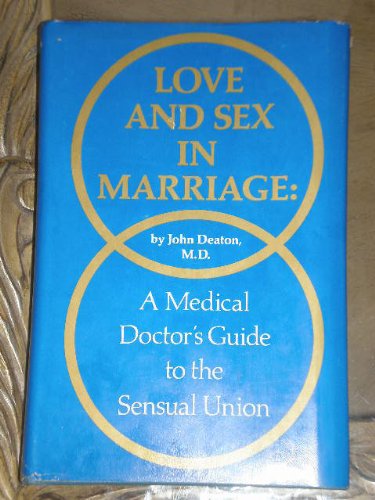
Love and sex in marriage: A medical doctor's guide to the sensual union
John G. Deaton
Item prices starting from
View 2 offersUS$ 4.99
Also find
Used -
The Death of Maria Chavarria: One Man's Journey from Doctor to Damnation
Deaton, John G.
Item prices starting from
View 17 offersUS$ 17.90
-
Woman's day book of family medical questions
Deaton, John G. & Pascoe, Elizabeth Jean
Item prices starting from
View 5 offersUS$ 6.99
-
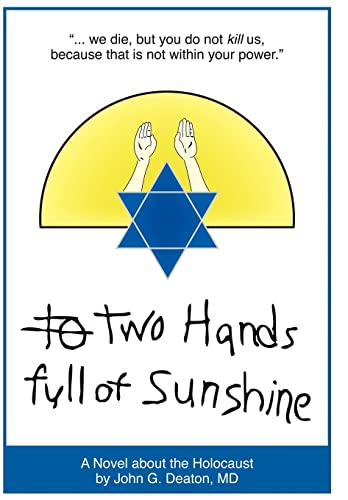
Two Hands Full of Sunshine (Volume I): An Epic about Children Trapped in the Holocaust
Deaton M.D., John
Item prices starting from
View 22 offersUS$ 13.99
-
Two Hands Full of Sunshine (Volume 2)
Deaton, MD John G.
Item prices starting from
View 19 offersUS$ 13.99