Fred Rochlin
Fred Rochlin (1923-2002) was an architect, artist, photographer, collector of Western Jewish Americana and, as a second career, monologist and author. Born in the Arizona border town of Nogales, he spent most of his adult life in Los Angeles, California, where he lived with his wife, author and historian Harriet Rochlin. They have four children and three grandchildren.
At the beginning of his career, Fred apprenticed in the offices of two renowned Los Angeles architects: Lloyd Wright and Charles Eames. From 1952 to 1986, Rochlin & Baran Architects, Engineers and Planning completed major medical facilities and observatories in California, seventeen other states, Iran and Israel.
After retiring from architectural practice, Fred wrote and performed a monologue on his experiences as a navigator in Italy during World War II. The show was lauded first by New York Times Arts in America critic, Bruce Weber (who said the performance "has the elements of an epic: love and death, honor and betrayal, vengefulness and martyrdom, and ultimately, the fortuitousness of survival"), then in newspapers throughout the country. The monologue opens with the following passage:
"My name is Fred Rochlin. I was born and raised near Nogales, Arizona. My parents had emigrated from Russia. I had two brothers and two sisters. I was the youngest. We lived in the country. We had chickens and turkeys and a black and white Holstein cow named Bossy. Nogales had about 5,000 people in it. It had a school and a library and a city hall and a county courthouse. It was a ranching and mining and railroad center and a border town. I liked Nogales. I thought it was a nice town. I had a summer job working in the stockyards. In high school, I was sort of a flash. At graduation, I got to join the National Honor Society. I went to the University of Arizona and I majored in civil engineering because that's what my two brothers had done. When I got there, I found that I couldn't pass algebra, couldn't pass calculus, chemistry, surveying, physics, differential equations. I couldn't pass a damn thing. I was flunking out and that would be a big scandal in my family. I was getting desperate. I didn't know what to do. That December, the Japanese government saw fit to bomb Pearl Harbor. So, next month, January, two weeks before finals, I got very patriotic and I went down and enlisted in the Army Air Corps."
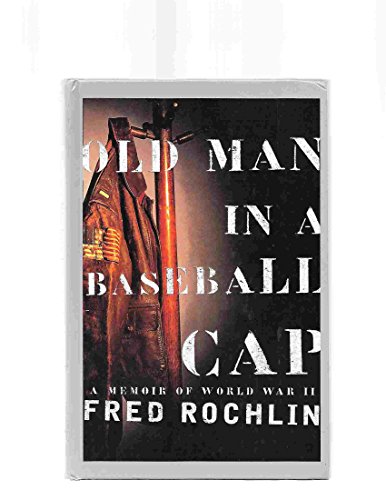
The resulting book and audio, Old Man in a Baseball Cap, was released by Harper-Collins in 2000 and is still in print. A DVD of his performance is also available at www.rochlin-roots-west.com/books-and-art.
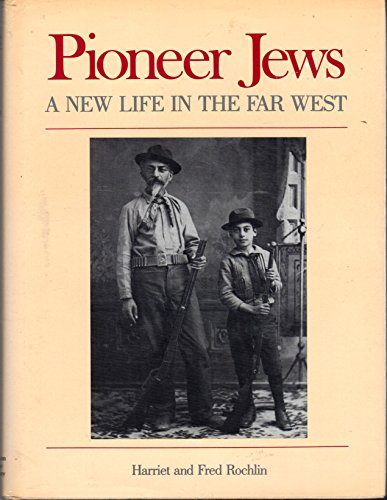
Fred also became infected with Harriet's passion for Western Jewish history, which culminated in Fred collecting the images for Harriet's Pioneer Jews: A New Life in the Far West, in print at Houghton Mifflin from 1984 to 2011 and still available. Fred's research on Southwestern history -- general and Jewish -- became an important archival resource for historians. Some of the materials he collected are now part of the Bloom Southwest Jewish Archives at the University of Arizona Library, Special Collections.
Fred also filled 114 personal journals, which he illustrated with sketches and watercolors and bound himself in rustic covers of rare wood. Some of his larger scale watercolor paintings of his native Arizona have been made into beautiful notecards (available at www.rochlin-roots-west.com/books-and-art).
Popular items by Fred Rochlin
View all offers-
-
Pioneer Jews: A New Life in the Far West
Rochlin, Harriet And Fred
Item prices starting from
View 81 offersUS$ 4.99