Kirk Tuck
I started my photography career as a teaching assistant at the University of Texas at Austin working for three diametrically different commercial photographers. Charles Guerrero was the consummate Brooks Institute graduate who possessed the knowledge to do every type of photography well. One day Charlie would be shooting technical shots of semiconductors with a 4x5 inch view camera and on the next he'd be shooting a wedding. Reagan Bradshaw was a kindred spirit, an English major who felt more at home with a camera than a typewriter. He would later become one of the most influential presidents of the ASMP (The American Society of Media Photographers). He could shoot fun ad stuff in his studio or head out for a long bout of Texas Landscape photography. My third major influence was Tomas Pantin who was resolutely an advertising shooter. He still has his fingers on the pulse of what looks cool and what doesn't. These three depended on me to run their labs for their commercial photography courses.
My early photography days were spent teaching students how to set up and use 8x10 view cameras, studio strobes, cinematic lighting equipment and much more. We also maintained a large and efficient darkroom.
One by one my mentors left the University to go back to their true love, taking photographs. When the last one left he recommended me to the chair person and I spent another few years teaching both commercial studio photography while occasionally filling in for a fine art instructor who'd gone of a sabbatical.
Eventually I left because that kind of teaching becomes a routine and the time and energy for your own work drains away. I spent seven years as the creative director of a regional ad agency until finally opening my own advertising studio in 1987. Since then I've be all over the United States and most of Europe and the Caribbean making photographs and cataloging experiences.
A student asked me recently what my favorite assignment of all time was. I could truthfully say that it was a toss up. There was the freezing February I spent in St. Petersburg, Russia shooting art in the Catherine Palace and being the first American photographer to bring equipment into the Alexander Palace. The Alexander Palace was the last palace of the Czars and the current headquarters of the Russian Naval Intelligence Agency. We were their guests. We worked hard during the gray days and we played hard in the evenings. A favorite memory is the evening we spent at the Mariensky Theater watching the Kirov Ballet perform "The Firebird". We were sitting in the box seats of the Czar and the show was great but one of our ongoing quests in Russia in 1995 was to find clean public toilets. I didn't find them in the basement of the theater but I did come back up to the long private hallway that led to our box seats. There was an ornate door with a velvet rope in front of it. Naturally curious I lifted the rope and tried the door knob. It was unlocked. I went in and closed the door behind. As I looked around the room it dawned on me that I'd discovered the "real" throne room of the Czar. It was his private bathroom. WC. Loo.
After making sure the plumbing worked I ascended the throne. I won't go into more detail but suffice it to say that few have sat upon the throne of the Czars. As the guards said when I was thrown out, "IT IS FORBIDDEN!"
My second favorite photo assignment took place in Monte Carlo for an American high tech company. It was a week long conference that, for one reason or another, was very sparsely attended. I had a marvelous room at the Lowes Beachfront Hotel, right next to the Grande Casino and, since the program had to be truncated because of the low attendance I was forced to entertain myself every afternoon, surrounded by beautiful people, swimming laps in the Prince Ranier Memorial competition swimming pool adjacent to the harbor. Oh, and having dinner at the Prince Ranier Private Car Museum, chatting with Tom Peters and Sir David Frost.
Over the past twenty years I've been present at the nomination of Clinton for his first term, done one of Renee Zellweger's first headshots, hung out in an executive suite with former president George Herbert Walker Bush and Michael Dell, met high ranking Chinese government officials, photographed the October fashion shows in Paris, and dragged camera gear through clean rooms, sewage plants, and printing factories.
Over the course of the years I've found that additional knowledge has generally helped me lighten my load of gear while giving me more access and more mobility.
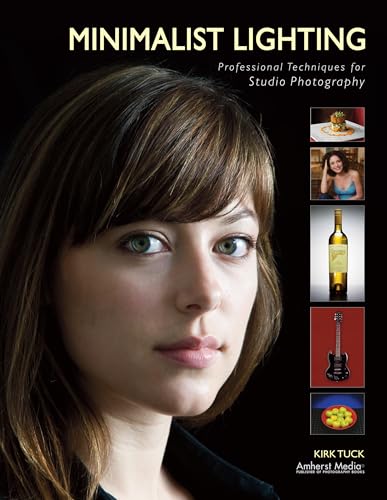
I decided to share that information when I was approached a few years ago by the folks at Amherst Media. They really believe in books. Not just as receptacles of information but as beautiful objects in their own right. They asked me to do a book I called "Minimalist Lighting: Professional Techniques for Location Photography". I didn't know what to expect but a great review from David Hobby propelled the book into bestseller status, and, as the information has not changed, it continues to sell very well.
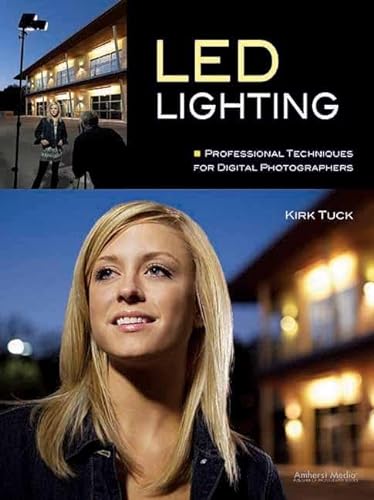
My second book is on Studio photography and the third book covers the ins and out of commercial photography. My fourth book is a compendium of lighting Equipment and my latest book is the first of its kind, a guide to using LED Lights for Photography. Exciting times, for sure.
I still love taking photographs and I'm constantly playing with new cameras and lenses. I think it's like a sport where you have to practice daily to preserve your edge, your "chops". I can't understand professionals who've given up shooting for themselves or hobbyists who only shoot on vacation. Cameras are small and light, especially these days. Is there any reason to travel anywhere without one?
I'm not totally consumed by photography. I also love to swim and swim with a masters group just about every morning but Mondays. (That's the day the pool is closed.....). Much of my discipline for writing comes from a life long discipline learned in the pool. As my coach, Kirsten Weiss, always says, "The only way to get better is time in the water." The only way to become a better photographer is time with the camera. Books, workshops, DVD's and such are just the building blocks or the modeling clay. You have to do the design, stack the blocks, throw the clay on the wheel and some times it's just basic hard work and drudgery. But in the end it's all that matters in the making of a beautiful image.
I bought a Honda Element a few years ago. I didn't see it as a car so much as a giant camera bag with tires. When I buy a TV I really just see it as a device to hook up a Panasonic GH2 to and scroll through images. I stopped drinking caffeine so I could handhold my cameras at lower shutter speeds. I named my child Shutter Speed. Why do something if you aren't committed to doing it well?
Next up for me are novels about a photographer. More swimming and a lot more writing about the things that can make our images different and better.
I live in Austin, Texas with my wife, our sixteen year old son and my dog. Life is fun. Photography is too.
Popular items by Kirk Tuck
View all offers-
Commercial Photography Handbook: Business Techniques for Professional Digital Photographers
Tuck, Kirk
Item prices starting from
View 12 offersUS$ 3.28
-
Minimalist Lighting: Professional Techniques for Studio Photography
Tuck, Kirk
Item prices starting from
View 22 offersUS$ 2.99
-
Minimalist Lighting: Professional Techniques for Location Photography
Tuck, Kirk
Item prices starting from
View 32 offersUS$ 4.61
-
The Lisbon Portfolio (Henry White's Portfolios)
Tuck, Kirk
Item prices starting from
View 4 offersUS$ 5.52
-
Photographic Lighting Equipment: A Comprehensive Guide for Digital Photographers
Tuck, Kirk
Item prices starting from
View 7 offersUS$ 9.98
-
LED Lighting: Professional Techniques for Digital Photographers
Tuck, Kirk
Item prices starting from
View 3 offersUS$ 14.99