Nigel Lesmoir-Gordon
NIGEL LESMOIR-GORDON
I came into this world in the midst of the Second World War, appearing among the soaring academic towers of Cambridge - the last outpost of 'civilisation' before the black-soiled, windswept fens ran their endless way up to King's Lynn and The Wash. I grew up in the austere and reactionary spirit of post-war England. People felt lucky to be alive. So many had died and there were shortages. Most of our ships had been sunk and we lived under the heavy-hanging threat of nuclear annihilation.
By the time I had made it into my teens Cambridge had blossomed and become prosperous and I grew up in a privileged world. I was 13 when I went off to board at Oundle School and Elvis Presley's Heartbreak Hotel burst incandescently upon the world. I began writing at Oundle and published poems and short stories in the UK, the USA and in France. I toured the UK performing with my poetry & jazz group. My interest in film took me to the London School of Film Technique in 1965. When I left Cambridge to go to the school I moved into a flat in Cromwell Road, South Kensington - the infamous '101'. When David Gale wrote about 101 in The Independent he recalled:
"As the 60s began to generate heat, I found myself running with a fast crowd. I had moved into a flat near the Royal College of Art. I shared the flat with some close friends from Cambridge, including Syd Barrett, who was busy becoming a rock star with Pink Floyd. A few hundred yards down the street at 101 Cromwell Road, our preternaturally cool friend Nigel was running the hipster equivalent of an arty salon. Between our place and his, there passed the cream of London alternative society - poets, painters, film-makers, charlatans, activists, bores and self-styled visionaries. It was a good time for name-dropping: how could I forget the time at Nigel's when I came across Allen Ginsberg asleep on a divan with a tiny white kitten on his bare chest? And wasn't that Mick Jagger visible through the fumes? Look, there's Nigel's postcard from William Burroughs, who looks forward to meeting him when next he visits London!"
During a weekend spent in Cambridge with old friends as part of my experimental work at film school I shot the now cult-movie classic Syd Barrett's First Trip.
When I joined the industry as an editor I worked for Hugh Hudson, director of Chariots of Fire, on TV commercials and documentaries. The film Performance was produced from his Chelsea studios. In 1968 I was commissioned by Mick Jagger to co-write a screenplay with Christopher Gibbs (the set designer on Performance) called The Quest. Marianne Faithfull writes about this project in her biography Faithfull. Mick, Keith and Marianne were already cast and keen to make it. The script we wrote drew on Arthurian legend, Celtic mythology and romantic poetry. Donovan had been writing music for the film and was disappointed when the project stalled due to other Rolling Stones commitments. To make up for this he suggested that I produce and direct a film of him making music sailing through the islands of the Aegean Sea with a small acoustic band. The band was called Open Road and the completed 30-minute film was There is an Ocean.
I then moved to the BBC as an editor, cutting dramas and documentaries for two years. I went on to work with Pink Floyd, 10cc, Squeeze, Rainbow, Joe Cocker, Big Country, Wings, Paul Nicholas and Leo Sayer amongst others in the 70's.
I concentrated on commercials and corporate videos throughout the 80s. I wrote and directed Regiment a documentary about the Royal Air Force's Infantry Regiment before I made the award-winning television documentary The Colours of Infinity, presented by Sir Arthur C. Clarke with music by David Gilmour of Pink Floyd in 1993. The Colours of Infinity has been broadcast in over fifty territories. It brought the Mandelbrot set and the subject of fractals to the attention of the general public for the first time.
I also directed The Bobby Charlton Story, Reflections Satguru, Rainbow - Live Between The Eyes and the series Whatever you Want for the UK's Channel Four.
Following the success of Colours I have since written, produced and directed the broadcast documentary Is God a Number? This science documentary looks at the mystery of consciousness and the relationship between maths, the mind and the physical, observable universe. I then made Clouds are not Spheres, a biographical broadcast documentary on the life and work of the mathematician Benoît Mandelbrot.
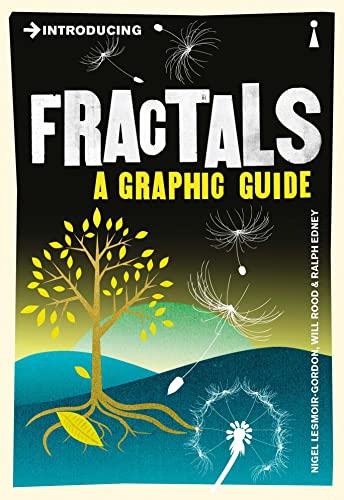
My first book Introducing Fractals was published by Icon Books in the USA and in the UK. This book has now sold over 16,000 copies and is available in Italian, Croat, Chinese and Korean. In 2005 I completed a modular DVD called Mandelbrot's World of Fractals, which I directed, produced and presented for the National Science Foundation in the USA through Yale University.
The short comedy The Mysterious Michael A, starring Nicholas Jones and Joanna Bowen, was written, directed and produced by me in 2007. This film has been shown at over 20 film festivals worldwide thus far and has been very well received. I directed the acclaimed documentary Brixton Beach in 2008.
In 2009 a compilation of three of my science documentaries, featuring a fractal chill-out film with David Gilmour's music was released on DVD. My second book, which was based on The Colours of Infinity, was published by Springer in 2010. The contributors to the film are joined in this comprehensive survey of the fractal theory and practice by some other leading experts in the field. The book features contributions from Arthur C. Clarke, Professor Benoît Mandelbrot, Professor Michael Barnsley, Gary Flake, David Pennock, Will Rood, Professor Ian Stewart and myself. The book includes an online link to the film.
Following the death of Benoît Mandelbrot I appeared on BBC Radio 4's Last Word describing my relationship to the great mathematician. I have written a tribute to Mandelbrot for the American Mathematical Society. I also wrote his obituary for The Guardian and The Independent.
In 2010 I gave an interview to Conscious TV on fractals and the mystery of consciousness, which can be watched at this link: https://www.youtube.com/watch?v=BZjx-Ix9DVA
Nothing and Everywhere was my first novel, which I finished in 2011. I have produced a promo film for this romantic, comic thriller. It can be viewed on YouTube: https://www.youtube.com/watch?v=PdxSkYL5cVQ
In 2012 I presented my science documentaries in Berlin, Kassel, at UCL, Queen Mary College, Imperial College in London, Leeds University and at Waterstones in Cambridge.
I wrote the biography of an airline pilot and drummer (Tibor January) called Aerodrum in 2013. I have recently completed my second novel, Life is Just... This is not the often requested sequel to Nothing and Everywhere but is something very different indeed. This book tells the story of a perfect family's fall from grace and its ultimate redemption. It is published by Eventispress.
I have just produced and directed a fund-raising teaser aimed at investors to garner the finance for the production of the screenplay based on my novel Nothing and Everywhere, which can viewed on Vimeo at this link: https://vimeo.com/205658080
My third novel A Glass of Two Milks, which is the sequel to my first Nothing and Everywhere, is now available on Amazon throughout the world in paperback and as an e-book.This story is set in 2030. It continues the gripping, roller-coaster saga of writer John Smith, mathematician Susie Bellavista and battle-hardened Biro as once again they have to wage war with Tigran Gevorkian, diving right into the eye of the storm as they take on the New World Order Movement. 2030 is a high-tech utopian world, but one that is still subject to all the usual human failings - lust, anger, greed, attachment and egotism. Will the team succeed? Be prepared for some surprises.
Here are some reviews:
‘A zippy number. The characters are sharp and intriguing. Great dialogue with a plot that moves along. I like the 'soft' futuristic setting. It's a world mostly like ours but with extra and intriguing layers.’ Andrew Rawlinson. Author.
‘Nigel's imagination is fantastic! The world he creates is not saved by a conventional Messiah... I like the way that the author speaks directly to the reader.’ Sarah Chatwin. Author.
‘A Glass of Two Milks is beautifully written. The author has a first rate command of the English language and his literary style makes this book a treat to read.’ Mary Thomas. Teacher.
‘Nigel Lesmoir-Gordon is a visionary and an entertainer. He writes a gripping tale with confidence, humour and flair.’ Harvey Brownwood-Fox. Entrepreneur.
I have just finished my fourth novel, which is called The Keeper of the Faith. Eventispress are publishing it. It starts in Vietnam in ’68, moving on to India and Belmont Abbey and thence to Cape Wrath. It’s a very strange book. Here are some reviews:
'I thoroughly enjoyed this Russian Doll of a book - stories within tracts within parables within more stories, supported by a strong central thread. This novel is excellent and illuminating.' Alistair Findlay. Actor.
'Masterpiece.' Mary Thomas. Teacher.
'An entertaining and compulsive read. I love the poetry & the dreams.' David Earl of Dudley. Writer and Musician.
'I thought The Keeper of the Faith was a very good read. I became fond of the hero, Tristram and was fascinated by aspects of that war that I knew nothing about and I was also impressed with the writer’s breadth of knowledge.' Lois Kleffman. Teacher.
'I loved this book. The writing flows. It’s full of in-depth knowledge, thoroughly researched and written with accomplished flair. The author makes it look so easy. He’s a consummate pro, who can really string a sentence together and his thoroughness is a joy to behold! He also writes some scintillating dialogue, which I think reveals his screen writing soul.' Stephen Ward. Journalist.
'This book is so good I had to put it down and sleep on it before I could continue. Pasquale Falbo.' Fast jet pilot with the US National Guard.
'The hero, Tristram, is well drawn as the questing Englishman. The author writes well about military life in action: the dialogue, nicknames, technical details and patois and life in the jungle ring true. His factual information about life in a monastery is most interesting too. I like the quotes which head the chapters.' Shelagh Bocking.
'This book zips along with excellent dialogue and the characters emerge from the conversations. Cool names, and using ‘The Art of War’ is very effective. Nigel is a good storyteller and he has something to say.' Andrew Rawlinson. Author.
'What a good read! Authentic and intricately researched. Heartfelt and believable - so much so it seemed autobiographical or perhaps biographical. I was caught from the start. I laughed out loud, I wept, I was informed, loved the chapter titles and the quotes. I couldn't believe how gripped I was by the war-torn chapters in Nam. Though, I was grateful for Tristram's occasional Cambridge and spiritual interludes. These offered respite from the tension of the jungle horrors. I had never attempted war accounts before, thinking I'd never survive them. This book proved me wrong. I can handle it. As if by magic I was right beside Tristram in his jungle ordeal.' Debbie Shorrock. Psychotherapist.
'Putting a British m'lord, Tristram Forbes, Eton, Cambridge, Yale, 8th Earl of Oundle, student of Sun Tzu's The Art Of War, poet, etcetera, in charge of a platoon of grunts during the Viet War certainly adds a new take to the canon of literature associated with that conflict. Philosophy galore, a girl who says the beauty of mathematics makes her cry, gory battle scenes— it's a heady mixture. Well researched and, certainly, original.' Damien Enright, author.
Popular items by Nigel Lesmoir-Gordon
View all offers-
Introducing Fractal Geometry
Lesmoir-Gordon, Nigel
Item prices starting from
View 40 offersUS$ 3.00
-
Introducing Fractals: A Graphic Guide
Lesmoir-Gordon, Nigel; Rood, Will
Item prices starting from
View 49 offersUS$ 5.99
-
Nothing and Everywhere: A Moral Tale
Lesmoir-Gordon, Nigel
Item prices starting from
View 16 offersUS$ 13.74
-
-