

Gary Snyder
My first published work actually appeared in May 1980 as an AD&D article in issue #49 of "Dragon" magazine. The original title was "The General Principles of Wishes", but was editorially retitled "Best Wishes! Guidelines for Giving and Getting". Apparently someone liked it, because it was republished in "The Best of Dragon Magazine, Vol. V" in May 1986. My next public works were a series of reasonably popular online fan fiction stories about two decades later. None of that has anything to do with my writing now, but I had to start this biography somewhere and thought that it was better padding for the resume than the written equivalent of a series of "umms" and "uhhs". Actually, my previous writing did let me discover that I enjoy writing, as much as I have always enjoyed reading. When people ask me (and that isn't often) I suggest that if they want to write, the first step is to start reading.
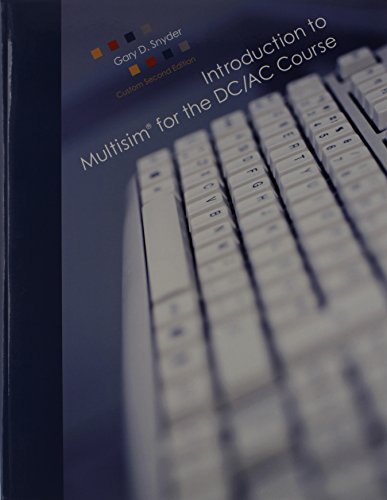
My first real opportunity, as with so many opportunities, was almost entirely accidental. I had been doing freelance work as a reviewer and technical contributor on electronics textbooks by Tom Floyd for Pearson Education (formerly Merrill Publishing) since the late 1980s. One of Pearson's customer's wanted a manual that combined a tutorial on MultiSIM with an introduction to dc/ac electronics, and Pearson decided that there was only one obvious choice with both the technical background and practical experience to write one. Fortunately for me, that person wasn't able to take on the project at the time, and recommended to Pearson that I do it instead. After several months of intensive effort on my computer and freeclimbing the near-vertical learning curve of writing for commercial publication, "Introduction to Multisim for the DC/AC Course" was on the shelves. Unlike J. K. Rowling's books, most of mine are still on the shelves, but there's always hope that the fascination of actually becoming an electronic engineer or technician will replace the unrealizable fantasy of becoming a wizard. There's also the possibility that people will mistake me for the Pulitzer Award-winning beat poet of the same name and somehow create a phenomenal demand for a MultiSIM tutorial, although since my high school days in Northern California's Central Valley I've used my middle initial on virtually everything I write to avoid that potential confusion.
Writing my first book taught me many things, but I decided to keep writing anyway. My second book was a collaborative effort with Dave Buchla, called "Multisim Experiments for DC/AC, Digital, and Devices Courses", or "DDD" for short. Dave was my instructor when I was working on my AS degree in electronics technology at Yuba College, and I had the opportunity of course testing his first Macintosh-authored work, a digital lab manual, in one of his courses. Since then he's produced many more excellent books and my opportunity to work with him on DDD has given me invaluable experience as an author, new perspectives on material presentation, and greater appreciation of the fine points of being a perfectionist (even when rewriting the same paragraph for the seventh time in the wee hours of the morning). Even in my first book I tried as much as possible to emulate his ability to clearly organize and present the course material and hope that I succeeded.
And now that I've crossed the Rubicon and the die is cast, I look forward to further adventures as an author. For the foreseeable future I plan to concentrate on technical subjects, but who can say where that will lead? As with Abrashkin and William's "Danny Dunn" books of the 50s, 60s, and 70s, the time may have come to introduce a whole new generation to the fascination of science.
Popular items by Gary Snyder
View all offers-
Introduction to Multiism for DC/AC Course
Gary Snyder
Item prices starting from
View 7 offersUS$ 3.78
Also find
Used -
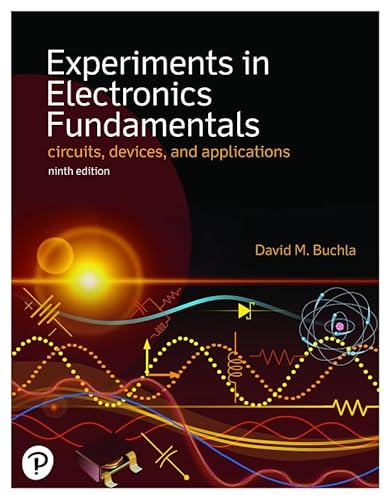
Experiments in Electronics Fundamentals
Floyd, Thomas; Buchla, David; Snyder, Gary
Item prices starting from
View 8 offersUS$ 48.43
-
Problem Solving Guide for DC/AC
Snyder, Gary
Item prices starting from
View 3 offersUS$ 37.29
Also find
Used -
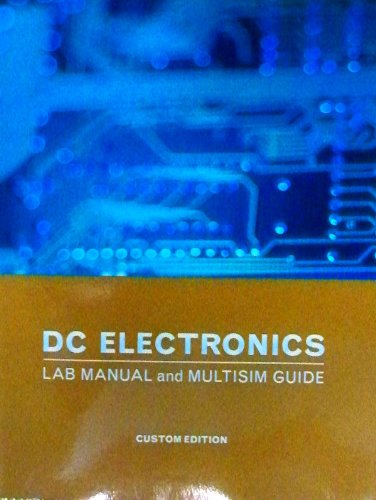
Dc Electronics Lab Manual and Multisim Guide Custom Edition
David M. Muchla; Gary Snyder
Item prices starting from
View 1 offerUS$ 49.97
Also find
Used -
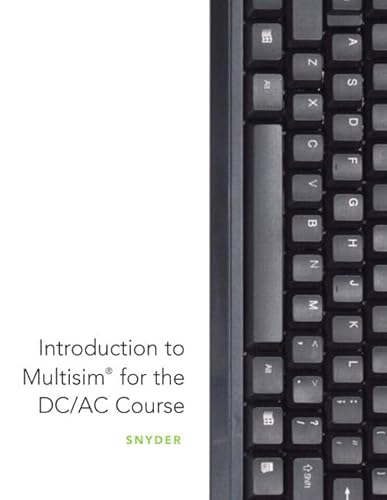
Introduction to Multisim for the DC/AC Course
Snyder, Gary D.
Item prices starting from
View 4 offersUS$ 17.78
-
Multisim Experiments for DC/AC, Digital, and Devices Courses
Snyder, Gary D.; Buchla, David M.
Item prices starting from
View 1 offerUS$ 104.00
Also find
New -
Electronics Fundamentals: Circuits, Devices & Applications [RENTAL EDITION]
David Buchla
Item prices starting from
View 24 offersUS$ 88.13


![Stock image for Electronics Fundamentals: Circuits, Devices & Applications [RENTAL EDITION]](https://pictures.abebooks.com/isbn/9780135583739-us.jpg)