Frank Troy
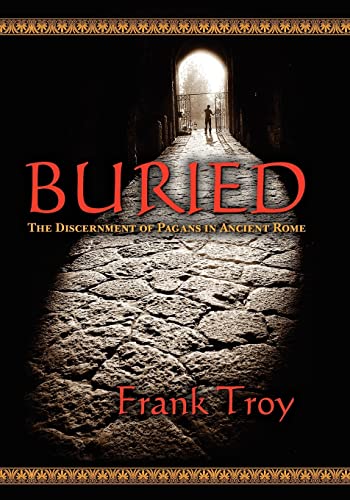
My book about Herman Melville and my novel about ancient Rome are based on ideas I developed during the thirty-some years I taught college and university undergraduate and graduate courses dealing with these subjects. "Herman Melville's Genius" draws attention to aspects of his writings that are not addressed by other scholars, or are addressed (in my opinion) inadequately or incorrectly. I wrote it for general readers, although I hope even Melville specialists might find some value in it. Melville was deeply influenced by the Greco-Roman cultural tradition which is not well understood in the modern, Christianized West. One of my teaching specialties was Greco-Roman literary classics, and writing "Buried," a novel set in pre-Christian Rome, was a way to immerse myself imaginatively in that rich intellectual tradition and hopefully enable readers to see its complexity and beauty.
"Buried" meets the requirements for 2 genres: literary fiction, and historical fiction. My latest novel (2026), "Gilead on Mars," meets the requirements for literary fiction and also hard science fiction. It explores 2 areas: space science, and brain science, in scientifically accurate terms.
"Beads of Water: Finding Relief: Notes and Poems about Living 70+ Years with PTSD" grew out of my discovery that I had been living for 65 years with undiagnosed PTSD that is clinically categorized as severe and that was characterized by emotional flashbacks I could not explain. That discovery changed my life in fundamental ways. I did a great deal of research to understand the nature and management of PTSD, and I wanted to pass on some of the more useful information. The book is directed to both military and civilian readers. It's based on my own experience, and it's designed as a how-to book for people with PTSD as well as their friends and supporters who want a better understanding of how the disorder operates and how it can be managed.
"Accuracy" examines Olympic marksmanship from an explanatory or how-to perspective. What's known as "International-style" riflery is peculiar in that an observer can see the three physical positions required in competition, but everything else--the psychology and the physics involved in successful performance--are invisible. My goal was to put into words, and make visible to the understanding of both participants and observers, those invisible components of performance. The book represents over 50 years of thinking about how to teach this style of marksmanship. Previously I had co-written three books on this subject with Bill Pullum, who coached more marksmen and markswomen to international gold medals than anyone else in the history of the sport. The foundation of "Accuracy" was everything I learned from him and my teammates on the All-Army International Rifle Team which, at the time I was at Fort Benning, was under his guidance.
Popular items by Frank Troy
View all offers-
Herman Melville's Genius: The Author of Moby-Dick on How to Think About Religion and Other Ideologies
Troy, Frank
Item prices starting from
View 9 offersUS$ 14.08
-
Buried: The Discernment of Pagans in Ancient Rome
Troy, Frank
Item prices starting from
View 12 offersUS$ 30.35
-
Beads of Water: Finding Relief: Notes and Poems about Living 70+ Years with PTSD
Troy PhD, Frank
Item prices starting from
View 11 offersUS$ 13.28
-
Accuracy: A Brief Guide to Precision Shooting
Troy PhD, Frank
Item prices starting from
View 14 offersUS$ 14.92