

Barbara Rogers
Friends have asked me why I write Christian fiction. In our post-Christian age, writers make a lot of money writing about characters driven by money, sex, and power. But for me, characters are of more interest when they care about loving God and neighbor, when they are grounded in the Judeo-Christian tradition of the West, a world-view that I was raised in and resonate with. Though I have traveled to India and Japan, investigating Eastern forms of spirituality and admiring them, I know that my own roots are in the soil of the Old and New Testaments. So my characters, like me, play out their lives in the world my own ancestors grew up in. I believe that Christianity, based as it is on love, will endure and be transformed from a tribal set of beliefs to a faith that embraces all forms of spirituality and learns from quantum physics how to understand the sacredness and beauty of the entire cosmos.
As we learn our place in the multiverse, we will become better able to take care of creation, both the animal and the plant lives that sustain us. We will become more conscious of our interconnectedness and our responsibility for this fragile earth, our island home. In my environmental fantasy, Deva and the Soul-Snatcher, I show what form this responsibility might take. This novel for young adults shows how the world might look if we changed our perspective from domination to sharing, from empire-building to soul-building. In this fable, two young people are able to change the world by challenging the corporate culture of greed and manifesting a new vision of abundance and simple kindness. As the Dalai Lama suggested, much good could be realized on earth if we were just kind to each other. That wisdom is at the heart of all spiritual traditions, and I put it at the heart of all my books.
I'm a recovering academic who has come to love story more than history. Now I write fiction rather than scholarly books, since I think imaginative writing can carry a deeper truth than can a list of events and dates. Years ago, I translated the poetry of Fortunatus, a sixth-century Italian poet. During the decades of my university teaching, I began to wonder how this classically trained aesthete survived and flourished in the barbaric Merovingian north of France. Improbably, Fortunatus wound up as a saint, guided by the radiant St. Radegund, who was also a great political force in this ferocious time. I found that King Sigibert and his Spanish-born Queen, Brunhild, eventually morphed into the Siegfried and Brunhild of legend. The original doomed lovers fought to hold their kingdom against a proto-feudal nobility and the wiles of a particularly nasty piece of work, Fredegund, the harlot-queen of Sigibert's older brother. Like people in our own sensate, God-bereft era, these largely forgotten people struggled to keep their faith alive in the face of almost unimaginable cruelty. In this experimental historical novel, the same events are viewed from three different perspectives--the poet's, the warrior's, and the saint's. During their chaotic age, the seeds of modern Europe were sown. I think people a thousand years from now will look back at the upheavals and suffering of our own time, seeing the first signs of a global revolution in technology, socio-political innovation, and new ways of expressing religious faith.
While I was writing The Ring and the Cross, I also wrote a very different book for people of all ages, Yeshua's Dog. I call it "A Gospel Love Story" because it captures the central message of Jesus: unconditional love and forgiveness. The book is simple and not at all intellectual. Maybe all those walks on the wild Oregon coast with my dogs have worked their magic on me and given me some insight into what it is just to live and be at peace. Dogs, I've found, are great teachers of joy in the moment. I am grateful to have them in my life.
See more at www.dogwholovedjesus.com
Popular items by Barbara Rogers
View all offers-
In the center: The story of a retreat
Barbara Rogers
Item prices starting from
View 8 offersUS$ 6.94
-
-
-
-
Jung and Shakespeare - Hamlet, Othello and the Tempest (Chiron Monograph Series)
Rogers-Gardner, Barbara; Gardner, Barbara
Item prices starting from
View 71 offersUS$ 4.69
-
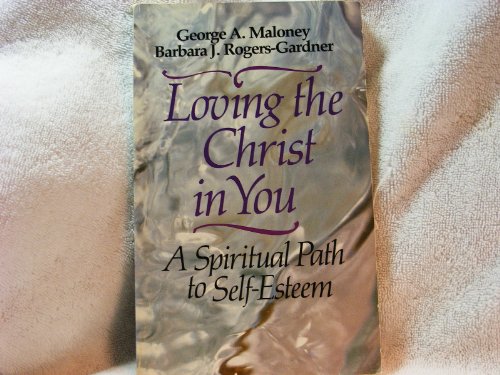
Loving the Christ in You: A Spiritual Path to Self-Esteem
Maloney, George A.; Rogers-Gardner, Barbara J.
Item prices starting from
View 7 offersUS$ 4.85
Also find
Used -
Little Man in a Dog Suit: The Story of a Boston Terrier
Wilson, B. R.
Item prices starting from
View 25 offersUS$ 4.88
-
A Place in the Heart: An Environmental Christian Romance
Jacques, B G
Item prices starting from
View 18 offersUS$ 13.00







Showing 8 of 10 titles