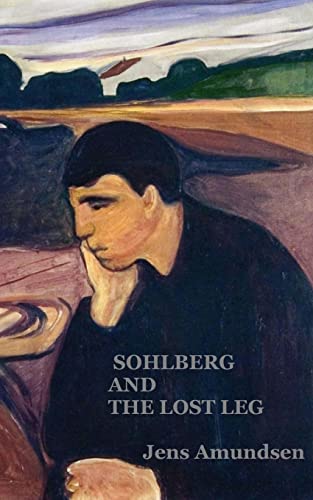
Jens Amundsen
After a move from Norway to be closer to his wife's family, Jens Amundsen now lives in Maine with his American wife. As a child, the author lived in Westport, Connecticut, for a few years when his father worked in New York for a large multi-national corporation.
The Murder Road book series has been described as “a Jens Amundsen travelogue of killers from coast to coast and around the world.”
His travels in search of killers has indeed led him on a journey into the dark hearts of men and women. These are their stories.
In courthouses and prisons, from the lips of killers and felons, he heard spine-chilling accounts of murder and mayhem. Friends and contacts in law enforcement confirmed the worst of his fears. "We are facing a new breed of super-killers."
The author loves his characters. For example, there's the hot-tempered and politically incorrect C.I. Harald Sohlberg, a man who is not part of the herd, a man who definitely thinks outside the box. He hates lies and liars. But he also understands that desperate people do desperate things.
Jens Amundsen is the pen name for an attorney whose literary anonymity protects him and his clients from the powers that be (and want to be).
The author's crime novels deal with "issues of life and death" because these issues are the basic requirements of worthwhile literature according to the author's literary mentor Cormac McCarthy (The Road; Blood Meridian; All the Pretty Horses; No Country for Old Men).
Mr. Amundsen writes back to all readers and interested persons who contact him through:
* e-mail (nynorsk@ymail.com)
* Facebook (www.facebook.com/nynorskforlag)
* Twitter (jensamundsen)
Please give him time since he sometimes has a backlog.
As for his unique writing style he's declared that: "Commas are superfluous. They're a waste. I try to never use them. Neither does the literary genius of Pulitzer Prize winner Cormac McCarthy."
And as for ellipses (...), he writes that they reflect how people really talk. For example: "I use ellipses in characters' dialogue because . . . natural and realistic speech means that people pause . . . they think . . . they lie . . . they get distracted . . . they take a breath . . . they drink or smoke or stare or look away."
Popular items by Jens Amundsen
View all offers-
Sohlberg and the Missing Schoolboy (An Inspector Sohlberg Mystery)
Amundsen, Jens
Item prices starting from
View 8 offersUS$ 3.00
-
Sohlberg and the Gift: an Inspector Sohlberg mystery
Amundsen, Jens
Item prices starting from
View 8 offersUS$ 4.54
-
Sohlberg and the Lost Leg: an Inspector Sohlberg mystery
Amundsen, Jens
Item prices starting from
View 7 offersUS$ 16.61
-
Sohlberg and the White Death (Inspector Sohlberg mysteries)
Amundsen, Jens
Item prices starting from
View 3 offersUS$ 24.00
Also find
New