Barry Kritzberg
Barry Kritzberg
I was born in Chicago, lived elsewhere, travelled much (all forty-eight of the continental U.S. states by age seven), and chose to live (more-or-less permanently) here when, as a high school junior, I was hired to work the graveyard shift of the Second City's second newspaper (there were four major dailies in those days). The graveyard shift allowed me to do something rather old-fashioned: work my way through college and graduate school on what I jocularly referred to as "the Marshall Field [then publisher of the Sun-Times] scholarship foundation."
There were many wise mentors at the Sun-Times who cheerfully taught me much that could not be learned in a classroom, but after watching seven editions come and go each day, I came to appreciate Ben Hecht's assertion that trying to learn what was going on in the world by reading a daily newspaper was like trying to tell time by reading the second-hand on the clock.
After so much gladly learning (both in and out of the classroom), I began to think, like Chaucer's good clerk of Oxenford, of gladly teaching. And so I did.
I began teaching in 1964 and, after bouncing around to different public schools, landed in the friendly confines of Morgan Park Academy in 1972. I taught, at various times, history (ancient, American and Chicago varieties), humanities, English (grades 9-12, including advanced placement, and electives involving literature, psychology, philosophy, anthropology and sociology).
I have also conducted a seminar for high school students at the Chicago Historical Society and taught courses for adults at the Field Museum, the Morton Arboretum, and the Newberry Library; taught a course on nature writing for fellow teachers for the Illinois Humanities Council; and, since 1992, have taught freshmen and sophomore English courses at VanderCook College of Music.
For some fourteen years I was a reader and table leader of Advanced Placement English exams. I have also been on several NEH panels that reviewed grants applications from individuals and educational organizations.
In the course of my career, I have been named an outstanding high school teacher by the University of Chicago (three times) and a distinguished high school teacher by the Illinois Institute of Technology (once), and have also been chosen to participate in five National Endowment for the Humanities seminars for teachers and have been the recipient of a grant from the Council for Basic Education for independent research on Greek and African drama. In 1990-91, I was selected as the Illinois recipient of the NEH teacher-scholar award, which permitted a year-long sabbatical for independent study on American reformers of the 1840s.
And, although I left the newspaper world long ago, I have not quite forsaken the art of writing and editing. I have had articles published in the Massachusetts Review, Labor History, the Concord Saunterer, the Thoreau Society Bulletin, the American Historical Association Register, the Richard Wright Newsletter, the English Journal, Illinois English Bulletin and the Florida English Journal. One article, "A Sharps' Rifle of Infinitely Surer Range," was reprinted in the book, A Natural Legacy: Thoreau's World and Ours.
I also revised and rewrote the English portion of a dual-language book, Lithuanian Bookplates.
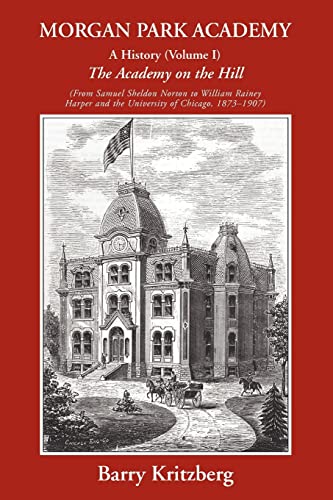
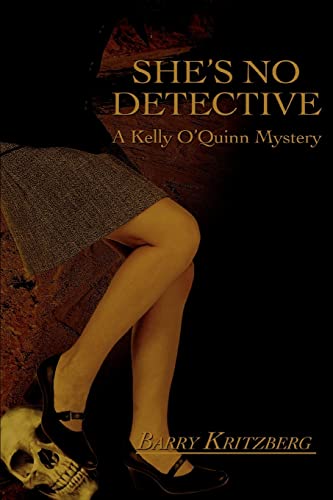
For five years (until its demise), I was the editor of the ISACS Magazine, the publication of the Independent Schools Association of the Central States and for another three years I edited Scholarly Adventures for the Council on Basic Education. I edited the Academy Magazine for Morgan Park Academy, 1998-2008 and also organized and developed the MPA archives, which was preliminary to two other projects: the writing of the history of MPA and creating a museum to illustrate that history. In 2007, the first volume--Morgan Park Academy: A History (The Academy on the Hill, 1873-1907)--was published, as was a novel, She's No Detective ( Kelly O'Quinn mystery # 1).
And, on September 29, 2007, I was inducted into to the Morgan Park Academy Hall of Fame. Then, on October 8, 2008, I was laid off (after 36 years) for economic reasons and, therefore, have had much more time to devote to writing and other pleasant pursuits.
HOW I BECAME A MYSTERY WRITER
There are two impulses behind the writing of the Kelly O’Quinn mystery novels, one ancient and one more recent.
The ancient one, more than fifty years in the past, was called to mind by a recent obituary in the New York Times.
The death of mystery writer Richard S. Prather reminded me of an encounter with the author in my father’s secondhand bookstore when I was thirteen or fourteen.
Prather, a frequent browser in the store, inscribed a copy of his latest novel to me and (perhaps urged by father) encouraged me to write, saying it was great fun. I said I’d rather play baseball.
That autographed copy did not survive various moves and removes and, although I can’t recall the title, some of the action was set in Mexico, where, coincidentally, some of the scenes in She’s No Detective and That Hyde Park Affair occur.
The more recent impulse came from my wife, but it was not the kind of inspiration one sees so often cited in book dedications.
It happened this way. We were on vacation and the unthinkable happened: I ran out of books to read.
We travel light, taking only one carry-on bag each, no matter the duration of the trip.
We consult on books to take, hoping to save a little space, and can usually agree to share some titles, but sometimes our tastes diverge and we go our separate bookish ways.
When I realized (this was pre-Kindle, of course) that I had read my small stock of books and that there was not an English language bookstore within a hundred miles, I began to forage in my wife’s stock of books.
The only books in my wife’s stock that I hadn’t read were a couple of mysteries. I tried one and gave it up after a page or so. I went on to the second and tossed it aside after the first paragraph.
“I can’t read these,” I complained. “They are poorly written and I think I could do better.”
“Then, why don’t you?”
Faced with the choice of either reading indifferent prose or attempting to write my own mystery (better written, presumably) , I did not hesitate to venture down that path less well traveled.
I sat down with a legal pad and pen and began to write. The story almost wrote itself and it seemed as though I were merely recording what the characters were doing.
I wrote four chapters and handed the legal pad to my wife. I watched as she read, interested enough apparently so that she did not complain once about my sorry penmanship.
“It’s pretty good,” she pronounced.
“See,” I said, triumphantly.
The vacation, alas, was over, and I put aside my story. At home, it was tucked in a file and forgotten for several years. When I happened on the manuscript again, I reread it and echoed my wife’s judgment that it was pretty good. I decided I should finish She’s No Detective. And so I did, writing some sixty thousand words, mostly over the next summer. I have added four more titles to the Kelly O’Quinn mystery series since.
And Richard Prather was right: writing is great fun, almost as much fun as playing baseball.
MY FIRST PUBLICATION
It was the novelty of it, after all, which seemed to win it a wider audience. We were asked to write, on that first day of fourth grade, “what we would like to be when we grew up.”
I did not follow conventional eight-year-old wisdom and say (as I’m sure many of my classmates did) that I wanted to be a doctor, or a fireman, or a baseball player.
I wrote, instead, that I wanted to be a game warden when I grew up. I said that I wanted to be game warden so that I could shorten the pheasant hunting season so that those beautiful birds would not become extinct. (I didn’t say, however, that by so doing I would ensure that there would be more fatter pheasants around for me to shoot during the next hunting season.) I also wrote that if I were a game warden I would limit the daily catch of northern pike even further and make the minimum length of a keeper even longer. This, too, was presented in the guise of conservation, but in my heart I hoped that the northern pike I thus protected would grow up to be a monster, a world record, caught by me.
Perhaps the teacher was relieved to have someone, anyone, who did not want to be doctor, fireman, baseball player, but my essay was the only work by a fourth grader to be printed in the Palmer Herald that year.
Writing about nature was a natural thing by the time I was in fourth grade, for I had been keeping a nature journal since about age six. It was my father’s idea and, while I did indeed address the natural world in my journal, I did so more as a predator than as a lover of nature.
That journal was probably lost in the same move that caused the mysterious disappearance of the finest collection of baseball cards that had ever been seen on playground of Palmer School. I can still recall, however, the kind of entries I made in that boyish journal.
“May 2, 1948. Caught three northerns. 21, 23, 24 inches. Biggest six pounds, 4 ounces. Bait: live golden roaches. Depth: 4 feet. Water temperature: 52 degrees. All caught between six and seven a.m. Nothing rest of day. Remarks: overcast, air temperature in 50s. Place: shallow cove, northwest corner of Channel Lake, water 2-6 feet deep.”
My father had persuaded me to keep a journal—to check water temperature, etc.—because fish were creatures of habit and if one caught them under certain conditions one was likely to catch them again when the conditions were replicated. It worked.
My goal, in writing that journal, was to catch more and bigger fish, to bag my limit of pheasants, rabbits and ducks every time out.
Hunting and fishing were passing fancies, however, like baseball card collecting. I never did become a game warden. I look at nature still, but with eyes very different from that eight-year old predator.
Popular items by Barry Kritzberg
View all offers-
Morgan Park Academy: A History (Volume I)
Kritzberg, Barry
Item prices starting from
View 36 offersUS$ 3.50
-
She's No Detective: (A Kelly O'Quinn Mystery)
Kritzberg, Barry
Item prices starting from
View 18 offersUS$ 4.25