Anna Borgeryd
Anna Borgeryd is a Swedish author, environmentalist and blogger with a Ph. D. in conflict management. As part of the fifth generation at the helm of family business Polarbröd she works to secure a sustainable supply of bread. Committed to solutions that can sustain humanity, she tweets @annaborgeryd about global challenges and what we can do to manage them.
Interview before the 2016 release of the novel Integrity.
1. What inspired you to write a novel?
After finishing my Ph.D. I felt a strong pull towards (again) writing for the joy of it. Only later did I realize the connection between my dissertation and this novel: the first being an evaluation of prevailing political structures, the second an evaluation of the economic rules of the game. Both were fundamentally motivated by the same calling.
2. What calling is that?
Ever since I was a child I’ve strived to understand things to help create solutions, to make people’s lives better, to protect what is good. When I was a teenager I didn’t write fan mails to pop artists (although music is important in my life). I wrote to [Soviet leader] Mikhail Gorbachev to thank him for closing down the Cold War.
3. Have you written fiction before?
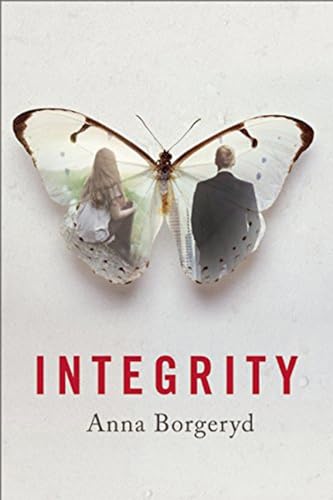
Yes, I have written since I was four. First letters, then short stories, poems, columns, music, musicals and film scripts. The musicals were co-creations, two staged in school and one at a local theatre, and one of my scripts was filmed in 2004 (the short film Familjesjäl.) Integrity is my first large-scale fiction project. It started out as a movie script called Spaller and was published with the title Tunna väggar in Sweden.
4. How has your professional life influenced this book?
Experiences from my years as a doctoral student and university teacher, as well as from years of corporate management, give much of the context in the novel.
5. Are the characters based on anyone you know?
Yes and no. There are a lot of real-life truths in the novel, yet only a few minor characters are straightforward portraits of actual people. Most characters are made up of facets of many real people, and all major characters certainly have some traits that are completely fictional.
6. You start several chapters with quotes. Are these things have inspired you personally? Some are music, such as Coldplay, but there is also JuJutsu Kai? Do you practice? Did you have these in mind before writing the book?
They are pieces of information that I use to flavor, inform or connect fiction to reality. No, I do not practice jujutsu. And no, these quotes did not precede the story. It’s more like they emanated out of it.
7. Please explain more about Elves and why Peter compares Vera to an Elf. This is from Tolkien, correct? Or is there a Nordic connotation?
Yes, it is from Tolkien. However, there are elves and dwarfs in Nordic mythology, which I believe Tolkien in turn was inspired by. In the Swedish original Tunna väggar, the word Skogsrå is used by Solveig when she describes Vera, which is an elf-like mythological being of the woods in Swedish folklore that precedes Tolkien.
8. What would you want readers to take away, to think about, upon finishing your book?
Having listened to some fifty readers, I’ve realized that people’s reading experiences are quite unique: to one, the illustration of developing love is the most rewarding element; to another it is the description of coming of age with a calling, or the story of how to disentangle oneself from the power of one’s parents – you know, “the sins of the fathers…”
As a writer, I enjoyed seeing all of the above develop in the story, but the biggest fascination for me was to discover how it was all connected, from the micro to the macro level. While I was writing Integrity, the story developed to show me that the kinds of things that threaten – on the one hand our ability to create and maintain loving relationships; and on the other, the future of civilization – are actually principally the same. And that has been a huge take away for me; in both cases, the realization is that we need to prioritize, respect and protect what is truly important. Perhaps this is why Integrity has become a something of a cult novel among environmentalists in Sweden: people with an interest in sustainability love the novel for this complex, yet simple, structural connection.
9. Do you think this book will give college students and graduate students in the US an accurate or typical picture of academic life in Sweden?
Yes, and a picture of student life in the northern university town of Umeå in particular.
10. Do you envision a sequel to this book?
That is not impossible, I do have some ideas…
11. You run a large-scale business, you have PhD in conflict management, you’re a musician and film-maker; now you’ve written a novel about love and the big issues of our time. How do you find the time?
Well, I haven’t done it all at the same time. Also, I haven’t done it all myself. I am running the business together with my sister, who is CEO of the company, and many competent colleagues. And my film-making thus far has been limited to scriptwriting.
I earned my PhD in my twenties and, after that, my research and writing has taken other forms, both as fine arts and as business intelligence. In fact, my most important business-intelligence insights came through the research I had to do in order to be able to finish Integrity. Through that, I got a chilling overview of the state of the world economy, both in terms of finance and the real, physical economy.
12. Is the novel a particularly suitable format for influencing public opinion on sustainability issues?
I once heard someone say that what is missing now isn’t more facts about how we are systematically undermining our own future. The missing piece, in order for us to act on this huge challenge, is that we realize the situation emotionally, what is really at stake here. Because action is not motivated by intellect, but rather by emotion. This might actually be the case, and when I heard this I had a sudden realization: “Oh, so that’s why I’ve had this strange drive to stay with this story for so many years until its publication!”
13. What’s the role of culture in shaping public policy?
I think that public policy, just like every other human endeavor, takes place within the framework of a meta story: a story that tells us who we are, why we are here, what the world is like and what constitutes progress. As long as the prevailing story says that what happened in the 20th century – the extreme growth of humankind and our activities – is a development that both can and should continue, it is difficult for policy makers to make the changes necessary to safeguard the future of humanity. Preserving as much as possible of the advantages of modernity, while developing new advantages and scaling down our physical overshoot of Earth’s carrying capacity is the pressing task.
And I do believe it is true: “change the story, change the world”. Because in order to change the world in constructive ways, we need first to change the story that we live within. If we do not change this story, and hence our behavior, the world will mercilessly change for the worse on us, driven by natural laws beyond our control.
14. Vera wants to save the world. So do you, it seems. How much of her is based on yourself?
Oh, I do believe there are parts of me in all of the main characters. And apart from that, I can cite author Jonathan Tropper who said, “I think one of my better gifts as a writer is empathy.”
Actually, when Integrity was first a movie script, it won first prize in an anonymous script competition, and when they opened the sealed envelope and read my name from the stage, the chair of the jury blurted out: “Oh, we thought you were a man!” Since I had written many parts from the point of view of Peter, I took this as a compliment, a sign that I can write from an understanding of what being a man is like.
15. What made you so involved with sustainability?
I have been engaged in the fate of the world my whole life; through childhood, my Gorbachev fan mail teens and my doctoral degree in conflict management. I guess I have always felt that understanding the big picture and working to help solve and – even better – prevent problems is why I am here.
Through my doctoral studies I learned that the most important thing in order for any social system to be stable, peaceful and able to allow people to thrive is that it provides for people’s basic needs. To then understand the state of the world’s economy and projecting a future of more people, with higher expectations and seemingly endless amounts of money within a finite, bruised biosphere is sobering. We need to realize that sustainability is not a small, cosmetic issue. It is about our very survival, because what is unsustainable will simply stop working. Therefore we urgently need to rebuild the ways we provide for ourselves; how we obtain food, water, shelter, transportation, how and for what purposes money is created, and so forth.
Why am I so involved with sustainability? I guess I have a soft spot for people, our children, humanity in general. It would be great to be able to help secure a livable future for it.
Popular items by Anna Borgeryd
View all offers-
-
Managing Intercollective Conflict: Prevailing Structures & Global Challenges
Borgeryd, Anna J.
Item prices starting from
View 11 offersUS$ 47.30