Ronald Payne
Ronald Payne was a genial foreign correspondent and writer of books with a rich appreciation for the comedy of human life. From the early 1950s he reported on anti-colonial troubles in Lebanon, Cyprus, Morocco, Tunisia and Algeria. He measured the mounting tensions of the Suez crisis by noting Egyptian graffiti which proclaimed "Your king is a woman" and hearing the waiters at his hotel furiously shouting "Death to the British". When the waiters spotted him, they politely added: "Not you, Mr Payne, not you".
After being brought home to be diplomatic correspondent of The Sunday Telegraph, Payne collaborated closely with Christopher Dobson on joint assignments, which took them throughout Europe and the Middle East. During the 1973 Yom Kippur war they were crossing a pontoon bridge over the Suez Canal when their car broke down under artillery fire, from which they were rescued by an Israeli officer who took them to General Ariel Sharon's headquarters. They remained for three days, attending meetings conducted in English for their benefit before filing their dispatches and being reunited with their car - which had been repaired and delivered to the enemy side of the bridge with a full tank of petrol.
One of Payne's most striking assignments was an interview with Col Gaddafi of Libya in 1976. After a 10-day delay Gaddafi received him first in Bedouin robes, next changing into in military riding dress before finally sitting down in a sharp Italian designed business suit. During the interview it emerged that the Colonel thought England ruled Ireland. The resulting article was translated into Arabic for a Tripoli newspaper as a propagandist hymn of praise to "the world's greatest leader". Later the translator offered "a small apology for taking certain liberties".
The son of a Primitive Methodist minister, Ronald Staveley Payne was born at Ripon, North Riding, on February 6 1926, and aged five enrolled as a Little White Ribboner into the Women's Temperance Association; the certificate remained on his office wall all his life. He joined the Royal Marines and was commissioned into 42 Commando, with whom he fought in Holland. He then read History at Jesus College, Oxford.
He arrived in Fleet Street as a leader writer for The Evening Standard and, with his beard, burly build and ever present pipe, quickly became a familiar figure. He joined the Telegraph as a reporter and was sent to Paris to cover the fizzling political climate and the troubles in North Africa. The paper had a palatial office on the Place Vendome staffed by three reporters as well as the young Jimmy Goldsmith - an unpaid dogsbody who once made Payne an offer - refused, naturally - of a free girl at a very expensive brothel.
In 1979 Goldsmith made Payne and Dobson a more conventional proposal, and the pair moved to Now, the short-lived news magazine which the businessman had started. After 19 lucrative months they were back on Fleet Street with plenty of material on Soviet espionage and international smuggling to sell to the Telegraph and other publications.
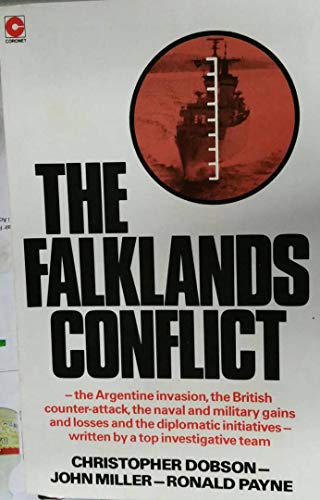
They also produced a series of popular books, which began with The Carlos Complex (1977), about the sinister and charismatic terrorist, Carlos the Jackal. The Falklands Conflict, written with John Miller, the paper's Moscow correspondent, was the first account of the 1982 war; it came out the day British troops entered Port Stanley and sold 100,000 copies. The Dictionary of Espionage and War Without End (1984) dealt with the spreading tentacles of terrorism; and with Miller again they produced The Cruellest Night (1979), about the sinking in April 1945 of the large German passenger ship Wilhelm Gustloff.
Among the books Payne wrote on his own were Private Spies (1967), about the growth and increasing professionalism of industrial espionage; Mossad (1991), an account of the Israeli secret service; and an Insider's Guide to the Press (1996). At the same time he continued to produce columns and features for The Sunday Telegraph on such subjects as the resident cat, Kitty, in the Shakespeare & Co bookshop in Paris; life in Saddam's Iraq; and the bounty hunters obstructing the hunt for the missing Terry Waite.
He also joined The European when it made its debut. At the opulent party to mark the event, Payne remarked to the publication's founder Robert Maxwell, who was keeping an eye on proceedings, that there was "no such thing as a free launch". .
Ronnie Payne and his third wife, Celia Haddon, the Telegraph's pet correspondent, retired to Oxfordshire, where he published One Hundred Ways To Live with a Cat Addict (2005). In it he stressed the need for one firm rule: "Keep cats out of the bedroom at all costs. Infuriating feline fascination with what the humans are up to must have spoiled more nights of passion than grey flannel knickers ever did." It was followed a year later by One Hundred Ways To Live with a Dog Addict.
Popular items by Ronald Payne
View all offers-
Mossad - Israel's Most Secret Service
Ronald Payne
Item prices starting from
View 17 offersUS$ 3.37
-
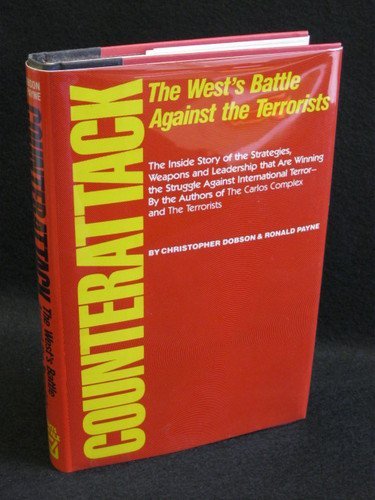
Counterattack : The West's Battle Against the Terrorists
Dobson, Christopher; Payne, Ronald
Item prices starting from
View 29 offersUS$ 6.21
-
One Hundred Ways to Live with a Cat Addict
Payne, Ronald
Item prices starting from
View 23 offersUS$ 7.19
-
The Carlos complex: A pattern of violence
Dobson, Christopher
Item prices starting from
View 9 offersUS$ 4.12
-
The Falklands conflict
DOBSON, Christopher And Others
Item prices starting from
View 17 offersUS$ 6.60
-
The Never-Ending War: Terrorism in the 80'S
Christopher Dobson -
Item prices starting from
View 15 offersUS$ 9.62