Gregg A. Brazinsky
I research and teach about U.S.-Asian relations at The George Washington University. My work seeks to understand the diverse and multi-faceted interactions among East Asian states and between Asia and the United States. This means not only formal diplomacy but also the transnational flow of culture and ideas across the Pacific and within East Asia. Proficient in both Mandarin Chinese and Korean, I have done multi-national, multi-archival research for all of my major projects. I have been especially interested in how the United States has tried to project its influence in Asia and how in turn Asians have adopted, transformed, and resisted American ideals and institutions.
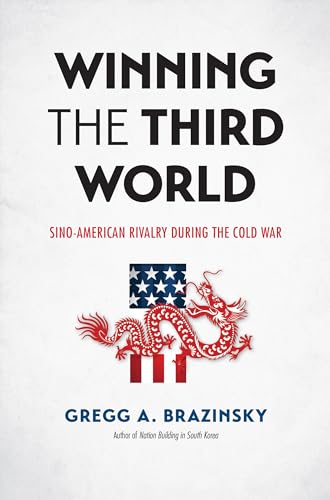
My most recent book, Winning the Third World: Sino-American Rivalry during the Cold War, explores the diplomatic, economic and cultural competition between Beijing and Washington in newly independent Afro-Asian countries between 1949 and 1979. The book opens a new window for understanding the Cold War by showing the pivotal importance of Sino-American competition to the conflict. Its central argument is that status was the driving force behind the long rivalry between Beijing and Washington.
I am also the author of Nation Building in South Korea: Koreans, Americans, and the Making of a Democracy, which was published by the University of North Carolina Press in 2007. The book demonstrated how a distinctive combination of American policies and Korean agency shaped South Korea’s rapid transformation into a prosperous democracy during the Cold War. It was the first historical work to explore post-1953 U.S.-South Korean relations through analyzing the sources and perspectives of both countries. Through using an array of Korean sources that no scholar had used before, it explored how Koreans appropriated American ideas about development, modernization, and democracy.
With Asia emerging as the most important driving force behind the world economy and international politics during the twenty-first century, my work helps the academic and policy communities to better understand how the past has shaped the present.
Popular items by Gregg A. Brazinsky
View all offers-
Nation Building in South Korea: Koreans, Americans, and the Making of a Democracy (The New Cold War History)
Brazinsky, Gregg A.
Item prices starting from
View 35 offersUS$ 11.57
-
Cold War Comrades: An Emotional History of the Sino-North Korean Alliance
Brazinsky, Gregg A.
Item prices starting from
View 22 offersUS$ 21.00
-
Winning the Third World: Sino-American Rivalry during the Cold War (New Cold War History)
Brazinsky, Gregg A.
Item prices starting from
View 27 offersUS$ 21.00