John Hagan
Thank you for visiting this page.
I should have set it up years ago but have been inexcusably remiss in that regard. This was called to my attention recently by a friend I hadn't seen in years who emailed me and said he enjoyed "Fires of Rome" but didn't know that I also wrote about the criminal justice system. It turns out that my author link on Amazon was to the wrong "John Hagan."
My bad!
John Hagan, in fact, is not my real name, though it is the name of a late relative that I admired tremendously.
As for my background and qualifications, I received an undergraduate degree in Journalism and went on to get a Medical Degree from a (US!) medical school with a subsequent residency in Family Practice. After practicing Emergency Medicine for 15 years and becoming financially secure, I decided to focus on aspects of History and Public Health that have always interested me.
Both "Year of the Passover" and "Fires of Rome" resulted from the nagging suspicion that something was being missed in the accepted history of those ancient times. As I relate in the prefaces to the works, I decided to roll up my sleeves and studiously read the original sources- Josephus, Tacitus, Suetonius and others- while deliberately ignoring later "scholarly" work on the subject as likely being overly-political and biased. The New Testament and writings of the early Church Fathers were only examined after I felt I had an understanding of the Roman and Jewish history of that era. A timeline was then constructed with the Christian "pieces" fitted in where they logically should be. I was so surprised at what I found that I thought the two books were merited- and I hope that you agree with that. In total, the entire project took ten years.
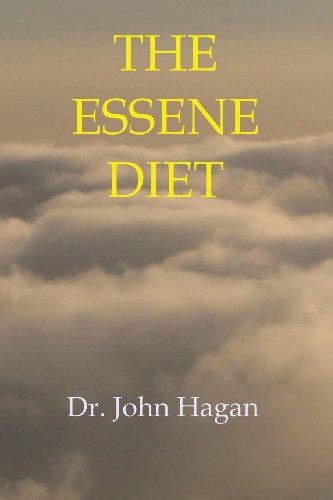
As a physician, I also had a nagging suspicion that something very basic was being missed in the understanding of why our modern society was wallowing in an epidemic of obesity. I knew what worked for me personally regarding weight gain and loss, but this ran contrary to everything I read in the popular literature and what can be seen on cable TV talk shows on the subject. Once again, I rolled up my sleeves and went back to the physiology textbooks of medical school and did some studious reading and research. This ultimately resulted in a small pilot study which was very successful and confirmed my hypothesis- which was that obesity results from simple bad habits- learned behavior. These habits can, in fact, be unlearned over time with the right approach with resulting weight loss and other health and psychological benefits. My research and study resulted in "The Essene Diet" which was later renamed to "Breakfast: The Least Important Meal of the Day" for the Kindle edition- the latter title having more "punch."
Interestingly, after the book was out, I stumbled up the century-old writings of the great Dr. Edward Hooker Dewey. He deduced through shrewd observation that consuming food in the morning was tantamount to putting a millstone around one's neck. In his own time, Dr, Dewey was considered a quack for these prescient theories. I edited a selection of his writings and published the work as "The No-Breakfast Plan."
As a post-script to the breakfast book, when I decided to begin my study almost five years ago, I realized it would not be fair to ask my volunteers to do something that I was not doing as well. So I followed the protocol along with them and haven't missed a beat since. In the original study, there was a eating window of about ten hours with water-fasting the rest of the time. I have found that over the years I have fallen into the habit of eating only one meal a day- and that is in the late afternoon. I never eat a set lunch but I do snack starting in the early afternoon. I am writing this now in a coffee shop after having a pleasant jog around a local lake. A chocolate chip cookie was my first food of the day- and it is now 2 pm. Oh, and my weight is normal, of course. But I never had a problem with obesity to begin with (don't hold that against me!).
Currently I am working on several projects- two of them should be of interest to the reader.
Both Passover and Fires are ripe to be turned into historical fiction but this is a daunting task. To do "Year of the Passover" justice, a period of 12 years must be covered with at least 15 major characters followed through their various adventures in the ancient world. In that dramatic landscape, Jesus becomes a de facto secondary character! And even then, we are only brought to the death of Tiberius in A.D. 37- the story of Paul the Apostle, the persecutions of Nero, and the Jewish Revolt are yet to be told.
Regarding weight loss, there are also additional little-understood aspects to obesity that need to be researched. The stomach and the GI system can be thought of as a mini-brain and endocrine organ as well as a "food processing" machine. My new hypothesis is that after years of overeating the stomach and GI system hypertrophy and remodel. This results in significant physiologic changes that become an impediment to weight loss for various reasons. This could be why almost all people who succeed short-term at "crash" diets fail in the long run. I suspect it might take three years of disciplined consumption for the stomach to naturally "shrink down" and totally normalize. This topic might be the subject of a future book.
I welcome any comments or questions.
Popular items by John Hagan
View all offers-
The Essene Diet: The Holistic Pathway to Health and Weight Loss
John Hagan
Item prices starting from
View 13 offersUS$ 3.49
-
Fires of Rome: Jesus and the Early Christians in the Roman Empire
Hagan, John
Item prices starting from
View 12 offersUS$ 25.37
-
Year of the Passover: Jesus and the Early Christians in the Roman Empire
Hagan, John
Item prices starting from
View 13 offersUS$ 25.39