

Sinclair Lewis
Harry Sinclair Lewis was born on February 7, 1885, in Sauk Centre, Minnesota, to Edwin J. Lewis and Emma Kermott Lewis. His grandfather, father, and older brother were all doctors in tiny towns. Lewis was a shy, lonely adolescent who enjoyed reading. He began writing in high school, and some of his works were published in local newspapers in Sauk Centre. Lewis left Minnesota after high school to attend Yale University in Connecticut, pausing his studies in 1907 to work at Helicon Hall, a New Jersey socialist colony founded by the writer Upton Sinclair (1878–1968). Lewis spent several years after graduating in 1908 working as a newspaper and editorial writer in various locations of the United States. His first four books were all failures.
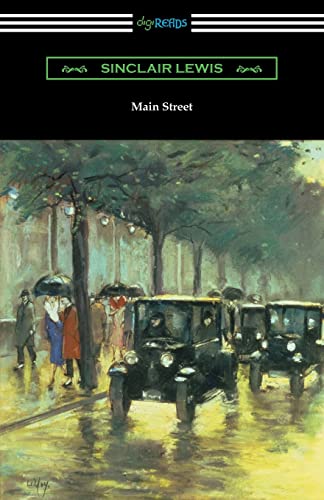
With the publication of Main Street in 1920, Lewis gained instant worldwide notoriety as the narrative of a gifted young lady married to a dull, much older village doctor who seeks to bring culture and imagination to a barren, small-town life. Next, in Babbitt (1922), possibly his most famous piece, Lewis concentrated on an American businessman. Lewis wrote in a fantastical style on purpose, ignoring story development and organization. Lewis's most outstanding achievement is the creation of George F. Babbitt, an intellectually worthless, immature man with poor morals who is yet a delightful comedy figure. "If Babbitt could write, he'd write like Sinclair Lewis," one critic said.
Belated novels and the Nobel Prize
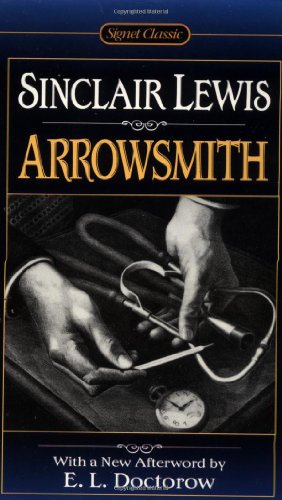
Arrowsmith (1925), Lewis's next popular work, reverted to the form of Main Street to depict a young doctor's struggle to maintain his dignity in a petty, dishonest environment. Arrowsmith was awarded the Pulitzer Prize despite its frequently naive view of science as a way of salvation. Lewis, on the other hand, promptly declined the accolade because the award's criteria stipulated that it be granted not for valuable work, but for one that depicts "the wholesome atmosphere of American Life."
Elmer Gantry (1927), a ferocious attack on religious hypocrisy (the false expression of the appearance of righteousness), appears to be more concerned with the main character's morals than with organized religion's flaws. More successful is Dodsworth (1929), a sympathetic portrayal of a wealthy, retired manufacturer seeking pleasure in Europe. Here, Lewis makes no attempt to hide his appreciation for, and even fondness for, the values espoused in Babbitt. Sinclair Lewis became the first American to win the Nobel Prize for Literature in 1930, but he was unsatisfied with the accolade.
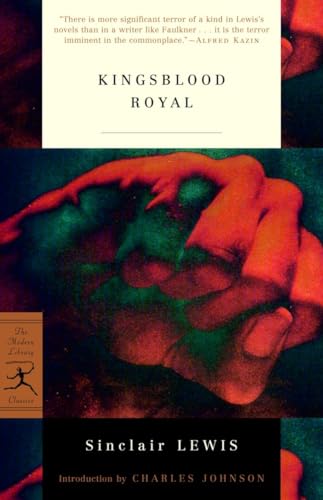
In the years that followed, Lewis wrote a lot of books, but none of them were as successful as his early ones. Cass Timberlane (1945) is about an unhappy marriage between a middle-aged judge and his loving wife; Kingsblood Royal (1947) is about racial prejudice, and The God-Seeker (1949) is about a New England missionary's attempts to convert Native American Indians of Minnesota in the 1840s.
For more classic books please visit www.thevinedresser.com/classicbooks
Popular items by Sinclair Lewis
View all offers-
-
-
-
Kingsblood Royal (Modern Library Classics)
Lewis, Sinclair
Item prices starting from
View 71 offersUS$ 4.00
-
-
-
-




Showing 8 of 52 titles