

Order Total (1 Item Items):
Shipping Destination:

Frischman (19 results)
Author:
FRISCHMAN
Refine with Advanced Search
Skip to main search results
Search filters
Product Type
- All Product Types
- Books (19)
- Magazines & Periodicals (No further results match this refinement)
- Comics (No further results match this refinement)
- Sheet Music (No further results match this refinement)
- Art, Prints & Posters (No further results match this refinement)
- Photographs (No further results match this refinement)
- Maps (No further results match this refinement)
- Manuscripts & Paper Collectibles (No further results match this refinement)
Condition Learn more
- New (5)
- As New, Fine or Near Fine (1)
- Very Good or Good (12)
- Fair or Poor (1)
- As Described (No further results match this refinement)
Binding
Collectible Attributes
- First Edition (5)
- Signed (No further results match this refinement)
- Dust Jacket (No further results match this refinement)
- Seller-Supplied Images (8)
- Not Print on Demand (16)
Language (3)
Free Shipping
Seller Location
Seller Rating
-

Conures
Language: English
Published by TFH Publications, Incorporated, 2007
ISBN 10: 0793837707 ISBN 13: 9780793837700
Condition: Good. Pages intact with minimal writing/highlighting. The binding may be loose and creased. Dust jackets/supplements are not included. Stock photo provided. Product includes identifying sticker. Better World Books: Buy Books. Do Good.
-
Conures
Language: English
Published by TFH Publications, Incorporated, 2007
ISBN 10: 0793837707 ISBN 13: 9780793837700
Condition: Good. Pages intact with minimal writing/highlighting. The binding may be loose and creased. Dust jackets/supplements are not included. Stock photo provided. Product includes identifying sticker. Better World Books: Buy Books. Do Good.
-
Conures
Language: English
Published by TFH Publications, Incorporated, 2007
ISBN 10: 0793837707 ISBN 13: 9780793837700
Condition: Good. Former library copy. Pages intact with minimal writing/highlighting. The binding may be loose and creased. Dust jackets/supplements are not included. Includes library markings. Stock photo provided. Product includes identifying sticker. Better World Books: Buy Books. Do Good.
-
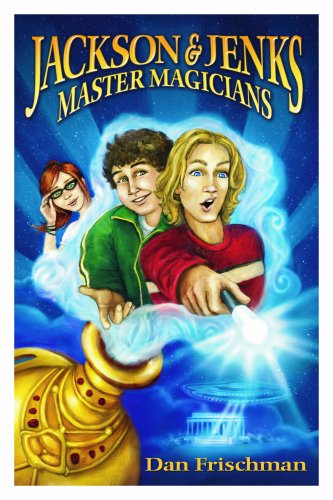
Jackson & Jenks, Master Magicians
Seller: World of Books (was SecondSale), Montgomery, IL, U.S.A.
Seller rating 5 out of 5 stars

Condition: Good. Item in good condition. Textbooks may not include supplemental items i.e. CDs, access codes etc.
-
Jackson & Jenks, Master Magicians
Language: English
Published by J.J. Ross Books (edition First Edition), 2009
ISBN 10: 0979629608 ISBN 13: 9780979629600
First Edition
Hardcover. Condition: Very Good. First Edition. It's a well-cared-for item that has seen limited use. The item may show minor signs of wear. All the text is legible, with all pages included. It may have slight markings and/or highlighting.
-
hardcover. Condition: Very Good. Connecting readers with great books since 1972! Used books may not include companion materials, and may have some shelf wear or limited writing. We ship orders daily and Customer Service is our top priority!
-
hardcover. Condition: Very Good. Connecting readers with great books since 1972! Used books may not include companion materials, and may have some shelf wear or limited writing. We ship orders daily and Customer Service is our top priority!
-
Jackson and Jenks, Master Magicians
Seller: New Story Community Books, Marshall, MI, U.S.A.
Seller rating 4 out of 5 stars

Hardcover. Condition: Very Good. Very Good, clean pages, binding is square and tight, minor shelf wear.
-
US$ 37.84
US$ 13.43 shipping
Ships from United Kingdom to U.S.A.Quantity: 1 available
Add to basketHardcover. Condition: Brand New. 112 pages. 8.25x6.75x0.75 inches. In Stock.
-

Out of Our Kitchen Closets, San Francisco Gay Jewish Cooking
Published by Congregation Sha'ar Zahav, 1987
Seller: Gold Beach Books & Art Gallery LLC, Gold Beach, OR, U.S.A.
Seller rating 5 out of 5 stars
First Edition
Soft cover. Condition: Very Good. No Jacket. Frischman, Ralph (illustrator). 1st Edition. 8vo. v, 215 pages. Full color pictorial soft covers; black & white illustrations. Light wear to cover extremities, spine lightly creased; binding opens at 134 & 135, leaves loosening. A very good minus copy.
-
De Fuente Viva : Florilegio de Prosistas Hebreos Modernos
Published by Buenos Aires : Editorial Israel, 1943
First Edition
Condition: Fine. First Edition. ~ Versión directa del hebreo de Máximo G. Yagupsky ~ Prólogo de Máximo G. Yagupsky ~ Colección «Biblioteca Israel», XXII ~ Cartoné editorial con sobrecubierta ~ 312p+1f ~ 19x15x3cm. ~ Excelente ejemplar ~ LANGUAGE: Español / Additional images available/// We accept PayPal & EU bank transfer in EUROS //.
-

Borders and Boundaries in and around Dutch Jewish History
Language: English
Published by Sociaal en Cultureel Planbureau, 2011
ISBN 10: 9052603871 ISBN 13: 9789052603872
Condition: New. pp. 210.
-
Hatkufa Hatekufah [Volume I] ha-tkufah ha-Tekufa
Language: Hebrew
Published by Avraham Yosef Stiebel, Moscow, 1918
First Edition
Hardcover. Condition: Good. No Jacket. First Edition. In Hebrew. 694 pages. 10 x 7 inches. Lacks back board. Articles include: Shimeon Dubnow's History of a Jewish Military Man From the 1915 Campaigns; poetry, short stories, translations of Homer, Anski, Goethe, Heine etc.; an article about the Palestinian and Babylonian Talmud, etc. David Frischmann (Dovid Frshman) (December 31, 1859 Zgierz, Russian Empire - August 4, 1922 Berlin, Germany) was a Hebrew and Yiddish modernist writer, poet, and translator and literary critic. He edited several important Hebrew periodicals, and wrote fiction, poetry, essays, feuilletons, literary criticisms, and translations. Born to wealthy merchants, Shaul and Freida Beila Frischmann, they moved to Lodz when he was two years old, where he received a private education combining traditional Jewish studies, French, and German. Frischmann showed signs of literary talent at a young age, and was considered a prodigy. He published his first article, in Chaim Selig Slonimski's journal Ha-Tsfira, at the age of 16 (written at age 13), followed by articles and poems in Ha-Shachar, Ha-Melitz, and Ha-Yom, and later edited Ha-Dor and Ha-Tkufa. In 1883 he published a Tohu va-Vohu ('Chaos and Emptiness'), a scathing criticism of Hebrew journalistic methods, especially directed against Ha-Melitz. He moved to Warsaw in the mid-1880s, where he wrote Otiyot porkhot ('Flying Letters'), a series of long stories. In 1886, he became an editor of Ha-Yom in St. Petersburg. Between 1895 and 1910 Frischmann studied philology, philosophy and the history of art at the University of Breslau where he befriended Micha Josef Berdyczewski. There he worked on translating works of European literature into Hebrew, among them works by Nietzsche, Pushkin, Eliot, Shakespeare, Baudelaire, and Ibsen. At the same time he worked as a Yiddish journalist for the Warsaw Jewish newspapers Hoys-Fraynd, Der Yud, and Fraynd. He visited the Land of Israel in 1911 and 1912 on behalf of the newspapers Ha-Tzefira and Haynt. Reports from his visits to Israel were collected in the book Sur la terre d'Israel ('On the Land of Israel', 1913), in which he described the landscapes, sacred places, and the revival of the Hebrew language. The impressions gathered there led him to believe in the future of Hebrew as a spoken language, although in his writings he remained faithful to classical Hebrew all his life. Frischmann was imprisoned in Berlin as an enemy alien at the outbreak of the World War I. After a few months he was allowed to return to Poland; he returned to Warsaw and was deported to Odessa by the Russian authorities when the German troops approached in 1915. In Odessa he translated the works of the Brothers Grimm, Tagore, Goethe, Heine, Byron, Wilde, and France, and contributed poetry to the Yiddish magazine Undzer Lebn. He briefly moved to Moscow following the Russian Revolution of 1917, where he became chairman of the editorial board of the Stybel Publishing House. He returned to Warsaw after the Bolsheviks closed the publishing house down in 1919. Frischmann went to Berlin in 1922 to be treated for a serious illness, and died there that year. His last work was a translation of Shakespeare's Coriolanus into Hebrew, which appeared posthumously.
-
Hatkufa sefer sheni [Volume 2][Ha-Tkufah ha-tekufa]
Language: Hebrew
Published by Avraham Yosef Stiebel, Moscow, 1918
First Edition
No Binding. Condition: Good. No Jacket. First Edition. In Hebrew. 705 pages. 27 x 18 cm. Paper wrappers as issued. Back wrapper lacking. Pages still uncut. Spine exposed and book block has broken into two halves. This issue was still published in Moscow. David Frischmann (Dovid Frshman) (December 31, 1859 Zgierz, Russian Empire - August 4, 1922 Berlin, Germany) was a Hebrew and Yiddish modernist writer, poet, and translator and literary critic. He edited several important Hebrew periodicals, and wrote fiction, poetry, essays, feuilletons, literary criticisms, and translations. Born to wealthy merchants, Shaul and Freida Beila Frischmann, they moved to Lodz when he was two years old, where he received a private education combining traditional Jewish studies, French, and German. Frischmann showed signs of literary talent at a young age, and was considered a prodigy. He published his first article, in Chaim Selig Slonimski's journal Ha-Tsfira, at the age of 16 (written at age 13), followed by articles and poems in Ha-Shachar, Ha-Melitz, and Ha-Yom, and later edited Ha-Dor and Ha-Tkufa. In 1883 he published a Tohu va-Vohu ('Chaos and Emptiness'), a scathing criticism of Hebrew journalistic methods, especially directed against Ha-Melitz. He moved to Warsaw in the mid-1880s, where he wrote Otiyot porkhot ('Flying Letters'), a series of long stories. In 1886, he became an editor of Ha-Yom in St. Petersburg. Between 1895 and 1910 Frischmann studied philology, philosophy and the history of art at the University of Breslau where he befriended Micha Josef Berdyczewski. There he worked on translating works of European literature into Hebrew, among them works by Nietzsche, Pushkin, Eliot, Shakespeare, Baudelaire, and Ibsen. At the same time he worked as a Yiddish journalist for the Warsaw Jewish newspapers Hoys-Fraynd, Der Yud, and Fraynd. He visited the Land of Israel in 1911 and 1912 on behalf of the newspapers Ha-Tzefira and Haynt. Reports from his visits to Israel were collected in the book Sur la terre d'Israel ('On the Land of Israel', 1913), in which he described the landscapes, sacred places, and the revival of the Hebrew language. The impressions gathered there led him to believe in the future of Hebrew as a spoken language, although in his writings he remained faithful to classical Hebrew all his life. Frischmann was imprisoned in Berlin as an enemy alien at the outbreak of the World War I. After a few months he was allowed to return to Poland; he returned to Warsaw and was deported to Odessa by the Russian authorities when the German troops approached in 1915. In Odessa he translated the works of the Brothers Grimm, Tagore, Goethe, Heine, Byron, Wilde, and France, and contributed poetry to the Yiddish magazine Undzer Lebn. He briefly moved to Moscow following the Russian Revolution of 1917, where he became chairman of the editorial board of the Stybel Publishing House. He returned to Warsaw after the Bolsheviks closed the publishing house down in 1919. Frischmann went to Berlin in 1922 to be treated for a serious illness, and died there that year. His last work was a translation of Shakespeare's Coriolanus into Hebrew, which appeared posthumously.
-
SIHOT HA'AKHIM GRIMM Sichot haachim Grimm : sefer Rishon, sefer sheni [Book 1 and Book 2 bound in one volume]
Language: Hebrew
Published by Moriya Bk 1: 1916, bk 2: 1919, Odessa, 1919
Hardcover. Condition: Fair. No Jacket. In Hebrew, vowelized. Book 1: (4), 166. Book 2: (2), 157 pages. 19 x 13 cm. Pages yellowed and brittle. A few illustrations.
-
HaNezira Beatrice : misterion beShalosh Ma'arakhot. [Sister Beatrice. IN HEBREW. A play in three acts]
Language: Hebrew
Published by Avrah, Moscow, Russia, 1918
No Binding. Condition: Good. No Jacket. In Hebrew. 54 pages. 170 x 127 mm. Lacks the binding. The work is based on a medieval legend. The protagonist, Sister Beatrice is a humble nun whose primary responsibility is to tend the main door to the convent, inside which is a statue of the Virgin Mary, which the nuns hold miraculous. A prominent military man arrives, falls in love with the nun and convinces her to come away with him. When she leaves the statue of the Virgin comes to life, puts on Beatrice's humble clothes and takes her place. When the nuns discover the statue missing they blame the nun at th e door, who is not Beatrice but rather the Virgin Mary, for the theft of the statute. As time goes on they mainly ignore the supposed nun, who remains the door keeper for many years.After 25 years, the real Beatrice, now broken, homely, and near death, returns and collapses just at the door of the convent. At this time the Virgin ceases to take her place, and replaces herself on the pedestal as the statue. When the nuns find Beatrice they assume she has caused this miracle of the return of the holy statue and believe she is a saint. Beatrice tries to tell them of her horrible life over these years, but they don't believe her. Maurice Maeterlinck wrote Sister Beatrice sometime before 1900 as an opera libretto. Bernard Miall mentions that Maeterlinck wrote it with the idea that M. Gilkas would write the music, but it was published as a play without music in 1902 and first produced at the New Theatre in New York in March of 1910. The Russian composer Alexandre Gretschaninoff immediately set it as an opera, and it was produced at the Paris Opera Comique in 1912, but the opera is no longer available. Maurice Polydore Marie Bernard Maeterlinck] (29 August 1862 - 6 May 1949), also known as Count (or Comte) Maeterlinck from 1932, was a Belgian playwright, poet, and essayist who was Flemish but wrote in French. He was awarded the Nobel Prize in Literature in 1911 "in appreciation of his many-sided literary activities, and especially of his dramatic works, which are distinguished by a wealth of imagination and by a poetic fancy, which reveals, sometimes in the guise of a fairy tale, a deep inspiration, while in a mysterious way they appeal to the readers' own feelings and stimulate their imaginations". The main themes in his work are death and the meaning of life. He was a leading member of La Jeune Belgique group[7] and his plays form an important part of the Symbolist movement. Sadly, in later life, Maeterlinck plagiarized some works.
-
![Seller image for Nicolai Franchimont a Franckenfeld . Lithotomia medica, seu tractatus lithontripticus, de calculo renum et vesicae 1683 [LeatherBound] for sale by True World of Books](https://pictures.abebooks.com/inventory/md/md31618599105.jpg)
LeatherBound. Condition: New. BOOKS ARE EXEMPT FROM IMPORT DUTIES AND TARIFFS; NO EXTRA CHARGES APPLY. LeatherBound edition. Condition: New. Reprinted from 1683 edition. Leather Binding on Spine and Corners with Golden leaf printing on spine. Bound in genuine leather with Satin ribbon page markers and Spine with raised gilt bands. A perfect gift for your loved ones. Pages: 108 NO changes have been made to the original text. This is NOT a retyped or an ocr'd reprint. Illustrations, Index, if any, are included in black and white. Each page is checked manually before printing. As this print on demand book is reprinted from a very old book, there could be some missing or flawed pages, but we always try to make the book as complete as possible. Fold-outs, if any, are not part of the book. If the original book was published in multiple volumes then this reprint is of only one volume, not the whole set. Sewing binding for longer life, where the book block is actually sewn (smythe sewn/section sewn) with thread before binding which results in a more durable type of binding. Pages: 108.
-
Taschenbuch. Condition: Neu. Borders and Boundaries in and around Dutch Jewish History | Judith Frischman (u. a.) | Taschenbuch | Einband - flex.(Paperback) | Englisch | 2011 | Routledge | EAN 9789052603872 | Verantwortliche Person für die EU: Libri GmbH, Europaallee 1, 36244 Bad Hersfeld, gpsr[at]libri[dot]de | Anbieter: preigu Print on Demand.
-

Taschenbuch. Condition: Neu. nach der Bestellung gedruckt Neuware - Printed after ordering - Judith Frishman is Chair of Jewish studies at the Institute of Religious Studies of Leiden University.David J. Wertheim is director of the Menasseh ben Israel Institute for Jewish social and cultural studies.Ido de Haan is professor of modern political history at Utrecht University.Joel Cahen is director of the Jewish Historical Museum in Amsterdam.


![Seller image for Hatkufa Hatekufah [Volume I] ha-tkufah ha-Tekufa for sale by Meir Turner](https://pictures.abebooks.com/inventory/md/md22677913403.jpg)
![Seller image for Hatkufa sefer sheni [Volume 2][Ha-Tkufah ha-tekufa] for sale by Meir Turner](https://pictures.abebooks.com/inventory/md/md21026711867.jpg)
![Seller image for SIHOT HA'AKHIM GRIMM Sichot haachim Grimm : sefer Rishon, sefer sheni [Book 1 and Book 2 bound in one volume] for sale by Meir Turner](https://pictures.abebooks.com/inventory/md/md32448640497.jpg)
![Seller image for HaNezira Beatrice : misterion beShalosh Ma'arakhot. [Sister Beatrice. IN HEBREW. A play in three acts] for sale by Meir Turner](https://pictures.abebooks.com/inventory/md/md31624530891.jpg)
