

Order Total (1 Item Items):
Shipping Destination:

Third Great Awakening (1 results)
Skip to main search results
Search filters
Product Type
- All Product Types
- Books (1)
- Magazines & Periodicals (No further results match this refinement)
- Comics (No further results match this refinement)
- Sheet Music (No further results match this refinement)
- Art, Prints & Posters (No further results match this refinement)
- Photographs (No further results match this refinement)
- Maps (No further results match this refinement)
- Manuscripts & Paper Collectibles (No further results match this refinement)
Condition Learn more
- New (No further results match this refinement)
- As New, Fine or Near Fine (No further results match this refinement)
- Very Good or Good (No further results match this refinement)
- Fair or Poor (No further results match this refinement)
- As Described (1)
Binding
- All Bindings
- Hardcover (No further results match this refinement)
- Softcover (No further results match this refinement)
Collectible Attributes
- First Edition (No further results match this refinement)
- Signed (No further results match this refinement)
- Dust Jacket (No further results match this refinement)
- Seller-Supplied Images (1)
- Not Print on Demand (1)
Language (1)
Price
- Any Price
- Under US$ 25 (No further results match this refinement)
- US$ 25 to US$ 50 (No further results match this refinement)
- Over US$ 50
Free Shipping
- Free Shipping to U.S.A. (No further results match this refinement)
Seller Location
Seller Rating
-
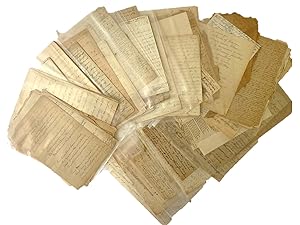
Irving R. Lovejoy Sermons, Hymns and Notes Documenting Nineteenth Century Methodist Social Reform, 1880-1888
Publication Date: 1880
Seller: Max Rambod Inc, Woodland Hills, CA, U.S.A.
Association Member: ABAA ILAB PADA
Seller rating 5 out of 5 stars

Lovejoy, Irving R. Archive of manuscript sermons, notes, and hymns by Methodist Minister Irving R. Lovejoy, written during the late nineteenth century document the preaching and theological development of a Methodist minister active during the Social Gospel movement and the broader revival culture associated with the Third Great Awakening. The writings illustrate Protestant efforts to address social reform, moral education, and community uplift through religious teaching during a period when American churches increasingly linked spiritual life with social responsibility. Over 300 pages documenting the preaching, theological development, and reform-oriented religious practice of Methodist minister Irving R. Lovejoy during the height of the Social Gospel movement and its intersection with the Third Great Awakening. The archive comprises approximately 334 handwritten pages, totaling an estimated 35,000-40,000 words, including twenty handwritten and hand-bound sermons (Aprox 219 pages of sermons), along with an additional 115 pages (Aprox) of loose sermon notes, religious reflections, letters, personal documents, and hymn drafts. Lovejoy's writings trace his evolving views on spirituality, the human condition, and the role of Methodism as a vehicle for social reform in late nineteenth-century America, particularly in relation to abolitionist legacy, temperance, moral education, and communal uplift. The archive also includes a later family genealogical study written by Lovejoy's granddaughter, situating his ministry within a multigenerational moral and abolitionist lineage. Lovejoy preached during the Social Gospel era, when Protestant religious activism emphasized social justice, reform, and collective moral responsibility over individual salvation alone. His sermons and notes are marked by narrative illustration and contemporary anecdote, a style characteristic of Methodist pedagogy and revival preaching. "I found a young life broken by sin's sedative art and touched with a Christlike pity I took him to my heart," he writes, "He lived with a nobeler purpose, and struggled not in vain." Throughout the archive, Lovejoy repeatedly emphasizes the moral agency of women within Methodism and their central role in sustaining both church life and broader reform efforts. In one sermon draft, he writes, "Now often too, next to a mother's prayers have been the sympathy and help rendered by the wives of Methodism! God bless them!" He continues by praising the sacrifices of Methodist women who share "the toils and privations of an itinerant life," describing them as figures whose devotion gives rise to "hearts too full of the love of Christ and lives crowned with Christian graces." On the verso of the same page, Lovejoy reinforces this theme through testimonial quotation and anecdote, citing maternal influence as the foundation of moral and spiritual formation: "I've poured o'er many a yellow page of ancient wisdom. but sage or bard have never taught thy son lessons so dear. as those his mother's faith shed on his youth," and elsewhere, "She led me first to God; Her words and prayers were my young spirit's dew." The archive further preserves Lovejoy's literary and devotional sensibility through handwritten and edited hymn lyrics, reflecting Methodism's long tradition of pastor-composed sacred song and its emphasis on accessible worship. Among these is an edited hymn beginning, "Will you go sinner go to the highlands of heaven where the storms never blow," as well as an original eight-stanza hymn titled The Soul Addressed, which reads in part, "Words compose the language meekness the actions clothe each helps the other gauge the soul's majestic growth." Lovejoy's loose notes-written on notebook paper, business cards, advertisements, and scrap cardstock-capture theological reflection in real time, marked by shorthand and urgency. In one meditation on Christian rest, he writes, "It is a pledge of God's veracity and goodness. inward rest-peace of conscience-joy of the holy ghost." His theology reflects Third Great Awakening postmillennialism, emphasizing loving conversion and communal reform rather than punitive judgment: "We would see Jesus-the desire of all nations," he notes; elsewhere, simply, "Let us go on until perfection." Draft correspondence further reveals his vocational self-conception, writing, "A man receives a hint of what his life-work ought to be. in the desire he entertains," a passage that reads as both personal reflection and theological justification for lifelong ministry. In 1888, Lovejoy relocated from Massachusetts to California, where he preached for more than twenty years, edited a local newspaper, and conducted revival meetings across the state. The archive includes a large newspaper leaf from the Daily Humboldt Times and a revival broadside featuring Lovejoy's photographic portrait, advertising him as an evangelist who was "earnest," "well equipped," and marked by "no finicism nor fanaticism. sane and safe socially." These materials situate Lovejoy within the professionalization of late-nineteenth-century revival culture and the integration of evangelical religion into civic and regional life in the American West. The granddaughter's genealogical memoir-A Biographical Sketch and Memories of Reverend Irving Roscoe Lovejoy (1974)-contextualizes his ministry within a broader abolitionist heritage, explicitly linking him to his cousin Elijah P. Lovejoy, the martyred abolitionist publisher murdered for distributing antislavery materials. Together, the manuscripts, printed ephemera, hymns, and family history form a coherent archive documenting Methodist reform theology, gendered religious labor, Social Gospel ethics, and the lived experience of Protestant moral activism during a transformative period in American religious history. Manuscripts exhibit expected age-toning, edge wear, and handling. Handwriting remains legible throughout; bindings are intact; loose materials are stable. Prin.
