

Order Total (1 Item Items):
Shipping Destination:

Arigo (65 results)
Author:
arigo
Refine with Advanced Search
Skip to main search results
Search filters
Product Type
- All Product Types
- Books (65)
- Magazines & Periodicals (No further results match this refinement)
- Comics (No further results match this refinement)
- Sheet Music (No further results match this refinement)
- Art, Prints & Posters (No further results match this refinement)
- Photographs (No further results match this refinement)
- Maps (No further results match this refinement)
- Manuscripts & Paper Collectibles (No further results match this refinement)
Condition Learn more
Binding
Collectible Attributes
- First Edition (16)
- Signed (No further results match this refinement)
- Dust Jacket (1)
- Seller-Supplied Images (17)
- Not Print on Demand (62)
Language (4)
Free Shipping
Seller Location
Seller Rating
-
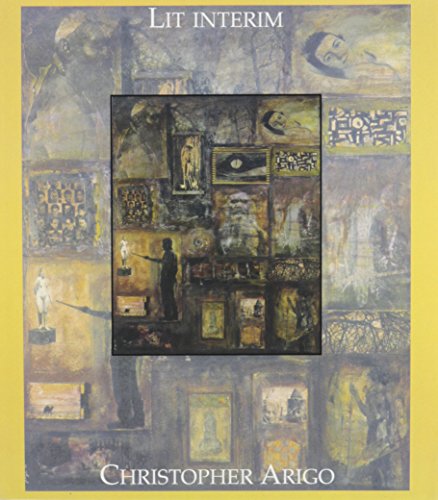
Soft cover. Condition: Very Good. Sticker to top of half title page acknowledging poetry prize entry; moderate corner wear.
-

Paperback. Condition: Very Good. No Jacket. May have limited writing in cover pages. Pages are unmarked. ~ ThriftBooks: Read More, Spend Less.
-
In the archives
Seller: Books From California, Simi Valley, CA, U.S.A.
Seller rating 4 out of 5 stars

paperback. Condition: Very Good.
-
Trade Paperback. Condition: VG. used trade paperback edition. lightly shelfworn, corners perhaps slightly bumped. pages and binding are clean, straight and tight. there are no marks to the text or other serious flaws.
-
In the Archives
Language: English
Published by Omnidawn Publishing, Richmond, CA, 2007
ISBN 10: 1890650315 ISBN 13: 9781890650315
First Edition
softcover. Condition: Fine copy. 1st. 8vo, 120 pp.
-
Condition: As New. Unread book in perfect condition.
-
IN THE ARCHIVES
Language: English
Published by Omnidawn, Richmond CA, 2007
ISBN 10: 1890650315 ISBN 13: 9781890650315
Seller: marvin granlund, Emeryville, CA, U.S.A.
Association Member: IOBA
Seller rating 5 out of 5 stars

First Edition
Softcover. Condition: Fine. First Edition; First Printing. Fine unread first edition. Fine blue paperback, first edition, first printing (complete number line) . 120 pages, unmarked. ; A Poe BPL; 8.90 X 5.90 X 0.50 inches; 120 pages.
-

Calling One of My Homes 20 Poems
Published by Taimen Talo, 1995
Seller: Jay W. Nelson, Bookseller, IOBA, Austin, MN, U.S.A.
Association Member: IOBA
Seller rating 5 out of 5 stars
First Edition
Soft cover. Condition: Near Fine. No Jacket. 1st Edition.
-
In the archives
Seller: PBShop.store UK, Fairford, GLOS, United Kingdom
Seller rating 5 out of 5 stars
PAP. Condition: New. New Book. Shipped from UK. Established seller since 2000.
-
Condition: New.
-
Paperback. Condition: Fine. Stated First Edition. 26 pages. part of the Northland College 3238 South Face series. ; 5 1/4 x 8 1/4 ".
-
US$ 15.58
US$ 13.45 shipping
Ships from United Kingdom to U.S.A.Quantity: 1 available
Add to basketPaperback. Condition: Brand New. 120 pages. 8.75x6.00x0.75 inches. In Stock.
-
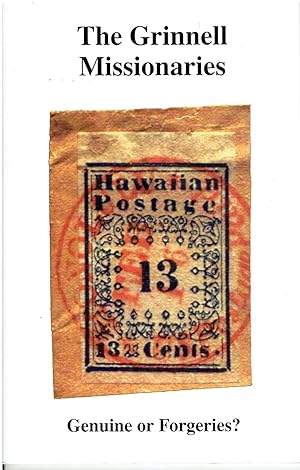
Soft cover. Condition: Very Good. A booklet that contains several articles that provide details, controversies and arguments for both sides of the issue as to whether these very old stamps issued for Hawaiian postage in the 19th century are real and authentic or not. Illustrated throughout with images of the various iterations of this historic stamp. Measures 5.5" x 8.5" with 65 pages.
-
In the Archives
Seller: Kennys Bookshop and Art Galleries Ltd., Galway, GY, Ireland
Seller rating 5 out of 5 stars
First Edition
Condition: New. Num Pages: 120 pages. BIC Classification: DCF. Category: (G) General (US: Trade). Dimension: 229 x 152 x 9. Weight in Grams: 208. . 2007. First Edition. Paperback. . . . .
-
Condition: New. Num Pages: 120 pages. BIC Classification: DCF. Category: (G) General (US: Trade). Dimension: 229 x 152 x 9. Weight in Grams: 208. . 2007. First Edition. Paperback. . . . . Books ship from the US and Ireland.
-
In the archives
Seller: THE SAINT BOOKSTORE, Southport, United Kingdom
Seller rating 5 out of 5 stars
US$ 20.17
US$ 17.66 shipping
Ships from United Kingdom to U.S.A.Quantity: 1 available
Add to basketPaperback / softback. Condition: New. New copy - Usually dispatched within 4 working days.
-
In the Archives
Seller: GreatBookPricesUK, Woodford Green, United Kingdom
Seller rating 5 out of 5 stars
US$ 22.47
US$ 20.17 shipping
Ships from United Kingdom to U.S.A.Quantity: 1 available
Add to basketCondition: New.
-
In the Archives
Seller: GreatBookPricesUK, Woodford Green, United Kingdom
Seller rating 5 out of 5 stars
US$ 24.60
US$ 20.17 shipping
Ships from United Kingdom to U.S.A.Quantity: 1 available
Add to basketCondition: As New. Unread book in perfect condition.
-
Softcover. Condition: Fine. Leichte Kratzer / Abnutzungen / Druckstellen; Leichte Rillen / Abschürfungen / Risse / Knicke.
-
Softcover. Condition: As New. Leichte Kratzer / Abnutzungen / Druckstellen.
-

La scelta. L'invenzione della Repubblica Italiana
Seller: libreriauniversitaria.it, Occhiobello, RO, Italy
Seller rating 4 out of 5 stars
Condition: NEW.
-

La scelta. L'invenzione della Repubblica Italiana
Language: Italian
Published by Armando Curcio Editore, 2008
ISBN 10: 8895049330 ISBN 13: 9788895049335
Condition: Ottime. italiano Condizioni dell'esterno: Ottime Condizioni dell'interno: Ottime.
-

Condition: Buone. italiano Condizioni dell'esterno: Discrete con difetti, segni d'uso macchie Condizioni dell'interno: Discrete con Difetti, bruniture.
-

La storia più bella 2 Gesù dice: nessuno va al padre se non attraverso me.
Published by Edizioni Fabio Arigò, MILANO, 2004
ISBN 13: 2568812109215
Condition: DISCRETO USATO. ITALIANO Brossura fresata, copertina illustrata segnata da pieghe permanenti ai piatti alonati da polvere, sbucciature al dorso e alle estremità, introduz. G. Arigò, carte leggermente ondulate ossidate ai margini, minimo pulviscolo ai tagli. N. pag. 220.
-

Condition: BUONO USATO. Storie vere ITALIANO Introduzione a cura dello stesso A., pagine ingiallite ai bordi causa tempo, piega agli angoli di alcune carte, brossura editoriale in cartoncino flessibile, completamente illustrata, con pieghe d'uso al dorso ed usura alle punte. Numero pagine 220.
-
Paperback. Condition: New. In shrink wrap. Looks like an interesting title!
-
![Stock image for Class Struggles and the Revolutionary Party -------- [ ENGLISH TEXT ] for sale by Okmhistoire](https://pictures.abebooks.com/isbn/9782912639066-us-300.jpg)
Couverture souple. Condition: Comme neuf. 2ème Édition. Paris 2000. 1 Volume/1. -- As New -- Softbound . 21 x 15 cm. -------- 160 pages . ******************* "" Lenin affirmed that without a revolutionary theory, there can be no revolutionary movement. His statement seems simple, but, in reality, it is anything but that since the revolutionary theory is more complex than it may seem to a formal reading of Lenin s political texts. Leninist theory is, precisely, the outcome of a profound scientific analysis of social reality. And, at the same time, it is a class instrument for acting in a historically determined society s economic structures and political superstructures. If we study the Leninist concept of the party, we immediately find ourselves faced with revolutionary theory as Marxist science. That is, we are faced with the issue of the scientific foundations of political action. In other words, it is not possible to understand the Leninist concept of the party unless one understands the entire scientific analysis of the economic structure that constitutes in Marx and Lenin its base. Removed from its scientific platform, the Leninist concept of the party would appear to be a monument perhaps even a gigantic one to political will. It would be a monument to the theory of power, to the theory of organization, but it would be a monument without a pedestal. This explains why formal acceptance of some Leninist theses still d s not represent the assimilation of the revolutionary theory. That is, it d s not represent assimilation of the general scientific concept that is Leninism s foundation. Consequently, the Leninist concept of the party is the result of a Marxist economic analysis and without applying this latter, we cannot reach even on an organizational level the former. Even Lenin s life story as a Marxist illustrates this dialectical path. Hence, the problem to face the entire issue of how to assimilate the revolutionary theory. Class Struggles and the Revolutionary Party is the result of an investigation into these problems. "" ******************** ref od.
-
![Stock image for The Political Shell ------------ [ ENGLISH TEXT ] for sale by Okmhistoire](https://pictures.abebooks.com/isbn/9782912639165-us-300.jpg)
Couverture souple. Condition: Comme neuf. 2ème Édition. Paris 2006. 1 Volume/1. -- -- As New -- Softbound . 21 x 15 cm. -------- 304 pages . ******************* "" This work is a methodological development running in parallel with the analysis of the Italian standing "imbalance", as it was investigated in "The Uneven Political Development". As is written in the Introduction, this book collects Cervetto's reflections on the materialist conception of politics in 1977-81 and 1984-89. It is the theoretical side of a strategic issue. It was necessary to underline the dialectical character in the structure/superstructure relationship through a sharp criticism of both mechanism which reduces political analysis to econometric evaluations and the idea of the primacy of politics which takes no account of the actual economic determination. The connection with the sound foundations of Marx and Engels's thought is shown in illuminating and less-known passages quoted from their works, as well as from Lenin's. This is the basis whereupon a comparison with Eduard Bernstein's liberal arguments, Heinrich Cunow's revisionist ideas, Lev Trotsky's tacticalism between the two world wars, Hans Kelsen's normative approach, and Pëtr Struve's objectivism can be drawn effectively. The investigation into the actual characters of democracy in the imperialist epoch marks this book throughout and accounts for its extreme up-to-dateness in a critical stage of the best possible "political shell" for capitalism. "" ***************** ref od.
-

Condition: Buone. italiano Condizioni dell'esterno: Discrete con difetti, strappi macchie Condizioni dell'interno: Discrete con Difetti, macchie.
-

brossura. Condition: Poor. Copertina flessibile ombrata lievemente rovinata dal tempo con pagine ingiallite. 219 Mediocre (Poor) . Book.


