
Boyken Immo (42 results)

- Hardcover
Seller: Montana Book Company, Fond du Lac, WI, U.S.A.Montana Book Company
Contact seller5-star sellerCondition: Used - Fine
US$ 11.00
US$ 3.98 shippingShips within U.S.A.Quantity: 1 available
Hardcover. Condition: Fine. Dust Jacket Condition: Fine Dust Jacket. 60 pp. Tightly bound. Corners not bumped. Text is free of markings. No ownership markings. Book still in original publisher shrink wrap.
- Hardcover
Seller: Powell's Bookstores Chicago, ABAA, Chicago, IL, U.S.A.Powell's Bookstores Chicago, ABAA
Contact seller4-star sellerCondition: Used
US$ 13.00
US$ 6.65 shippingShips within U.S.A.Quantity: 1 available
Hardcover. Condition: Used-Very Good. Bilingual. 4to. Cloth, d.j. Some shelf-wear. Text in German. Else clean copy.
- Hardcover
Seller: INDOO, Avenel, NJ, U.S.A.INDOO
Contact seller5-star sellerCondition: Used - As new
US$ 31.25
Free ShippingShips within U.S.A.Quantity: Over 20 available
Condition: As New. Unread copy in mint condition.
- Hardcover
Seller: INDOO, Avenel, NJ, U.S.A.INDOO
Contact seller5-star sellerCondition: New
US$ 31.31
Free ShippingShips within U.S.A.Quantity: Over 20 available
Condition: New.
- Hardcover
Seller: GreatBookPrices, Columbia, MD, U.S.A.GreatBookPrices
Contact seller5-star sellerCondition: Used - As new
US$ 29.86
US$ 2.64 shippingShips within U.S.A.Quantity: 2 available
Condition: As New. Unread book in perfect condition.
- Hardcover
Seller: INDOO, Avenel, NJ, U.S.A.INDOO
Contact seller5-star sellerCondition: Used - As new
US$ 32.51
Free ShippingShips within U.S.A.Quantity: Over 20 available
Condition: As New. Unread copy in mint condition.
- Hardcover
Seller: INDOO, Avenel, NJ, U.S.A.INDOO
Contact seller5-star sellerCondition: New
US$ 32.57
Free ShippingShips within U.S.A.Quantity: Over 20 available
Condition: New.
- Hardcover
Seller: GreatBookPrices, Columbia, MD, U.S.A.GreatBookPrices
Contact seller5-star sellerCondition: New
US$ 29.96
US$ 2.64 shippingShips within U.S.A.Quantity: 2 available
Condition: New.
- Hardcover
Seller: PBShop.store US, Wood Dale, IL, U.S.A.PBShop.store US
Contact seller5-star sellerCondition: New
US$ 36.70
Free ShippingShips within U.S.A.Quantity: 2 available
HRD. Condition: New. New Book. Shipped from UK. Established seller since 2000.

- Hardcover
Seller: INDOO, Avenel, NJ, U.S.A.INDOO
Contact seller5-star sellerCondition: Used - As new
US$ 36.73
Free ShippingShips within U.S.A.Quantity: Over 20 available
Condition: As New. Unread copy in mint condition.
- Hardcover
Seller: INDOO, Avenel, NJ, U.S.A.INDOO
Contact seller5-star sellerCondition: New
US$ 36.83
Free ShippingShips within U.S.A.Quantity: Over 20 available
Condition: New. Brand New.

- Hardcover
Seller: Rarewaves.com USA, London, LONDO, United KingdomRarewaves.com USA
Contact seller5-star sellerCondition: New
US$ 37.34
Free ShippingShips from United Kingdom to U.S.A.Quantity: 1 available
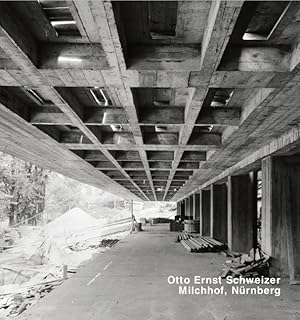
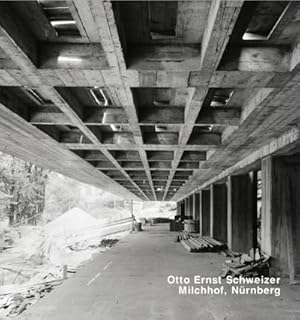
Hardback. Condition: New. Text in English and German. Otto Ernst Schweizer (1890-1965), architect, philosopher and teacher, had a crucial effect on the path of Modern architecture. When the central dairy in Nuremberg was finished in 1931 it was the largest complex of its kind in Europe and was seen by critics as a work that dese…rved the rank of prototype.

- Hardcover
Seller: Rarewaves.com USA, London, LONDO, United KingdomRarewaves.com USA
Contact seller5-star sellerCondition: New
US$ 40.11
Free ShippingShips from United Kingdom to U.S.A.Quantity: 1 available
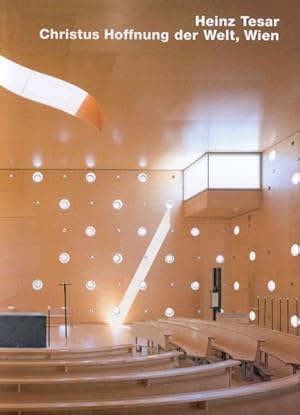
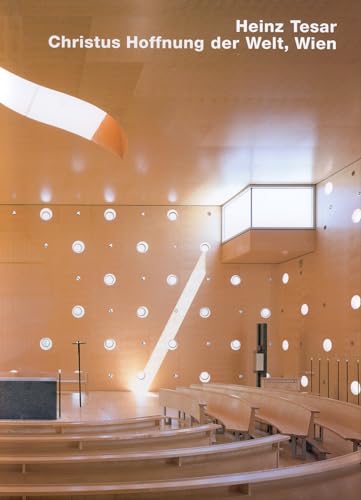
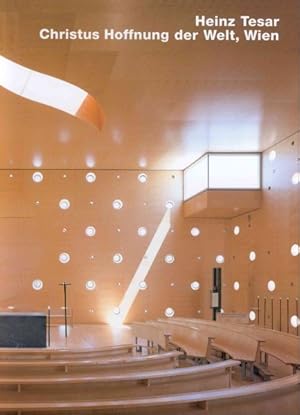
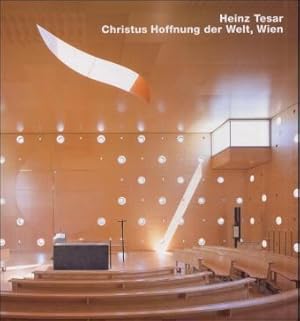
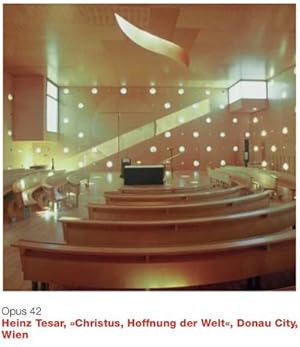
Hardback. Condition: New. Text in English and German. The church rises to the challenge of providing a spiritual centre for Donau City, the new residential and commercial centre on the opposite bank of the Danube -- not as an act of coronation for the city in the sense of Taut's urban crown, as a temple or cathedral, but as mini…ature, as a demonstration of the power of the quiet as opposed to the loud, as an 'oasis in the diaspora', to use Karl Rahner's formulation about the parishes of the future. The building gives an impression of starkness: a hard cube, cut off at the corners, clad with sheets of black chromium steel. But it is only stark at first glance. A second glance shows that the hardness is a friendly hardness: because of the reflections that the material admits; because of the grid of the large-format sheets, to which the brightly gleaming drill-holes that cover the walls like fine gossamer respond; because of circular apertures that allow light to shine outwards after dark; because of large, rectangular windows in the receding corners that create a contrast with the closed quality of the building. Inside the starkness gives way altogether: a light space, which one comes into through an art-fully designed entrance. Originally a sparse covering for the space, which thrives mainly because of the light material -- birch wood -, because of the arrangement of the pews, which is as lively as it is peaceful -- segments of circles of different sizes, surrounding the dark syenite altar block in the form of an open circle -- and especially because of the wide range of circular light sources that render the introverted interior transparent, the large windows that create islands of light, the free-form aperture in the ceiling, which sends light gliding down on to the altar. Heinz Tesar's church continues a tradition of forward-looking modern church building, from Rudolf Schwarz's Fronleichnamskirche in Aachen via Egon Eiermann's Kaiser-Wilhelm-Gedachtniskirche in Berlin, Franz Fueg's Piuskirche in Meggen on Lake Lucerne to the new Herz-Jesu-Kirche in Munich by Allmann, Sattler and Wappner; and alongside all this there is also the tradition of a genuinely Viennese development of this theme, from Otto Wagner's Kirche am Steinhof to Ottokar Uhl's parish church Katharina von Siena.
- Hardcover
Seller: PBShop.store UK, Fairford, GLOS, United KingdomPBShop.store UK
Contact seller5-star sellerCondition: New
US$ 37.75
US$ 6.73 shippingShips from United Kingdom to U.S.A.Quantity: 2 available
HRD. Condition: New. New Book. Shipped from UK. Established seller since 2000.
- Hardcover
Seller: GreatBookPricesUK, Woodford Green, United KingdomGreatBookPricesUK
Contact seller5-star sellerCondition: New
US$ 33.15
US$ 20.12 shippingShips from United Kingdom to U.S.A.Quantity: 2 available
Condition: New.
- Hardcover
Seller: Kennys Bookstore, Olney, MD, U.S.A.Kennys Bookstore
Contact seller5-star sellerCondition: New
US$ 46.34
US$ 10.50 shippingShips within U.S.A.Quantity: 2 available
Condition: New. 2002. Bilingual. Hardcover. The church rises to the challenge of providing a spiritual centre for Donau City, the residential and commercial centre on the opposite bank of the Danube - as miniature, as a demonstration of the power of the quiet as opposed to the loud to use Karl Rahner's formulation about the pari…shes. This book features text in English and German. Editor(s): Boyken, Immo. Num Pages: 56 pages, 78 illustrations. BIC Classification: 1DD; 1DFG; AMA; AMB; AMN. Category: (P) Professional & Vocational; (UP) Postgraduate, Research & Scholarly; (UU) Undergraduate. Dimension: 308 x 291 x 12. Weight in Grams: 778. . . . . . Books ship from the US and Ireland.
- Hardcover
Seller: Kennys Bookshop and Art Galleries Ltd., Galway, GY, IrelandKennys Bookshop and Art Galleries Ltd.
Contact seller5-star sellerCondition: New
US$ 47.75
US$ 12.17 shippingShips from Ireland to U.S.A.Quantity: 2 available
Condition: New. 2002. Bilingual. Hardcover. The church rises to the challenge of providing a spiritual centre for Donau City, the residential and commercial centre on the opposite bank of the Danube - as miniature, as a demonstration of the power of the quiet as opposed to the loud to use Karl Rahner's formulation about the pari…shes. This book features text in English and German. Editor(s): Boyken, Immo. Num Pages: 56 pages, 78 illustrations. BIC Classification: 1DD; 1DFG; AMA; AMB; AMN. Category: (P) Professional & Vocational; (UP) Postgraduate, Research & Scholarly; (UU) Undergraduate. Dimension: 308 x 291 x 12. Weight in Grams: 778. . . . . .

Language: German
Published by Axel Menges Stuttgart 2002
- Hardcover
Seller: Seitenreise, Wien, WIEN, AustriaSeitenreise
Contact seller4-star sellerCondition: Used - Fine
US$ 29.85
US$ 18.55 shippingShips from Austria to U.S.A.Quantity: 1 available
Hardcover. Condition: Sehr gut. 4 Original-Leinen Guter Umschlag Buch 55 SS, OLn. in OUmschlag (geringe Gebrauchsspuren), Vors. mit hs. Widmung von Tesar, innen und aussen sehr gutes Exemplar mit zahlreichen teils farbigen Abbildungen Sehr gut. christian RICHTERS (Photo) (illustrator).
- Hardcover
Seller: moluna, Greven, , Germanymoluna
Contact seller5-star sellerCondition: New
US$ 42.98
US$ 52.16 shippingShips from Germany to U.S.A.Quantity: Over 20 available
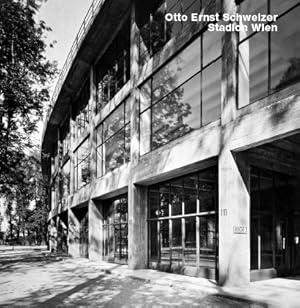
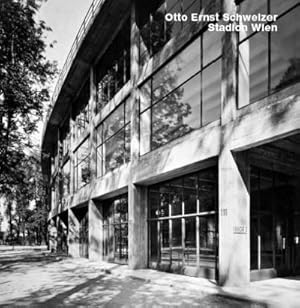
Gebunden. Condition: New. When the stadium for a Winter Workers Olympiad - one of the most beautiful complexes in Europe, as the daily press put it - was opened in 1931 on the occasion of the 10th anniversary of the Re-public of Austria on the Prater site in Vienna, Otto Ernst Sch.
- Softcover
Seller: moluna, Greven, , Germanymoluna
Contact seller5-star sellerCondition: New
US$ 42.98
US$ 52.16 shippingShips from Germany to U.S.A.Quantity: Over 20 available
Buch. Condition: New. Als im Jahr 1931 der Milchhof in Nuernberg seiner Bestimmunguebergeben wurde, seinerzeit die groesste Anlageihrer Art in Europa, war nach uebereinstimmendemTenor der Architekturkritik dem Architekten Otto ErnstSchweizer ein Werk gelungen, dem wegen der raffinier.
- Softcover
Seller: moluna, Greven, , Germanymoluna
Contact seller5-star sellerCondition: New
US$ 42.98
US$ 56.79 shippingShips from Germany to U.S.A.Quantity: Over 20 available
Buch. Condition: New. The church rises to the challenge of providing a spiritual centre forDonau City, the new residential and commercial centre on the oppositebank of the Danube - not as an act of coronation for the cityin the sense of Taut s urban crown, as a temple or cathedr.
- Hardcover
Seller: moluna, Greven, , Germanymoluna
Contact seller5-star sellerCondition: New
US$ 42.98
US$ 56.79 shippingShips from Germany to U.S.A.Quantity: Over 20 available
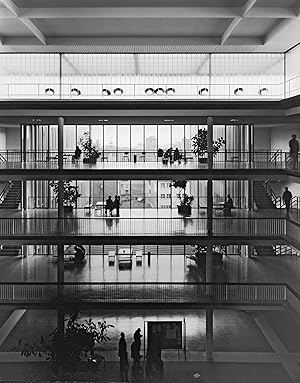
Condition: New. Mit dem im Jahr 1961 seiner Bestimmung uebergebenen Kollegiengebaeude II der Universitaet Freiburg war dem Architekten Otto Ernst Schweizer ein Meisterwerk gelungen, das, mit Gestaltungsmitteln der Moderne und doch an der Tradition Freiburgs orientiert, dem Le.
- Hardcover
Seller: Gazelle Books, Lancaster, LANCA, United KingdomGazelle Books
Contact seller4-star sellerCondition: New
US$ 29.02
US$ 73.79 shippingShips from United Kingdom to U.S.A.Quantity: 2 available
Hardback. Condition: New. New Book, Direct from Publisher.
- Hardcover
Seller: GreatBookPricesUK, Woodford Green, United KingdomGreatBookPricesUK
Contact seller5-star sellerCondition: Used - As new
US$ 96.34
US$ 20.12 shippingShips from United Kingdom to U.S.A.Quantity: 2 available
Condition: As New. Unread book in perfect condition.

- Hardcover
Seller: Mooney's bookstore, Den Helder, NetherlandsMooney's bookstore
Contact seller4-star sellerCondition: Used - Very good
US$ 99.90
US$ 17.33 shippingShips from Netherlands to U.S.A.Quantity: 1 available
Condition: Very good.
- Hardcover
Seller: AHA-BUCH GmbH, Einbeck, GermanyAHA-BUCH GmbH
Contact seller5-star sellerCondition: New
US$ 42.98
US$ 74.01 shippingShips from Germany to U.S.A.Quantity: 1 available
Buch. Condition: Neu. Neuware - When the stadium for a 'Winter Workers Olympiad' - one of the most beautiful complexes in Europe, as the daily press put it - was opened in 1931 on the occasion of the 10th anniversary of the Re-public of Austria on the Prater site in Vienna, Otto Ernst Schweizer, the architect, was suddenly catap…ulted into the ranks of interna-tionally acclaimed architects.The stadium, which can seat 60,000, was built as an amphi-theatre on the model of its ancient predecessors, in particular the Colosseum in Rome, which Schweizer had studied intensively; the Viennese stadium seen as a reinterpretation of the enormous Roman structure on the basis of the constancy of things that were valid, which was one of the basic premises of his architecture.Otto Ernst Schweizer, born in 1890, and thus of the same generation as Le Corbusier, Hans Scharoun, Erich Mendelsohn and Ludwig Mies van der Rohe, had attracted attention even as a young architect with some outstanding competition entries, and was ac-claimed for his planetarium on the periphery of the old town in Nuremberg and for the stands and the two cafés of the stadium complex there. He had left municipal service as an Oberbaurat to dedicate himself to planning and realizing the Milchhof in Nuremberg and also the stadium in Vienna. For thirty years he worked as one of the great teachers and researchers in the architecture faculty of the Technische Hochschule in Karlsruhe. He built - after a long break forced upon him by National Socialist culture policy - the.
- Hardcover
Seller: AHA-BUCH GmbH, Einbeck, GermanyAHA-BUCH GmbH
Contact seller5-star sellerCondition: New
US$ 42.98
US$ 74.25 shippingShips from Germany to U.S.A.Quantity: 1 available
Buch. Condition: Neu. Neuware - Als im Jahr 1931 der Milchhof in Nürnberg seiner Bestimmungübergeben wurde, seinerzeit die größte Anlageihrer Art in Europa, war nach übereinstimmendemTenor der Architekturkritik dem Architekten Otto ErnstSchweizer ein Werk gelungen, dem wegen der raffiniert-einfachen Grundrißordnung und einer arc…hitektonischenFormensprache jenseits allzu individuellen Eigenlebensder Rang eines Prototyps zukommt.Schweizer (1890-1965) hatte schon zuvor internationaleAnerkennung erfahren durch sein Planetariumund seine Stadionanlage in Nürnberg: klar und unprätentiösgestaltete Bauten von dauerhaftem Wert. Seinwohl bekanntestes Werk neben den Bauten in Nürnbergist das gleichzeitig mit dem Milchhof entstandeneStadion in Wien. Zusätzlich zu seiner praktischenTätigkeit wirkte Schweizer dreißig Jahre als einer dergroßen Lehrer und Forscher an der Architekturfakultätder Technischen Hochschule in Karlsruhe.Die meisten seiner wesentlichen Bauten sind verlorenoder entstellt. Der Milchhof aber steht nahezuunverändert (wenn auch weitgehend ungenutzt) undbildet noch immer, wie von Schweizer geplant, eineArt Point de vue für den Zugang der Stadt von Westen.Das Verwaltungsgebäude ist als Dreiflügelanlagekonzipiert; die Flügel umfangen eine drei Geschossehohe, lichtdurchflutete Halle mit offenen Galerien alsErschließungsebenen - Raumverschwendung imbesten Sinne, die zudem jede Art der Büronutzungzuläßt. Das Betriebsgebäude, das noch heute vonder Bahn aus über das Obergeschoß und von der dasGebäude umfahrenden Straße auf Erdgeschoßebenebedient werden kann, ist ein über 110 m langer undim Mittel 24 m tiefer Trakt, der sein einprägsames'Gesicht' durch das trapezförmige Falt-Dachtragwerkund das Stahlbetonskelett mit Glas- und (ehemaliger)Backsteinausfachung erhält und dessen GeschoßebenenSchweizers Grundforderung nach größtmöglicherVariabilität dadurch entsprechen, daß sich alle Einbautenund Zwischenwände nichttragend unterzuordnenhatten - eine flexible Struktur, die sich heute füreine Umnutzung erneut bewähren könnte.Immo Boyken ist Professor für Baugeschichte undArchitekturtheorie in Konstanz. Sein besonderes Interessegilt der Architektur des späten 19. und des20. Jahrhunderts. Er war maßgebend an der 1984 erschienenenMonographie über Egon Eiermann beteiligt,verfaßte neben anderen Schriften zur modernenArchitektur die Monographie über Otto Ernst Schweizerund schrieb zuletzt über Heinz Tesars Kirche ChristusHoffnung der Welt in der Donau City in Wien (Opus42) und über Egon Eiermanns Botschaftsgebäude inWashington (Opus 54).
- Hardcover
Seller: AHA-BUCH GmbH, Einbeck, GermanyAHA-BUCH GmbH
Contact seller5-star sellerCondition: New
US$ 42.98
US$ 74.10 shippingShips from Germany to U.S.A.Quantity: 1 available
Buch. Condition: Neu. Neuware - The church rises to the challenge of providing a spiritual centre forDonau City, the new residential and commercial centre on the oppositebank of the Danube - not as an act of coronation for the cityin the sense of Taut's urban crown, as a temple or cathedral, butas miniature, as a demonstration o…f the power of the quiet as opposedto the loud, as an 'oasis in the diaspora', to use Karl Rahner'sformulation about the parishes of the future.The building gives an impression of starkness: a hard cube, cutoff at the corners, clad with sheets of black chromium steel. But itis only stark at first glance. A second glance shows that the hardnessis a friendly hardness: because of the reflections that the materialadmits; because of the grid of the large-format sheets, towhich the brightly gleaming drill-holes that cover the walls like finegossamer respond; because of circular apertures that allow light toshine outwards after dark; because of large, rectangular windowsin the receding corners that create a contrast with the closed qualityof the building.Inside the starkness gives way altogether: a light space, whichone comes into through an artfully designed entrance. Originally asparse covering for the space, which thrives mainly because of thelight material - birch wood -, because of the arrangement of thepews, which is as lively as it is peaceful - segments of circles ofdifferent sizes, surrounding the dark syenite altar block in the formof an open circle - and especially because of the wide range of circularlight sources that render the introverted interior transparent,the large windows that create islands of light, the free-form aperturein the ceiling, which sends light gliding down on to the altar.Heinz Tesar's church continues a tradition of forward-lookingmodern church building, from Rudolf Schwarz's Fronleichnamskirchein Aachen via Egon Eiermann's Kaiser-Wilhelm-Gedächtniskirchein Berlin, Franz Füeg's Piuskirche in Meggen on Lake Lucerneto the new Herz-Jesu-Kirche in Munich by Allmann, Sattlerand Wappner; and alongside all this there is also the tradition of agenuinely Viennese development of this theme, from Otto Wagner'sKirche am Steinhof to Ottokar Uhl's parish church Katharina vonSiena.Immo Boyken is Professor of architectural history, surveying anddesign in Konstanz. He had a major involvement in the great monographon the works of Egon Eiermann, and has also writtena monograph on Otto Ernst Schweizer, as well as other works aboutmodern architecture. Christian Richters studied at the Folkwangschulein Essen. He is one of the most sought-after architecturalphotographers in Europe today.

- Hardcover
Seller: AHA-BUCH GmbH, Einbeck, GermanyAHA-BUCH GmbH
Contact seller5-star sellerCondition: New
US$ 42.98
US$ 74.50 shippingShips from Germany to U.S.A.Quantity: 1 available
Buch. Condition: Neu. Neuware - Mit dem im Jahr 1961 seiner Bestimmung übergebenen Kollegiengebäude II der Universität Freiburg war dem Architekten Otto Ernst Schweizer ein Meisterwerk gelungen, das, mit Gestaltungsmitteln der Moderne und doch an der Tradition Freiburgs orientiert, dem Leben der Universität sowie der urbanen Ent…wicklung des innerstädtischen Quartiers neue Qualitäten und damit auch dem Hoch-schulbau insgesamt wesentliche Impulse gegeben hat. Ein Bau, der dank seiner neutralen Aussage, kompakt in seiner großen Form, dank seiner 'elastischen Konstruktionsstruktur' (die weitgehendste Flexibilität in der Raumaufteilung ermöglicht, ohne das tragende Skelett zu berühren) und dank seiner lakonisch-einfachen Grundrißordnung mit dementsprechend reibungslosem Funktio-nieren den Wert eines Prototyps hat. Eine offene, im Inneren von jedem erdrückenden Pathos freie Architektur, die mit ihren weiten Bewegungsräumen, mit ihrem menschlichen Maßstab in Proportion und Größe der Vorstellung von freizügig-akademischem Forschen, Lehren und Lernen in idealer Weise entspricht. Schweizer, geboren 1890 und gestorben 1965, Professor für Städtischen Hochbau an der Technischen Hochschule Karlsruhe, zählt zu den wegweisenden Architekten des 20. Jahrhunderts, der durch seine Nürnberger Bauten Ende der 1920er Jahre, darunter die Stadionanlage und der Milchhof, sowie durch das Prater-Stadion der Stadt Wien internationale Anerkennung und Bedeutung gewann und der sich in den 1930er Jahren, in denen es ihm verwehrt war, zu bauen, mit grundlegenden Fragen zu Architektur und Städtebau befaßte - Gedanken, die er nach dem Zweiten Weltkrieg für Vorschläge zur Neuordnung zerstörter Städte wie Gießen, Karls-ruhe, Mannheim oder Stuttgart wieder aufgreifen konnte. In seinem letzten Werk, dem Kollegien-gebäude II, konzentriert sich, quasi als Quintessenz eines reichen schöpferischen Lebens, Schweizers Anspruch an architektonischer Form und Funktion auf auch heute noch überzeugende Weise.Immo Boyken ist emeritierter Professor für Baugeschichte und Architekturtheorie in Konstanz, dessen besonderes Interesse der Architektur des späten 19. und des 20. Jahrhunderts gilt. Er war maßgebend an der Monographie über Egon Eiermann beteiligt, verfaßte unter anderem die Monographie über Otto Ernst Schweizer und schrieb zuletzt über die Kirche in der Donau City in Wien von Heinz Tesar (Opus 42), das Kanzleigebäude der deutschen Bot-schaft in Washington von Egon Eiermann (Opus 54), den Milchhof in Nürnberg von Otto Ernst Schweizer (Opus 59), das Prater-Stadion in Wien (Opus 75), ebenfalls von Schweizer, sowie über die Deutschen Pavillons auf der Weltausstellung 1958 in Brüssel von Sep Ruf und Egon Eiermann (Opus 62).

- Hardcover
Seller: Rarewaves.com UK, London, United KingdomRarewaves.com UK
Contact seller5-star sellerCondition: New
US$ 35.02
US$ 87.20 shippingShips from United Kingdom to U.S.A.Quantity: 1 available
Hardback. Condition: New. Text in English and German. Otto Ernst Schweizer (1890-1965), architect, philosopher and teacher, had a crucial effect on the path of Modern architecture. When the central dairy in Nuremberg was finished in 1931 it was the largest complex of its kind in Europe and was seen by critics as a work that dese…rved the rank of prototype.


