Order Total (1 Item Items):
Shipping Destination:

Charles Sumner, Signed (20 results)
Skip to main search results
Search filters
Product Type
- All Product Types
- Books (18)
- Magazines & Periodicals (No further results match this refinement)
- Comics (No further results match this refinement)
- Sheet Music (No further results match this refinement)
- Art, Prints & Posters (No further results match this refinement)
- Photographs (No further results match this refinement)
- Maps (No further results match this refinement)
- Manuscripts & Paper Collectibles (2)
Condition Learn more
Binding
Collectible Attributes
Language (2)
Free Shipping
Seller Location
Seller Rating
-
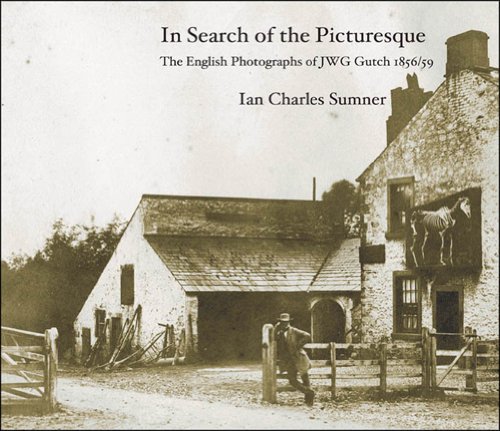
In Search of the Picturesque: The English Photographs of John Wheeley Gough Gutch 1856 - 59 (an author signed first printing)
First Edition Signed
US$ 13.74
US$ 26.80 shipping
Ships from United Kingdom to U.S.A.Quantity: 1 available
Add to basketSoft cover. Condition: Fine. 1st Edition. uk1st.edition.1st.printing/fine glossy softwraps with flaps.signed by the author on the half title page. Signed by Author(s).
-

The story of Pomona College
Published by The Pilgrim Press, Boston, 1914
Seller: Friends of SMPL Bookstore, Santa Monica, CA, U.S.A.
Seller rating 5 out of 5 stars

First Edition Signed
Hardcover. Condition: Fair. 1st Edition. Rare autographed copy of the story of the campus written by its founder, on endpaper. Also features names/stamp of subsequent owners. Hinges loose, corner wear to blue cloth covers. One photo page re-attached. Gilt emblem on front cover. Signed by Author(s).
-
The Spanish Galleon: Being an Account of a Search for Sunken Treasure in the Caribbean Sea
Published by A. C. McClurg & Co., 1891
Signed
Hardcover. Condition: Good. Small 8vo in green cloth, title and illustrations in black. Slight spine lean, front hinge starting, rubbing to all edges and covers. Signed by Seeley and inscribed to federal district court judge Lysander Hill on the front free endpaper. Signed By Author.
-
RANSOM OF SLAVES AT THE NATIONAL CAPITAL SPEECH ON THE BILL FOR THE ABOLITION OF SLAVERY IN THE DISTRICT OF COLUMBIA.MARCH 31, 1862
Publication Date: 1862
Seller: Xerxes Fine and Rare Books and Documents, Glen Head, NY, U.S.A.
Seller rating 5 out of 5 stars
First Edition Signed
Condition: Good. Washington 1862 first edition. 13p. double column text. Original printing. Good, light fraying of edges and spine. Signed in pencil on top of front page by J I Christie.
-
Works of Charles Sumner
Language: English
Published by Lee and Shepard, Boston, 1874
Seller: Sumner Family Books and letters, Bellingham, MA, U.S.A.
Seller rating 5 out of 5 stars
First Edition Signed
Hardcover. Condition: Very Good. No Jacket. 1st Edition, Limited Edition. The product is a signed first edition hardcover book titled "Works of Charles Sumner Lee and Shepard 1874" by Charles Sumner. This book, copyright 1870 and published in 1874 in the United States, delves into political and historical topics in North America. It is an original work, not a facsimile, making it a valuable addition to any collection of antiquarian and collectible books. This is Sumner family collection of mine as is rare to have all 15 volumes in such excellent condition . let me know any open questions and each book will be wrapped individually . thanks so much .je Sumner / Boston. Signed by Author(s).
-
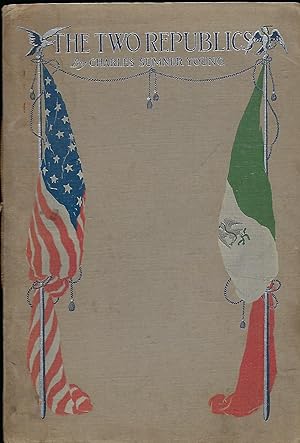
THE TWO REPUBLICS: INTERNATIONAL RELATIONS- UNITED STATES AND MEXICO
Published by The Fred S. Lang Company, Los Angeles, 1916
Seller: Antic Hay Books, Asbury Park, NJ, U.S.A.
Seller rating 5 out of 5 stars
First Edition Signed
Deliver At Los Angeles, California, August 12, 1915. Illustrated with Photographs of Presidents and Other Dignitaries. (illustrator). Very Good (moderate wear covers; contents clean & tight). 8vo., sewn gray pictorial wraps, stamped with two color flags on the front cover; 34 pages First Edition. Signed presentation from Young on the front endpaper: "To the Honorable S.A. Wildman with the compliments and best wishes of Charles Sumner Young. Los Angeles, California. July 26th, 1916." This essay was addressed to the President of the United States in 1916. Signed.
-
Sumner letter with original envelope
Language: English
Published by Washington DC, 1852
Seller: Sumner Family Books and letters, Bellingham, MA, U.S.A.
Seller rating 5 out of 5 stars
Manuscript / Paper Collectible Signed
Condition: Fine. content is incredible . rare find w both letter and envelope and superb content .Famous Senator Charles Sumner writes a unique letter from Washington in 1852 to the Rev Thomas t Stone ( Salem, mass) where he uniquely speaksnof how he was touched and charmed by an address the Reverend gave .Sumner also says " May I be able to speak in the same spirit and with equal timber "!!! an awesome letter of impact and results by this most famous senator and oratory genius .Sumner . . I am proud as a Sumner relation to provide this piece of history to a person of interest for sure .je Sumner. Signed by Author(s).
-
THE TWO REPUBLICS INTERNATIONAL RELATIONS- UNITED STATES AND MEXICO
Published by The Fred S. Lang Company Publishers, Los Angeles, 1916
Seller: Libros Latinos, Redlands, CA, U.S.A.
Seller rating 4 out of 5 stars

First Edition Signed
Sewn Binding. Condition: New. 1st ed. 8vo, 34p., inscribed by author to Felix Palavicini. photo plates,uncut pages, lightly soiled cover. The speech, and essay "The Two Republics", delivered by Charles Sumner Young addressed to the president of the United States in 1916. With several photographs of American and Mexican presidents of the era. Autographed copy.
-
I SPY
Published by D. Appleton & Company, 1916
Seller: Antic Hay Books, Asbury Park, NJ, U.S.A.
Seller rating 5 out of 5 stars
First Edition Signed
WRENN, CHARLES L. (illustrator). LINCOLN, Natalie Sumner. I SPY. Illustrated by Charles L. Wrenn. NY: D. Appleton & Company, 1916. 12mo., black cloth, stamped in gilt. First Edition. Signed presentation by Lincoln on front endpaper: "Dear Mrs. Dowing, To a true friend and friendly critic. With deep affection. Natalie S. Lincoln. Major 2nd Battalion, National Service School." Very Good (bright, newspaper-quality photograph of Lincoln tipped to front pastedown that has resulted in even browning to the front endpaper). $125.00.
-
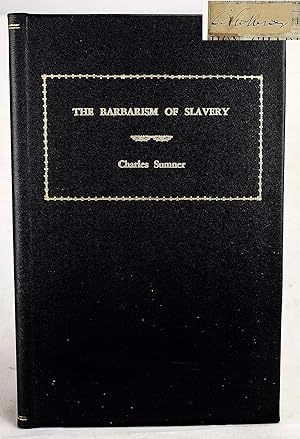
The Barbarism of Slavery
Published by Buell & Blanchard, 1860
Seller: Sequitur Books, Boonsboro, MD, U.S.A.
Association Member: IOBA
Seller rating 5 out of 5 stars
First Edition Signed
Leather Bound. Condition: Fair. First Edition. Leather bound hardcover. Fine binding and cover. Gilt lettering with decorative border on front cover. Original pamphlet in modern binding. *Includes clipped in signature from Charles Sumner* Wear to edges of pages with toning and foxing throughout. Stamps and markings from Potomac Valley Memorial Association, Deerfield, Massachusetts. Previous owner's signature on top of first page. Text remains clear and legible. "The Barbarism of Slavery" was Charles Sumner's first speech after returning to the Senate following his savage beating at the hands of Congressman. Signed.
-
The Works of Charles Sumner
Published by Lee and Shepard 1870-1880, Boston, 1870
Seller: Rooke Books PBFA, Bath, United Kingdom
Association Member: PBFA
Seller rating 5 out of 5 stars
Signed
US$ 6,180.85
US$ 26.66 shipping
Ships from United Kingdom to U.S.A.Quantity: 1 available
Add to basketLeather. Condition: Very Good Indeed. None (illustrator). A handsome 'Subscriber's Copy' collection of Charles Sumner's influential speeches and other works, signed by him to the first volume. A 'Subscriber's Copy', signed by Charles Sumner to the half title page to Vol. I.Comprising thirteen out of the fifteen total volumes that make up this set. Lacking Vol. XIV and Vol. XV.Presented in a uniform half calf, with marbled boards and gilt to the spines. With an engraved portrait frontispiece to Vol I.Offering the various writings of Charles Sumner, an American lawyer, statesman and leading advocate for the abolition of slavery. Sumner embarked on a public political career in 1845, when he emerged as one of the most prominent critics of slavery in the city of Boston and the state of Massachusetts, a hotbed of abolitionist sentiment.Among the speeches, letters and other writings included here are 'The True Grandeur of Nations', 'The Party of Freedom', 'Prophetic Voices Concerning America: A Monograph', 'Expulsion of the President', 'Caste and Prejudice of Color', 'Tax on Slave-Masters', 'Antislavery Duties of the Whig Party', and much more. Works have been arranged chronologically. Uniformly bound in half calf, with marbled boards and gilt to the spines.Externally, very smart, with really only rubbing to the extremities, largely concentrated to the corners. Internally, firmly bound. Pages are generally bright and clean, with scattered spots concentrated to the first and last couple leaves. Very Good Indeed. signed by author. book.
-

The Complete Works of Charles Sumner.
Published by Lee and Shepard, Boston, 1900
First Edition Signed
The Statesman edition of the complete works of Charles Sumner, with a three-page autograph letter signed by Sumner tipped into Vol. I. Octavo, twenty volumes bound in three quarter crushed levant morocco over marbled boards with gilt titles and tooling to the spine in six compartments within raised gilt bands, marbled endpapers, top edge gilt, tissue-guarded frontispiece to each volume. One of one thousand numbered copies, this is number 391. With three-page autograph letter signed by Sumner to the Rev. R.C. Waterston tipped into Vol. I. which reads in full, "Yesterday I read the enclosed account, which will explain itself. It seems to me rather hard that I should be left in the lurch by our committee, & particularly by individuals on it who have never contributed their full quota, & who are themselves rich, too. I have so far neglected my worldly affairs during these latter years, & have been called upon so frequently for contributions, that I am less able than any member of the committee to pay this deficiency out of my own pocket. Nor do I think it just that Mr. Brigham, or Mr. Brooks, or Mr. Thayer, all of whom were originally responsible with me, and who have not contributed their full share, should let this be cast upon me. I have had the labor & responsibility of carrying the matter through--as far as it has gone, & secured contributions much beyond my portion. It seems to me, therefore, that I may properly devolve upon the members of the committee above named the duty of meeting this deficit. Upon you there is no claim; for you have already supplied more than your share but I submit the account to you, & ask your advice as to the course to be pursued. Ever sincerely yours,ÂCharlesÂSumner." Here, Sumner writes as Republican Senator to Reverend Robert C. Waterston, regarding a commitment made to raise money for the public school system in Massachusetts, a cause Sumner championed alongside famous education reformer Horace Mann (1796-1859). In fine condition. A stunning set. The only complete set of the Statesman Edition we can locate in the auction record since 1964. Charles Sumner was a prominent American statesman, lawyer, and abolitionist who played a critical role in the political struggle against slavery in the mid-19th century. As a leading member of the Radical Republicans in the U.S. Senate, Sumner championed civil rights and was an outspoken critic of the institution of slavery and its defenders. His most notable moment came in 1856 when he delivered a fiery anti-slavery speech titled "The Crime Against Kansas," which led to his brutal caning on the Senate floor by Representative Preston Brooksâ"a violent episode that symbolized the intensifying sectional conflict. Throughout the Civil War and Reconstruction, Sumner advocated for the emancipation of enslaved people and pushed for full legal and political equality for African Americans, including support for the Civil Rights Act and the Fourteenth Amendment. His commitment to moral principle and constitutional equality often put him at odds with more moderate figures, but it positioned him as a key figure in the transformation of American democracy during one of its most turbulent periods.
-
![Seller image for The Works of Charles Sumner (15 Volumes, Complete [SIGNED By AUTHOR]) for sale by Dorley House Books, Inc.](https://pictures.abebooks.com/inventory/md/md808916589.jpg)
The Works of Charles Sumner (15 Volumes, Complete [SIGNED By AUTHOR])
Published by Lee and Shepard Publishers, Boston, MA, 1870
Seller: Dorley House Books, Inc., Hagerstown, MD, U.S.A.
Seller rating 4 out of 5 stars
First Edition Signed
Leatherbound. Condition: Collectible Very Good. Dust Jacket Condition: No Jacket as Issued. Frontis Engravings (illustrator). 1st. 15 volumes, Signed by author in volume one. 3/4 leather, tan leather (grey-brown), with marbled paper boards, all edges marbled matching, also endpapers; 4 raised bands, morocco title patch, gilt tooling on spine; gophered page edges.an absolutely lovely set in remarkable condition Size: 12 vo (34 pounds). Signed By Author.
-
Crime Against Kansas - letter post attack Charles Sumner - Rare
Language: English
Publication Date: 1856
Seller: Sumner Family Books and letters, Bellingham, MA, U.S.A.
Seller rating 5 out of 5 stars
Manuscript / Paper Collectible Signed
Condition: Fine. The product is a rare letter written by Charles Sumner in 1856, following an attack on him three weeks earlier. This letter is a historical piece of memorabilia from the United States Senate and is a unique collectible item related to political events in the country. The topic of the letter revolves around politics and the specific historical context of the attack on Charles Sumner, making it a valuable and sought-after item for collectors and history. passed to me from family as Sumner relative . see pictures and notes also .je Sumner / Boston. Signed by Author(s).
-
Signatures / Unsigned Portraits
Seller: Main Street Fine Books & Mss, ABAA, Galena, IL, U.S.A.
Association Member: ABAA ILAB MWABA
Seller rating 5 out of 5 stars
Signed
It's been noted that U.S. vice president Wilson (1873-75) began as a cobbler (actually, he founded a successful shoe factory), but never that he might perchance have cobbled shoes using leather from the tannery of his future commander in chief, President Ulysses S. Grant, who worked at (and despised) his father's tannery in Galena, Illinois; an ardent antislavery advocate, Wilson founded the Free-Soil party when he left the Whig party in 1848, then in 1854 joined the American (Know-Nothing) party -- but it was as a Republican that he was elected as senator from Massachusetts (1855-73); Grant's second vice president, he was the third second-in-chief to die in office. Sumner was the most fiery and influential of abolitionists and represented Massachusetts in the Senate from 1851 to 1874; his antislavery sentiments earned him an infamous beating on the floor of the Senate from a South Carolina representative, Preston S. Brooks, leaving injuries that plagued him the rest of his life. On a single 5" X 8½" sheet, likely a book front flyleaf, Wilson signs large and bold in brown ink, adding "Mass." below; under this, Sumner signs boldly, adding "Mass." below. Near fine. Undated, but Wilson and Sumner's Senate careers overlapped between 1855 and 1873. Accompanied by two fine heavy stock steel-engraved head-and-shoulders portraits, each 5" X 8½". Wilson is shown later in life, with facsimile signature beneath, and Sumner appears within an oval as a young man in this aquatint engraving. A delightful trio.
-

AUTOGRAPH LETTER SIGNED (ALS)
Published by 19 February 1864, [Washington, DC], 1864
Seller: Charles Agvent, est. 1987, ABAA, ILAB, Fleetwood, PA, U.S.A.
Seller rating 5 out of 5 stars
First Edition Signed
Letter. A two-page AUTOGRAPH LETTER SIGNED on a 10" x 8" sheet of paper folded in half to "My dear Ballard" [Corresponding Secretary of the Young Men's Republican Union] from the "Senate Chamber," as noted by Sumner at the head. In full: "I have written to the Secy for your young protege. I shall report on the sweeping away all Fug. Slave Acts -- with a report at length arguing reasons therefor. It has been approved by the Committee. 'The good time is coming.' Of this be sure." An interesting letter in that a month before it was written (13 January 1864), on the floor of the Senate, Sumner had moved to create a special committee on slavery and freedmen, and was its chairman, introducing a bill to repeal all fugitive slave acts. Ten days before writing this letter (9 February 1864), Sumner gave his famous "The Prayer of One Hundred Thousand" speech, petitioning for the Thirteenth Amendment to abolish slavery once and for all. It passed in the Senate in April but not the House and would not be ratified until January 1865. Senator Charles Sumner, perhaps the most influential man in public life after Lincoln at the end of the Civil War, was a notable advocate for emancipation of the slaves and later for civil rights. He was the originator of the idea of constitutional emancipation which came about finally with the Thirteenth Amendment. He was severely beaten on the floor of the United States Senate by Representative Preston Brooks of South Carolina in retribution for Sumner's attack on Brooks's uncle, South Carolina Senator Andrew Butler, and the Kansas-Nebraska Act in his "Crime against Kansas" [May 19 and 20, 1856] speech. The beating nearly killed Sumner, and it took him several years to recover. The beating also contributed significantly to the country's polarization over the issue of slavery and has been considered symbolic of the "breakdown of reasoned discourse" and the use of violence that eventually led to the Civil War. Creases from folding; mounting strip on verso. Very Good.
-
Autograph letter
Published by Boston, 1863
Seller: North Star Rare Books & Manuscripts, Sheffield, MA, U.S.A.
Seller rating 5 out of 5 stars
Signed
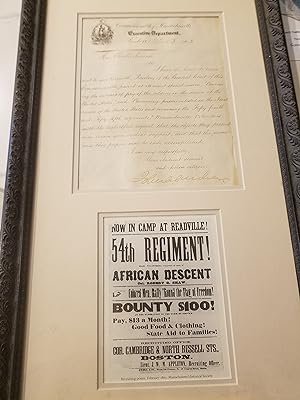
No Binding. Condition: Fine. One leaf, octavo, on Commonwealth of Massachusetts Executive Department letterhead, signed by Massachusetts Governor "John A. Andrew" to Massachusetts Senator Charles Sumner, December 3, 1863, approximately 100 words. A significant letter regarding the unequal pay of African American soldiers serving in the Fifty-fourth Massachusetts Infantry (made memorable in the award-winning film "Glory" ). ----- "Hon. Charles Sumner, Sir, I have the honor to transmit to you herewith, Resolves of the General Court of this Commonwealth, passed at its recent special session, `Concerning the increase of pay of the soldiers in the service of the United States,' and `Concerning persons enlisted in the Naval service of the United States and concerning the Fifty-fourth and fifty-fifth regiments,' Massachusetts Volunteers, with the respectful request that the objects they present may receive your cordial support, and that the measures they propose may be early accomplished. I am very respectfully, Your obedient servant and fellow citizen, John A. Andrew." ----- The Fifty-fourth was the first regular army unit of African Americans raised in the North during the Civil War. Massachusetts abolitionist Governor Andrew organized the regiment between January and May 1863. Because they were often cheated out of bounties, issued inferior weapons and insufficient rations, regulated to relentless fatigue duty, and paid unfairly (Black volunteers were paid as laborers and not as soldiers), Andrew petitioned the Bureau of Colored Troops for their equal pay. Unsuccessful, he went to Washington in September for talks with Lincoln which fell flat. As a stopgap measure, the Governor then asked for and got action from the Massachusetts legislature --- Andrew's December 3, 1863, letter to Sumner confirmed the fact that state money had been appropriated to make up the difference in pay for the men of the Fifty-fourth and Fifty-fifth. However, both regiments were adamant and declined Andrew's compromise solution. Refusing to accept any pay until it should be made equal by national legislation to that received by the white troops with whom they served, they fought and died for some eighteen months without pay. ---- Provenance: owned by the Reverend Samuel Harrison (1818-1900), perhaps gifted to him by Senator Sumner. One of Western Massachusetts's most ardent abolitionists, Harrison became the first minister of the Second Congregational Church of Pittsfield in 1850. In July 1863, Harrison journeyed to Boston and met with Governor Andrew, who requested that he travel to South Carolina to "express the sympathy of the Commonwealth" to the surviving members of the Fifty-fourth, who had fought valiantly at Fort Wagner. He set off in August. Harrison preached to soldiers and freedmen for six weeks before returning home, only to be appointed official chaplain of the regiment by Andrew. He reported for duty at Morris Island, South Carolina, in November. Immediately, the issue of discriminatory pay practices drew protest from Harrison, who demanded that he receive the same wages as white chaplains. Andrew and Attorney General Edward Bates penned letters to Lincoln on Harrison's behalf. Taken ill in March 1864, Harrison was honorably discharged from the army. He continued to minister until his death in 1900. A truly remarkable historical document with a distinguished provenance, handsomely matted and framed. [Together with] Books from Harrison s library, including 1). Lyman Coleman, "An Historical Text Book and Atlas of Biblical Geography" (Philadelphia: J. B. Lippincott, 1857). Later edition, inscribed, "Samuel Harrison's Book, Presented by the author, Philadelphia, Nov. 2/57," on the front endpaper. 2). James Redpath, "The Public Life of Capt. John Brown" (Boston: Boston: Thayer and Eldridge, 1860). Later edition, inscribed: "Samuel Harrison s Book Presented by Mrs. Lynch of Newark," on the front endpaper. 3). William C. Richards, "Great in Goodness: A Memoir of George Briggs. Signed by Author(s).
-
Autographed 3-page letter signed from the Senate Chamber (No envelop) Private letter about an Aubusson carpet controversy!
Publication Date: 1869
Seller: Brainerd Phillipson Rare Books, Holliston, MA, U.S.A.
Association Member: SNEAB
Seller rating 5 out of 5 stars
Signed
No Binding. Condition: Very Good. Very good condition; written in clear, crisp ink on 3 sides of one sheet of stationery measuring 5" x 8" and signed by Charles Sumner. With a 1"brown strip from the original envelop pasted along the folded edge of side 4 which is blank. Senate Chamber 9th Jan. '69Private (underlined)Dear Mr Kinsley, The interest you took in a certain carpet induces me to make a report not official. The British Minister was with me sipping his coffee after dinner, when, after observing the carpet, he said: --"This is an Aubusson & very beautiful." And then he asked about it. I said, that it came from Paris via Boston, & that the house from which I had it assured me that a better carpet never crossed the Atlantic. "I do not doubt that," he replied. So you will see that yr saying is already fulfilled. But I have not done with the carpet. A lady who called at my house, revealed at once a strong interst on seeing it. She had ordered precisely this carpet of the best dealer in Paris, where she was in September, but hers had not yet arrived. Now she found the article in my house. She called it the finest which she saw in Paris. Perhaps Mr. Lovejoy will be amused by this little history. Ever yours, Charles Sumner Charles Sumner (1811 1874) was an American lawyer, politician, and statesman who represented Massachusetts in the United States Senate from 1851 until his death in 1874. Before and during the American Civil War, he was a leading American advocate for the abolition of slavery. He chaired the Senate Foreign Relations Committee from 1861 to 1871, until he lost the position following a dispute with President Ulysses S. Grant over the attempted annexation of Santo Domingo. After breaking with Grant, he joined the C, spending his final two years in the Senate alienated from his party. Sumner had a controversial and divisive legacy for many years after his death, but in recent decades, his historical reputation has improved in recognition of his early support for racial equality.Sumner began his political activism as a member of various anti-slavery groups, leading to his election to the U.S. Senate in 1851 as a member of the Free Soil Party; he soon became a founding member of the Republican Party. In the Senate, he devoted his efforts to opposing the "Slave Power,"[1] which in 1856 culminated in a vicious beating, almost to the point of death, by Representative Preston Brooks on the Senate floor.[2] Sumner's severe injuries and extended absence from the Senate made him a symbol of the anti-slavery cause. Though he did not return to the Senate until 1859, Massachusetts reelected him in 1857, leaving his empty desk as a reminder of the incident, which polarized the nation as the Civil War approached. (Wikipedia).
-
Autographed 3-page letter signed (No envelop) Mentions a bronze statue of Mr. George Peabody
Publication Date: 1870
Seller: Brainerd Phillipson Rare Books, Holliston, MA, U.S.A.
Association Member: SNEAB
Seller rating 5 out of 5 stars
Signed
No Binding. Condition: Very Good. Very good condition written in clear, crisp ink on three sides of one sheet of stationery measuring 5" x 8" and signed by Charles Sumner.Senate Chamber, 24th Jan. 70My dear Dr.,I am grateful to you not only for yr kindness to me but for yr appreciation of a young artist who deserves yr praise. Show me how I can serve him & I shall do all in my power. There is one bronze statue of Mr. Peabody (with pencil addition of "George" and "merchant" in another hand) by an American artist which has been placed in London. To propose another in bronze--also by an American artist--is not sufficiently reasonable. Why not have it here? There is none in our country. Let us have one here rather than have two in London. Bring your energies in this direction, Dear Dr. Very faithfully yours, Charles Sumner Charles Sumner (1811 1874) was an American lawyer, politician, and statesman who represented Massachusetts in the United States Senate from 1851 until his death in 1874. Before and during the American Civil War, he was a leading American advocate for the abolition of slavery. He chaired the Senate Foreign Relations Committee from 1861 to 1871, until he lost the position following a dispute with President Ulysses S. Grant over the attempted annexation of Santo Domingo. After breaking with Grant, he joined the C, spending his final two years in the Senate alienated from his party. Sumner had a controversial and divisive legacy for many years after his death, but in recent decades, his historical reputation has improved in recognition of his early support for racial equality.Sumner began his political activism as a member of various anti-slavery groups, leading to his election to the U.S. Senate in 1851 as a member of the Free Soil Party; he soon became a founding member of the Republican Party. In the Senate, he devoted his efforts to opposing the "Slave Power,"[1] which in 1856 culminated in a vicious beating, almost to the point of death, by Representative Preston Brooks on the Senate floor.[2] Sumner's severe injuries and extended absence from the Senate made him a symbol of the anti-slavery cause. Though he did not return to the Senate until 1859, Massachusetts reelected him in 1857, leaving his empty desk as a reminder of the incident, which polarized the nation as the Civil War approached. (Wikipedia).
-
Autographed 2-page letter signed from the Senate Chamber (No envelop) Urges that a post office at Harris Square must not be connected with a grog shop
Publication Date: 1861
Seller: Brainerd Phillipson Rare Books, Holliston, MA, U.S.A.
Association Member: SNEAB
Seller rating 5 out of 5 stars
Signed
No Binding. Condition: Very Good. Very good condition with small ink splotch on p 1; written in clear, crisp ink on 2 sides of one sheet of stationery measuring 5" x 8" and signed by Charles Sumner.11th Jan. '61My Dear Pierce, Several days before I read yr letter I saw the Postmaster, who in the presence of Mr Kass , and found that he should not reconsider the case of the post office at Harris Square--the the place was definitely fixed;--but that it must not be connected with a grog shop. I thought this reasonable. Ever yrs, Charles Sumner Charles Sumner (1811 1874) was an American lawyer, politician, and statesman who represented Massachusetts in the United States Senate from 1851 until his death in 1874. Before and during the American Civil War, he was a leading American advocate for the abolition of slavery. He chaired the Senate Foreign Relations Committee from 1861 to 1871, until he lost the position following a dispute with President Ulysses S. Grant over the attempted annexation of Santo Domingo. After breaking with Grant, he joined the C, spending his final two years in the Senate alienated from his party. Sumner had a controversial and divisive legacy for many years after his death, but in recent decades, his historical reputation has improved in recognition of his early support for racial equality.Sumner began his political activism as a member of various anti-slavery groups, leading to his election to the U.S. Senate in 1851 as a member of the Free Soil Party; he soon became a founding member of the Republican Party. In the Senate, he devoted his efforts to opposing the "Slave Power,"[1] which in 1856 culminated in a vicious beating, almost to the point of death, by Representative Preston Brooks on the Senate floor.[2] Sumner's severe injuries and extended absence from the Senate made him a symbol of the anti-slavery cause. Though he did not return to the Senate until 1859, Massachusetts reelected him in 1857, leaving his empty desk as a reminder of the incident, which polarized the nation as the Civil War approached. (Wikipedia).