

Order Total (1 Item Items):
Shipping Destination:

Chateau B (17 results)
Author:
chateau b
Refine with Advanced Search
Skip to main search results
Search filters
Product Type
- All Product Types
- Books (15)
- Magazines & Periodicals (No further results match this refinement)
- Comics (No further results match this refinement)
- Sheet Music (No further results match this refinement)
- Art, Prints & Posters (2)
- Photographs (No further results match this refinement)
- Maps (No further results match this refinement)
- Manuscripts & Paper Collectibles (No further results match this refinement)
Condition Learn more
Binding
Collectible Attributes
- First Edition (2)
- Signed (No further results match this refinement)
- Dust Jacket (No further results match this refinement)
- Seller-Supplied Images (8)
- Not Print on Demand (13)
Language (3)
Free Shipping
- Free Shipping to U.S.A. (No further results match this refinement)
Seller Location
Seller Rating
-

Condition: Fair. This is an ex-library book and may have the usual library/used-book markings inside.This book has hardback covers. In fair condition, suitable as a study copy. No dust jacket. Please note the Image in this listing is a stock photo and may not match the covers of the actual item,750grams, ISBN:0387816755.
-

The Wine and Brandy Districts of France
Published by Chateau Prevost, Medina, WA, U.S.A., 1968
First Edition
3 Ring Plastic Binder. Condition: Very Good. b/w Illustrations, Maps (illustrator). First Thus. 3-ring binder presumably assembled for a wine tour (?). Includes maps, label facsimiles, etc. Includes France, Germany, and California. Size: 8vo - over 7¾" - 9¾". Book.
-
Couverture souple. Condition: Neuf. 272 pages, 24x16 cm Livre à l'état neuf, n'a jamais été lu. Pour l'UE, envoi depuis la France, sans frais ou taxe douanière ou TVA.
-
L'éducation nouvelle à l'école. L'expérience de Boulogne. 1947-1956.
Published by Editions du Scarabée / C. E. M. E. A. 1968., 1968
15 photos hors texte. Broché. 195 pages.
-

Madame de Pompadour et les arts
Language: French
Published by Réunion des Musées Nationaux (RMN), Paris, 2002
ISBN 10: 2711843041 ISBN 13: 9782711843046
First Edition
Soft cover. Condition: Near Fine. 1st Edition. Clean copy in as new condition with sharp corners, crease-free spine. Extra postage possible. KRM/Untran French.
-

flessibile. Condition: Good. 202 p., f.to cm 20x13, copertina flessibile. Otime condizioni. Book.
-

Energy Demand: Facts and Trends: A Comparative Analysis of Industrialized Countries (Topics in Energy)
Seller: Ria Christie Collections, Uxbridge, United Kingdom
Seller rating 5 out of 5 stars

US$ 131.70
US$ 15.81 shipping
Ships from United Kingdom to U.S.A.Quantity: Over 20 available
Add to basketCondition: New. In.
-
Taschenbuch. Condition: Neu. Energy Demand: Facts and Trends | A Comparative Analysis of Industrialized Countries | B. Chateau (u. a.) | Taschenbuch | xv | Englisch | 2011 | Springer | EAN 9783709186411 | Verantwortliche Person für die EU: Springer Verlag GmbH, Tiergartenstr. 17, 69121 Heidelberg, juergen[dot]hartmann[at]springer[dot]com | Anbieter: preigu.
-

Condition: Gut. Zustand: Gut | Seiten: 295 | Sprache: Englisch | Produktart: Bücher | Keine Beschreibung verfügbar.
-
Energy Demand: Facts and Trends Chateau, B. /Lapillonne, B.
Seller: BUCHSERVICE / ANTIQUARIAT Lars Lutzer, Wahlstedt, Germany
Seller rating 5 out of 5 stars
Condition: gut. Energy Demand: Facts and Trends In deutscher Sprache. pages.
-
Madame de pompadour protectric
Language: French
Published by Réunion des Musées Nationaux (RMN), 2002
ISBN 10: 2711843041 ISBN 13: 9782711843046
Condition: fine. vendeur professionnel. envoi soigne en 24/48h. le livre peut presenter de tres legers signes d'usure, petites rayures ou imperfections esthetiques.
-

Porträt. Brustbild. Umriss-Kupferstich von Charles Paul Landon (*1760 - 1826 ), Bild: 9 x 5,5 cm, Blatt: 15,5 x 8,5 cm, um 1800.
Seller: Antiquariat Michael Eschmann, Groß-Gerau, Germany
Seller rating 5 out of 5 stars
Art / Print / Poster
0. Sprache: Deutschu.
-
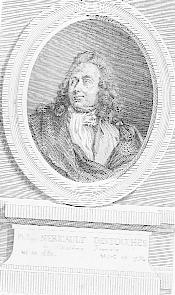
Porträt. Brustbild, halblinks im Oval auf Sockel. Original-Kupferstich von Ingous nach Berruev, Blattgröße: 19,5 x 14 cm, um 1780.
Seller: Antiquariat Michael Eschmann, Groß-Gerau, Germany
Seller rating 5 out of 5 stars
Art / Print / Poster
0. Seitenränder beschnitten, etwas fleckig. Sprache: Deutschu.
-
Condition: new. Questo è un articolo print on demand.
-

Energy Demand: Facts and Trends
Language: English
Published by Springer, Springer Dez 2011, 2011
ISBN 10: 3709186412 ISBN 13: 9783709186411
Seller: BuchWeltWeit Ludwig Meier e.K., Bergisch Gladbach, Germany
Seller rating 5 out of 5 stars
Taschenbuch. Condition: Neu. This item is printed on demand - it takes 3-4 days longer - Neuware -The fIrst oil crisis of 1973-74 and the questions it raised in the economic and social fIelds drew attention to energy issues. Industrial societies, accustomed for two decades or more to energy sufficiently easy to produce and cheap to consume that it was thought to be inexhaustible, began to question their energy future. The studies undertaken at that time, and since, on a national, regional, or world level were over-optimistic. The problem seemed simple enough to solve. On the one hand, a certain number of resources: coal, the abundance of which was discovered, or rather rediscovered oil, source of all the problems . In fact, the problems seemed to come, if not from oil itself (an easy explanation), then from those who produced it without really owning it, and from those who owned it without really control ling it natural gas, second only to oil and less compromised uranium, all of whose promises had not been kept, but whose resources were not in question solar energy, multiform and really inexhaustible thermonuclear fusion, and geothermal energy, etc. On the other hand, energy consumption, though excessive perhaps, was symbolic of progress, development, and increased well being. The originality of the energy policies set up since 1974 lies in the fact they no longer aimed to produce (or import) more, but to consume less. They sought, and still seek, what might be emphatically called the control of energy consump tion, or rather the control of energy demand. 300 pp. Englisch.
-

US$ 108.21
US$ 55.78 shipping
Ships from Germany to U.S.A.Quantity: Over 20 available
Add to basketCondition: New. Dieser Artikel ist ein Print on Demand Artikel und wird nach Ihrer Bestellung fuer Sie gedruckt. The fIrst oil crisis of 1973-74 and the questions it raised in the economic and social fIelds drew attention to energy issues. Industrial societies, accustomed for two decades or more to energy sufficiently easy to produce and cheap to consume that it was t.
-

Energy Demand: Facts and Trends
Language: English
Published by Springer, Springer Dez 2011, 2011
ISBN 10: 3709186412 ISBN 13: 9783709186411
Seller: buchversandmimpf2000, Emtmannsberg, BAYE, Germany
Seller rating 5 out of 5 stars
Taschenbuch. Condition: Neu. This item is printed on demand - Print on Demand Titel. Neuware -The fIrst oil crisis of 1973-74 and the questions it raised in the economic and social fIelds drew attention to energy issues. Industrial societies, accustomed for two decades or more to energy sufficiently easy to produce and cheap to consume that it was thought to be inexhaustible, began to question their energy future. The studies undertaken at that time, and since, on a national, regional, or world level were over-optimistic. The problem seemed simple enough to solve. On the one hand, a certain number of resources: coal, the abundance of which was discovered, or rather rediscovered oil, source of all the problems . In fact, the problems seemed to come, if not from oil itself (an easy explanation), then from those who produced it without really owning it, and from those who owned it without really control ling it natural gas, second only to oil and less compromised uranium, all of whose promises had not been kept, but whose resources were not in question solar energy, multiform and really inexhaustible thermonuclear fusion, and geothermal energy, etc. On the other hand, energy consumption, though excessive perhaps, was symbolic of progress, development, and increased well being. The originality of the energy policies set up since 1974 lies in the fact they no longer aimed to produce (or import) more, but to consume less. They sought, and still seek, what might be emphatically called the control of energy consump tion, or rather the control of energy demand.Springer-Verlag KG, Sachsenplatz 4-6, 1201 Wien 300 pp. Englisch.


