

Order Total (1 Item Items):
Shipping Destination:

Chick Sean Michael (97 results)
Skip to main search results
Search filters
Product Type
- All Product Types
- Books (97)
- Magazines & Periodicals (No further results match this refinement)
- Comics (No further results match this refinement)
- Sheet Music (No further results match this refinement)
- Art, Prints & Posters (No further results match this refinement)
- Photographs (No further results match this refinement)
- Maps (No further results match this refinement)
- Manuscripts & Paper Collectibles (No further results match this refinement)
Condition Learn more
- New (78)
- As New, Fine or Near Fine (13)
- Very Good or Good (6)
- Fair or Poor (No further results match this refinement)
- As Described (No further results match this refinement)
Binding
Collectible Attributes
- First Edition (1)
- Signed (No further results match this refinement)
- Dust Jacket (No further results match this refinement)
- Seller-Supplied Images (47)
- Not Print on Demand (96)
Language (1)
Free Shipping
Seller Location
Seller Rating
-

They Came Only to Die: The Battle of Nashville, December 15-16, 1864 (Emerging Civil War Series)
Book 53 of 68: Emerging Civil WarSeller: Books From California, Simi Valley, CA, U.S.A.
Seller rating 4 out of 5 stars

paperback. Condition: Fine.
-
They Came Only to Die: The Battle of Nashville, December 15-16, 1864 (Emerging Civil War Series)
Book 53 of 68: Emerging Civil WarSeller: Books From California, Simi Valley, CA, U.S.A.
Seller rating 4 out of 5 stars
paperback. Condition: Very Good.
-

paperback. Condition: Very Good. Connecting readers with great books since 1972! Used books may not include companion materials, and may have some shelf wear or limited writing. We ship orders daily and Customer Service is our top priority!
-

A Grand Opening Squandered (Paperback)
Book 63 of 68: Emerging Civil WarLanguage: English
Published by Savas Beatie, El Dorado Hills, 2025
ISBN 10: 1611217210 ISBN 13: 9781611217216
Paperback. Condition: new. Paperback. May and June 1864 in Virginia witnessed some of the most brutal and bloody fighting of the Civil War. After the Wilderness, Spotsylvania Court House, North Anna, and Cold Harbor, combined losses for the two armies exceeded 80,000 men killed, wounded, and captured. And the result after all that carnage was a stalemate outside the gates of Richmond. Federal Lt. Gen. Ulysses S. Grant remained undeterred and set his armies toward their next target: The logistical powerhouse of Petersburg. Grant's surprising maneuver, which included the construction of a massive pontoon bridge across the broad James River and a surprise march against Petersburg, caught Confederate commander Robert E. Lee by surprise. Petersburg was but lightly guarded and seemed at the mercy of the aggressive Federal commander. Its fall would cut the lifelines into Richmond and force the evacuation of the Southern capital. The capture of the city would ensure President Abraham Lincoln's reelection and eliminate whatever thin hopes the Confederacy still had for victory. Petersburg was fortified, its garrison small but determined to hold the city. Department commander, Gen. P. G. T. Beauregard, realized the danger and shifted as many men as he could spare into the defenses and took the field himself. North of the river, meanwhile, Lee remained unconvinced that Grant had stolen a march on him. Three days of battle (June 15-17) followed. The Federals bungled the effort, and somehow the understrength Confederates managed to fight the Federals to a standstill. Reinforcements from Lee's army finally arrived on June 18. Petersburg would hold-for now. Beauregard had won one of the Confederacy's most impressive victories and one of the Confederacy last strategic victories. Sean Chick's A Grand Opening Squandered: The Battle for Petersburg, June 6-18, 1864 provides fresh and renewed attention to one of the most important, fascinating, and yet oddly forgotten battles of the Civil War. Inside are original maps, new research, and dozens of images-many published here for the first time. A Grand Opening Squandered is the first in a series on the Petersburg Campaign, which will provide readers with a strong introduction to the war's longest campaign. AUTHOR: Sean Michael Chick graduate d from the University of New Orleans with a Bachelor of Arts in History and Communications and from Southeastern Louisiana University with a Master of Arts in History. He works in New Orleans, leading historic tours of his hometown. He is the author of Grant's Left Hook: The Bermuda Hundred Campaign, The Battle of Petersburg, June 15-21, 1864, and Dreams of Victory: P. G. T. Beauregard in the Civil War. 100 images, 10 maps This provides fresh and renewed attention to one of the most important, fascinating, and yet oddly forgotten battles of the Civil War. Inside are original maps, new research, and dozens of images. The first in a series on the Petersburg Campaign, which will provide readers with a strong introduction to the wars longest campaign. Shipping may be from multiple locations in the US or from the UK, depending on stock availability.
-

-

Soft cover. Condition: As New. 1st Edition. As New and UNREAD, First Printing, pages clean and crisp, covers clean, no highlighting or underlining. 100% Satisfaction guaranteed or your money back. Thank you for your interest. We ship the same day or the next business day. k3.
-

Condition: good. Fast Free Shipping â" Good condition. It may show normal signs of use, such as light writing, highlighting, or library markings, but all pages are intact and the book is fully readable. A solid, complete copy that's ready to enjoy.
-

-
They Came Only to Die (Paperback)
Book 53 of 68: Emerging Civil WarLanguage: English
Published by Savas Beatie, El Dorado Hills, 2024
ISBN 10: 1611216370 ISBN 13: 9781611216370
Paperback. Condition: new. Paperback. Historian Sean Michael Chick offers a fast-paced, well analyzed narrative of John Bell Hood's final campaign, complete with the most accurate maps yet made of this crucial battle. Nashville was the first peal in the long death knell of the Confederate States of America. The November 1864 battle of Franklin left the Army of Tennessee stunned. In only a few hours, the army lost 6,000 men and a score of generals. Rather than pause, John Bell Hood marched his army north to Nashville. He had risked everything on a successful campaign and saw his offensive as the Confederacy's last hope. There was no time to mourn. There was no question of attacking Nashville. Too many Federals occupied too many strong positions. But Hood knew he could force them to attack him and, in doing so, he could win a defensive victory that might rescue the Confederacy from the chasm of collapse. Unfortunately for Hood, he faced George Thomas. He was one of the Union's best commanders, and he had planned and prepared his forces. But with battle imminent, the ground iced over, Thomas had to wait. An impatient Ulysses S. Grant nearly sacked him, but on December 15-16, Thomas struck and routed Hood's army. He then chased him out of Tennessee and into Mississippi in a grueling winter campaign. After Nashville, the Army of Tennessee was never again a major fighting force. Combined with William Tecumseh Sherman's march through Georgia and the Carolinas and Grant's capture of Petersburg and Richmond, Nashville was the first peal in the long death knell of the Confederate States of America. In They Came Only to Die: The Battle of Nashville, historian Sean Michael Chick offers a fast-paced, well analysed narrative of John Bell Hood's final campaign, complete with the most accurate maps yet made of this crucial battle. AUTHOR: Sean Michael Chick has a Master's Degree in history from Southeastern Louisiana University. 75 images, 9 maps Historian Sean Michael Chick offers a fast-paced, well analyzed narrative of John Bell Hoods final campaign, complete with the most accurate maps yet made of this crucial battle. Nashville was the first peal in the long death knell of the Confederate States of America. Shipping may be from multiple locations in the US or from the UK, depending on stock availability.
-

-
Condition: New. Brand New! Not Overstocks or Low Quality Book Club Editions! Direct From the Publisher! We're not a giant, faceless warehouse organization! We're a small town bookstore that loves books and loves it's customers! Buy from Lakeside Books!
-

They Came Only to Die: The Battle of Nashville, December 15-16, 1864 (Paperback or Softback)
Book 53 of 68: Emerging Civil WarLanguage: English
Published by Savas Beatie 4/26/2023, 2023
ISBN 10: 1611216370 ISBN 13: 9781611216370
Paperback or Softback. Condition: New. They Came Only to Die: The Battle of Nashville, December 15-16, 1864. Book.
-

Condition: As New. Unread book in perfect condition.
-
Condition: New. Brand New.
-

Dreams of Victory (Paperback)
Book 28 of 68: Emerging Civil WarLanguage: English
Published by Savas Beatie, El Dorado Hills, 2022
ISBN 10: 1611215218 ISBN 13: 9781611215212
Paperback. Condition: new. Paperback. Few Civil War generals attracted as much debate and controversy as Pierre Gustav Toutant Beauregard. He combined brilliance and charisma with arrogance and histrionics. He was a Catholic Creole in a society dominated by white Protestants, which made him appear exotic next to the likes of Albert Sidney Johnston and Robert E. Lee. He was reviled by Jefferson Davis and often mocked by Mary Chesnut in her diary. Yet, he was popular with his soldiers and subordinates. Outside of Lee, he was the South's most consistently successful commander, winning at Bull Run, defending Charleston in 1864, and defeating Benjamin Butler at Bermuda Hundred and Ulysses Grant and George Meade at Petersburg. Yet, he lived his life in the shadow of his one major defeat: Shiloh. Beauregard's career before and after the war was no less tumultuous than his Civil War record. He was born among the Creole elite of Louisiana, but rejected the life of a planter in favor of the military, inspired by tales of Napoleon. He was considered a shining light of the antebellum army and performed superbly in the Mexican-American War. Yet, he complained about a lack of promotion and made a frustrating stab at being mayor of New Orleans in 1858. After the war, he was a successful railroad executive and took a stand against racism, violence, and corruption during Reconstruction. Yet, he was ousted from both railroads he oversaw and his foray into Reconstruction politics came to naught. Although he provided for his family and left them a hefty sum after his death, the money was mostly gained by working for the corrupt Louisiana Lottery. In Dreams of Victory: General P. G. T. Beauregard in the Civil War, Sean Michael Chick explores a life of contradictions and dreams unrealised - the first real hero of the Confederacy who sometimes proved to be his own worst enemy. 10 maps, 150 images Few Civil War generals attracted as much debate and controversy as Pierre Gustav Toutant Beauregard. Sean Michael Chick explores a life of contradictions and dreams unrealized - the first real hero of the Confederacy who sometimes proved to be his own worst enemy. Shipping may be from multiple locations in the US or from the UK, depending on stock availability.
-
Condition: New. Brand New.
-
Condition: New. Brand New.
-
A Grand Opening Squandered: The Battle for Petersburg: June 15-18, 1864 (Emerging Civil War Series)
Book 63 of 68: Emerging Civil WarSeller: Books From California, Simi Valley, CA, U.S.A.
Seller rating 4 out of 5 stars
paperback. Condition: Very Good.
-
A Grand Opening Squandered: The Battle for Petersburg: June 15-18, 1864 (Emerging Civil War Series)
Book 63 of 68: Emerging Civil WarSeller: Books From California, Simi Valley, CA, U.S.A.
Seller rating 4 out of 5 stars
paperback. Condition: Fine.
-

Condition: As New. Unread book in perfect condition.
-
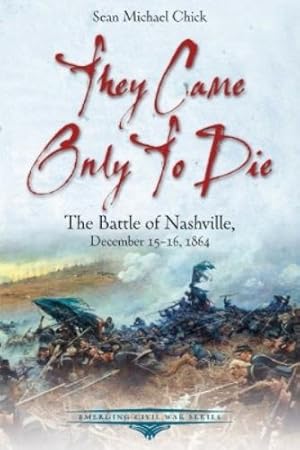
Paperback. Condition: New. The November 1864 battle of Franklin left the Army of Tennessee stunned. In only a few hours, the army lost 6,000 men and a score of generals. Rather than pause, John Bell Hood marched his army north to Nashville. He had risked everything on a successful campaign and saw his offensive as the Confederacy's last hope. There was no time to mourn. There was no question of attacking Nashville. Too many Federals occupied too many strong positions. But Hood knew he could force them to attack him and, in doing so, he could win a defensive victory that might rescue the Confederacy from the chasm of collapse. Unfortunately for Hood, he faced George Thomas. He was one of the Union's best commanders, and he had planned and prepared his forces. But with battle imminent, the ground iced over, Thomas had to wait. An impatient Ulysses S. Grant nearly sacked him, but on December 15-16, Thomas struck and routed Hood's army. He then chased him out of Tennessee and into Mississippi in a grueling winter campaign. After Nashville, the Army of Tennessee was never again a major fighting force. Combined with William Tecumseh Sherman's march through Georgia and the Carolinas and Grant's capture of Petersburg and Richmond, Nashville was the first peal in the long death knell of the Confederate States of America. In They Came Only to Die: The Battle of Nashville, historian Sean Michael Chick offers a fast-paced, well analyzed narrative of John Bell Hood's final campaign, complete with the most accurate maps yet made of this crucial battle.
-

The Battle of Petersburg, June 15-18, 1864
Seller: Midtown Scholar Bookstore, Harrisburg, PA, U.S.A.
Seller rating 5 out of 5 stars

Hardcover. Condition: Good. Good - Bumped and creased book with tears to the extremities, but not affecting the text block, may have remainder mark or previous owner's name - GOOD Standard-sized.
-

Condition: As New. Unread book in perfect condition.
-

Paperback. Condition: New. Few Civil War generals attracted as much debate and controversy as Pierre Gustav Toutant Beauregard. He combined brilliance and charisma with arrogance and histrionics. He was a Catholic Creole in a society dominated by white Protestants, which made him appear exotic next to the likes of Albert Sidney Johnston and Robert E. Lee.He was reviled by Jefferson Davis and often mocked by Mary Chesnut in her diary. Yet, he was popular with his soldiers and subordinates. Outside of Lee, he was the South's most consistently successful commander, winning at Bull Run, defending Charleston in 1864, and defeating Benjamin Butler at Bermuda Hundred and Ulysses Grant and George Meade at Petersburg. Yet, he lived his life in the shadow of his one major defeat: Shiloh.Beauregard's career before and after the war was no less tumultuous than his Civil War record. He was born among the Creole elite of Louisiana, but rejected the life of a planter in favor of the military, inspired by tales of Napoléon. He was considered a shining light of the antebellum army and performed superbly in the Mexican-American War. Yet, he complained about a lack of promotion and made a frustrating stab at being mayor of New Orleans in 1858.After the war, he was a successful railroad executive and took a stand against racism, violence, and corruption during Reconstruction. Yet, he was ousted from both railroads he oversaw and his foray into Reconstruction politics came to naught. Although he provided for his family and left them a hefty sum after his death, the money was mostly gained by working for the corrupt Louisiana Lottery.In Dreams of Victory: General P. G. T. Beauregard in the Civil War, Sean Michael Chick explores a life of contradictions and dreams unrealized-the first real hero of the Confederacy who sometimes proved to be his own worst enemy.
-

Paperback. Condition: New. May and June 1864 in Virginia witnessed some of the most brutal and bloody fighting of the Civil War. After the Wilderness, Spotsylvania Court House, North Anna, and Cold Harbor, combined losses for the two armies exceeded 80,000 men killed, wounded, and captured. And the result after all that carnage was a stalemate outside the gates of Richmond.Federal Lt. Gen. Ulysses S. Grant remained undeterred and set his armies toward their next target: The logistical powerhouse of Petersburg. Grant's surprising maneuver, which included the construction of a massive pontoon bridge across the broad James River and a surprise march against Petersburg, caught Confederate commander Robert E. Lee by surprise. Petersburg was but lightly guarded and seemed at the mercy of the aggressive Federal commander. Its fall would cut the lifelines into Richmond and force the evacuation of the Southern capital. The capture of the city would ensure President Abraham Lincoln's reelection and eliminate whatever thin hopes the Confederacy still had for victory.Petersburg was fortified, its garrison small but determined to hold the city. Department commander, Gen. P. G. T. Beauregard, realized the danger and shifted as many men as he could spare into the defenses and took the field himself. North of the river, meanwhile, Lee remained unconvinced that Grant had stolen a march on him. Three days of battle (June 15-17) followed. The Federals bungled the effort, and somehow the understrength Confederates managed to fight the Federals to a standstill. Reinforcements from Lee's army finally arrived on June 18\. Petersburg would hold-for now.Beauregard had won one of the Confederacy's most impressive victories and one of the Confederacy last strategic victories.Sean Chick's A Grand Opening Squandered: The Battle for Petersburg, June 6-18, 1864 provides fresh and renewed attention to one of the most important, fascinating, and yet oddly forgotten battles of the Civil War. Inside are original maps, new research, and dozens of images-many published here for the first time. A Grand Opening Squandered is the first in a series on the Petersburg Campaign, which will provide readers with a strong introduction to the war's longest campaign.
-
Dreams of Victory: General P. G. T. Beauregard in the Civil War (Emerging Civil War Series)
Book 28 of 68: Emerging Civil WarSeller: Military History Books, El Dorado Hills, CA, U.S.A.
Seller rating 4 out of 5 stars
Soft cover. Condition: New. SIGNED AUTHOR BOOKPLATE - Few Civil War generals attracted as much debate and controversy as Pierre Gustav Toutant Beauregard. He combined brilliance and charisma with arrogance and histrionics. He was a Catholic Creole in a society dominated by white Protestants, which made him appear exotic next to the likes of Albert Sidney Johnston and Robert E. Lee. He was reviled by Jefferson Davis and often mocked by Mary Chesnut in her diary. Yet, he was popular with his soldiers and subordinates. Outside of Lee, he was the South's most consistently successful commander, winning at Bull Run, defending Charleston in 1864, and defeating Benjamin Butler at Bermuda Hundred and Ulysses Grant and George Meade at Petersburg. Yet, he lived his life in the shadow of his one major defeat: Shiloh. Beauregard's career before and after the war was no less tumultuous than his Civil War record. He was born among the Creole elite of Louisiana, but rejected the life of a planter in favor of the military, inspired by tales of Napoléon. He was considered a shining light of the antebellum army and performed superbly in the Mexican-American War. Yet, he complained about a lack of promotion and made a frustrating stab at being mayor of New Orleans in 1858. After the war, he was a successful railroad executive and took a stand against racism, violence, and corruption during Reconstruction. Yet, he was ousted from both railroads he oversaw and his foray into Reconstruction politics came to naught. Although he provided for his family and left them a hefty sum after his death, the money was mostly gained by working for the corrupt Louisiana Lottery. In Dreams of Victory: General P. G. T. Beauregard in the Civil War, Sean Michael Chick explores a life of contradictions and dreams unrealizedthe first real hero of the Confederacy who sometimes proved to be his own worst enemy.
-
Paperback. Condition: new. Paperback. A fully illustrated history of the Shiloh campaign, from its earliest origins and the armies and commanders on both sides to the strategy of the campaign from both perspectives, how the armies ended up along the Tennessee River at Shiloh, and the two-day battle that unfolded thereafter. It will include a discussion on the related river war and the naval vessels involved, the retreat from the battlefield, the casualties, treatment of wounded, burial of the dead, and establishment of the National Military Park. AUTHOR: Sean Michael Chick graduated from University of New Orleans with a Bachelor of Arts in History and Communications and from Southeastern Louisiana University with a Master of Arts in History. He works in New Orleans, leading historic tours of his hometown and helping residents and visitors appreciate the city's past. He is the author of The Battle of Petersburg, June 1521, 1864 (Potomac, 2015) and Dreams of Victory: General P. G. T. Beauregard in the Civil War (Savas Beatie, 2021). 100-120 photographs, artworks and maps This fully illustrated history of the Shiloh campaign discusses its earliest origins and the armies and commanders on both sides, the strategy of the campaign from both perspectives. Shipping may be from multiple locations in the US or from the UK, depending on stock availability.
-

-
Condition: New. Brand New.
-

They Came Only to Die
Book 53 of 68: Emerging Civil WarSeller: Rarewaves.com USA, London, LONDO, United Kingdom
Seller rating 5 out of 5 stars
Paperback. Condition: New. The November 1864 battle of Franklin left the Army of Tennessee stunned. In only a few hours, the army lost 6,000 men and a score of generals. Rather than pause, John Bell Hood marched his army north to Nashville. He had risked everything on a successful campaign and saw his offensive as the Confederacy's last hope. There was no time to mourn. There was no question of attacking Nashville. Too many Federals occupied too many strong positions. But Hood knew he could force them to attack him and, in doing so, he could win a defensive victory that might rescue the Confederacy from the chasm of collapse. Unfortunately for Hood, he faced George Thomas. He was one of the Union's best commanders, and he had planned and prepared his forces. But with battle imminent, the ground iced over, Thomas had to wait. An impatient Ulysses S. Grant nearly sacked him, but on December 15-16, Thomas struck and routed Hood's army. He then chased him out of Tennessee and into Mississippi in a grueling winter campaign. After Nashville, the Army of Tennessee was never again a major fighting force. Combined with William Tecumseh Sherman's march through Georgia and the Carolinas and Grant's capture of Petersburg and Richmond, Nashville was the first peal in the long death knell of the Confederate States of America. In They Came Only to Die: The Battle of Nashville, historian Sean Michael Chick offers a fast-paced, well analyzed narrative of John Bell Hood's final campaign, complete with the most accurate maps yet made of this crucial battle.

