

Order Total (1 Item Items):
Shipping Destination:

Committee Science Learning Computer Games (5 results)
Skip to main search results
Search filters
Product Type
- All Product Types
- Books (5)
- Magazines & Periodicals (No further results match this refinement)
- Comics (No further results match this refinement)
- Sheet Music (No further results match this refinement)
- Art, Prints & Posters (No further results match this refinement)
- Photographs (No further results match this refinement)
- Maps (No further results match this refinement)
- Manuscripts & Paper Collectibles (No further results match this refinement)
Condition Learn more
- New (3)
- As New, Fine or Near Fine (No further results match this refinement)
- Very Good or Good (2)
- Fair or Poor (No further results match this refinement)
- As Described (No further results match this refinement)
Binding
- All Bindings
- Hardcover (No further results match this refinement)
- Softcover (5)
Collectible Attributes
- First Edition (No further results match this refinement)
- Signed (No further results match this refinement)
- Dust Jacket (No further results match this refinement)
- Seller-Supplied Images (No further results match this refinement)
- Not Print on Demand (5)
Language (1)
Free Shipping
Seller Location
Seller Rating
-
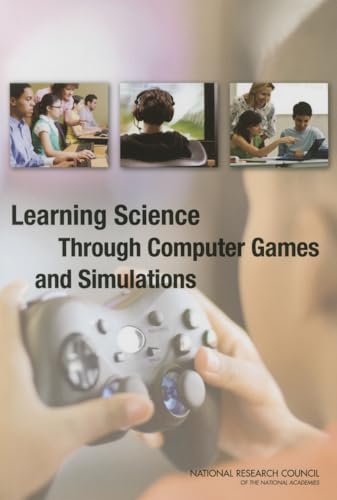
Learning Science Through Computer Games and Simulations
Language: English
Published by National Academies Press (edition ), 2011
ISBN 10: 0309185238 ISBN 13: 9780309185233
Paperback. Condition: Good. It's a preowned item in good condition and includes all the pages. It may have some general signs of wear and tear, such as markings, highlighting, slight damage to the cover, minimal wear to the binding, etc., but they will not affect the overall reading experience.
-
Learning Science Through Computer Games and Simulations
Language: English
Published by National Academies Press, 2011
ISBN 10: 0309185238 ISBN 13: 9780309185233
paperback. Condition: Good. Ex-library book with typical stickers and stampings. Priority Mail is available on this item. No international shipping.
-
Learning Science Through Computer Games and Simulations (Paperback)
Language: English
Published by National Academies Press, Washington, 2011
ISBN 10: 0309185238 ISBN 13: 9780309185233
Paperback. Condition: new. Paperback. At a time when scientific and technological competence is vital to the nation's future, the weak performance of U.S. students in science reflects the uneven quality of current science education. Although young children come to school with innate curiosity and intuitive ideas about the world around them, science classes rarely tap this potential. Many experts have called for a new approach to science education, based on recent and ongoing research on teaching and learning. In this approach, simulations and games could play a significant role by addressing many goals and mechanisms for learning science: the motivation to learn science, conceptual understanding, science process skills, understanding of the nature of science, scientific discourse and argumentation, and identification with science and science learning. To explore this potential, Learning Science: Computer Games, Simulations, and Education, reviews the available research on learning science through interaction with digital simulations and games. It considers the potential of digital games and simulations to contribute to learning science in schools, in informal out-of-school settings, and everyday life.The book also identifies the areas in which more research and research-based development is needed to fully capitalize on this potential. Learning Science will guide academic researchers; developers, publishers, and entrepreneurs from the digital simulation and gaming community; and education practitioners and policy makers toward the formation of research and development partnerships that will facilitate rich intellectual collaboration. Industry, government agencies and foundations will play a significant role through start-up and ongoing support to ensure that digital games and simulations will not only excite and entertain, but also motivate and educate. In this approach, simulations and games could play a significant role by addressing many goals and mechanisms for learning science: the motivation to learn science, conceptual understanding, science process skills, understanding of the nature of science, scientific discourse and argumentation, and identification with science and science learning. Shipping may be from multiple locations in the US or from the UK, depending on stock availability.
-
Learning Science Through Computer Games and Simulations
Language: English
Published by National Academies Press, 2011
ISBN 10: 0309185238 ISBN 13: 9780309185233
Seller: THE SAINT BOOKSTORE, Southport, United Kingdom
Seller rating 5 out of 5 stars

US$ 60.20
US$ 18.50 shipping
Ships from United Kingdom to U.S.A.Quantity: 1 available
Add to basketPaperback / softback. Condition: New. New copy - Usually dispatched within 4 working days.
-
Learning Science Through Computer Games and Simulations (Paperback)
Language: English
Published by National Academies Press, Washington, 2011
ISBN 10: 0309185238 ISBN 13: 9780309185233
Paperback. Condition: new. Paperback. At a time when scientific and technological competence is vital to the nation's future, the weak performance of U.S. students in science reflects the uneven quality of current science education. Although young children come to school with innate curiosity and intuitive ideas about the world around them, science classes rarely tap this potential. Many experts have called for a new approach to science education, based on recent and ongoing research on teaching and learning. In this approach, simulations and games could play a significant role by addressing many goals and mechanisms for learning science: the motivation to learn science, conceptual understanding, science process skills, understanding of the nature of science, scientific discourse and argumentation, and identification with science and science learning. To explore this potential, Learning Science: Computer Games, Simulations, and Education, reviews the available research on learning science through interaction with digital simulations and games. It considers the potential of digital games and simulations to contribute to learning science in schools, in informal out-of-school settings, and everyday life.The book also identifies the areas in which more research and research-based development is needed to fully capitalize on this potential. Learning Science will guide academic researchers; developers, publishers, and entrepreneurs from the digital simulation and gaming community; and education practitioners and policy makers toward the formation of research and development partnerships that will facilitate rich intellectual collaboration. Industry, government agencies and foundations will play a significant role through start-up and ongoing support to ensure that digital games and simulations will not only excite and entertain, but also motivate and educate. In this approach, simulations and games could play a significant role by addressing many goals and mechanisms for learning science: the motivation to learn science, conceptual understanding, science process skills, understanding of the nature of science, scientific discourse and argumentation, and identification with science and science learning. Shipping may be from our Sydney, NSW warehouse or from our UK or US warehouse, depending on stock availability.
