
Euwe Prins (20 results)
 More images
Published by De Tijdstroom, Lochem 1951
- Hardcover
- First Edition
Seller: The Book Collector, Inc. ABAA, ILAB, Fort Worth, TX, U.S.A.The Book Collector, Inc. ABAA, ILAB
Contact seller4-star sellerCondition: Used - Very good
US$ 20.00
US$ 7.00 shippingShips within U.S.A.Quantity: 1 available
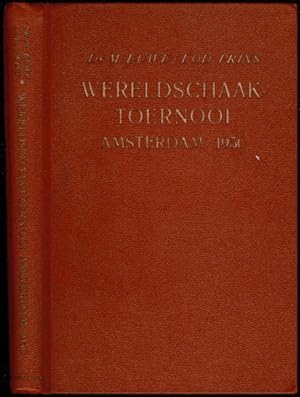
Hardcover. Condition: Very Good. 1st Edition. 280 pages with diagrams, photographs, tables and index. Royal octavo (9 3/4" x 6 1/2") bound in original publishers brown cloth with gilt lettering to spine and cover. First edition. In the winter of 1950 Lodewijk Prins, backed by a committee presided over by Hendrik Jan van Steenis,… organized an international chess tournament that was held at the stock exchange in Amsterdam, The Netherlands. Invitations went out to all the strongest chess masters of the day, whether they reside in Europe, the Soviet Union, or the Americas. The Soviet Chess Federation declined the invitations sent to their masters (they would refrain from entering international competitions until late 1952), as did Laszlo Szabo. Nevertheless, the eventual line-up was still one of the finest selections to be found of the best, active Western chess masters of the day. The field was notable also for the healthy mix of both early century chess mastery and post-war talent emerging for the next generation. All of the best Dutch masters were present, including former world champion Max Euwe and the recent Hoogovens champion, 23 year old Jan Hein Donner. Another example of the generational split among the players was the presence of Savielly Tartakower, who had played against all the greats of the early 20th century, and his former pupil Miguel Najdorf who journeyed from Argentina to attend the event. Other notable participants both young and old were Samuel Reshevsky from the United States, Swedish champion Gideon Ståhlberg, Yugoslavian players Svetozar Gligoric and Vasja Pirc, and Belgium's strongest master Alberic O'Kelly de Galway. All twenty players participated in the round robin event from November 11th to December 9th. G. van Harten served as wedstrijdleider (chief arbiter). The tournament saw some interesting stories and turns as international events before the war often had: Eugenio Szabados attended the event considering it his vacation (a true chess tourist! though his draws against the tournament first and second place were well earned). British champion Harry Golombek was the victim of a practical joke wherein a particular opponent was suspected of ordering Golombek a glass of milk to be delivered before dawn of their encounter. Anecdotes aside, the event was a spectacular run for Najdorf, who won clear first undefeated with 15 points out of 19 rounds. He earned wins against half the field, further cementing his status as one of the best players in the world at the time (there had been controversy surrounding his absence from the 1948 world championship tournament). However, Najdorf only finished one point ahead of clear second place Reshevsky who also finished undefeated, scoring an impressive 9 wins in the process. Ståhlberg also had 9 wins, but tragically could not share second place with Reshevsky by a measly half point (a half point he failed to win in his draw with Tartakower where the good doctor blundered a pawn in an opening experiment but then tenaciously defended). Other masters who placed in the top standings were Pirc and Gligoric as shared 4th and Euwe and Herman Pilnik as shared 6th. The brilliancy prize of the tournament went to Nicolas Rossolimo from France in his sixth round win against Dutch player Theo Daniel van Scheltinga. Rossolimo manuevered for 55 moves in a Caro-Kann, achieving a won endgame with a pushed passed pawn and a temporary queen sac in the finale. The tournament can be seen as a transitional gem, when the austere mastery of the pre-War years would soon give way (but not this year!) to the competitive talents of next generation and the Soviet Chess Machine of the 1950s. (Chess dot com) Condition: Points rubbed, lightly soiled else very good.

Language: English
Published by Independently published 2020
Series: Books Cover Design by Alex Ghizea Ciobanu, Book 1 of 4. Book 1 of 4 - Books Cover Design by Alex Ghizea Ciobanu
- Softcover
Seller: Ria Christie Collections, Uxbridge, United KingdomRia Christie Collections
Contact seller5-star sellerCondition: New
US$ 30.80
US$ 15.82 shippingShips from United Kingdom to U.S.A.Quantity: Over 20 available
Condition: New. In. Ghizea Ciobanu, Alex (illustrator).

Language: German
Published by Verlag Gerd Hatje, Stuttgart 1952
- Hardcover
Seller: WTP Books, Kenilworth, IL, U.S.A.WTP Books
Contact seller4-star sellerCondition: Used - Very good
US$ 25.00
US$ 5.00 shippingShips within U.S.A.Quantity: 1 available
Hardcover. Condition: Very Good. 175 games of the great world champion analyzed by another world champion. 368 pp.
Language: German
Published by Das Schacharchiv, Stuttgart 1979
- Hardcover
Seller: WTP Books, Kenilworth, IL, U.S.A.WTP Books
Contact seller4-star sellerCondition: Used - Very good
US$ 25.00
US$ 5.00 shippingShips within U.S.A.Quantity: 1 available
Hardcover. Condition: Very Good. 175 games of the great world champion analyzed by another world champion. Bookplate of former owner on inside cover. 368 pp.
Language: Dutch
Published by De Tijdstroom, Lochem 1951
- Hardcover
Seller: WTP Books, Kenilworth, IL, U.S.A.WTP Books
Contact seller4-star sellerCondition: Used - Good
US$ 30.00
US$ 5.00 shippingShips within U.S.A.Quantity: 1 available
Hardcover. Condition: Good. Dust Jacket Condition: Good. Najdorf wins ifo Reshevsky, Stahlberg, Gligoric, Pirc, Euwe, and Rossolimo in a field of 20. 1 x 2 inch missing from top of dj. Dj protected by Brodart archival cover. 280 pp.
Language: Dutch
Published by De Tijdstroom, Lochem 1951
- Hardcover
Seller: WTP Books, Kenilworth, IL, U.S.A.WTP Books
Contact seller4-star sellerCondition: Used - Good
US$ 30.00
US$ 5.00 shippingShips within U.S.A.Quantity: 1 available
Hardcover. Condition: Good. Najdorf wins ifo Reshevsky, Stahlberg, Gligoric, Pirc, Euwe, and Rossolimo in a field of 20. Prior owners bookplates on inside cover, fep, and title page.
Published by Hamburg, Verlag Das Schacharchiv, . 1979
- Hardcover
Seller: Werner Engelmann, Lahr, BW, GermanyWerner Engelmann
Contact seller5-star sellerCondition: Used
US$ 23.60
US$ 22.92 shippingShips from Germany to U.S.A.Quantity: 1 available
Porträt, 368 S. schwarzer Orig. Pappband ---mit kl. Läsuren.
 More images
Language: Dutch
Published by N V Lochemse Handels 1951
- Hardcover
- First Edition
Seller: The Book Collector, Inc. ABAA, ILAB, Fort Worth, TX, U.S.A.The Book Collector, Inc. ABAA, ILAB
Contact seller4-star sellerCondition: Used - Very good
US$ 50.00
US$ 7.00 shippingShips within U.S.A.Quantity: 1 available
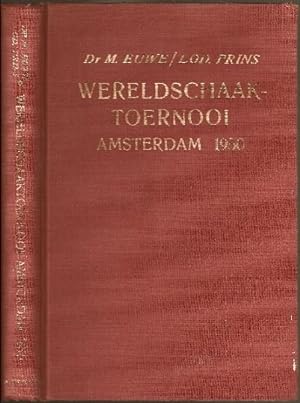
Hardcover. Condition: Very Good. 1st Edition. 280 pages with diagrams, tables, photographs and index. Royal Octavo (9 3/4" x 6 1/2") bound in original publisher's reddish brown cloth with gilt lettering to spine and front cover. Forewords by A De Roos and T Rutten. Preface by H J Van Steenis. (Bibliotheca Van der Linde-Niemeijer…iana: 5790) First edition. In the winter of 1950 Lodewijk Prins, backed by a committee presided over by Hendrik Jan Van Steenis, organized an international chess tournament that was held at the stock exchange in Amsterdam, The Netherlands. Invitations went out to all the strongest chess masters of the day, whether they reside in Europe, the Soviet Union, or the Americas. The Soviet Chess Federation declined the invitations sent to their masters (they would refrain from entering international competitions until late 1952), as did Lazslo Szabo. Nevertheless, the eventual line-up was still one of the finest selections to be found of the best, active Western chess masters of the day. The field was notable also for the healthy mix of both early century chess mastery and post-war talent emerging for the next generation. All of the best Dutch masters were present, including former world champion Max Euwe and the recent Hoogovens champion, 23 year old Jan Hein Donner. Another example of the generational split among the players was the presence of Savielly Tartakower, who had played against all the greats of the early 20th century, and his former pupil Miguel Najdorf who journeyed from Argentina to attend the event. Other notable participants both young and old were Samuel Reshevsky from the United States, Swedish champion Gideon Stahlberg, Yugoslavian players Svetozar Gligoric and Vasja Pirc, and Belgium's strongest master Alberic O'Kelly de Galway. All twenty players participated in the round robin event from November 11th to December 9th. G. van Harten served as wedstrijdleider (chief arbiter). The event was a spectacular run for Najdorf, who won clear first undefeated with 15 points out of 19 rounds. He earned wins against half the field, further cementing his status as one of the best players in the world at the time (there had been controversy surrounding his absence from the 1948 world championship tournament). However, Najdorf only finished one point ahead of clear second place Reshevsky who also finished undefeated, scoring an impressive 9 wins in the process. Stahlberg also had 9 wins, but tragically could not share second place with Reshevsky by a measly half point (a half point he failed to win in his draw with Tartakower where the good doctor blundered a pawn in an opening experiment but then tenaciously defended). Other masters who placed in the top standings were Pirc and Gligoric as shared 4th and Euwe and Herman Pilnik as shared 6th. The brilliancy prize of the tournament went to Nicolas Rossolimo from France in his sixth round win against Dutch player Theo Daniel Van Scheltinga. Rossolimo maneuvered for 55 moves in a Caro-Kann, achieving a won endgame with a pushed passed pawn and a temporary queen sac in the finale. The tournament can be seen as a transitional gem, when the austere mastery of the pre-War years would soon give way (but not this year!) to the competitive talents of next generation and the Soviet Chess Machine of the 1950s. Condition: Pages rippled, corners bumped else a very good copy.
 More images
Published by De Tijdstroom, Lochem 1951
- Hardcover
- First Edition
Seller: The Book Collector, Inc. ABAA, ILAB, Fort Worth, TX, U.S.A.The Book Collector, Inc. ABAA, ILAB
Contact seller4-star sellerCondition: Used - Very good
US$ 50.00
US$ 7.00 shippingShips within U.S.A.Quantity: 1 available
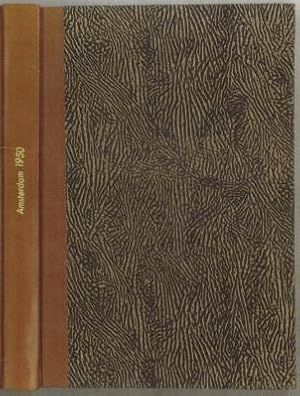
Hardcover. Condition: Very Good. 1st Edition. 279 pages with diagrams, photograph and tables. Royal octavo (9 1/2" x 6 3/4") Bound in quarter leather with gilt lettering to spine with origibnal wrappers bound-in. (Bibliotheca Van der Linde-Niemeijeriana: 5791) First edition. In the winter of 1950 Lodewijk Prins, backed by a comm…ittee presided over by Hendrik Jan Van Steenis, organized an international chess tournament that was held at the stock exchange in Amsterdam, The Netherlands. Invitations went out to all the strongest chess masters of the day, whether they reside in Europe, the Soviet Union, or the Americas. The Soviet Chess Federation declined the invitations sent to their masters (they would refrain from entering international competitions until late 1952), as did Lazslo Szabo. Nevertheless, the eventual line-up was still one of the finest selections to be found of the best, active Western chess masters of the day. The field was notable also for the healthy mix of both early century chess mastery and post-war talent emerging for the next generation. All of the best Dutch masters were present, including former world champion Max Euwe and the recent Hoogovens champion, 23 year old Jan Hein Donner. Another example of the generational split among the players was the presence of Savielly Tartakower, who had played against all the greats of the early 20th century, and his former pupil Miguel Najdorf who journeyed from Argentina to attend the event. Other notable participants both young and old were Samuel Reshevsky from the United States, Swedish champion Gideon Stahlberg, Yugoslavian players Svetozar Gligoric and Vasja Pirc, and Belgium's strongest master Alberic O'Kelly de Galway. All twenty players participated in the round robin event from November 11th to December 9th. G. van Harten served as wedstrijdleider (chief arbiter). The tournament saw some interesting stories and turns as international events before the war often had: Eugenio Szabados attended the event considering it his vacation (a true chess tourist! though his draws against the tournament first and second place were well earned). British champion Harry Golombek was the victim of a practical joke wherein a particular opponent was suspected of ordering Golombek a glass of milk to be delivered before dawn of their encounter. Anecdotes aside, the event was a spectacular run for Najdorf, who won clear first undefeated with 15 points out of 19 rounds. He earned wins against half the field, further cementing his status as one of the best players in the world at the time (there had been controversy surrounding his absence from the 1948 world championship tournament). However, Najdorf only finished one point ahead of clear second place Reshevsky who also finished undefeated, scoring an impressive 9 wins in the process. Stahlberg also had 9 wins, but tragically could not share second place with Reshevsky by a measly half point (a half point he failed to win in his draw with Tartakower where the good doctor blundered a pawn in an opening experiment but then tenaciously defended). Other masters who placed in the top standings were Pirc and Gligoric as shared 4th and Euwe and Herman Pilnik as shared 6th. The brilliancy prize of the tournament went to Nicolas Rossolimo from France in his sixth round win against Dutch player Theo Daniel Van Scheltinga. Rossolimo maneuvered for 55 moves in a Caro-Kann, achieving a won endgame with a pushed passed pawn and a temporary queen sac in the finale. The tournament can be seen as a transitional gem, when the austere mastery of the pre-War years would soon give way (but not this year!) to the competitive talents of next generation and the Soviet Chess Machine of the 1950s. The final standings: 1st Najdorf 15/19, 2nd Reshevsky 14, 3rd Stahlberg 13 1/2, tied 4th through 5th Pirc and Gligoric 12, tied 6th through 7th Euwe and Pilnik 11, 8th Rossolimo 11 1/2, 9th Trifunovic 10 1/2, 10th O'Kelly de Galway 9 1/2, tied 11th through 12th Tartakower and Donner 8 1/2, 13th Foltys 8, 14t.
Published by Lochem 1951
- Hardcover
- First Edition
Seller: Tony Peterson, Littlehampton, , United KingdomTony Peterson
Contact seller5-star sellerCondition: Used
US$ 33.99
US$ 23.76 shippingShips from United Kingdom to U.S.A.Quantity: 1 available
1st Edn. Original brown cloth, VG. 280pp., 4 plates, 190 games, most annotated. A well produced tournament book. 1.Najdorf (15/19 unbeaten) 2.Reshevsky 3.Stahlberg. LN 5791.
Language: English
Published by Independently published 2020
Series: Books Cover Design by Alex Ghizea Ciobanu, Book 1 of 4. Book 1 of 4 - Books Cover Design by Alex Ghizea Ciobanu
- Softcover
- Print on Demand
Seller: California Books, Miami, FL, U.S.A.California Books
Contact seller4-star sellerCondition: New
US$ 27.00
Free ShippingShips within U.S.A.Quantity: Over 20 available
Condition: New. Print on Demand. Ghizea Ciobanu, Alex (illustrator).

- Hardcover
Seller: Antiquariaat Clio / cliobook.nl, Odijk, UTREC, NetherlandsAntiquariaat Clio / cliobook.nl
Contact seller5-star sellerCondition: Used
US$ 23.60
US$ 30.94 shippingShips from Netherlands to U.S.A.Quantity: 1 available
Hamburg, Verlag: Das Schacharchiv, (1979); 21x13,5 cm. Hardcover, boards (sl.wear). 368 pp., text in German, portrait, illustrated, index. Good copy.

- Hardcover
Seller: Celler Versandantiquariat, Eicklingen, , GermanyCeller Versandantiquariat
Contact seller5-star sellerCondition: Used
US$ 17.70
US$ 43.54 shippingShips from Germany to U.S.A.Quantity: 1 available
De Tijdstroom, Lochem, 1951, 279 S., mit einigen Abbildungen, Leinen (Name auf Vorsatz)---- Text niederländisch - 665 Gramm.
Published by Verlag Gerd Hatje 1952
- Hardcover
Seller: Book Alley, Pasadena, CA, U.S.A.Book Alley
Contact seller4-star sellerCondition: Used - Good
US$ 87.19
US$ 6.00 shippingShips within U.S.A.Quantity: 1 available
hardcover. Condition: Good. NO dust jacket. Used with normal wear and signs of age but is still in solid reading condition.
Language: Dutch
Published by Lochem, De Tjidstroom (1951). 1951
- First Edition
Seller: Antiquariat im OPUS, Silvia Morch-Israel, Oppenheim, GermanyAntiquariat im OPUS, Silvia Morch-Israel
Contact seller5-star sellerCondition: Used - Very good
US$ 29.50
US$ 45.83 shippingShips from Germany to U.S.A.Quantity: 1 available
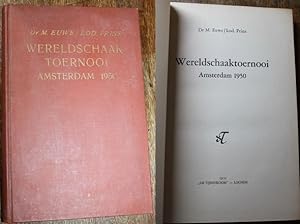
Leineneinband, ca. 25 x 27 cm. Condition: Gut. 1. Auflage. 279 S., 1 nn.S., einige schwarz-weiße Fotos Einband leicht berieben und bestossen, Vorsätze fleckig. Insgesamt noch gutes Exemplar. Sprache: Niederländisch Gewicht in Gramm: 662.
 More images
Published by De Tijdstroom,, Lochem 1951
- Hardcover
Seller: Bergoglio Libri d'Epoca, RIVALBA, TO, ItalyBergoglio Libri d'Epoca
Contact seller4-star sellerCondition: Used
US$ 61.37
US$ 76.77 shippingShips from Italy to U.S.A.Quantity: 1 available
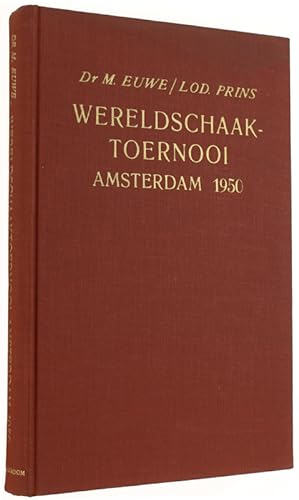
In 8° 279 pp. Language: dutch. Plates, diagrams. Linen bound, gilted title (fine), chipped dust jacket. All books are in stock in fine condition or described meticulously. Very safe packaging.

Language: German
Published by Stuttgart, Gerd Hatje 1952
- Hardcover
Seller: Antiquarische Fundgrube e.U., Wien, , AustriaAntiquarische Fundgrube e.U.
Contact seller5-star sellerCondition: Used
US$ 56.65
US$ 63.02 shippingShips from Austria to U.S.A.Quantity: 1 available
Leinen. 368 S. Schutzumschlag etw. berieben u. bestaubt, Buchschnitt etw. bestaubt // KUBANISCHE SCHACHSPIELER, SCHACHWELTMEISTER L047 *.* Sprache: Deutsch Gewicht in Gramm: 550.
Language: German
Published by Hamburg : Verlag Das Schacharchiv 1979
- Hardcover
Seller: BOUQUINIST, München, BY, GermanyBOUQUINIST
Contact seller5-star sellerCondition: Used - Fine
US$ 29.50
US$ 91.66 shippingShips from Germany to U.S.A.Quantity: 1 available
Condition: Sehr gut. 2. Auflage. 368 Seiten mit einem Titelporträt und 320 graphischen Darstellungen. 20,8 cm. Sehr guter Zustand. - José Raúl Capablanca y Graupera (* 19. November 1888 in Havanna; 8. März 1942 in New York) war ein kubanischer Schachspieler und Diplomat. Von 1921 bis 1927 war er der dritte Schachweltmeister. Leb…en: Capablanca war der Sohn eines spanischen Kolonialbeamten. Er galt als Wunderkind und erlernte das Schachspielen schon mit vier Jahren. Angeblich soll er sich dies durch bloßes Zusehen bei den Spielen seines Vaters selbst beigebracht haben, was von Capablanca selbst in späteren Jahren jedoch ins Reich der Fabel verwiesen wurde. Tatsache ist jedoch, dass er bereits in sehr jungen Jahren über eine beachtliche Spielstärke verfügte. Capablanca gewann im Alter von zwölf Jahren einen Wettkampf gegen den kubanischen Landesmeister Juan Corzo 4:3 bei sechs Remisen. Später studierte er an der Columbia University in New York Chemie und Sport. Im Jahr 1909 gewann er einen Wettkampf gegen den führenden amerikanischen Meister Frank Marshall deutlich mit 8-1 bei 14 Remisen. Der internationale Durchbruch gelang ihm beim Turnier in San Sebastián 1911, welches er vor bekannten Meistern wie Akiba Rubinstein, Milan Vidmar und Carl Schlechter gewann. Ab 1913 stand er im diplomatischen Dienst Kubas, konnte sich aber de facto völlig dem Schach widmen. Im April/Mai 1914 fand in St. Petersburg eines der bedeutendsten Turniere der Schachgeschichte statt. Capablanca erreichte im allgemeinen Turnier einen Vorsprung von 1 Punkten gegenüber Weltmeister Emanuel Lasker. Lasker machte im Siegerturnier der besten fünf Spieler jedoch den Rückstand wieder wett, besiegte Capablanca und wurde mit 13 Punkten aus 18 Partien, einen halben Punkt vor Capablanca, Turniersieger. 1921 gewann Capablanca in einem Wettkampf gegen Lasker (4 Siege, 10 Unentschieden, keine Niederlage) den Weltmeistertitel. Diesen verlor er 1927 in Buenos Aires an Alexander Aljechin (3:6 bei 25 Remispartien). Zu einem Revanchekampf kam es nicht mehr, da sich Capablanca und Aljechin nicht auf die Modalitäten einigen konnten; manche Autoren sprechen davon, dass Aljechin einem Revanchekampf bewusst auswich. Capablanca gehörte noch bis Mitte der 1930er Jahre zur Weltspitze. So gewann er 1936 stark besetzte Turniere in Moskau (alleiniger Sieger vor Botwinnik) und Nottingham (geteilt mit Botwinnik). Während des AVRO-Turniers 1938 erlitt er einen ersten leichten Schlaganfall, war dadurch beeinträchtigt und belegte nur den vorletzten Platz. Im Jahr 1942 erlitt Capablanca beim Kiebitzen im Manhattan Chess Club einen weiteren Schlaganfall, von dem er sich nicht mehr erholte. Er starb in derselben Klinik wie Lasker ein Jahr zuvor. Seine letzte Ruhestätte befindet sich auf dem Kolumbus-Friedhof von Havanna. Ehen: Capablanca heiratete 1921 seine erste Ehefrau Gloria Simioni y Betancourt, mit der er wenige Monate vor der Ehe durch den kubanischen Minister Gonzalo de Quesada bekanntgemacht worden war. Sie stammte aus einer Familie kubanischer Patrioten, die für ihre Verdienste im Unabhängigkeitskrieg ausgezeichnet worden war. Die Ehe, aus der zwei Kinder hervorgingen, wurde 1937 geschieden. Am 20. Oktober 1938 heiratete er in New York seine zweite Ehefrau Olga Chagodaev (geb. Choubaroff) (* 23. September 1898 in Georgien, 24. April 1994 in Manhattan), eine russische Prinzessin, die er 1934 kennengelernt hatte. Spiel: Capablancas Stil war sehr solide. Er spielte mit großer Leichtigkeit und galt in seiner besten Zeit zwischen 1914 und 1924 als kaum zu schlagen. Er selbst behauptete, in Endspielen bis zu 25 Züge (nicht Halbzüge) vorauszurechnen. Wegen seines präzisen Spiels wurde Capablanca auch die Schachmaschine genannt. Von 1914 bis 1927 verlor er nur fünf Turnierpartien, von 578 ernsten Partien insgesamt nur 36.nik war Capablanca auch für seine sogenannten petites combinaisons bekannt: kurzzügige, nicht besonders komplizierte Kombinationen, die aber weit im Voraus gesehen werden mussten. Ein Beispiel aus Capablanca.
 More images
Published by De Tijdstroom, Lochem 1951
- Hardcover
- First Edition
- Signed
Seller: The Book Collector, Inc. ABAA, ILAB, Fort Worth, TX, U.S.A.The Book Collector, Inc. ABAA, ILAB
Contact seller4-star sellerCondition: Used - Very good
US$ 1,200.00
US$ 7.00 shippingShips within U.S.A.Quantity: 1 available
Hardcover. Condition: Very Good. 1st Edition. 280 pages with signed plates diagrams, tables, photographs and index. Royal Octavo (9 3/4" x 6 1/2") bound in original publisher's reddish brown cloth with gilt lettering to spine and front cover. Forewords by A De Roos and T Rutten. Preface by H J Van Steenis. With the handwritten s…ignatures of all 20 participants: by the former world champion M. Euwe and the grandmasters Johannes H. Donner, Svetozar Gligoric, Albéric O'Kelly, Miguel Najdorf, Herman Pilnik, Vasja Pirc, Samuel Reshevsky, Nicolas Rossolimo, Gideon Stahlberg, Savielly Tartakower, Petar Trifunovic and the international masters CB van den Berg, Jan Foltys, Harry Golombek, Cenek Kottnauer, Haije Kramer, Theo D. van Scheltinga, Eugenio Szabados and by Gudmundur S. Gudmundsson (Bibliotheca Van der Linde-Niemeijeriana: 5791) First edition signed edition limited to 100 copies. In the winter of 1950 Lodewijk Prins, backed by a committee presided over by Hendrik Jan Van Steenis, organized an international chess tournament that was held at the stock exchange in Amsterdam, The Netherlands. Invitations went out to all the strongest chess masters of the day, whether they reside in Europe, the Soviet Union, or the Americas. The Soviet Chess Federation declined the invitations sent to their masters (they would refrain from entering international competitions until late 1952), as did Lazslo Szabo. Nevertheless, the eventual line-up was still one of the finest selections to be found of the best, active Western chess masters of the day. The field was notable also for the healthy mix of both early century chess mastery and post-war talent emerging for the next generation. All of the best Dutch masters were present, including former world champion Max Euwe and the recent Hoogovens champion, 23 year old Jan Hein Donner. Another example of the generational split among the players was the presence of Savielly Tartakower, who had played against all the greats of the early 20th century, and his former pupil Miguel Najdorf who journeyed from Argentina to attend the event. Other notable participants both young and old were Samuel Reshevsky from the United States, Swedish champion Gideon Stahlberg, Yugoslavian players Svetozar Gligoric and Vasja Pirc, and Belgium's strongest master Alberic O'Kelly de Galway. All twenty players participated in the round robin event from November 11th to December 9th. G. van Harten served as wedstrijdleider (chief arbiter). The event was a spectacular run for Najdorf, who won clear first undefeated with 15 points out of 19 rounds. He earned wins against half the field, further cementing his status as one of the best players in the world at the time (there had been controversy surrounding his absence from the 1948 world championship tournament). However, Najdorf only finished one point ahead of clear second place Reshevsky who also finished undefeated, scoring an impressive 9 wins in the process. Stahlberg also had 9 wins, but tragically could not share second place with Reshevsky by a measly half point Other masters who placed in the top standings were Pirc and Gligoric as shared 4th and Euwe and Herman Pilnik as shared 6th. The brilliancy prize of the tournament went to Nicolas Rossolimo from France in his sixth round win against Dutch player Theo Daniel Van Scheltinga. Rossolimo maneuvered for 55 moves in a Caro-Kann, achieving a won endgame with a pushed passed pawn and a temporary queen sac in the finale. The tournament can be seen as a transitional gem, when the austere mastery of the pre-War years would soon give way (but not this year!) to the competitive talents of next generation and the Soviet Chess Machine of the 1950s. Condition: The bookplate on front paste-down removed. Endplates and inner cover browned. Somewhat browned on the inside and occasionally stained. Few notes in pencil in the text. Loosened book block improperly glued with transparent adhesive tape. Cover slightly rubbed and slightly bumped else about very good. Signed by Author(s).
Seller: Hay-on-Wye Booksellers, Hay-on-Wye, HEREF, United KingdomHay-on-Wye Booksellers
Contact seller4-star sellerCondition: Used - Good
US$ 40.73
US$ 33.00 shippingShips from United Kingdom to U.S.A.Quantity: 1 available
Condition: Good. Mild shelf wear to extremities. Scuffs, chips and small tears along jacket edges, with 1 piece missing at base of spine. Heavy scuff to base of spine, 0.5 missing. Light tanning and foxing, mainly to page edges.


