
Evers Charles: Signed (13 results)
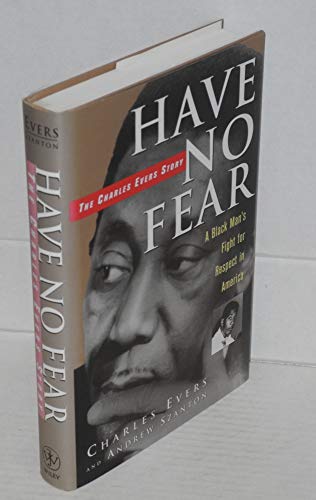
- Hardcover
- First Edition
- Signed
Seller: Dunaway Books, St. Louis, MO, U.S.A.Dunaway Books
Contact seller4-star sellerCondition: Used - Very good
US$ 35.00
US$ 4.00 shippingShips within U.S.A.Quantity: 1 available
Hardcover. Condition: Very Good. Dust Jacket Condition: Good. First Edition. Signed by both Charles Evers and Andrew Szanton on half title page, jacket has been price clipped, binding tight, pages clean. Signed By Author.
- Hardcover
- First Edition
- Signed
Seller: Books From California, Simi Valley, CA, U.S.A.Books From California
Contact seller4-star sellerCondition: Used - Very good
US$ 35.00
US$ 4.99 shippingShips within U.S.A.Quantity: 1 available
hardcover. Condition: Very Good. Dust Jacket Condition: Includes dust jacket. Signed. First Edition. Signed by Charles Evers.
- Hardcover
- First Edition
- Signed
Seller: River of Books, Clive, IA, U.S.A.River of Books
Contact seller5-star sellerCondition: Used - Very good
US$ 50.00
US$ 4.00 shippingShips within U.S.A.Quantity: 1 available
Hardcover. Condition: Very Good. Dust Jacket Condition: Very Good. 1st Edition. Signed by author, Charles Evers, the brother of slain civil rights leader Medgar Evers, on title page. Also inscribed by Charles Evers on FFEP. Also included is 15" x 23" publisher's color poster promoting the book, also signed by Charles Evers (a to…tal of three Charles Evers signatures). Date of publication also inked onto FFEP but unclear if it is in the author's hand. DJ unclipped with $24.95 price present. Slight skew, some bumping. Signed by Author(s).

Published by The World Publishing Company
- First Edition
- Signed
Seller: Wonder Book, Frederick, MD, U.S.A.Wonder Book
Contact seller5-star sellerCondition: Fair. Signed Copy First edition copy. . Acceptable dust jacket. Former Library book. Inscribed by introduction author Grace Halsell on front endpage verso. Some rodent damage to upper edges. (African Americans, Mississippi, Civil Rights, Autobiography).
- Hardcover
- Signed
Seller: Daniel Montemarano, Newfield, NJ, U.S.A.Daniel Montemarano
Contact seller5-star sellerCondition: Used - Very good
US$ 40.00
US$ 6.95 shippingShips within U.S.A.Quantity: 1 available
No Binding. Condition: Very Good +. Personal business card - SIGNED and inscribed by Civil Rights Leader Charles Evers. Comes with a unsigned B&W photo of Evers. SIGNED CARD.
 More images
Language: English
Published by The World Publishing Compan, New York 1971
- Hardcover
- First Edition
- Signed
Seller: Collectible By John, Maple Ridge, BC, CanadaCollectible By John
Contact seller5-star sellerCondition: Used - Very good
US$ 165.70
US$ 12.03 shippingShips from Canada to U.S.A.Quantity: 1 available
Hardcover. Condition: Very Good. Dust Jacket Condition: Near Fine. 1st Edition. First Edition 1971. Does have previous owners name, with address blacked out. James Charles Evers was an American civil rights activist, businessman, radio personality, and politician. Evers was known for his role in the civil rights movement along w…ith his younger brother Medgar Evers. After serving in World War II, Evers began his career as a disc jockey at WHOC in Philadelphia, Mississippi. Signed by Author(s).

- Hardcover
- Signed
Seller: Daniel Montemarano, Newfield, NJ, U.S.A.Daniel Montemarano
Contact seller5-star sellerCondition: Used - Near fine
US$ 50.00
US$ 6.95 shippingShips within U.S.A.Quantity: 1 available
No Binding. Condition: Near Fine. First Day Cover (FDC), honoring Mississippi Teritory, postmarked April 7, 1948 SIGNED by Civil Rights Leader Charles Evers: "Charles Evers, Mayor Fayette Miss." Comes with original Philadelphia Inquirer obituary for Evers. Signed FDC.
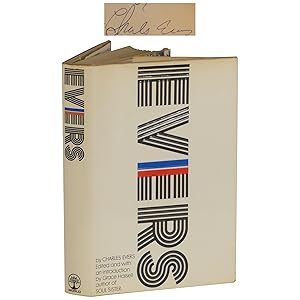 More images
Published by World Publishing Company, New York 1971
- Hardcover
- First Edition
- Signed
Seller: Downtown Brown Books, Portland, OR, U.S.A.Downtown Brown Books
Contact seller5-star sellerCondition: Used - Very good
US$ 180.00
US$ 7.00 shippingShips within U.S.A.Quantity: 1 available
Hardcover. Condition: Very good. Dust Jacket Condition: Very good. First Edition. The memoirs of the brother of the assassinated civil rights leader Medgar Evers. xii, 196 pages. First edition (stated first printing). Some spotting to the front board, else very good in a very good dust jacket with shallow chipping to the top of…the spine. Pages tanned, as usual. Inscribed by the author, "Dear Mrs Benson, Thanks very much, Charles Evers.".
 More images
Published by The World Publishing Company, New York 1971
- Hardcover
- First Edition
- Signed
Seller: APPLEDORE BOOKS, ABAA, WACCABUC, NY, U.S.A.APPLEDORE BOOKS, ABAA
Contact seller5-star sellerCondition: Used - Very good
US$ 500.00
US$ 6.00 shippingShips within U.S.A.Quantity: 1 available
Cloth. Condition: Very Good +. Dust Jacket Condition: Near Fine. First Edition. A very notable Association copy: WARMLY INSCRIBED BY GRACE HALSELL (WHO EDITED AND WROTE THE INTRODUCTION FOR THIS BOOK) TO JOHN HOWARD GRIFFIN, THE LEGENDARY AUTHOR OF "BLACK LIKE ME", WHOSE EXAMPLE, ACCORDING TO THE INSCRIPTION, INSPIRED GRACE TO T…RY A SIMILAR EXPERIMENT IN SWITCHING RACES AND TO RECORD THE EXPERIENCE IN HER OWN PIONEERING BOOK ON THE SUBJECT, "SOUL SISTER". A solid copy of the 1971 stated 1st printing to boot. Clean and VG+ (with light cocking to the binding) in a crisp, price-intact, Near Fine dustjacket. Octavo, important memoir by the older brother of slain Civil Rights leader Medgar Evers. Signed.
 More images
Published by The World Publishing Company, New York & Cleveland 1971
- First Edition
- Signed
Seller: Lorne Bair Rare Books, ABAA, Winchester, VA, U.S.A.Lorne Bair Rare Books, ABAA
Contact seller5-star sellerdj. First Edition. First Printing. Octavo (21.5cm); white cloth, with titles stamped in blue on spine; pictorial endpapers; dustjacket; [iv],v-xii,196pp. Signed by the author opposite the title page. Subtle tanning to text edges, some foxing to cloth and upper edge of textblock, though internally clean; Very Good+. Dustjacket is… price-clipped, with some trivial external wear, and a corresponding faint trace of foxing to verso; Near Fine. Memoir of Charles Evers (1922-2020), former mayor of Fayette, Mississippi, and brother of murdered civil rights leader Medgar Evers. Edited and with an introduction by Grace Halsell. BLOCKSON 2787. 82491. Signed.
- Signed
Seller: NUDEL BOOKS, New York, NY, U.S.A.NUDEL BOOKS
Contact seller3-star sellerCondition: Used - Very good
US$ 175.00
US$ 7.00 shippingShips within U.S.A.Quantity: 1 available
No Binding. Condition: Very Good. 2 BY 3 inch personal card as N.A.A.C.P. field secretary.SIGNED on back as mayor of Fayette, MIss. Signed by Author(s).
- First Edition
- Signed
Seller: Bauman Rare Books, Philadelphia, PA, U.S.A.Bauman Rare Books
Contact seller4-star sellerFirst Edition. "(MEDGAR EVERS) EVERS, Charles. Evers. New York and Cleveland: World, 1971. Octavo, original white cloth, photographic endpapers, original dust jacket. $1250.First edition of Charles Evers' complicated memoir of his brother, his explosive rage at Medgar Ever's murder, and his own resolve to continue his brother's…work, noting"racists can't kill all of us who believe in freedom"signed by him on his photographic image in the book's opening pastedown.Charles Evers always felt protective of his younger brother Medgar. In this extraordinary memoir he recalls of one of their last phone calls. Charles, then in Chicago, urged Medgar to be careful: the KKK "down there are after you. And if they can stop you, they'll feel like they've got everything under control' 'Don't worry about me,' he said, 'I'm going to make it.'" Before the phone call ended. "somehow we both wound up crying." Three days later his brother was murdered. Charles recalls blaming "every white man" and then blaming himself. "Medgar didn't carry a gun. I felt that if I'd stayed in Mississippi, Medgar wouldn't be gone Medgar's death made one point clear to me. I had to change Mississippi by giving Blacks the courage to get registered and start voting. I followed in Medgar's footsteps." Within months Charles, often described as Medgar's "wayward brother picked up his brother's mantle" (Washington Post).After replacing Medgar as Mississippi field director of the NAACP he notes his refusal to back down: "racists can't kill all of us who believe in freedom" He speaks of the murders of civil rights workers Chaney, Schwerner and Goodman, and his work on the ground desegregating businesses in Natchez. "Over the next decade, Evers became a nationally known civil rights figure in his own right. He was co-chairman of Robert Kennedy's Mississippi campaign for the Democratic presidential nomination in 1968" and in 1969 ran for mayor of Fayette, Mississippi (New York Times). "He delivered rousing, sermon-like speeches during his campaign, which was credited with inspiring more than 175 African Americans to run for office across the state. The growing Black political movement was described in the New York Times as 'the biggest threat to the local level white establishment since Reconstruction.' After he beat the longtime white incumbent, Evers "oversaw the building of a monument to his brother near another that honored the Confederate dead, an action that made him the target of death threats. He and his newly elected all-Black city council set to work on an economic revival strategy that involved lifting Black morale." Evers, who died in 2020, had a "complicated legacy," said historian Robert Luckett: one that symbolized "a Black man [willing] to speak up and make claim to power." Three decades after his brother' s assassination, "Charles Evers lived to see Byron De La Beckwith convicted of murder. Evers told a reporter that he was only sorry he couldn't personally execute the man. 'I believe in an eye for an eye,' he said, 'a life for a life'"(Washington Post). First edition: copyright page with "First printing1971." Edited by journalist Grace Halsell from tape-recordings; in her introduction she affirms: "All the words in this book are his spoken words, recorded mostly on the run during history-making events." A fine signed copy.". Signed.
- First Edition
- Signed
Seller: Bauman Rare Books, Philadelphia, PA, U.S.A.Bauman Rare Books
Contact seller4-star sellerFirst Edition. "(MEDGAR EVERS) EVERS, Charles. Evers. New York and Cleveland: World, 1971. Octavo, original white cloth, photographic endpapers, original dust jacket. $1250.First edition of Charles Evers' complicated memoir of his brother, his explosive rage at Medgar Ever's murder, and his own resolve to continue his brother's…work, noting"racists can't kill all of us who believe in freedom"inscribed by him on the title page, "Thanks for reading my book, Charles Evers, Mayor, Fayette, Miss. 4-5-89."Charles Evers always felt protective of his younger brother Medgar. In this extraordinary memoir he recalls of one of their last phone calls. Charles, then in Chicago, urged Medgar to be careful: the KKK "down there are after you. And if they can stop you, they'll feel like they've got everything under control' 'Don't worry about me,' he said, 'I'm going to make it.'" Before the phone call ended. "somehow we both wound up crying." Three days later his brother was murdered. Charles recalls blaming "every white man" and then blaming himself. "Medgar didn't carry a gun. I felt that if I'd stayed in Mississippi, Medgar wouldn't be gone Medgar's death made one point clear to me. I had to change Mississippi by giving Blacks the courage to get registered and start voting. I followed in Medgar's footsteps." Within months Charles, often described as Medgar's "wayward brother picked up his brother's mantle" (Washington Post).After replacing Medgar as Mississippi field director of the NAACP he notes his refusal to back down: "racists can't kill all of us who believe in freedom" He speaks of the murders of civil rights workers Chaney, Schwerner and Goodman, and his work on the ground desegregating businesses in Natchez. "Over the next decade, Evers became a nationally known civil rights figure in his own right. He was co-chairman of Robert Kennedy's Mississippi campaign for the Democratic presidential nomination in 1968" and in 1969 ran for mayor of Fayette, Mississippi (New York Times). "He delivered rousing, sermon-like speeches during his campaign, which was credited with inspiring more than 175 African Americans to run for office across the state. The growing Black political movement was described in the New York Times as 'the biggest threat to the local level white establishment since Reconstruction.' After he beat the longtime white incumbent, Evers "oversaw the building of a monument to his brother near another that honored the Confederate dead, an action that made him the target of death threats. He and his newly elected all-Black city council set to work on an economic revival strategy that involved lifting Black morale." Evers, who died in 2020, had a "complicated legacy," said historian Robert Luckett: one that symbolized "a Black man [willing] to speak up and make claim to power." Three decades after his brother' s assassination, "Charles Evers lived to see Byron De La Beckwith convicted of murder. Evers told a reporter that he was only sorry he couldn't personally execute the man. 'I believe in an eye for an eye,' he said, 'a life for a life'"(Washington Post). First edition: copyright page with "First printing1971." Edited by journalist Grace Halsell from tape-recordings; in her introduction she affirms: "All the words in this book are his spoken words, recorded mostly on the run during history-making events." Book pristine in bright price-clipped dust jacket. A fine inscribed copy.". Signed.


