

Order Total (1 Item Items):
Shipping Destination:

Gilot Jon Erik (20 results)
Skip to main search results
Search filters
Product Type
- All Product Types
- Books (20)
- Magazines & Periodicals (No further results match this refinement)
- Comics (No further results match this refinement)
- Sheet Music (No further results match this refinement)
- Art, Prints & Posters (No further results match this refinement)
- Photographs (No further results match this refinement)
- Maps (No further results match this refinement)
- Manuscripts & Paper Collectibles (No further results match this refinement)
Condition Learn more
- New (13)
- As New, Fine or Near Fine (2)
- Very Good or Good (4)
- Fair or Poor (1)
- As Described (No further results match this refinement)
Binding
- All Bindings
- Hardcover (No further results match this refinement)
- Softcover (20)
Collectible Attributes
- First Edition (No further results match this refinement)
- Signed (No further results match this refinement)
- Dust Jacket (No further results match this refinement)
- Seller-Supplied Images (10)
- Not Print on Demand (20)
Language (1)
Price
- Any Price
- Under US$ 25
- US$ 25 to US$ 50
- Over US$ 50 (No further results match this refinement)
Free Shipping
Seller Location
Seller Rating
-

paperback. Condition: Very Good. Connecting readers with great books since 1972! Used books may not include companion materials, and may have some shelf wear or limited writing. We ship orders daily and Customer Service is our top priority!
-
John Brown's Raid: Harpers Ferry and the Coming of the Civil War, October 16-18, 1859 (Emerging Civil War Series)
Book 52 of 68: Emerging Civil WarSeller: Books From California, Simi Valley, CA, U.S.A.
Seller rating 4 out of 5 stars

paperback. Condition: Very Good.
-
John Brown's Raid: Harpers Ferry and the Coming of the Civil War, October 16-18, 1859 (Emerging Civil War Series)
Book 52 of 68: Emerging Civil WarSeller: Books From California, Simi Valley, CA, U.S.A.
Seller rating 4 out of 5 stars
paperback. Condition: Fine.
-

Journal of the Shenandoah Valley During the Civil War Era: Volume 3
Language: English
Published by Independently Published, 2019
ISBN 10: 179771998X ISBN 13: 9781797719986
Paperback. Condition: Good. No Jacket. Pages can have notes/highlighting. Spine may show signs of wear. ~ ThriftBooks: Read More, Spend Less.
-
John Brown's Raid: Harpers Ferry and the Coming of the Civil War, October 16-18, 1859 (Emerging Civil War Series)
Book 52 of 68: Emerging Civil WarSeller: Books From California, Simi Valley, CA, U.S.A.
Seller rating 4 out of 5 stars
paperback. Condition: Acceptable. poorly cut and badly bound copy. it is complete, but it doesn't look pretty.
-
Journal of the Shenandoah Valley During the Civil War Era: Volume 3
Language: English
Published by Independently published, 2019
ISBN 10: 179771998X ISBN 13: 9781797719986
Paperback. Condition: Very Good. Very nice book. Minor wear to cover edges and corners.
-
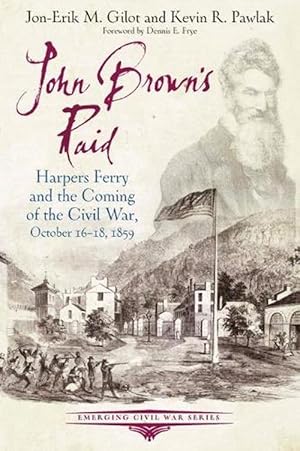
John Brown's Raid (Paperback)
Book 52 of 68: Emerging Civil WarLanguage: English
Published by Savas Beatie, El Dorado Hills, 2024
ISBN 10: 1611215978 ISBN 13: 9781611215977
Paperback. Condition: new. Paperback. The first shot of the American Civil War was not fired on April 12, 1861, in Charleston, South Carolina, but instead came on October 16, 1859, in Harpers Ferry, Virginia - or so claimed former slave turned abolitionist Frederick Douglass. The shot came like a meteor in the dark. John Brown, the infamous fighter on the Kansas plains and detester of slavery, led a band of nineteen men on a desperate nighttime raid that targeted the Federal arsenal at Harpers Ferry. There, they planned to begin a war to end slavery in the United States. But after 36 tumultuous hours, John Brown's Raid failed, and Brown himself became a prisoner of the state of Virginia. Brown's subsequent trial further divided north and south on the issue of slavery as Brown justified his violent actions to a national audience forced to choose sides. Ultimately, Southerners cheered Brown's death at the gallows while Northerners observed it with reverence. The nation's dividing line had been drawn. Herman Melville and Walt Whitman extolled Brown as a "meteor" of the war. Roughly one year after Brown and his men attacked slavery in Virginia, the nation split apart, fueled by Brown's fiery actions. John Brown's Raid tells the story of the first shots that led to disunion. Richly filled with maps and images, it includes a driving and walking tour of sites related to Brown's Raid so visitors today can walk in the footsteps of America's meteor. AUTHORS: Jon-Erik Gilot has been indelibly fascinated with Harpers Ferry since his first visit as a child - so much so that he later proposed to his wife on Maryland Heights. A native of historic Mount Pleasant, Ohio, Jon-Erik has spent more than fifteen years in the fields of history and preservation. He works as an archivist and records manager in Wheeling, West Virginia; since 2021 he has also served as curator at the Captain Thomas Espy Grand Army of the Republic Post in Carnegie, PA. Outside of work, Jon-Erik is a historic landmarks commissioner with the City of Wheeling, West Virginia, and a board member with the West Virginia Independence Hall Foundation. Kevin R. Pawlak is a historic site manager for Prince William County's Office of Historic Preservation and a Certified Battlefield Guide at Antietam National Battlefield. He previously worked as a park ranger at Harpers Ferry National Historical Park. Kevin is the author of four books about the American Civil War, including To Hazard All: A Guide to the Maryland Campaign, 1862, part of the Emerging Civil War Series. 150 images, 10 maps The first shot of the American Civil War was not fired on April 12, 1861, in Charleston, South Carolina, but instead came on October 16, 1859, in Harpers Ferry, Virginia--or so claimed former slave turned abolitionist Frederick Douglass. Shipping may be from multiple locations in the US or from the UK, depending on stock availability.
-
Condition: New. Brand New.
-

Paperback. Condition: New. The first shot of the American Civil War was not fired on April 12, 1861, in Charleston, South Carolina, but instead came on October 16, 1859, in Harpers Ferry, Virginia - or so claimed former slave turned abolitionist Frederick Douglass. The shot came like a meteor in the dark. John Brown, the infamous fighter on the Kansas plains and detester of slavery, led a band of nineteen men on a desperate nighttime raid that targeted the Federal arsenal at Harpers Ferry. There, they planned to begin a war to end slavery in the United States. But after 36 tumultuous hours, John Brown's Raid failed, and Brown himself became a prisoner of the state of Virginia. Brown's subsequent trial further divided north and south on the issue of slavery as Brown justified his violent actions to a national audience forced to choose sides. Ultimately, Southerners cheered Brown's death at the gallows while Northerners observed it with reverence. The nation's dividing line had been drawn. Herman Melville and Walt Whitman extolled Brown as a "meteor" of the war. Roughly one year after Brown and his men attacked slavery in Virginia, the nation split apart, fueled by Brown's fiery actions. John Brown's Raid tells the story of the first shots that led to disunion. Richly filled with maps and images, it includes a driving and walking tour of sites related to Brown's Raid so visitors today can walk in the footsteps of America's meteor.
-
John Brown's Raid: Harpers Ferry and the Coming of the Civil War, October 16-18, 1859 (Emerging Civil War Series)
Book 49 of 68: Emerging Civil WarSeller: Military History Books, El Dorado Hills, CA, U.S.A.
Seller rating 4 out of 5 stars
Soft cover. Condition: New. The first shot of the American Civil War was not fired on April 12, 1861, in Charleston, South Carolina, but instead came on October 16, 1859, in Harpers Ferry, Virginia or so claimed former slave turned abolitionist Frederick Douglass. The shot came like a meteor in the dark. John Brown, the infamous fighter on the Kansas plains and detester of slavery, led a band of nineteen men on a desperate nighttime raid that targeted the Federal arsenal at Harpers Ferry. There, they planned to begin a war to end slavery in the United States. But after 36 tumultuous hours, John Brown's Raid failed, and Brown himself became a prisoner of the state of Virginia. Brown's subsequent trial further divided north and south on the issue of slavery as Brown justified his violent actions to a national audience forced to choose sides. Ultimately, Southerners cheered Brown s death at the gallows while Northerners observed it with reverence. The nation's dividing line had been drawn. Herman Melville and Walt Whitman extolled Brown as a meteor of the war. Roughly one year after Brown and his men attacked slavery in Virginia, the nation split apart, fueled by Brown's fiery actions. John Brown's Raid tells the story of the first shots that led to disunion. Richly filled with maps and images, it includes a driving and walking tour of sites related to Brown's Raid so visitors today can walk in the footsteps of America's meteor.
-
paperback. Condition: New. *Brand new* Ships from USA.
-

John Brown's Raid
Book 52 of 68: Emerging Civil WarSeller: Rarewaves.com USA, London, LONDO, United Kingdom
Seller rating 5 out of 5 stars

Paperback. Condition: New. The first shot of the American Civil War was not fired on April 12, 1861, in Charleston, South Carolina, but instead came on October 16, 1859, in Harpers Ferry, Virginia - or so claimed former slave turned abolitionist Frederick Douglass. The shot came like a meteor in the dark. John Brown, the infamous fighter on the Kansas plains and detester of slavery, led a band of nineteen men on a desperate nighttime raid that targeted the Federal arsenal at Harpers Ferry. There, they planned to begin a war to end slavery in the United States. But after 36 tumultuous hours, John Brown's Raid failed, and Brown himself became a prisoner of the state of Virginia. Brown's subsequent trial further divided north and south on the issue of slavery as Brown justified his violent actions to a national audience forced to choose sides. Ultimately, Southerners cheered Brown's death at the gallows while Northerners observed it with reverence. The nation's dividing line had been drawn. Herman Melville and Walt Whitman extolled Brown as a "meteor" of the war. Roughly one year after Brown and his men attacked slavery in Virginia, the nation split apart, fueled by Brown's fiery actions. John Brown's Raid tells the story of the first shots that led to disunion. Richly filled with maps and images, it includes a driving and walking tour of sites related to Brown's Raid so visitors today can walk in the footsteps of America's meteor.
-

Condition: As New. Unread book in perfect condition.
-

-
John Brown's Raid: Harpers Ferry and the Coming of the Civil War, October 16-18, 1859
Book 52 of 68: Emerging Civil WarUS$ 36.64
US$ 16.69 shipping
Ships from United Kingdom to U.S.A.Quantity: 1 available
Add to basketPaperback. Condition: Brand New. 163 pages. 8.75x5.75x0.50 inches. In Stock.
-

Paperback. Condition: New. The first shot of the American Civil War was not fired on April 12, 1861, in Charleston, South Carolina, but instead came on October 16, 1859, in Harpers Ferry, Virginia - or so claimed former slave turned abolitionist Frederick Douglass. The shot came like a meteor in the dark. John Brown, the infamous fighter on the Kansas plains and detester of slavery, led a band of nineteen men on a desperate nighttime raid that targeted the Federal arsenal at Harpers Ferry. There, they planned to begin a war to end slavery in the United States. But after 36 tumultuous hours, John Brown's Raid failed, and Brown himself became a prisoner of the state of Virginia. Brown's subsequent trial further divided north and south on the issue of slavery as Brown justified his violent actions to a national audience forced to choose sides. Ultimately, Southerners cheered Brown's death at the gallows while Northerners observed it with reverence. The nation's dividing line had been drawn. Herman Melville and Walt Whitman extolled Brown as a "meteor" of the war. Roughly one year after Brown and his men attacked slavery in Virginia, the nation split apart, fueled by Brown's fiery actions. John Brown's Raid tells the story of the first shots that led to disunion. Richly filled with maps and images, it includes a driving and walking tour of sites related to Brown's Raid so visitors today can walk in the footsteps of America's meteor.
-

John Brown's Raid (Paperback)
Book 52 of 68: Emerging Civil WarLanguage: English
Published by Savas Beatie, El Dorado Hills, 2024
ISBN 10: 1611215978 ISBN 13: 9781611215977
US$ 23.37
US$ 49.40 shipping
Ships from United Kingdom to U.S.A.Quantity: 1 available
Add to basketPaperback. Condition: new. Paperback. The first shot of the American Civil War was not fired on April 12, 1861, in Charleston, South Carolina, but instead came on October 16, 1859, in Harpers Ferry, Virginia - or so claimed former slave turned abolitionist Frederick Douglass. The shot came like a meteor in the dark. John Brown, the infamous fighter on the Kansas plains and detester of slavery, led a band of nineteen men on a desperate nighttime raid that targeted the Federal arsenal at Harpers Ferry. There, they planned to begin a war to end slavery in the United States. But after 36 tumultuous hours, John Brown's Raid failed, and Brown himself became a prisoner of the state of Virginia. Brown's subsequent trial further divided north and south on the issue of slavery as Brown justified his violent actions to a national audience forced to choose sides. Ultimately, Southerners cheered Brown's death at the gallows while Northerners observed it with reverence. The nation's dividing line had been drawn. Herman Melville and Walt Whitman extolled Brown as a "meteor" of the war. Roughly one year after Brown and his men attacked slavery in Virginia, the nation split apart, fueled by Brown's fiery actions. John Brown's Raid tells the story of the first shots that led to disunion. Richly filled with maps and images, it includes a driving and walking tour of sites related to Brown's Raid so visitors today can walk in the footsteps of America's meteor. AUTHORS: Jon-Erik Gilot has been indelibly fascinated with Harpers Ferry since his first visit as a child - so much so that he later proposed to his wife on Maryland Heights. A native of historic Mount Pleasant, Ohio, Jon-Erik has spent more than fifteen years in the fields of history and preservation. He works as an archivist and records manager in Wheeling, West Virginia; since 2021 he has also served as curator at the Captain Thomas Espy Grand Army of the Republic Post in Carnegie, PA. Outside of work, Jon-Erik is a historic landmarks commissioner with the City of Wheeling, West Virginia, and a board member with the West Virginia Independence Hall Foundation. Kevin R. Pawlak is a historic site manager for Prince William County's Office of Historic Preservation and a Certified Battlefield Guide at Antietam National Battlefield. He previously worked as a park ranger at Harpers Ferry National Historical Park. Kevin is the author of four books about the American Civil War, including To Hazard All: A Guide to the Maryland Campaign, 1862, part of the Emerging Civil War Series. 150 images, 10 maps The first shot of the American Civil War was not fired on April 12, 1861, in Charleston, South Carolina, but instead came on October 16, 1859, in Harpers Ferry, Virginia--or so claimed former slave turned abolitionist Frederick Douglass. Shipping may be from our UK warehouse or from our Australian or US warehouses, depending on stock availability.
-
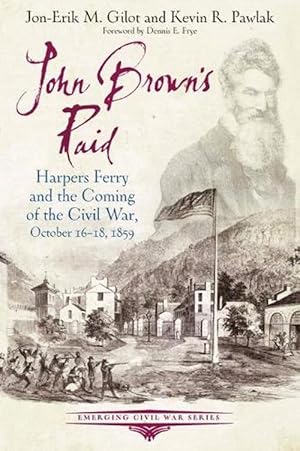
John Brown's Raid (Paperback)
Book 52 of 68: Emerging Civil WarLanguage: English
Published by Savas Beatie, El Dorado Hills, 2024
ISBN 10: 1611215978 ISBN 13: 9781611215977
Paperback. Condition: new. Paperback. The first shot of the American Civil War was not fired on April 12, 1861, in Charleston, South Carolina, but instead came on October 16, 1859, in Harpers Ferry, Virginia - or so claimed former slave turned abolitionist Frederick Douglass. The shot came like a meteor in the dark. John Brown, the infamous fighter on the Kansas plains and detester of slavery, led a band of nineteen men on a desperate nighttime raid that targeted the Federal arsenal at Harpers Ferry. There, they planned to begin a war to end slavery in the United States. But after 36 tumultuous hours, John Brown's Raid failed, and Brown himself became a prisoner of the state of Virginia. Brown's subsequent trial further divided north and south on the issue of slavery as Brown justified his violent actions to a national audience forced to choose sides. Ultimately, Southerners cheered Brown's death at the gallows while Northerners observed it with reverence. The nation's dividing line had been drawn. Herman Melville and Walt Whitman extolled Brown as a "meteor" of the war. Roughly one year after Brown and his men attacked slavery in Virginia, the nation split apart, fueled by Brown's fiery actions. John Brown's Raid tells the story of the first shots that led to disunion. Richly filled with maps and images, it includes a driving and walking tour of sites related to Brown's Raid so visitors today can walk in the footsteps of America's meteor. AUTHORS: Jon-Erik Gilot has been indelibly fascinated with Harpers Ferry since his first visit as a child - so much so that he later proposed to his wife on Maryland Heights. A native of historic Mount Pleasant, Ohio, Jon-Erik has spent more than fifteen years in the fields of history and preservation. He works as an archivist and records manager in Wheeling, West Virginia; since 2021 he has also served as curator at the Captain Thomas Espy Grand Army of the Republic Post in Carnegie, PA. Outside of work, Jon-Erik is a historic landmarks commissioner with the City of Wheeling, West Virginia, and a board member with the West Virginia Independence Hall Foundation. Kevin R. Pawlak is a historic site manager for Prince William County's Office of Historic Preservation and a Certified Battlefield Guide at Antietam National Battlefield. He previously worked as a park ranger at Harpers Ferry National Historical Park. Kevin is the author of four books about the American Civil War, including To Hazard All: A Guide to the Maryland Campaign, 1862, part of the Emerging Civil War Series. 150 images, 10 maps The first shot of the American Civil War was not fired on April 12, 1861, in Charleston, South Carolina, but instead came on October 16, 1859, in Harpers Ferry, Virginia--or so claimed former slave turned abolitionist Frederick Douglass. Shipping may be from our Sydney, NSW warehouse or from our UK or US warehouse, depending on stock availability.
-

Condition: New. Über den AutorJon-Erik M. Gilot has worked more than fifteen years in the field of public history. In addition to his work as a business archivist and records manager, he also serves as curator at the Captain Thomas Espy Grand Army .
-

US$ 23.35
US$ 86.79 shipping
Ships from United Kingdom to U.S.A.Quantity: 13 available
Add to basketPaperback. Condition: New. The first shot of the American Civil War was not fired on April 12, 1861, in Charleston, South Carolina, but instead came on October 16, 1859, in Harpers Ferry, Virginia - or so claimed former slave turned abolitionist Frederick Douglass. The shot came like a meteor in the dark. John Brown, the infamous fighter on the Kansas plains and detester of slavery, led a band of nineteen men on a desperate nighttime raid that targeted the Federal arsenal at Harpers Ferry. There, they planned to begin a war to end slavery in the United States. But after 36 tumultuous hours, John Brown's Raid failed, and Brown himself became a prisoner of the state of Virginia. Brown's subsequent trial further divided north and south on the issue of slavery as Brown justified his violent actions to a national audience forced to choose sides. Ultimately, Southerners cheered Brown's death at the gallows while Northerners observed it with reverence. The nation's dividing line had been drawn. Herman Melville and Walt Whitman extolled Brown as a "meteor" of the war. Roughly one year after Brown and his men attacked slavery in Virginia, the nation split apart, fueled by Brown's fiery actions. John Brown's Raid tells the story of the first shots that led to disunion. Richly filled with maps and images, it includes a driving and walking tour of sites related to Brown's Raid so visitors today can walk in the footsteps of America's meteor.

