

Order Total (1 Item Items):
Shipping Destination:

Greg Baughen (119 results)
Skip to main search results
Search filters
Product Type
- All Product Types
- Books (119)
- Magazines & Periodicals (No further results match this refinement)
- Comics (No further results match this refinement)
- Sheet Music (No further results match this refinement)
- Art, Prints & Posters (No further results match this refinement)
- Photographs (No further results match this refinement)
- Maps (No further results match this refinement)
- Manuscripts & Paper Collectibles (No further results match this refinement)
Condition Learn more
- New (98)
- As New, Fine or Near Fine (6)
- Very Good or Good (15)
- Fair or Poor (No further results match this refinement)
- As Described (No further results match this refinement)
Binding
Collectible Attributes
- First Edition (6)
- Signed (No further results match this refinement)
- Dust Jacket (10)
- Seller-Supplied Images (46)
- Not Print on Demand (119)
Language (2)
Free Shipping
Seller Location
Seller Rating
-

RAF at the Crossroads: The Second Front and Strategic Bombing Debate, 1942â"1943
Seller: Books From California, Simi Valley, CA, U.S.A.
Seller rating 4 out of 5 stars

Hardcover. Condition: Good.
-
Condition: Very Good. 1780596537. 6/4/2026 6:08:57 PM.
-
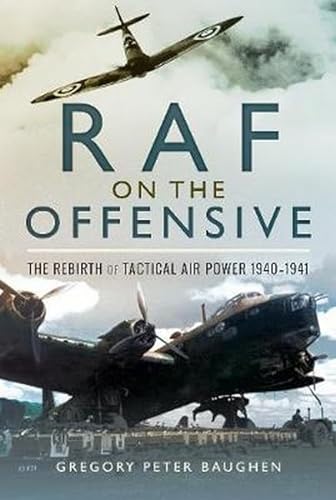
RAF ON THE OFFENSIVEThe Rebirth of Tactical Air Power 1940-1941
Seller: Naval and Military Press Ltd, Uckfield, United Kingdom
Seller rating 4 out of 5 stars
Condition: New. Hardback, 304 pagesPublished Price £25 An Army scarcely seemed necessary for the defence of the UK and no British army could ever be powerful enough to mount an invasion of Europe on its own. Bombing Germany into defeat seemed Britain's only option. In North Africa, however, Commonwealth armies and air forces were demonstrating that they too could use blitzkrieg tactics to crush opponents. Britain was also no longer alone; Greece and then the Soviet Union joined the fight. RAF on the Offensive describes how British air power developed after the Battle of Britain. Attitudes were beginning to change-the fighter, rather than the bomber, was re-emerging as the principal means of gaining air superiority. As 1941 drew to a close, the strategic air offensive appeared to be achieving little and conventional land warfare seemed poised to replace it as the way to defeat the enemy. Which direction, then, would the war take?"The author has produced a detailed view of how the RAF addressed a serious deficiency to build an impressive tactical air power. The RAF had neglected tactical air power, leaving the Army exposed and, without urgent correction, landing troops in Occupied Europe successfully would be impossible. â" Very Highly Recommended." - Fire Reviews, 15 April 2020.
-
RAF at the Crossroads : The Second Front and Strategic Bombing Debate, 1942-1943
Language: English
Published by Pen & Sword Books Limited, 2021
ISBN 10: 1526795345 ISBN 13: 9781526795342
Condition: Very Good. Pages intact with possible writing/highlighting. Binding strong with minor wear. Dust jackets/supplements may not be included. Stock photo provided. Product includes identifying sticker. Better World Books: Buy Books. Do Good.
-
RAF On the Offensive: The Rebirth of Tactical Air Power 1940â"1941
Seller: WorldofBooks, Goring-By-Sea, WS, United Kingdom
Seller rating 5 out of 5 stars

Paperback. Condition: Very Good. The book has been read, but is in excellent condition. Pages are intact and not marred by notes or highlighting. The spine remains undamaged.
-

THE RAFâS ROAD TO D-DAYThe Struggle to Exploit Air Superiority, 1943-1944
Seller: Naval and Military Press Ltd, Uckfield, United Kingdom
Seller rating 4 out of 5 stars
US$ 11.04
US$ 19.45 shipping
Ships from United Kingdom to U.S.A.Quantity: 9 available
Add to basketCondition: New. Hardback 320 pages with 32 B&W illustrationsPublished Price £25 By the summer of 1943, the Third Reichâs fate seemed sealed. The combined might of Britain and the Commonwealth nations, the United States and the Soviet Union had made Germany victory impossible. All that remained to decide was how the Allies should complete their victory. Would strategic bombing decide the outcome or would ground and air forces working together play the more significant role? Greg Baughen follows the air and land battles in Italy, France and Germany between September 1943 and September1944, as well as the equally bitter battles behind the scenes as army and air commanders debated and argued over how the war should be won. He charts the trials, tribulations, and successes of the bomber offensive and assesses whether, in the final analysis, it made any contribution to the success of Normandy landings. He explains how army air support went backwards after the successes of the Desert Air Force, and how this led to a failure to support the troops landing on the D-Day beaches in Normandy. He also describes the subsequent revival of tactical air support and how it went on to play a key role in the subsequent campaigns but questions whether Eisenhower, Montgomery or Tedder ever fully understood how to make best use of the massive aerial forces available to them. Drawing on archive documents and accounts written at the time, the author tackles some fundamental defence issues. Was RAF independence a benefit or a hindrance to the Allied cause? To what extent was the War Office to blame for shortcomings in army air support? Did Britain understand the way the methods for waging war were evolving in the twentieth century? He takes a look at how the Air Ministry was interpreting the lessons being learned during the war. Were the defence policies of the twenties and thirties still valid? Had they ever been valid? This, then, is the story of the decisions and actions that the RAF followed in the months leading up to D-Day and how air operations evolved in the subsequent campaign.
-
RAF at the Crossroads: The Second Front and Strategic Bombing Debate, 1942â"1943
Seller: Books From California, Simi Valley, CA, U.S.A.
Seller rating 4 out of 5 stars
Hardcover. Condition: Very Good. Cover and edges may have some wear.
-
RAF at the CrossroadsThe Second Front and Strategic Bombing Debate, 1942â"1943
Seller: Naval and Military Press Ltd, Uckfield, United Kingdom
Seller rating 4 out of 5 stars
US$ 12.42
US$ 19.45 shipping
Ships from United Kingdom to U.S.A.Quantity: 9 available
Add to basketCondition: New. Hardback. 368 pages with 32 black and white illustrations. Published Price £25 The events of 1942 marked a pivotal year in the history of British air power. For more than two decades the theory that long-range bombing could win wars had dominated British defence policy. The vast majority of warplanes ordered for the RAF were designed either to bomb enemy cities or stop the enemy from bombing British cites. Conventional armies and the air forces that supported them were seen as an outmoded way of waging war.During 1941 evidence began to mount that British policy was wrong. It had become clear the RAFâs bomber offensive against Germany had, until that point, achieved very little. Meanwhile, the wars raging in Europe, Africa and Asia were being decided not by heavy bombers, but by armies and their supporting tactical air forces. Britain had never had the resources to build a large army as well as a strategic bomber fleet; it had always had to make a choice. Now it seemed the country might have made the wrong choice.For the first time since 1918 Britain began thinking seriously about a different way of fighting wars. Was it too late to change? Was a strategic bombing campaign the only option open to Britain? Could the United Kingdom help its Soviet ally more by invading France as Stalin so vehemently demanded? Could this be done in 1942?Looking further ahead, was it time to begin the development of an entirely new generation of warplanes to support the Army? Should the RAF have specialist ground attack aircraft and air superiority fighters?The answers to these questions, which are all explored here by aviation historian Greg Baughen, would help shape the development of British air power for decades to come.
-
RAF at the Crossroads: The Second Front and Strategic Bombing Debate, 1942-1943
Seller: WorldofBooks, Goring-By-Sea, WS, United Kingdom
Seller rating 5 out of 5 stars
Paperback. Condition: Very Good. The book has been read, but is in excellent condition. Pages are intact and not marred by notes or highlighting. The spine remains undamaged.
-
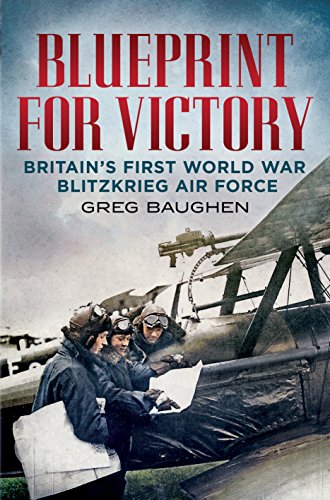
Blueprint for Victory: Britain's First World War Blitzkrieg Air Force
Seller: WorldofBooks, Goring-By-Sea, WS, United Kingdom
Seller rating 5 out of 5 stars
Paperback. Condition: Fine.
-
Blueprint for Victory: Britain's First World War Blitzkrieg Air Force
Seller: WorldofBooks, Goring-By-Sea, WS, United Kingdom
Seller rating 5 out of 5 stars
Paperback. Condition: Very Good. The book has been read, but is in excellent condition. Pages are intact and not marred by notes or highlighting. The spine remains undamaged.
-

-
The RAF Enters the Atomic Age (Hardcover)
Language: English
Published by Pen & Sword Books Ltd, Barnsley, 2025
ISBN 10: 1036123642 ISBN 13: 9781036123642
Hardcover. Condition: new. Hardcover. By September 1944 the Western Allies had reached the approximate positions they had held back in September 1939 at the outbreak of war. It had taken more than four years to claw back the territory lost in 1940. It was four years in which the strategic bomber had failed to deliver the victory the bomber advocated had promised. With Allied armies converging on Germany from all directions, they were running out of time to prove that countries could be bombed into defeat. Baughen describes the fierce battles that were fought right up to the German surrender in May 1945. He also explores the equally fierce debates behind the scenes about how air power should be used to complete the Allied victory, and analyses the lessons learned from six years of war. Even before Germany's surrender, thoughts were turning to the new enemy. The wartime alliance between Communist East and Capitalist West had always been one of convenience. Within weeks of the German surrender hostilities between the wartime allies were already a possibility. The seeds for post-war defence policy were already being sown. Meanwhile, in the Far East Hiroshima and Nagasaki had become the victims of the first atomic bombs. Days later Japan surrendered. The bomber advocates appeared to have the proof that bombing could win wars. But how related were the two events? Using contemporary documents, Baughen describes the how British air policy evolved in the late 1940s. Would the atomic bomb change the way wars were fought? Would conventional armies have any role in future wars? In the new atomic age, were there any lessons to be learned from the Second World War? How would the emerging cruise and ballistic missiles and associated guidance systems affect defence policy? Was a conventional defence to Soviet aggression possible? This is the story of the contribution air power made in the final battles of the Second World War, how the lessons of that conflict were misinterpreted and how the policies developed to incorporate the atomic bomb into Cold Wat defence thinking was leading the country into grave danger. AUTHOR: Greg Baughen was educated at Sussex University where he obtained a degree in Mathematics. In a varied teaching career, he has taught Maths and English as a foreign language, to children and adults, in Britain and abroad. His interest in military aviation was sparked at a very early age by curiosity over the defeat of British and French air forces in the Battle of France in 1940. For forty years, he has delved though public archives in Britain and France seeking explanations. The quest has taken him back to the origins of air power in both countries and forwards to what might have been in the Cold War. He then set to work writing a history of air power in both countries. 32 b/w illustrations Shipping may be from multiple locations in the US or from the UK, depending on stock availability.
-
RAF at the Crossroads
Language: English
Published by Pen and Sword Books Ltd, 2021
ISBN 10: 1526795345 ISBN 13: 9781526795342
HRD. Condition: New. New Book. Shipped from UK. Established seller since 2000.
-
Condition: New. Brand New.
-
Condition: New. Brand New.
-

Condition: very good. Gut/Very good: Buch bzw. Schutzumschlag mit wenigen Gebrauchsspuren an Einband, Schutzumschlag oder Seiten. / Describes a book or dust jacket that does show some signs of wear on either the binding, dust jacket or pages.
-
hardcover. Condition: New. *Brand new* Ships from USA.
-
Condition: As New. Unread book in perfect condition.
-

The RAF in the Battle of France and the Battle of Britain (Hardcover)
Language: English
Published by Fonthill Media Ltd, Toadsmoor Road, 2016
ISBN 10: 1781555257 ISBN 13: 9781781555255
Hardcover. Condition: new. Hardcover. In May 1940, the opposing German and Allied forces seemed reasonably well matched. On the ground, the four allied nations had more troops, artillery and tanks. Even in the air, the German advantage in numbers was slight. Yet two months later, the Allied armies had been crushed. The Netherlands, Belgium and France had all surrendered and Britain stood on her own, facing imminent defeat. Subsequent accounts of the campaign have tended to see this outcome as predetermined, with the seeds of defeat sown long before the fighting began. Was it so inevitable? Should the RAF have done more to help the Allied armies? Why was such a small proportion of the RAF's frontline strength committed to the crucial battle on the ground? Could Fighter Command have done more to protect the British and French troops being evacuated from the beaches of Dunkirk? This study looks at the operations flown and takes a fresh look at the fatal decisions made behind the scenes, decisions that unnecessarily condemned RAF aircrews to an unequal struggle and ultimately ensured Allied defeat. What followed became the RAF's finest hour with victory achieved by the narrowest of margins. Or was it, as some now suggest, a victory that was always inevitable? If so, how was the German military juggernaut that had conquered most of Europe so suddenly halted? This study looks at the decisions and mistakes made by both sides. It explains how the British obsession with bomber attacks on cities had led to the development of the wrong type of fighter force and how only a fortuitous sequence of events enabled Fighter Command to prevail. It also looks at how ready the RAF was to deal with an invasion. How much air support could the British Army have expected? Why were hundreds of American combat planes and experienced Polish and Czech pilots left on the sidelines? And when the Blitz began, and Britain finally got the war it was expecting, what did this campaign tell us about the theories on air power that had so dominated pre-war air policy? All these questions and more are answered in Greg Baughen's third book. Baughen describes the furious battles between the RAF and the Luftwaffe and the equally bitter struggle between the Air Ministry and the War Office - and explains how close Britain really came to defeat in the summer of 1940. The RAF in the Battle of France and Battle of Britain looks at the opportunities missed in the French campaign. It takes a fresh look at the Battle of Britain and asks if the RAF was ready to help repel an invasion. It follows the disputes between the Army and RAF and debates whether air power used independently can ever achieve decisive results. Shipping may be from multiple locations in the US or from the UK, depending on stock availability.
-

The Rise and Fall of the French Air Force (Hardcover)
Language: English
Published by Fonthill Media Ltd, Toadsmoor Road, 2017
ISBN 10: 178155644X ISBN 13: 9781781556443
Hardcover. Condition: new. Hardcover. On 10 May 1940, the French possessed one of the largest air forces in the world. On paper, it was nearly as strong as the RAF. Six weeks later, France had been defeated. For a struggling French Army desperately looking for air support, the skies seemed empty of friendly planes. In the decades that followed, the debate raged. Were there unused stockpiles of planes? Were French aircraft really so inferior? Baughen examines the myths that surround the French defeat. He explains how at the end of the First World War, the French had possessed the most effective air force in the world, only for the lessons learned to be forgotten. Instead, air policy was guided by radical theories that predicted air power alone would decide future wars.Baughen traces some of the problems back to the very earliest days of French aviation. He describes the mistakes and bad luck that dogged the French efforts to modernise their air force in the twenties and thirties. He examines how decisions made just months before the German attack further weakened the air force. Yet defeat was not inevitable. If better use had been made of the planes that were available, the result might have been different. Why did the French lose in 1940? Were their aircraft inferior? Were there stockpiles of unused planes? Was defeat inevitable? Greg Baughen separates the facts from the myths. He describes the problems the French faced, the operations they flew and how, even with the available resources, defeat might have been avoided. Shipping may be from multiple locations in the US or from the UK, depending on stock availability.
-
US$ 18.28
US$ 18.24 shipping
Ships from United Kingdom to U.S.A.Quantity: 1 available
Add to basketCondition: Good. This is an ex-library book and may have the usual library/used-book markings inside.This book has hardback covers. In good all round condition. Dust jacket in good condition. Please note the Image in this listing is a stock photo and may not match the covers of the actual item,850grams, ISBN:9781526795342.
-

Hardcover. Condition: New. *Brand new* Ships from USA.
-
The Rise and Fall of the French Air Force: French Air Operations and Strategy, 1900-1940
Language: English
Published by Fonthill, London, UK, 2018
ISBN 10: 178155644X ISBN 13: 9781781556443
Seller: BookAddiction (IOBA, IBooknet), Canterbury, United Kingdom
Association Member: IOBA
Seller rating 5 out of 5 stars
First Edition
Hardcover. Condition: Very Good. Dust Jacket Condition: Good. 1st Edition. First edition, first impression. 288pp, plus a central section of black and white plate illustrations, a couple of maps in text. Black cloth-covered boards with gilt lettering to spine. 8vo. Cloth very gently rounded at corners and spine ends. There are three small, mild marks on the front endpapers else volume is neat, clean, bright and tight. In its original worn and blown dust wrapper, a little bumped at edges and a couple of short, flat creases on the rear inner flap.
-
RAF at the Crossroads
Language: English
Published by Pen and Sword Books Ltd, 2021
ISBN 10: 1526795345 ISBN 13: 9781526795342
Seller: PBShop.store UK, Fairford, GLOS, United Kingdom
Seller rating 5 out of 5 stars
HRD. Condition: New. New Book. Shipped from UK. Established seller since 2000.
-

The RAF's Road to D-Day (Hardcover)
Language: English
Published by Pen & Sword Books Ltd, Barnsley, 2023
ISBN 10: 1399051806 ISBN 13: 9781399051804
Hardcover. Condition: new. Hardcover. A uniquely insightful study of the key decisions taken for the conduct of the RAF's offensive during the period leading up to D-Day in 1944. The third title in the author's examination of the RAF in the Second World War. By the summer of 1943, the Third Reich's fate seemed sealed. The combined might of Britain and the Commonwealth nations, the United States and the Soviet Union had made a Germany victory impossible. All that remained to decide was how the Allies should complete their victory. Would strategic bombing decide the outcome or would ground and air forces working together play the more significant role? Greg Baughen follows the air and land battles in Italy, France and Germany between 1943 and early 1944, as well as the equally bitter battles behind the scenes as army and air commanders debated and argued over how the war should be won. He charts the trials, tribulations, and successes of the bomber offensive and assesses whether, in the final analysis, the bomber strategy shortened or lengthened the war. He explains how army air support went backwards after the successes of the Desert Air Force, and how this led to a failure to support the troops landing on the D-Day beaches in Normandy. He also describes the subsequent revival of tactical air support and how it went on to play a key role in the subsequent campaigns but questions whether Eisenhower, Montgomery or Tedder ever fully understood how to make best use of the massive aerial forces available to them. Drawing on archive documents and accounts written at the time, the author tackles some fundamental defence issues. Was RAF independence a benefit or a hindrance to the Allied cause? To what extent was the War Office to blame for shortcomings in army air support? Did Britain understand the way the methods for waging war were evolving in the twentieth century? He takes a look at how the Air Ministry was interpreting the lessons being learned during the war. Were the defence policies of the twenties and thirties still valid? Had they ever been valid? This, then, is the story of the decisions and actions that the RAF followed in the months leading up to D-Day and the Normandy landings. AUTHOR: Greg Baughen was educated at Sussex University where he obtained a degree in Mathematics. In a varied teaching career, he has taught Maths and English as a foreign language, to children and adults, in Britain and abroad. His interest in military aviation was sparked at a very early age by curiosity over the defeat of British and French air forces in the Battle of France in 1940. For forty years, he has delved though public archives in Britain and France seeking explanations. The quest has taken him back to the origins of air power in both countries and forwards to what might have been in the Cold War. He then set to work writing a history of air power in both countries. 32 b/w illustrations A uniquely insightful study of the key decisions taken for the conduct of the RAF's offensive during the period leading up to D-Day in 1944 and the air operations in the campaign that followed. Shipping may be from multiple locations in the US or from the UK, depending on stock availability.
-
The RAF Enters the Atomic Age
Language: English
Published by Pen and Sword Books Ltd, 2025
ISBN 10: 1036123642 ISBN 13: 9781036123642
HRD. Condition: New. New Book. Shipped from UK. Established seller since 2000.
-

The RAF in the Battle of France and the Battle of Britain
Language: English
Published by Fonthill Media Ltd, GB, 2016
ISBN 10: 1781555257 ISBN 13: 9781781555255
Hardback. Condition: New. In May 1940, the opposing German and Allied forces seemed reasonably well matched. On the ground, the four allied nations had more troops, artillery and tanks. Even in the air, the German advantage in numbers was slight. Yet two months later, the Allied armies had been crushed. The Netherlands, Belgium and France had all surrendered and Britain stood on her own, facing imminent defeat. Subsequent accounts of the campaign have tended to see this outcome as predetermined, with the seeds of defeat sown long before the fighting began. Was it so inevitable? Should the RAF have done more to help the Allied armies? Why was such a small proportion of the RAF's frontline strength committed to the crucial battle on the ground? Could Fighter Command have done more to protect the British and French troops being evacuated from the beaches of Dunkirk? This study looks at the operations flown and takes a fresh look at the fatal decisions made behind the scenes, decisions that unnecessarily condemned RAF aircrews to an unequal struggle and ultimately ensured Allied defeat. What followed became the RAF's finest hour with victory achieved by the narrowest of margins.Or was it, as some now suggest, a victory that was always inevitable? If so, how was the German military juggernaut that had conquered most of Europe so suddenly halted? This study looks at the decisions and mistakes made by both sides. It explains how the British obsession with bomber attacks on cities had led to the development of the wrong type of fighter force and how only a fortuitous sequence of events enabled Fighter Command to prevail. It also looks at how ready the RAF was to deal with an invasion. How much air support could the British Army have expected? Why were hundreds of American combat planes and experienced Polish and Czech pilots left on the sidelines? And when the Blitz began, and Britain finally got the war it was expecting, what did this campaign tell us about the theories on air power that had so dominated pre-war air policy? All these questions and more are answered in Greg Baughen's third book. Baughen describes the furious battles between the RAF and the Luftwaffe and the equally bitter struggle between the Air Ministry and the War Office - and explains how close Britain really came to defeat in the summer of 1940.
-

RAF at the Crossroads (Hardcover)
Language: English
Published by Pen & Sword Books Ltd, Barnsley, 2021
ISBN 10: 1526795345 ISBN 13: 9781526795342
Hardcover. Condition: new. Hardcover. The events of 1942 marked a pivotal year in the history of British air power. For more than two decades the theory that long-range bombing could win wars had dominated British defence policy. The vast majority of warplanes ordered for the RAF were designed either to bomb enemy cities or stop the enemy from bombing British cites. Conventional armies and the air forces that supported them were seen as an outmoded way of waging war. During 1941 evidence began to mount that British policy was wrong. It had become clear the RAF's bomber offensive against Germany had, until that point, achieved very little. Meanwhile, the wars raging in Europe, Africa and Asia were being decided not by heavy bombers, but by armies and their supporting tactical air forces. Britain had never had the resources to build a large army as well as a strategic bomber fleet; it had always had to make a choice. Now it seemed the country might have made the wrong choice. For the first time since 1918 Britain began thinking seriously about a different way of fighting wars. Was it too late to change? Was a strategic bombing campaign the only option open to Britain? Could the United Kingdom help its Soviet ally more by invading France as Stalin so vehemently demanded? Could this be done in 1942? Looking further ahead, was it time to begin the development of an entirely new generation of warplanes to support the Army? Should the RAF have specialist ground attack aircraft and air superiority fighters? The answers to these questions, which are all explored here by aviation historian Greg Baughen, would help shape the development of British air power for decades to come. AUTHOR: Greg Baughen was educated at Sussex University where he obtained a degree in Mathematics. In a varied teaching career, he has taught Maths and English as a foreign language, to children and adults, in Britain and abroad. His interest in military aviation was sparked at a very early age by curiosity over the defeat of British and French air forces in the Battle of France in 1940. For forty years, he has delved though public archives in Britain and France seeking explanations. The quest has taken him back to the origins of air power in both countries and forwards to what might have been in the Cold War. He then set to work writing a definitive history of air power in both countries. 32 b/w illustrations Uniquely insightful study of the key decisions taken for the conduct of the RAF's offensive during the middle period of the Second World War. Shipping may be from multiple locations in the US or from the UK, depending on stock availability.
-

RAF at the Crossroads
Language: English
Published by Pen and Sword Books Ltd, GB, 2021
ISBN 10: 1526795345 ISBN 13: 9781526795342
Seller: Rarewaves.com USA, London, LONDO, United Kingdom
Seller rating 5 out of 5 stars
Hardback. Condition: New. The events of 1942 marked a pivotal year in the history of British air power. For more than two decades the theory that long-range bombing could win wars had dominated British defence policy. The vast majority of warplanes ordered for the RAF were designed either to bomb enemy cities or stop the enemy from bombing British cites. Conventional armies and the air forces that supported them were seen as an outmoded way of waging war.During 1941 evidence began to mount that British policy was wrong. It had become clear the RAF's bomber offensive against Germany had, until that point, achieved very little. Meanwhile, the wars raging in Europe, Africa and Asia were being decided not by heavy bombers, but by armies and their supporting tactical air forces. Britain had never had the resources to build a large army as well as a strategic bomber fleet; it had always had to make a choice. Now it seemed the country might have made the wrong choice.For the first time since 1918 Britain began thinking seriously about a different way of fighting wars. Was it too late to change? Was a strategic bombing campaign the only option open to Britain? Could the United Kingdom help its Soviet ally more by invading France as Stalin so vehemently demanded? Could this be done in 1942?Looking further ahead, was it time to begin the development of an entirely new generation of warplanes to support the Army? Should the RAF have specialist ground attack aircraft and air superiority fighters?The answers to these questions, which are all explored here by aviation historian Greg Baughen, would help shape the development of British air power for decades to come.


