
Hudert (29 results)

- Softcover
Seller: Versandbuchhandlung Kisch & Co., Fürstenberg OT Blumenow, GermanyVersandbuchhandlung Kisch & Co.
Contact seller5-star sellerCondition: Used - Fine
US$ 8.02
US$ 30.17 shippingShips from Germany to U.S.A.Quantity: 1 available
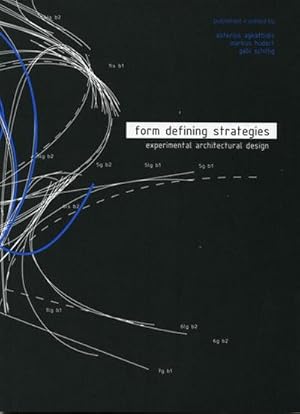
Taschenbuch. Condition: Sehr gut. Gebraucht - Sehr gut Ungelesen, vollständig, sehr guter Zustand, leichte Lagerspuren, Mängelexemplar -This book examines experimental design methodologies in the field of architecture and their implementation in academic settings. Theoretical considerations by guest essayists and numerous exampl…es of conceptual designs compliment our holistic approach to the subject matter. The studies collected here emerged during a two day workshop in 2006 with architecture students at the Technical University of Darmstadt. Due to this short time frame, parameters such as functional specifications and local context were not considered. The models that emerged are organizational systems that have been developed through diagrammatic thinking and are therefore capable of representing processed data and strategies. The starting point of the teaching concept was a divergence from the usual methods and ways of thinking, allowing for new, innovative solutions to emerge during the design process. The development of novel spatial modules, in coherence with material and structural considerations, was actively encouraged. During the workshop various design techniques were applied that enabled the development of integrative spatial concepts. Geometry played an essential role here. Studies were later developed by following given rules, converting them into diagrams then finally and perhaps most importantly, through the use of physical models. Thereby the question of materiality becomes a crucial consideration: the characteristics of different materials that were used for the models did not just influence geometrical possibilities, but brought with them material specific effects, with which spatial qualities could be intensified, explored and organised. This methodology is based on our conviction that working with physical models is indispensable even in today's all-digital climate. Architects are able to explore unpredictable, unimagined, unexpected and exciting spatiality that can emerge organically during the design process. Novel, innovative spatial structures and systems are discovered and inform this process and subsequent decisions. It becomes clear that the design process in architecture has to be understood as a conscious, sensible yet ambitious process to investigate and apply innovative notions of space to construction. 126 pp. Deutsch.
- Softcover
Seller: Versandbuchhandlung Kisch & Co., Fürstenberg OT Blumenow, GermanyVersandbuchhandlung Kisch & Co.
Contact seller5-star sellerCondition: Used - As new
US$ 10.30
US$ 30.17 shippingShips from Germany to U.S.A.Quantity: 1 available
Taschenbuch. Condition: Wie neu. Gebraucht - Wie neu Ungelesen, vollständig, sehr guter Zustand, leichte Lagerspuren, als Mängelexemplar gekennzeichnet -This book examines experimental design methodologies in the field of architecture and their implementation in academic settings. Theoretical considerations by guest essayists an…d numerous examples of conceptual designs compliment our holistic approach to the subject matter. The studies collected here emerged during a two day workshop in 2006 with architecture students at the Technical University of Darmstadt. Due to this short time frame, parameters such as functional specifications and local context were not considered. The models that emerged are organizational systems that have been developed through diagrammatic thinking and are therefore capable of representing processed data and strategies. The starting point of the teaching concept was a divergence from the usual methods and ways of thinking, allowing for new, innovative solutions to emerge during the design process. The development of novel spatial modules, in coherence with material and structural considerations, was actively encouraged. During the workshop various design techniques were applied that enabled the development of integrative spatial concepts. Geometry played an essential role here. Studies were later developed by following given rules, converting them into diagrams, then finally and perhaps most importantly, through the use of physical models. Thereby the question of materiality becomes a crucial consideration: the characteristics of different materials that were used for the models did not just influence geometrical possibilities, but brought with them material specific effects, with which spatial qualities could be intensified, explored and organised. This methodology is based on our conviction that working with physical models is indispensable even in today's all-digital climate. Architects are able to explore unpredictable, unimagined, unexpected and exciting spatiality that can emerge organically during the design process. Novel, innovative spatial structures and systems are discovered and inform this process and subsequent decisions. It becomes clear that the design process in architecture has to be understood as a conscious, sensible yet ambitious process to investigate and apply innovative notions of space to construction. 119 pp. Englisch.

- Softcover
Seller: SKULIMA Wiss. Versandbuchhandlung, Westhofen, , GermanySKULIMA Wiss. Versandbuchhandlung
Contact seller5-star sellerCondition: Used - As new
US$ 9.32
US$ 46.41 shippingShips from Germany to U.S.A.Quantity: 9 available
Condition: Wie Neu. Zustandsbeschreibung: leichte Lagerspuren. experimental architectural design. Edited by Asterios Agkathidis, Markus Hudert and Gabi Schillig. This book examines experimental design methodologies in the field of architecture and their implementation in academic settings. Theoretical considerations by guest ess…ayists and numerous examples of conceptual designs compliment our holistic approach to the subject matter. The studies collected here emerged during a workshop in 2007/08 with architecture students at the Technical University of Darmstadt and the Aristotle University of Thessaloniki. Usual designing parameters such as functional specifications and local context were not considered. The models that emerged are organizational systems that have been developed through diagrammatic thinking and are therefore capable of representing processed data and strategies. During the workshop various design techniques were applied that enabled the development of integrative spatial concepts. Geometry played an essential role here. Studies were later developed by following given rules, converting them into diagrams, then finally and perhaps most importantly, through the use of physical models. With contributions by Asterios Agkathidis, Johan Bettum, Maria Blaisse, Anja Bramkamp, Moritz Hauschild, Markus Hudert, George Katodrytis, Gabi Schillig, Michael Schwarz and Yves Weinand. 3., veränderte Auflage. 119 Seiten mit 355 Abb., broschiert (Wasmuth Verlag 2011). Früher EUR 16,80. Gewicht: 226 g - Softcover/Taschenbuch.

- Hardcover
Seller: GreatBookPrices, Columbia, MD, U.S.A.GreatBookPrices
Contact seller5-star sellerCondition: New
US$ 54.83
US$ 2.64 shippingShips within U.S.A.Quantity: 3 available
Condition: New.

- Hardcover
Seller: Rarewaves USA, OSWEGO, IL, U.S.A.Rarewaves USA
Contact seller5-star sellerCondition: New
US$ 57.48
Free ShippingShips within U.S.A.Quantity: 3 available
Hardback. Condition: New. Advances in the materials and the digitalization of architecture bring about new methods in design and construction. Whereas traditional timber construction consists of pre-cut and pre-assembled timber sections, modern timber buildings today consist of elaborate wood-based materials. Owing to their flex…ibility and good properties in terms of building physics and ecology, these wood-based materials are ideal for computer-aided building component production. Fifteen case examples from research, teaching, and practical applications provide inspiring insights into the potential of formable wood-based materials and digital design: Woven Wood, Wood Foam, Living Wood and Organic Joints, Timber Joints for Robotic Building Processes, Efficiencies of Wood, Designing with Tree Form.

- Softcover
Seller: Che & Chandler Versandbuchhandlung, Fürstenberg OT Blumenow, GermanyChe & Chandler Versandbuchhandlung
Contact seller5-star sellerCondition: Used - Fine
US$ 10.70
US$ 52.22 shippingShips from Germany to U.S.A.Quantity: 1 available
Taschenbuch. Condition: Sehr gut. Gebraucht - Sehr gut Ungelesen, vollständig, sehr guter Zustand, leichte Lagerspuren, Mängelexemplar -This book examines experimental design methodologies in the field of architecture and their implementation in academic settings. Theoretical considerations by guest essayists and numerous exampl…es of conceptual designs compliment our holistic approach to the subject matter. The studies collected here emerged during a two day workshop in 2006 with architecture students at the Technical University of Darmstadt. Due to this short time frame, parameters such as functional specifications and local context were not considered. The models that emerged are organizational systems that have been developed through diagrammatic thinking and are therefore capable of representing processed data and strategies. The starting point of the teaching concept was a divergence from the usual methods and ways of thinking, allowing for new, innovative solutions to emerge during the design process. The development of novel spatial modules, in coherence with material and structural considerations, was actively encouraged. During the workshop various design techniques were applied that enabled the development of integrative spatial concepts. Geometry played an essential role here. Studies were later developed by following given rules, converting them into diagrams then finally and perhaps most importantly, through the use of physical models. Thereby the question of materiality becomes a crucial consideration: the characteristics of different materials that were used for the models did not just influence geometrical possibilities, but brought with them material specific effects, with which spatial qualities could be intensified, explored and organised. This methodology is based on our conviction that working with physical models is indispensable even in today's all-digital climate. Architects are able to explore unpredictable, unimagined, unexpected and exciting spatiality that can emerge organically during the design process. Novel, innovative spatial structures and systems are discovered and inform this process and subsequent decisions. It becomes clear that the design process in architecture has to be understood as a conscious, sensible yet ambitious process to investigate and apply innovative notions of space to construction. 126 pp. Deutsch.
- Hardcover
Seller: GreatBookPrices, Columbia, MD, U.S.A.GreatBookPrices
Contact seller5-star sellerCondition: Used - As new
US$ 60.66
US$ 2.64 shippingShips within U.S.A.Quantity: 3 available
Condition: As New. Unread book in perfect condition.

- Softcover
Seller: Che & Chandler Versandbuchhandlung, Fürstenberg OT Blumenow, GermanyChe & Chandler Versandbuchhandlung
Contact seller5-star sellerCondition: Used - As new
US$ 13.75
US$ 52.22 shippingShips from Germany to U.S.A.Quantity: 1 available
Taschenbuch. Condition: Wie neu. Gebraucht - Wie neu Ungelesen, vollständig, sehr guter Zustand, leichte Lagerspuren, als Mängelexemplar gekennzeichnet -This book examines experimental design methodologies in the field of architecture and their implementation in academic settings. Theoretical considerations by guest essayists an…d numerous examples of conceptual designs compliment our holistic approach to the subject matter. The studies collected here emerged during a two day workshop in 2006 with architecture students at the Technical University of Darmstadt. Due to this short time frame, parameters such as functional specifications and local context were not considered. The models that emerged are organizational systems that have been developed through diagrammatic thinking and are therefore capable of representing processed data and strategies. The starting point of the teaching concept was a divergence from the usual methods and ways of thinking, allowing for new, innovative solutions to emerge during the design process. The development of novel spatial modules, in coherence with material and structural considerations, was actively encouraged. During the workshop various design techniques were applied that enabled the development of integrative spatial concepts. Geometry played an essential role here. Studies were later developed by following given rules, converting them into diagrams, then finally and perhaps most importantly, through the use of physical models. Thereby the question of materiality becomes a crucial consideration: the characteristics of different materials that were used for the models did not just influence geometrical possibilities, but brought with them material specific effects, with which spatial qualities could be intensified, explored and organised. This methodology is based on our conviction that working with physical models is indispensable even in today's all-digital climate. Architects are able to explore unpredictable, unimagined, unexpected and exciting spatiality that can emerge organically during the design process. Novel, innovative spatial structures and systems are discovered and inform this process and subsequent decisions. It becomes clear that the design process in architecture has to be understood as a conscious, sensible yet ambitious process to investigate and apply innovative notions of space to construction. 119 pp. Englisch.

- Softcover
Seller: Rarewaves USA, OSWEGO, IL, U.S.A.Rarewaves USA
Contact seller5-star sellerCondition: New
US$ 68.60
Free ShippingShips within U.S.A.Quantity: Over 20 available
Paperback. Condition: New.

- Hardcover
Seller: Rarewaves.com USA, London, LONDO, United KingdomRarewaves.com USA
Contact seller5-star sellerCondition: New
US$ 70.85
Free ShippingShips from United Kingdom to U.S.A.Quantity: 2 available
Hardback. Condition: New. Advances in the materials and the digitalization of architecture bring about new methods in design and construction. Whereas traditional timber construction consists of pre-cut and pre-assembled timber sections, modern timber buildings today consist of elaborate wood-based materials. Owing to their flex…ibility and good properties in terms of building physics and ecology, these wood-based materials are ideal for computer-aided building component production. Fifteen case examples from research, teaching, and practical applications provide inspiring insights into the potential of formable wood-based materials and digital design: Woven Wood, Wood Foam, Living Wood and Organic Joints, Timber Joints for Robotic Building Processes, Efficiencies of Wood, Designing with Tree Form.

- Softcover
Seller: Borkert, Schwarz und Zerfaß GbR, Berlin, GermanyBorkert, Schwarz und Zerfaß GbR
Contact seller5-star sellerCondition: Used - Very good
US$ 27.49
US$ 46.41 shippingShips from Germany to U.S.A.Quantity: 1 available
kart. Condition: Gut. 119 S. : überw. Ill. ; 19 cm, Gutes Ex. - Texte: Asterios Agkathidis, Johan Bettum, Maria Blaisse, Anja Bramkamp, Moritz Hauschild, Markus Hudert, George Katodrytis, Gabi Schillig, Michael Schwarz, Yves Weinand. // This book examines experimental design methodologies in the field of architecture and their i…mplementation in academic settings. Theoretical considerations by guest essayists and numerous examples of conceptual designs complement our holistic approach to the subject matter. The studies collected here emerged during weekly workshops during 2007 and 2008 with architecture students at the Technische Universitat Darmstadt and the Aristotele University of Thessaloniki. Usual design parameters such as functional specifications and local context were not considered. The models that emerged are organiza-tional systems that have been developed through diagrammatic thinking and are therefore capable of representing processed data and strategies. This methodology is based on our conviction that working with physical models is indispensable even in today's all-digital climate. Architects are able to explore unpredictable, unimagined, unexpected and exciting spatiality that can emerge organically during the design process. Novel, innovative spatial structures and systems are discovered and inform this process and subsequent decisions. It becomes clear that the design process in architecture has to be understood as a conscious, sensible yet ambitious process to investigate and apply innovative notions of space to construction. (Vorwort) ISBN 9783803007469 Sprache: Englisch Gewicht in Gramm: 221.
- Hardcover
Seller: Ria Christie Collections, Uxbridge, United KingdomRia Christie Collections
Contact seller5-star sellerCondition: New
US$ 60.55
US$ 16.11 shippingShips from United Kingdom to U.S.A.Quantity: 6 available
Condition: New. In.
- Hardcover
Seller: Revaluation Books, Exeter, , United KingdomRevaluation Books
Contact seller5-star sellerCondition: New
US$ 58.14
US$ 20.17 shippingShips from United Kingdom to U.S.A.Quantity: 2 available
Hardcover. Condition: Brand New. 294 pages. 10.50x7.25x1.25 inches. In Stock.

- Hardcover
Seller: GreatBookPricesUK, Woodford Green, United KingdomGreatBookPricesUK
Contact seller5-star sellerCondition: New
US$ 58.75
US$ 20.17 shippingShips from United Kingdom to U.S.A.Quantity: 3 available
Condition: New.
- Hardcover
Seller: GreatBookPricesUK, Woodford Green, United KingdomGreatBookPricesUK
Contact seller5-star sellerCondition: Used - As new
US$ 61.92
US$ 20.17 shippingShips from United Kingdom to U.S.A.Quantity: 3 available
Condition: As New. Unread book in perfect condition.

- Hardcover
Seller: Rarewaves USA United, OSWEGO, IL, U.S.A.Rarewaves USA United
Contact seller5-star sellerCondition: New
US$ 58.76
US$ 50.00 shippingShips within U.S.A.Quantity: 3 available
Hardback. Condition: New. Advances in the materials and the digitalization of architecture bring about new methods in design and construction. Whereas traditional timber construction consists of pre-cut and pre-assembled timber sections, modern timber buildings today consist of elaborate wood-based materials. Owing to their flex…ibility and good properties in terms of building physics and ecology, these wood-based materials are ideal for computer-aided building component production. Fifteen case examples from research, teaching, and practical applications provide inspiring insights into the potential of formable wood-based materials and digital design: Woven Wood, Wood Foam, Living Wood and Organic Joints, Timber Joints for Robotic Building Processes, Efficiencies of Wood, Designing with Tree Form.

- Softcover
Seller: Rarewaves USA United, OSWEGO, IL, U.S.A.Rarewaves USA United
Contact seller5-star sellerCondition: New
US$ 75.76
US$ 50.00 shippingShips within U.S.A.Quantity: Over 20 available
Paperback. Condition: New.

- Softcover
Seller: AHA-BUCH GmbH, Einbeck, GermanyAHA-BUCH GmbH
Contact seller5-star sellerCondition: New
US$ 69.98
US$ 72.34 shippingShips from Germany to U.S.A.Quantity: 1 available
Taschenbuch. Condition: Neu. Druck auf Anfrage Neuware - Printed after ordering - This book highlights the possibilities arising in architectural design through the integration of Generative AI technologies in the design process. Generative Artificial Intelligence (GAI) tools, methods and techniques are gaining popularity in arc…hitectural design, producing illustrations of fictional or future buildings, providing floor plan solutions, simulating human behavior, or providing 3D massing solutions for buildings, among others. Some architects find them useful and inspiring, while others criticize them as superficial or feel threatened by them. Consequently, the question of how to integrate AI into the architectural design process in a synergetic and meaningful way becomes crucial. This book casts light on how such an integration may be possible in architectural research, practice and pedagogy. It explores the latest methods and techniques through fourteen articles by renowned researchers, practitioners and educators focusing on the design process and the arising possibilities and challenges in 2D and 3D generation of spatial design solutions. Our findings provide an overview of original, cutting-edge AI technology articles in the realm of architectural design, as well as insights into how AI might change architectural design processes in the future.

- Hardcover
Seller: AHA-BUCH GmbH, Einbeck, GermanyAHA-BUCH GmbH
Contact seller5-star sellerCondition: New
US$ 72.64
US$ 76.45 shippingShips from Germany to U.S.A.Quantity: 1 available
Buch. Condition: Neu. Neuware - Advances in the materials and the digitalization of architecture bring about new methods in design and construction. Whereas traditional timber construction consists of pre-cut and pre-assembled timber sections, modern timber buildings today consist of elaborate wood-based materials. Owing to thei…r flexibility and good properties in terms of building physics and ecology, these wood-based materials are ideal for computer-aided building component production. Fifteen case examples from research, teaching, and practical applications provide inspiring insights into the potential of formable wood-based materials and digital design: Woven Wood, Wood Foam, Living Wood and Organic Joints, Timber Joints for Robotic Building Processes, Efficiencies of Wood, Designing with Tree Form. ; Fortschritte im Materialangebot und die Digitalisierung in der Architektur bringen neue Methoden in Entwurf und Baupraxis hervor. Während Holzkonstruktionen traditionell aus zugeschnittenem, maximal in Verbund gefügtem Holz bestanden, werden moderne Holzbauten aus elaborierteren Holzwerkstoffen gefertigt. Gerade diese Holzwerkstoffe sind aufgrund ihrer Flexibilität und ihrer guten bauphysikalischen und ökologischen Eigenschaften für computergestützte Bauteilproduktion prädestiniert. 15 Fallbeispiele aus Praxis, Lehre und Forschung liefern inspirierende Einblicke in das Potenzial formbarer Holzwerkstoffe und digitaler Entwurfspraxis: Woven Wood, Wood Foam, Living Wood and Organic Joints, Timber Joints for Robotic Building Processes, Efficiencies of Wood, Designing with Tree Form.

Albert Einstein, Boris Podolsky, Nathan Rosen : Can Quantum-mechanical Description of Physical Reality Be Considered Complete?
Kiefer, Claus (EDT); Hudert, Anna Katharina (TRN); Linden, Sebastian (TRN)
- Softcover
Seller: GreatBookPrices, Columbia, MD, U.S.A.GreatBookPrices
Contact seller5-star sellerCondition: New
US$ 147.20
US$ 2.64 shippingShips within U.S.A.Quantity: 15 available
Condition: New.

- Hardcover
Seller: Rarewaves.com UK, London, United KingdomRarewaves.com UK
Contact seller5-star sellerCondition: New
US$ 68.14
US$ 87.42 shippingShips from United Kingdom to U.S.A.Quantity: 2 available
Hardback. Condition: New. Advances in the materials and the digitalization of architecture bring about new methods in design and construction. Whereas traditional timber construction consists of pre-cut and pre-assembled timber sections, modern timber buildings today consist of elaborate wood-based materials. Owing to their flex…ibility and good properties in terms of building physics and ecology, these wood-based materials are ideal for computer-aided building component production. Fifteen case examples from research, teaching, and practical applications provide inspiring insights into the potential of formable wood-based materials and digital design: Woven Wood, Wood Foam, Living Wood and Organic Joints, Timber Joints for Robotic Building Processes, Efficiencies of Wood, Designing with Tree Form.
Albert Einstein, Boris Podolsky, Nathan Rosen : Can Quantum-mechanical Description of Physical Reality Be Considered Complete?
Kiefer, Claus (EDT); Hudert, Anna Katharina (TRN); Linden, Sebastian (TRN)
- Softcover
Seller: GreatBookPrices, Columbia, MD, U.S.A.GreatBookPrices
Contact seller5-star sellerCondition: Used - As new
US$ 162.19
US$ 2.64 shippingShips within U.S.A.Quantity: 15 available
Condition: As New. Unread book in perfect condition.
Albert Einstein, Boris Podolsky, Nathan Rosen: Can Quantum-Mechanical Description of Physical Reality Be Considered Complete? (Classic Texts in the Sciences)
Kiefer, Claus (Editor) / Hudert, Anna Katharina (Translator) / Linden, Sebastian (Translator)
- Softcover
Seller: Revaluation Books, Exeter, , United KingdomRevaluation Books
Contact seller5-star sellerCondition: New
US$ 205.88
US$ 13.45 shippingShips from United Kingdom to U.S.A.Quantity: 2 available
Paperback. Condition: Brand New. 121 pages. 9.45x6.61x0.35 inches. In Stock.

- Softcover
Seller: BWS BKS, Ferndale, NY, U.S.A.BWS BKS
Contact seller5-star sellerCondition: New
US$ 1,976.00
US$ 3.00 shippingShips within U.S.A.Quantity: 2 available
Paperback. Condition: New.

Language: German
Published by Hamburg: Expedition des Deutschen Kinderfreundes, 1892. 1892
- Hardcover
Seller: Antiquariat Im Seefeld / Ernst Jetzer, Zürich, SwitzerlandAntiquariat Im Seefeld / Ernst Jetzer
Contact seller4-star sellerCondition: Used - Very good
US$ 64.86
US$ 40.61 shippingShips from Switzerland to U.S.A.Quantity: 1 available
Condition: Gut. 216 S., Gr. 8°, OLwd. mit Prägedruck, mit marmoriertem Schnitt, mit s/w Abb., z. T. ganzseitig. Sprache(n)/language(s): deEinband berieben und bestossen, Buchblock minim stockfleckig, insgesamt aber gut erhalten.

- Softcover
Seller: Frans Melk Antiquariaat, HILVERSUM, NetherlandsFrans Melk Antiquariaat
Contact seller5-star sellerCondition: Used
US$ 17.93
US$ 78.90 shippingShips from Netherlands to U.S.A.Quantity: 1 available
Wasmuth, [introd. 2007]. 19 x 13,5 cm. Paperback / Softcover. Profusely illustrated in b/w. 119 pages. FINE COPY [Architecture / international [Algemene Architectuur] ].

- Softcover
- Print on Demand
Seller: moluna, Greven, , Germanymoluna
Contact seller5-star sellerCondition: New
US$ 56.45
US$ 56.85 shippingShips from Germany to U.S.A.Quantity: Over 20 available
Condition: New. Dieser Artikel ist ein Print on Demand Artikel und wird nach Ihrer Bestellung fuer Sie gedruckt.

- Softcover
- Print on Demand
Seller: buchversandmimpf2000, Emtmannsberg, BAYE, Germanybuchversandmimpf2000
Contact seller5-star sellerCondition: New
US$ 63.92
US$ 69.62 shippingShips from Germany to U.S.A.Quantity: 1 available
Taschenbuch. Condition: Neu. This item is printed on demand - Print on Demand Titel. Neuware -This book highlights the possibilities arising in architectural design through the integration of Generative AI technologies in the design process. Generative Artificial Intelligence (GAI) tools, methods and techniques are gaining popul…arity in architectural design, producing illustrations of fictional or future buildings, providing floor plan solutions, simulating human behavior, or providing 3D massing solutions for buildings, among others. Some architects find them useful and inspiring, while others criticize them as superficial or feel threatened by them. Consequently, the question of how to integrate AI into the architectural design process in a synergetic and meaningful way becomes crucial. This book casts light on how such an integration may be possible in architectural research, practice and pedagogy. It explores the latest methods and techniques through fourteen articles by renowned researchers, practitioners and educators focusing on the design process and the arising possibilities and challenges in 2D and 3D generation of spatial design solutions. Our findings provide an overview of original, cutting-edge AI technology articles in the realm of architectural design, as well as insights into how AI might change architectural design processes in the future.Springer-Verlag KG, Sachsenplatz 4-6, 1201 Wien 260 pp. Englisch.

- Softcover
- Print on Demand
Seller: preigu, Osnabrück, Germanypreigu
Contact seller5-star sellerCondition: New
US$ 58.62
US$ 81.22 shippingShips from Germany to U.S.A.Quantity: 5 available
Taschenbuch. Condition: Neu. Architecture in the AI Era for Research, Practice, and Pedagogy | Asterios Agkathidis (u. a.) | Taschenbuch | SpringerBriefs in Architectural Design and Technology | 2 Taschenbücher | Englisch | 2026 | Springer | EAN 9789819507597 | Verantwortliche Person für die EU: Springer Verlag GmbH, Tiergartens…tr. 17, 69121 Heidelberg, juergen[dot]hartmann[at]springer[dot]com | Anbieter: preigu Print on Demand.


