Order Total (1 Item Items):
Shipping Destination:

Innemee Karel (26 results)
Skip to main search results
Search filters
Product Type
- All Product Types
- Books (26)
- Magazines & Periodicals (No further results match this refinement)
- Comics (No further results match this refinement)
- Sheet Music (No further results match this refinement)
- Art, Prints & Posters (No further results match this refinement)
- Photographs (No further results match this refinement)
- Maps (No further results match this refinement)
- Manuscripts & Paper Collectibles (No further results match this refinement)
Condition Learn more
- New (12)
- As New, Fine or Near Fine (5)
- Very Good or Good (7)
- Fair or Poor (No further results match this refinement)
- As Described (2)
Binding
Collectible Attributes
- First Edition (2)
- Signed (No further results match this refinement)
- Dust Jacket (2)
- Seller-Supplied Images (13)
- Not Print on Demand (19)
Language (4)
Free Shipping
Seller Location
Seller Rating
-
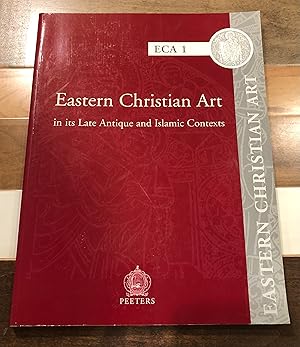
Eastern Christian Art in its Late Antique and Islamic Contexts (ECA 1)
Published by Peeters, 2004
Seller: Rosario Beach Rare Books, Lake Stevens, WA, U.S.A.
Association Member: CBA ESA IOBA
Seller rating 5 out of 5 stars

Soft cover. Condition: Near Fine. Dust Jacket Condition: Near Fine. Veteran-owned, family-run, small business in the Pacific Northwest.
-

Koptische kloosters. Gods levende doden
First Edition
Condition: Good. First Edition. Een monnik leidt een bestaan aan de rand van de samenleving. Dat wordt misschien niet meer zo ervaren in het Europa van de twintigste eeuw, maar in Egypte, waar het kluizenaars- en monnikenleven is ontstaan in de vierde eeuw, is dit eigenlijk nog steeds zo. Kloosters bevinden zich in de woestijn, de woonplaats van wilde dieren en boze geesten, waar een gewoon mens alleen naartoe gaat als hij dood is en wordt bijgezet op een begraafplaats. Een monnik is dan ook eigenlijk een levende dode: hij heeft afscheid genomen van zijn familie, en zijn biologisch bestaan is tot een minimum teruggebracht. De Heilige Macarius (vierde eeuw) stelde de doden als voorbeeld voor de jonge monniken: of ze nu vervloekt of gevleid worden, ze reageren niet en zijn noch beledigd noch trots. Zo leeft de monnik als het ware tussen twee werelden; zijn lichaam, hoe ondergeschikt ook, is nog op aarde, maar zijn geest heeft al afscheid genomen van alle aardse geneugten en passies. Tot op de huidige dag geloven Egypti; Gebonden boek (zonder losse stofomslag), in prima staat, met fris en schoon binnenwerk.
-

Condition: Good. Paperbackillustraties in z/w, 8vo.
-
Condition: Very good.
-

Condition: New. pp. 160.
-

The Value of a Human Life: Ritual Killing and Human Sacrifice in Antiquity (PALMA)
Seller: Books From California, Simi Valley, CA, U.S.A.
Seller rating 4 out of 5 stars

hardcover. Condition: Very Good. The copy shows minor external wear, but is in otherwise good condition.
-
The Value of a Human Life: Ritual Killing and Human Sacrifice in Antiquity (PALMA)
Seller: Books From California, Simi Valley, CA, U.S.A.
Seller rating 4 out of 5 stars
hardcover. Condition: Fine.
-
Condition: New. pp. 160.
-
The Value of a Human Life. Ritual Killing and Human Sacrifice in Antiquity.
Seller: Scrinium Classical Antiquity, Aalten, Netherlands
Seller rating 5 out of 5 stars
Sidestone Press, Leiden, 2022. 156p. Richly ills.(B&W as well as full colour photographs). Paperback. Series: Palma, 26. Throughout the millennia and all over the world people have been killed by others, not only in wars and as a result of murders, but also in a ritualised way, often called human sacrifice. Much has been written about this, and research and discussion about ritual killing continue. This book offers contributions to this on-going discussion, by a re-evaluation of the term human sacrifice, arguing that not all forms of ritual killing can be considered to be sacrificial. Experts from different disciplines present new insights into the subject of ritual homicide in various regions of the ancient world. Various aspects of the phenomenon are discussed, such as offering humans to gods, making servants accompany their masters into the hereafter, and ritual killing in connection with execution of criminals and captives. While in some cultures ritual killing was accepted, others would consider it a symptom of barbarism and would use it as a reason or pretext for hostility, war, or genocide. Thus the Romans justified the violence against Carthage partly because of this, early Christians were accused of infanticide, while in turn they accused Jews of the same. The Spanish conquistadores used the argument to justify the genocide on indigenous Americans. The last chapter concerns one of the last surviving forms of ritual killing in recent history: headhunting among the Asmat. (Publisher's information).
-
Condition: New. pp. 160.
-

Begraven in Den Haag. Honderd Jaar.
Language: German
Published by Utrecht / Stichting Matrijs, 1987
ISBN 10: 9070482584 ISBN 13: 9789070482589
Okart. Condition: Gut. 1.Auflage. Mit s/w Abb. 72 S. Historische Reeks, Den Haag Nr. 2. In Niederländisch! Guter Zustand Sprache: Deutsch Gewicht in Gramm: 300.
-

The Value of a Human Life
Language: English
Published by Sidestone Press Apr 2022, 2022
ISBN 10: 9464260564 ISBN 13: 9789464260564
Seller: buchversandmimpf2000, Emtmannsberg, BAYE, Germany
Seller rating 5 out of 5 stars
Taschenbuch. Condition: Neu. Neuware -Throughout the millennia and all over the world people have been killed by others, not only in wars and as a result of murders, but also in a ritualised way, often called human sacrifice. Much has been written about this, and research and discussion about ritual killing continue. This book offers contributions to this on-going discussion, by a re-evaluation of the term human sacrifice, arguing that not all forms of ritual killing can be considered to be sacrificial. Experts from different disciplines present new insights into the subject of ritual homicide in various regions of the ancient world. Various aspects of the phenomenon are discussed, such as offering humans to gods, making servants accompany their masters into the hereafter, and ritual killing in connection with execution of criminals and captives. While in some cultures ritual killing was accepted, others would consider it a symptom of barbarism and would use it as a reason or pretext for hostility, war, or genocide. Thus the Romans justified the violence against Carthage partly because of this, early Christians were accused of infanticide, while in turn they accused Jews of the same. The Spanish conquistadores used the argument to justify the genocide on indigenous Americans. The last chapter concerns one of the last surviving forms of ritual killing in recent history: headhunting among the Asmat. Contents Human sacrifice and ritual killing, defining the field Karel C. Innemée Ritual killing of humans in ancient Mesopotamia Theo Krispijn Ritual Homicide in ancient Egypt Jacobus van Dijk Sacrifice and ritual killing of humans in the Etruscan world Bouke van der Meer Phoenician synthesis: patterns of human sacrifice and problems with ritual killing Brien Garnand Human sacrifice from ancient Israel to early Christianity Karel C. Innemée Deconstructing the Aztec human sacrifice Maarten Jansen Death and new life: an intimate relationship Pieter ter Keurs Bibliography List of authorsBooks on Demand GmbH, Überseering 33, 22297 Hamburg 158 pp. Englisch.
-

Ecclesiastical Dress in the Medieval Near East
Seller: St Philip's Books, P.B.F.A., B.A., Oxford, United Kingdom
Association Member: PBFA
Seller rating 5 out of 5 stars
US$ 104.14
US$ 17.52 shipping
Ships from United Kingdom to U.S.A.Quantity: 1 available
Add to basketHardcover. Condition: Fine. ~Mild wear to dustwrapper. ~Robust packaging. Size: x, 300pp. Large 4to (30x22.5cm). Illus.
-
US$ 112.47
US$ 37.56 shipping
Ships from United Kingdom to U.S.A.Quantity: 1 available
Add to basketCondition: Good. Volume 1. This is an ex-library book and may have the usual library/used-book markings inside.This book has hardback covers. In good all round condition. No dust jacket. Library sticker on front cover. Please note the Image in this listing is a stock photo and may not match the covers of the actual item,1250grams, ISBN:9004095489.
-

Ecclesiastical Dress in the Medieval Near East
Language: English
Published by E. J. Brill, Leiden, 1992
Seller: Chris Duggan, Bookseller, St. Paul, MN, U.S.A.
Seller rating 5 out of 5 stars
First Edition
Hardcover. Condition: Near Fine. Dust Jacket Condition: Near Fine. 1st Edition.
-

The Value of a Human Life
Language: English
Published by Sidestone Press Apr 2022, 2022
ISBN 10: 9464260572 ISBN 13: 9789464260571
Seller: buchversandmimpf2000, Emtmannsberg, BAYE, Germany
Seller rating 5 out of 5 stars
Buch. Condition: Neu. Neuware -Throughout the millennia and all over the world people have been killed by others, not only in wars and as a result of murders, but also in a ritualised way, often called human sacrifice. Much has been written about this, and research and discussion about ritual killing continue. This book offers contributions to this on-going discussion, by a re-evaluation of the term human sacrifice, arguing that not all forms of ritual killing can be considered to be sacrificial.Experts from different disciplines present new insights into the subject of ritual homicide in various regions of the ancient world. Various aspects of the phenomenon are discussed, such as offering humans to gods, making servants accompany their masters into the hereafter, and ritual killing in connection with execution of criminals and captives.While in some cultures ritual killing was accepted, others would consider it a symptom of barbarism and would use it as a reason or pretext for hostility, war, or genocide. Thus the Romans justified the violence against Carthage partly because of this, early Christians were accused of infanticide, while in turn they accused Jews of the same. The Spanish conquistadores used the argument to justify the genocide on indigenous Americans. The last chapter concerns one of the last surviving forms of ritual killing in recent history: headhunting among the Asmat.ContentsHuman sacrifice and ritual killing, defining the fieldKarel C. InneméeRitual killing of humans in ancient MesopotamiaTheo KrispijnRitual Homicide in ancient EgyptJacobus van DijkSacrifice and ritual killing of humans in the Etruscan world Bouke van der MeerPhoenician synthesis: patterns of human sacrifice and problems with ritual killingBrien GarnandHuman sacrifice from ancient Israel to early ChristianityKarel C. InneméeDeconstructing the Aztec human sacrificeMaarten JansenDeath and new life: an intimate relationshipPieter ter KeursBibliographyList of authorsBooks on Demand GmbH, Überseering 33, 22297 Hamburg 158 pp. Englisch.
-
-
US$ 223.54
US$ 33.70 shipping
Ships from United Kingdom to U.S.A.Quantity: 1 available
Add to baskethardcover. Condition: Like New. LIKE NEW. SHIPS FROM MULTIPLE LOCATIONS. book.
-

Ecclesiastical Dress in the Medieval Near East.
Seller: Antiquariaat A. Kok & Zn. B.V., Amsterdam, Netherlands
Seller rating 5 out of 5 stars
Leiden, Brill, 1992. X,300 pp. 64 plts. Hardcover, d./j. (Studies in Textile and Costume History 1).
-

Condition: New. Dieser Artikel ist ein Print on Demand Artikel und wird nach Ihrer Bestellung fuer Sie gedruckt. Throughout the millennia and all over the world people have been killed by others, not only in wars and as a result of murders, but also in a ritualised way, often called human sacrifice. Much has been written about this, and research and discussion about r.
-

Taschenbuch. Condition: Neu. nach der Bestellung gedruckt Neuware - Printed after ordering - Throughout the millennia and all over the world people have been killed by others, not only in wars and as a result of murders, but also in a ritualised way, often called human sacrifice. Much has been written about this, and research and discussion about ritual killing continue. This book offers contributions to this on-going discussion, by a re-evaluation of the term human sacrifice, arguing that not all forms of ritual killing can be considered to be sacrificial.Experts from different disciplines present new insights into the subject of ritual homicide in various regions of the ancient world. Various aspects of the phenomenon are discussed, such as offering humans to gods, making servants accompany their masters into the hereafter, and ritual killing in connection with execution of criminals and captives.While in some cultures ritual killing was accepted, others would consider it a symptom of barbarism and would use it as a reason or pretext for hostility, war, or genocide. Thus the Romans justified the violence against Carthage partly because of this, early Christians were accused of infanticide, while in turn they accused Jews of the same. The Spanish conquistadores used the argument to justify the genocide on indigenous Americans. The last chapter concerns one of the last surviving forms of ritual killing in recent history: headhunting among the Asmat.ContentsHuman sacrifice and ritual killing, defining the fieldKarel C. InneméeRitual killing of humans in ancient MesopotamiaTheo KrispijnRitual Homicide in ancient EgyptJacobus van DijkSacrifice and ritual killing of humans in the Etruscan world Bouke van der MeerPhoenician synthesis: patterns of human sacrifice and problems with ritual killingBrien GarnandHuman sacrifice from ancient Israel to early ChristianityKarel C. InneméeDeconstructing the Aztec human sacrificeMaarten JansenDeath and new life: an intimate relationshipPieter ter KeursBibliographyList of authors.
-

Taschenbuch. Condition: Neu. The Value of a Human Life | Karel C. Innemée | Taschenbuch | Papers on Archaeology of the Leiden Museum of Antiquities 26 | Englisch | 2022 | Sidestone Press | EAN 9789464260564 | Verantwortliche Person für die EU: preigu GmbH & Co. KG, Lengericher Landstr. 19, 49078 Osnabrück, mail[at]preigu[dot]de | Anbieter: preigu Print on Demand.
-

The Value of a Human Life
Language: English
Published by Sidestone Press Apr 2022, 2022
ISBN 10: 9464260572 ISBN 13: 9789464260571
Seller: BuchWeltWeit Ludwig Meier e.K., Bergisch Gladbach, Germany
Seller rating 5 out of 5 stars
Buch. Condition: Neu. This item is printed on demand - it takes 3-4 days longer - Neuware -Throughout the millennia and all over the world people have been killed by others, not only in wars and as a result of murders, but also in a ritualised way, often called human sacrifice. Much has been written about this, and research and discussion about ritual killing continue. This book offers contributions to this on-going discussion, by a re-evaluation of the term human sacrifice, arguing that not all forms of ritual killing can be considered to be sacrificial.Experts from different disciplines present new insights into the subject of ritual homicide in various regions of the ancient world. Various aspects of the phenomenon are discussed, such as offering humans to gods, making servants accompany their masters into the hereafter, and ritual killing in connection with execution of criminals and captives.While in some cultures ritual killing was accepted, others would consider it a symptom of barbarism and would use it as a reason or pretext for hostility, war, or genocide. Thus the Romans justified the violence against Carthage partly because of this, early Christians were accused of infanticide, while in turn they accused Jews of the same. The Spanish conquistadores used the argument to justify the genocide on indigenous Americans. The last chapter concerns one of the last surviving forms of ritual killing in recent history: headhunting among the Asmat.ContentsHuman sacrifice and ritual killing, defining the fieldKarel C. InneméeRitual killing of humans in ancient MesopotamiaTheo KrispijnRitual Homicide in ancient EgyptJacobus van DijkSacrifice and ritual killing of humans in the Etruscan world Bouke van der MeerPhoenician synthesis: patterns of human sacrifice and problems with ritual killingBrien GarnandHuman sacrifice from ancient Israel to early ChristianityKarel C. InneméeDeconstructing the Aztec human sacrificeMaarten JansenDeath and new life: an intimate relationshipPieter ter KeursBibliographyList of authors 158 pp. Englisch.
-

Condition: New. Dieser Artikel ist ein Print on Demand Artikel und wird nach Ihrer Bestellung fuer Sie gedruckt. Throughout the millennia and all over the world people have been killed by others, not only in wars and as a result of murders, but also in a ritualised way, often called human sacrifice. Much has been written about this, and research and discussion about r.
-

Buch. Condition: Neu. The Value of a Human Life | Karel C. Innemée | Buch | Englisch | 2022 | Sidestone Press | EAN 9789464260571 | Verantwortliche Person für die EU: preigu GmbH & Co. KG, Lengericher Landstr. 19, 49078 Osnabrück, mail[at]preigu[dot]de | Anbieter: preigu Print on Demand.
-

Buch. Condition: Neu. nach der Bestellung gedruckt Neuware - Printed after ordering - Throughout the millennia and all over the world people have been killed by others, not only in wars and as a result of murders, but also in a ritualised way, often called human sacrifice. Much has been written about this, and research and discussion about ritual killing continue. This book offers contributions to this on-going discussion, by a re-evaluation of the term human sacrifice, arguing that not all forms of ritual killing can be considered to be sacrificial.Experts from different disciplines present new insights into the subject of ritual homicide in various regions of the ancient world. Various aspects of the phenomenon are discussed, such as offering humans to gods, making servants accompany their masters into the hereafter, and ritual killing in connection with execution of criminals and captives.While in some cultures ritual killing was accepted, others would consider it a symptom of barbarism and would use it as a reason or pretext for hostility, war, or genocide. Thus the Romans justified the violence against Carthage partly because of this, early Christians were accused of infanticide, while in turn they accused Jews of the same. The Spanish conquistadores used the argument to justify the genocide on indigenous Americans. The last chapter concerns one of the last surviving forms of ritual killing in recent history: headhunting among the Asmat.ContentsHuman sacrifice and ritual killing, defining the fieldKarel C. InneméeRitual killing of humans in ancient MesopotamiaTheo KrispijnRitual Homicide in ancient EgyptJacobus van DijkSacrifice and ritual killing of humans in the Etruscan world Bouke van der MeerPhoenician synthesis: patterns of human sacrifice and problems with ritual killingBrien GarnandHuman sacrifice from ancient Israel to early ChristianityKarel C. InneméeDeconstructing the Aztec human sacrificeMaarten JansenDeath and new life: an intimate relationshipPieter ter KeursBibliographyList of authors.