
Jayashanker (11 results)
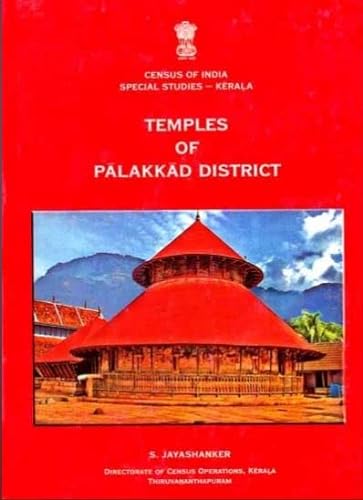
- Hardcover
Seller: Majestic Books, Hounslow, , United KingdomMajestic Books
Contact seller4-star sellerCondition: New
US$ 22.69
US$ 8.72 shippingShips from United Kingdom to U.S.A.Quantity: 4 available
Condition: New.
- Hardcover
Seller: Books Puddle, New York, NY, U.S.A.Books Puddle
Contact seller4-star sellerCondition: New
US$ 30.13
US$ 3.99 shippingShips within U.S.A.Quantity: 4 available
Condition: New.
- Hardcover
Seller: Biblios, frankfurt am main, HESSE, GermanyBiblios
Contact seller4-star sellerCondition: New
US$ 27.07
US$ 11.52 shippingShips from Germany to U.S.A.Quantity: 4 available
Condition: New.

Published by Directorate of Census Operat 2002
- Hardcover
Seller: Vedams eBooks (P) Ltd, New Delhi, IndiaVedams eBooks (P) Ltd
Contact seller4-star sellerCondition: Used - Near fine
US$ 8.00
US$ 20.26 shippingShips from India to U.S.A.Quantity: 1 available
Hardcover. Condition: Near Fine. Contents: I. General background. II. Salient features of important temples:A. Maananthavaati Taluk: 1. Sree Maha Vishnu Temple, Thirunelli. 2. Sree Maha Deva Temple, Thrssleri. 3. Sree (Valliyoor kaav) Bhagavathy Temple, Aaraattuthara. 4. Sree (Vateri) Siva Temple, Maananthavaati. 5. Sree ( Kunno…m Bhagavathy kaav) Siva Temple, Niravilpuzha. 6. Sree Raajaraajeswari Temple, Paingaattiri. 7. Sree Lakshmi-Nrsimhaswaamy Temple, Eranalloor. B. Sulththaan Baththeri Taluk:1. Sree Maha Siva Temple, Poothaati, 2. Sree ( Vattaththaani) Maha Vishnu Temple, Vaalavayal. 3. Sree (Veliyambamkotta) Siva Temple, Veliyambam. 4. Sree Seetha-Lava-Kusa Temple, Pulpalli. 5. Sree Maariyamman Temple, Baththeri. 6. Sree Maha Ganapathi Temple, Ganapathivattam (Baththeri). 7. Sree Lakshmi-Narasimha Temple, Baththeri. 8. Sree Maha Siva Temple, Thiruvannoor. 9. Sree (Kallunkara) Maha Siva Temple, Pulinchaa. 10. Sree Siva Temple, Ambalavayal. 11. Sree Mathsyamoorththy (Maha Vishnu) Temple, Meenangaati. 12. Sree ( Thinavarambathth) Siva Temple, Meenangaati. 13. Sree Maha Siva Temple, Maanikaav. C. Vaiththiri Taluk: 1. Sree (Pongini) Bhadrakaali Paradevatha Temple, Chikkalloor. 2. Sree Maha Vishnu Temple, Muttil. 3. Sree Maha Vishnu (Maniyankottappan) Temple, Kalpetta. 4. Sree (Matiyoor) Maha Vishnu Temple, Kalpetta. 5. Sree Maariyamman Temple, Kalpetta. 6. Sree Maha Vishnu Temple, Vengappalli. 7. Sree (Pazhoor) Maha Vishnu Temple, Kaappuvayal. 8. Sree (Etaththara) Siva Temple, Thariyot. 9. Sree Maariyamman Temple, Vaiththiri. 10. Sree Maariyamman kovil, Meppaati. 11. 220 pp.

- Hardcover
Seller: Majestic Books, Hounslow, , United KingdomMajestic Books
Contact seller4-star sellerCondition: New
US$ 54.38
US$ 8.72 shippingShips from United Kingdom to U.S.A.Quantity: 1 available
Condition: New.
- Hardcover
Seller: Biblios, frankfurt am main, HESSE, GermanyBiblios
Contact seller4-star sellerCondition: New
US$ 57.84
US$ 11.52 shippingShips from Germany to U.S.A.Quantity: 1 available
Condition: New.
- Hardcover
Seller: Books Puddle, New York, NY, U.S.A.Books Puddle
Contact seller4-star sellerCondition: New
US$ 67.36
US$ 3.99 shippingShips within U.S.A.Quantity: 1 available
Condition: New.
Published by Controller Pub 2006
- Hardcover
Seller: Vedams eBooks (P) Ltd, New Delhi, IndiaVedams eBooks (P) Ltd
Contact seller4-star sellerCondition: Used - As new
US$ 52.50
US$ 20.26 shippingShips from India to U.S.A.Quantity: 5 available
Hardcover. Condition: As New. Contents: Preface. Foreword. I. General background: 1. Geographical setting. 2. History of the district. 3. People and religious composition. 4. Mode of worship. 5. Antiquity of Temple. . II. Salient features of important temples: i. Talappilli Taluk: 1. Sree Siva Temple, Kattakampal. 2. Sree Partha…sarathy Temple, Ramapuram. 3. Sree (Peetikeswaram) Siva Temple, Pengamukku. 4. Sree (Tuppeswaram) Siva Temple, Pazhanni. 5. Sree (Mangatt-Trkkovil) Siva Temple, Pazhanni. . ii. Trssoor Taluk: 1. Sree Durga Devi Temple, Itakkalatoor. 2. Sree (Tiruvanikkav) Bhadrakali Temple, Puttoor. 3. Sree (Pisharikkal) Bhagavati Temple, Peninganoor. 4. Sree Mahadeva Temple, Muntayoor. 5. Sree Siva Temple, Velappaya. . iii. Chavakkat Taluk: 1. Sree (Govindapuram) Maha Vishnu Temple, Punnayoorkkulam. 2. Sree Siva Temple, Paroor. 3. Sree Siva Temple, Tiruvalayannoor. 4. Sree (Manikantheswaram) Siva Temple, Vatakkekkat. 5. Sree Mahadeva Temple, Mammiyoor. . iv. Kotungalloor Taluk: 1. Sree Sasta (Ayyappan Kaav) Temple, Etattiruti. 2. Sree (Kannanamkulam) Siva Temple, Chendrappinni. 3. Sree (Ayiroor) Maha Vishnu Temple, Kaippamangalam. 4. Sree (Palliyil) Bhagavati Temple, Perinnanam. 5. Sree (Trppekkulam) Siva Temple, Matilakam. . v. Mukundapuram Taluk: 1. Sree Bhagavati Temple, Ponnanam. 2. Sree (Pattanapuram) Maha Vishnu (Anantapadmanabhaswamy) Temple, Tanisseri. 3. Sree (Ittikkulam) Karttyayani Temple Kuzhikkattukonam. 4. Sree (Vayaloor) Siva Temple, Nellayi. 5. Sree Maha Vishnu Temple, Aanandapuram. . III. Temple directory: 1. Talappilli Taluk. 2. Trssoor Taluk. 3. Chavakkat Taluk. 4. Kotungalloor Taluk. 5. Mukundapuram Taluk. Procedure of translation. Glossary. From the Preface: "The monograph Temples of Kerala which was published earlier covered the general aspects on temples in Kerala like history of temples over the last two thousand years, mode of worship, architectural features, carvings and paintings, iconography of idols, deva-prasnam, (Astrological prediction relating to temples) rites, priesthood, offerings, temple customs, administration, ritualistic and performing arts etc. This volume, the seventh in the series of district monographs, is an addendum to the monograph Temples of Kerala and it attempts to cover an account of the temples of Trssoor district. The background of taking up this exhaustive study needs little elaboration. The Census Organization of India undertook a study on Temples of Madras State as an ancillary study of the 1961 census. This study evoked keen interest among scholars, the government and statutory bodies of Kerala. Late Sree R. Vasudeva Poduval a renowned archaeologist, requested the Registrar General, India (Late Sree A. Chandrasekhar) as early as 1969 to launch a study on temples of Kerala similar to the one that was conducted in Madras state and the latter readily agreed to this suggestion. But the study could not be taken up due to heavy pressure of work in connection with the 1971 census. In 1973, the Travancore Devaswam Board also came up with a similar request but the backlog of census work of 1971 census stood in the way in launching the study. In 1979 the Advisor to the Government of Kerala on Temples and Traditional Arts again requested the Director of Census Operations to commence the study. But again some unforeseen circumstances prevented the organization from taking up the study. However, in May 1990, the Government of Kerala again requested the Census Directorate to take up a detailed survey on temples of Kerala and The Registrar General (Sree A.R. Nanda I.A.S) directed to commence the survey in June 1991." From the Foreword: "Temples built in different historical time reflect the spirit and idioms of the people and their way of life as existed then. The splendor of architectural designs of temples are embodiments of the aesthetic taste of the people and society. The cultural heritage reflected in temple designs in different parts of India has evoked interest and has attracted touri.

Published by Directorate of Census Operations, Kerala 2023
- Hardcover
Seller: Vedams eBooks (P) Ltd, New Delhi, IndiaVedams eBooks (P) Ltd
Contact seller4-star sellerCondition: New
US$ 71.25
US$ 20.26 shippingShips from India to U.S.A.Quantity: 5 available
Hardcover. Condition: New. From the Preface: The present monograph, Temples of Tiruvanantapuram District, has also three sections, of which Section 1 gives a general background on geographical-setting of the district based on physio-geographic regions, history, people and analysis of data collected during the field work. Section… 2 deals with salient features of 127 important temples of the district, which include all those temples having swayambhoo (self-revealed) idols as principal deity and other important temples based on antiquity, number of prakaras, architectural excellence, number of poojas and number of worshippers. This does not mean that other temples are insignificant but the selection was done based on above mentioned parameters. Section 3 - Temple directory provides data of all temples open to public, big or small, as existed at the close of the twentieth century. Therefore, subsequent changes on structures, idols etc. have not been incorporated in this monograph except in few cases where revisits were done while writing the monograph. However, it is significant to mention the limitations of the data. Generally the informants of temples, mainly temple authorities and local devotees, were very co-operative with the field-staff in giving data. With the whole-hearted co-operation of all, the author could finalize the monograph of the district.
Published by Office of the Registrar General and Census Commissioner 2011
Seller: Vedams eBooks (P) Ltd, New Delhi, IndiaVedams eBooks (P) Ltd
Contact seller4-star sellerCondition: Used
US$ 63.75
US$ 20.26 shippingShips from India to U.S.A.Quantity: 1 available
Contents I General background II Salient features of important temples 1 Kunnattunat Taluk 2 Aluva Taluk 3 Paravoor Taluk 4 Kochi Taluk 5 Kanayannoor Taluk 6 Muvattupuzha Taluk 7 Kotamangalam Taluk III Temple directory 1 Kunnattunat Taluk 2 Aluva Taluk 3 Paravoor Taluk 4 Kochi Taluk 5 Kanayanoor Taluk 6 Muvattupuzha Taluk 7 Kota…mangalam Taluk Procedure of transliteration Glossary PhotographsFrom the Foreword This monograph titled Temples of Ernakulam District which is eighth in the District monograph series has a special significance as the district can claim to have the birthplace of the renowned philosopher saint Sree Sankarachaarya in it By adopting best elements of Hinduism and Buddhism in his teachings and methods he became the mastermind of cultural synthesis in India Born at Kaladi on the northern Bank of Poorna River Periyar in Ernakulam District he also made signal contributions to the philosophy and practice of Hindu religion The history of temples of the district is interwoven with his association which include those temples he worshipped consecrated or pooja system introducedKerala temples are unique in their architecture style and rituals The distinctive style of architecture is termed Dravida-Kerala The monograph gives the varied forms of architectural types used in building temples These patterns are clearly discernible from the photographs of major and most important temples included in this monograph They are aesthetically pleasing visualization of the great temples described in the monograph The painstakingly compiled temple director of 1285 temples in the district could support several research studies in architectural pattern antiquity deities forms of worship festivals etc In short this monograph is a worthy companion to the other great volumes of the distinguished series brought out earlier 728 pp. 96 Col. Plates (illustrator).
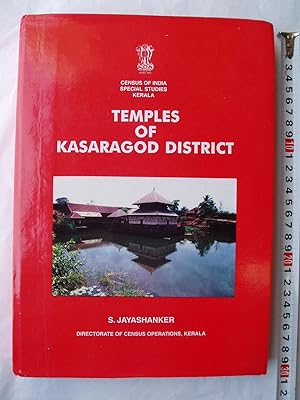
Published by Controller of Publications (2001), New Delhi 2001
- Hardcover
Seller: Expatriate Bookshop of Denmark, Svendborg, , DenmarkExpatriate Bookshop of Denmark
Contact seller5-star sellerCondition: Used
US$ 98.00
US$ 149.32 shippingShips from Denmark to U.S.A.Quantity: 1 available
orig. boards. 30x21cm, xii,404,(56)p, Series: Census of India, Special Studies: Kerala- Contents: General Backround; Salient Features of Important Temples: Kasaragod taluk; Hosdurg taluk; Temple Directory: Kasaragod; Hosdurg. Slight binding corner bumps. Minor rubbing. VG., dustwrapper. 56pp color photoplates (illustrator).


