

Order Total (1 Item Items):
Shipping Destination:

John Blakinger (44 results)
Skip to main search results
Search filters
Product Type
- All Product Types
- Books (44)
- Magazines & Periodicals (No further results match this refinement)
- Comics (No further results match this refinement)
- Sheet Music (No further results match this refinement)
- Art, Prints & Posters (No further results match this refinement)
- Photographs (No further results match this refinement)
- Maps (No further results match this refinement)
- Manuscripts & Paper Collectibles (No further results match this refinement)
Condition Learn more
Binding
Collectible Attributes
- First Edition (3)
- Signed (No further results match this refinement)
- Dust Jacket (3)
- Seller-Supplied Images (10)
- Not Print on Demand (42)
Language (2)
Free Shipping
Seller Location
Seller Rating
-

Gyorgy Kepes: Undreaming the Bauhaus (Mit Press)
Seller: Bay State Book Company, North Smithfield, RI, U.S.A.
Seller rating 5 out of 5 stars

Condition: good. The book is in good condition with all pages and cover intact, including the dust jacket if originally issued. The spine may show light wear. Pages may contain some notes or highlighting, and there might be a "From the library of" label. Boxed set packaging, shrink wrap, or included media like CDs may be missing.
-
hardcover. Condition: Acceptable. DAMAGED - Bruise/tear to cover/dust jacket.
-
hardcover. Condition: Good. Crease/tear to cover.
-
Condition: Like New. Never used! Light wear to corners/edges from shelving.
-
hardcover. Condition: New.
-
Condition: New. New.
-
Gyorgy Kepes: Undreaming the Bauhaus
Language: English
Published by The MIT Press, Cambridge, MA, 2019
ISBN 10: 0262039869 ISBN 13: 9780262039864
First Edition
Hardcover. Condition: Very Good. 1st Edition. 486 pp. Tightly bound. Corners not bumped. Text is free of markings. No ownership markings. Very good dust jacket. First Edition / First Printing. 10,9,8,7,6,5,4,3,2,1. This copy is smyth sewn. Smyth sewing is a method of bookbinding where groups of folded pages (referred to as signatures) are stitched together using binder thread. Each folded signature is sewn together individually with multiple stitches and then joined with other signatures to create the complete book block. This is the traditional and best method of bookbinding.
-
Gyorgy Kepes: Undreaming the Bauhaus
Seller: Magers and Quinn Booksellers, Minneapolis, MN, U.S.A.
Seller rating 5 out of 5 stars
hardcover. Condition: Very Good. May have light to moderate shelf wear and/or a remainder mark. Complete. Clean pages.
-

Condition: New.
-
Condition: New.
-

Condition: As New. Unread book in perfect condition.
-
Condition: As New. Unread book in perfect condition.
-
Hardcover with dustjacket, 486 pages; very good condition; clean and crisp; no internal marks. Foreign shipping may be extra.
-
Condition: New.
-
Condition: New.
-
Ruth Asawa : Citizen of the Universe
Seller: GreatBookPricesUK, Woodford Green, United Kingdom
Seller rating 5 out of 5 stars
US$ 27.83
US$ 19.80 shipping
Ships from United Kingdom to U.S.A.Quantity: 1 available
Add to basketCondition: New.
-
Ruth Asawa: Citizen of the Universe
Seller: Ria Christie Collections, Uxbridge, United Kingdom
Seller rating 5 out of 5 stars
US$ 33.23
US$ 15.82 shipping
Ships from United Kingdom to U.S.A.Quantity: 4 available
Add to basketCondition: New. In.
-
Gyorgy Kepes (Hardcover)
Language: English
Published by MIT Press Ltd, Cambridge, Mass., 2019
ISBN 10: 0262039869 ISBN 13: 9780262039864
Hardcover. Condition: new. Hardcover. How Gyorgy Kepes, the last disciple of Bauhaus modernism, became the single most significant artist within a network of scientific experts and elites.Gyorgy Kepes (1906-2001) was the last disciple of Bauhaus modernism, an acolyte of Laszl Moholy-Nagy and a self-styled revolutionary artist. But by midcentury, transplanted to America, Kepes found he was trapped in the military-industrial-aesthetic complex. In this first book-length study of Kepes, John Blakinger argues that Kepes, by opening the research laboratory to the arts, established a new paradigm for creative practice- the artist as technocrat. First at Chicago's New Bauhaus and then for many years at MIT, Kepes pioneered interdisciplinary collaboration between the arts and sciences-what he termed "interthinking" and "interseeing." Kepes and his colleagues-ranging from metallurgists to mathematicians-became part of an important but little-explored constellation- the Cold War avant-garde.Blakinger traces Kepes's career in the United States through a series of episodes- Kepes's work with the military on camouflage techniques; his development of a visual design pedagogy, as seen in the exhibition The New Landscape and his book The New Landscape in Art and Science; his encyclopedic Vision + Value series; his unpublished magnum opus, the Light Book; the Center for Advanced Visual Studies (CAVS), an art-science research institute established by Kepes at MIT in 1967; and the Center's proposals for massive environmental installations that would animate the urban landscape. CAVS was entangled in the antiwar politics of the late 1960s, as many students and faculty protested MIT's partnerships with defense contractors-some of whom had ties to the Center. In attempting to "undream" the Bauhaus into existence in the postwar world, Kepes faced profound resistance.Generously illustrated, drawing on the vast archive of Kepes's papers at Stanford and MIT's CAVS Special Collection, this book supplies a missing chapter in our understanding of midcentury modern and Cold War visual culture. How Gyorgy Kepes, the last disciple of Bauhaus modernism, became the single most significant artist within a network of scientific experts and elites. Shipping may be from multiple locations in the US or from the UK, depending on stock availability.
-
Gyorgy Kepes: Undreaming the Bauhaus
First Edition
Hard Cover. Condition: Fine. Dust Jacket Condition: Fine. First Edition. This is a fine hardcover copy with a fine dust jacket virtually as new. Completely clean. Profusely illustrated in black & white, some color. 9" high X 7" wide, 486 pages. Heavy book, foreign shipping will be extra. This book will be securely wrapped and packed in a sturdy box and shipped with tracking.
-

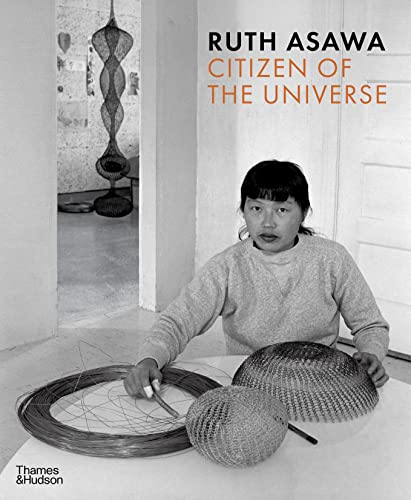
Paperback. [Author], [Publisher]. A unique look at the visionary artist, educator and activist Ruth Asawa (1926-2013). 'I state, without hesitation or reserve, that I consider Ruth Asawa to be the most gifted, productive, and originally inspired artist that I have ever known personally' R. Buckminster Fuller, 1971 Although less known outside North America, Japanese-American artist Ruth Asawa is an artist of vital importance to modern art. Ruth Asawa: Citizen of the Universe , which accompanies the first exhibition of Asawa's work to be staged in public galleries in Europe, introduces European audiences to both Asawa's powerful art - including her signature hanging sculptures in looped and tied wire - and her pioneering education practice. It positions her expansive ethos - her self-identification as 'a citizen of the universe' and belief that art education can be life enriching for everyone - as a catalyst for creative forward-thinking in the 21st century. Focusing on a dynamic and formative period in her life from 1945 to 1980, this book gives readers a unique experience of the artist and her work, exploring her legacy from a European perspective and positioning her as an abstract sculptor crucial to American modernism. It is a wonderful celebration of her holistic integration of art, education and community engagement, through which she called for a revolutionary and inclusive vision of art's role in society. Paperback.
-

Out of the Real World : Robert Rauschenberg at Usf Graphicstudio
Seller: GreatBookPricesUK, Woodford Green, United Kingdom
Seller rating 5 out of 5 stars
US$ 32.57
US$ 19.80 shipping
Ships from United Kingdom to U.S.A.Quantity: 18 available
Add to basketCondition: New.
-
Ruth Asawa : Citizen of the Universe
Seller: GreatBookPricesUK, Woodford Green, United Kingdom
Seller rating 5 out of 5 stars
US$ 33.29
US$ 19.80 shipping
Ships from United Kingdom to U.S.A.Quantity: 1 available
Add to basketCondition: As New. Unread book in perfect condition.
-

Hardback. Condition: New.
-
Condition: New. Illustrated edition NO-PA16APR2015-KAP.
-
US$ 38.11
US$ 19.80 shipping
Ships from United Kingdom to U.S.A.Quantity: 2 available
Add to basketPaperback. Condition: Brand New. 192 pages. 9.00x7.50x0.90 inches. In Stock.
-
Out of the Real World : Robert Rauschenberg at Usf Graphicstudio
Seller: GreatBookPricesUK, Woodford Green, United Kingdom
Seller rating 5 out of 5 stars
US$ 38.52
US$ 19.80 shipping
Ships from United Kingdom to U.S.A.Quantity: 18 available
Add to basketCondition: As New. Unread book in perfect condition.
-

Hardback. John R. Blakinger (Terra Visiting Professor of American Art, 2018-2019, Oxford University), MIT Press Ltd. How Gyorgy Kepes, the last disciple of Bauhaus modernism, became the single most significant artist within a network of scientific experts and elites.Gyorgy Kepes (1906-2001) was the last disciple of Bauhaus modernism, an acolyte of Laszl Moholy-Nagy and a self-styled revolutionary artist. But by midcentury, transplanted to America, Kepes found he was trapped in the military-industrial-aesthetic complex. In this first book-length study of Kepes, John Blakinger argues that Kepes, by opening the research laboratory to the arts, established a new paradigm for creative practice- the artist as technocrat. First at Chicago's New Bauhaus and then for many years at MIT, Kepes pioneered interdisciplinary collaboration between the arts and sciences-what he termed "interthinking" and "interseeing." Kepes and his colleagues-ranging from metallurgists to mathematicians-became part of an important but little-explored constellation- the Cold War avant-garde.Blakinger traces Kepes's career in the United States through a series of episodes- Kepes's work with the military on camouflage techniques; his development of a visual design pedagogy, as seen in the exhibition The New Landscape and his book The New Landscape in Art and Science; his encyclopedic Vision + Value series; his unpublished magnum opus, the Light Book; the Center for Advanced Visual Studies (CAVS), an art-science research institute established by Kepes at MIT in 1967; and the Center's proposals for massive environmental installations that would animate the urban landscape. CAVS was entangled in the antiwar politics of the late 1960s, as many students and faculty protested MIT's partnerships with defense contractors-some of whom had ties to the Center. In attempting to "undream" the Bauhaus into existence in the postwar world, Kepes faced profound resistance.Generously illustrated, drawing on the vast archive of Kepes's papers at Stanford and MIT's CAVS Special Collection, this book supplies a missing chapter in our understanding of midcentury modern and Cold War visual culture. Hardback.
-
US$ 42.89
US$ 16.50 shipping
Ships from United Kingdom to U.S.A.Quantity: 2 available
Add to basketPaperback. Condition: Brand New. sew edition. 176 pages. 11.00x9.50x9.45 inches. In Stock.
-
Hardcover. Condition: New.
-

Condition: As New. Unread book in perfect condition.

