Order Total (1 Item Items):
Shipping Destination:

John D Stempel (35 results)
Skip to main search results
Search filters
Product Type
- All Product Types
- Books (35)
- Magazines & Periodicals (No further results match this refinement)
- Comics (No further results match this refinement)
- Sheet Music (No further results match this refinement)
- Art, Prints & Posters (No further results match this refinement)
- Photographs (No further results match this refinement)
- Maps (No further results match this refinement)
- Manuscripts & Paper Collectibles (No further results match this refinement)
Condition Learn more
Binding
Collectible Attributes
Language (2)
Free Shipping
Seller Location
Seller Rating
-
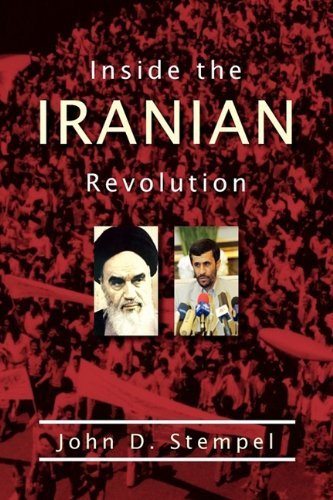
Inside the Iranian Revolution
Language: English
Published by Indiana University Press, 1981
ISBN 10: 0253142008 ISBN 13: 9780253142009
Condition: Good. Pages intact with minimal writing/highlighting. The binding may be loose and creased. Dust jackets/supplements are not included. Stock photo provided. Product includes identifying sticker. Better World Books: Buy Books. Do Good.
-
Inside the Iranian Revolution
Language: English
Published by Indiana University Press, 1981
ISBN 10: 0253142008 ISBN 13: 9780253142009
Condition: Good. Former library copy. Pages intact with minimal writing/highlighting. The binding may be loose and creased. Dust jackets/supplements are not included. Includes library markings. Stock photo provided. Product includes identifying sticker. Better World Books: Buy Books. Do Good.
-
Inside the Iranian Revolution
Language: English
Published by Indiana University Press, 1981
ISBN 10: 0253142008 ISBN 13: 9780253142009
Condition: Good. Former library copy. Pages intact with minimal writing/highlighting. The binding may be loose and creased. Dust jackets/supplements are not included. Includes library markings. Stock photo provided. Product includes identifying sticker. Better World Books: Buy Books. Do Good.
-
Inside the Iranian Revolution
Language: English
Published by Indiana Univ Pr (edition First Edition), 1981
ISBN 10: 0253142008 ISBN 13: 9780253142009
First Edition
Hardcover. Condition: Fair. First Edition. With dust jacket. The item might be beaten up but readable. May contain markings or highlighting, as well as stains, bent corners, or any other major defect, but the text is not obscured in any way.
-
Hardcover. Condition: Very Good. No Jacket. Former library book; May have limited writing in cover pages. Pages are unmarked. ~ ThriftBooks: Read More, Spend Less.
-

hardcover. Condition: Good. Connecting readers with great books since 1972! Used textbooks may not include companion materials such as access codes, etc. May have some wear or writing/highlighting. We ship orders daily and Customer Service is our top priority!
-
Common Sense and Foreign Policy
Language: English
Published by The Clark Group, Lexington, KY, 2008
ISBN 10: 1883589991 ISBN 13: 9781883589998
First Edition Signed
Hardcover. Condition: Very Good. First Edition. Illus. , maps, inscribed and signed by the author; 252 pages; Signed by Author.
-
hardcover. Condition: LikeNew.
-

Common Sense and Foreign Policy
Published by The Clark Group, Lexington, Kentucky, U.S.A., 2008
ISBN 10: 1883589991 ISBN 13: 9781883589998
Signed
Hardcover. Dust Jacket Condition: No Dust Jacket. 252pp. Inscribed to former owners on title page by John D. Stempel. Boards have a slight bend. Spine ends are bumped. Tips and spine ends are rubbed. Text is unmarked. 9781883589998. Inscribed by Author.
-
Common Sense and Foreign Policy
Seller: International Book Project, Lexington, KY, U.S.A.
Seller rating 4 out of 5 stars

Hardcover. Condition: Very Good. Inscribed by author! Very minor shelf wear. 100% of the proceeds go towards supporting the International Book Project's mission of sending books to the developing world.
-

, 0253142008. Condition: Very Good. . . . . 8vo, hardcover. Vg+ condition in vg+ dj. Previous owner's name on title page. Light foxing to upper textblock edge. Covers and contents clean, unworn, no marking or writing. Binding square and tight. 336 pp.
-
Inside the Iranian Revolution
Language: English
Published by Indiana University Press, Bloomington, IN, 1981
ISBN 10: 0253142008 ISBN 13: 9780253142009
Seller: Ground Zero Books, Ltd., Silver Spring, MD, U.S.A.
Seller rating 5 out of 5 stars

First Edition
Hardcover. Condition: Good. Dust Jacket Condition: Good. First Printing. xii, [2], 336, [2] pages. Tabular Data. Notes. Index. DJ edges somewhat worn and small tears, sticker residue to front DJ flap, small stains to fore-edge. This work describes Iran under the Shah, traces the Ayatollah Khomeini's rise to power, and speculates on the future of U.S.-Iran relations. Dr. Stempel was a career Foreign Service Officer. His 23 year career included oversees postings focused on political and economic affairs in Guinea, Burundi, Zambia, and Iran. In Washington D.C. he was assigned to both the State and Defense Departments, in addition to serving as the Director of the State's Operation Center. Dr. Stempel retired after 26 years in the University of Kentucky's Patterson School, serving as the first Associate Director from 1988-1993, Director from 1993-2003, and then finally as a Senior Professor. He became Professor Emeritus in 2013. The author was the Deputy Chief of the Political Section, U.S. Embassy, Tehran, from 1975 to 1979. Derived from a Kirkus review: Stempel was in the political section of the US Teheran embassy from 1975 until July 1979, when he left Iran and so avoided being taken prisoner the following November. As Deputy Director of his section, he was responsible for gathering information. An introductory chapter flashes back to the overthrow of the Qajar dynasty by Reza Shah, and then Stempel focuses on the political and economic programs of his son. Emphasizing the dislocations caused by rapid economic development--the late Shah's "White Revolution"--Stempel observes that this upheaval does not fully explain the Shah's troubles, since similar programs have not toppled regimes elsewhere. Instead, Stempel emphasizes the style of personal rule adopted by the Shah, which tied both political and military leaders personally to him without any intervening structures like political parties. The one party that did exist--except for a short-lived official opposition party created by the Shah himself--had no chance to develop its own political mechanisms, since the Shah moved politicians around at whim. When the Shah then became indecisive--partly on account of his cancer and the medication he took for it--there was no rational organization capable of dealing with a crisis by its own lights. So much embassy effort went into economic affairs, Stempel notes, that political information-gathering and analysis suffered. Written while Bani Sadr was still president, Stempel's prognosis that the fractured political identities and loyalties within Iran today will probably lead to another "dashing figure on horseback," still stands. For an introduction to the Iranian revolution, Stempel's has vignettes on the US role that make for intriguing reading.
-
Inside the Iranian Revolution - Signed Copy
Language: English
Published by Indiana University Press, Bloomington, 1981
ISBN 10: 0253142008 ISBN 13: 9780253142009
First Edition Signed
Cloth. Condition: Good. Dust Jacket Condition: Very Good. First Edition. Red cloth has gilt titles on spine. Cloth is bright and clean. Front hinge is partially cracked but binding is currently holding. Dedication to John, signed by the author on front e/p. No other inscriptions or markings. Dust jacket has edge-wear else tidy. Signed by Author.
-

Hardcover. Condition: Near Fine. No Jacket. Hardcover; 8vo; 381 pages. Glossy paper hardcovers, red, with white titles. Light shelfwear. Bright and clean interior, tightly-bound. No jacket. NF/--. Book.
-
Inside the Iranian Revolution
Language: English
Published by Indiana University Press, Bloomington, IN, 1981
ISBN 10: 0253142008 ISBN 13: 9780253142009
Seller: Ground Zero Books, Ltd., Silver Spring, MD, U.S.A.
Seller rating 5 out of 5 stars
Signed
Hardcover. Condition: Very good. Dust Jacket Condition: Good. Second Printing. xii, [2], 336, [2] pages. Tabular Data. Notes. Index. DJ worn at edges and corners, small tears to DJ. Inscribed by the author. This work describes Iran under the Shah, traces the Ayatollah Khomeini's rise to power, and speculates on the future of U.S.-Iran relations. Dr. Stempel was a career Foreign Service Officer. His 23 year career included oversees postings focused on political and economic affairs in Guinea, Burundi, Zambia, and Iran. In Washington D.C. he was assigned to both the State and Defense Departments, in addition to serving as the Director of the State's Operation Center. Dr. Stempel retired after 26 years in the University of Kentucky's Patterson School, serving as the first Associate Director from 1988-1993, Director from 1993-2003, and then finally as a Senior Professor. He became Professor Emeritus in 2013. The author was the Deputy Chief of the Political Section, U.S. Embassy, Tehran, from 1975 to 1979. Derived from a Kirkus review: Stempel was in the political section of the US Teheran embassy from 1975 until July 1979, when he left Iran and so avoided being taken prisoner the following November. As Deputy Director of his section, he was responsible for gathering information. An introductory chapter flashes back to the overthrow of the Qajar dynasty by Reza Shah, and then Stempel focuses on the political and economic programs of his son. Emphasizing the dislocations caused by rapid economic development--the late Shah's "White Revolution"--Stempel observes that this upheaval does not fully explain the Shah's troubles, since similar programs have not toppled regimes elsewhere. Instead, Stempel emphasizes the style of personal rule adopted by the Shah, which tied both political and military leaders personally to him without any intervening structures like political parties. The one party that did exist--except for a short-lived official opposition party created by the Shah himself--had no chance to develop its own political mechanisms, since the Shah moved politicians around at whim. When the Shah then became indecisive--partly on account of his cancer and the medication he took for it--there was no rational organization capable of dealing with a crisis by its own lights. So much embassy effort went into economic affairs, Stempel notes, that political information-gathering and analysis suffered. Written while Bani Sadr was still president, Stempel's prognosis that the fractured political identities and loyalties within Iran today will probably lead to another "dashing figure on horseback," still stands. For an introduction to the Iranian revolution, Stempel's has vignettes on the US role that make for intriguing reading.
-

Condition: New.
-

Condition: As New. Unread book in perfect condition.
-
Media in the 1984 and 1988 Presidential Campaigns
Seller: GreatBookPricesUK, Woodford Green, United Kingdom
Seller rating 5 out of 5 stars
US$ 111.12
US$ 19.85 shipping
Ships from United Kingdom to U.S.A.Quantity: Over 20 available
Add to basketCondition: New.
-
Inside the Iranian Revolution
Language: English
Published by Indiana University Press, Bloomington, IN, 1981
ISBN 10: 0253142008 ISBN 13: 9780253142009
Seller: Ground Zero Books, Ltd., Silver Spring, MD, U.S.A.
Seller rating 5 out of 5 stars
First Edition Signed
Hardcover. Condition: Very good. Dust Jacket Condition: Very good. First Printing [Stated]. xii, [2], 336, [2] pages. Tabular Data. Notes. Index. There is minor wear, tear, and staining to the dust jacket and edges of the pages. Inscribed by the author on the fep. The inscription reads: "To Bill & Jane fellow observers of the world, from the higher perspective -- John D. Stempel". This work describes Iran under the Shah, traces the Ayatollah Khomeini's rise to power, and speculates on the future of U.S.-Iran relations. Dr. Stempel was a career Foreign Service Officer. His 23 year career included oversees postings focused on political and economic affairs in Guinea, Burundi, Zambia, and Iran. In Washington D.C. he was assigned to both the State and Defense Departments, in addition to serving as the Director of the State's Operation Center. Dr. Stempel retired after 26 years in the University of Kentucky's Patterson School, serving as the first Associate Director from 1988-1993, Director from 1993-2003, and then finally as a Senior Professor. He became Professor Emeritus in 2013. The author was the Deputy Chief of the Political Section, U.S. Embassy, Tehran, from 1975 to 1979. Derived from a Kirkus review: Stempel was in the political section of the US Teheran embassy from 1975 until July 1979, when he left Iran and so avoided being taken prisoner the following November. As Deputy Director of his section, he was responsible for gathering information. An introductory chapter flashes back to the overthrow of the Qajar dynasty by Reza Shah, and then Stempel focuses on the political and economic programs of his son. Emphasizing the dislocations caused by rapid economic development--the late Shah's "White Revolution"--Stempel observes that this upheaval does not fully explain the Shah's troubles, since similar programs have not toppled regimes elsewhere. Instead, Stempel emphasizes the style of personal rule adopted by the Shah, which tied both political and military leaders personally to him without any intervening structures like political parties. The one party that did exist--except for a short-lived official opposition party created by the Shah himself--had no chance to develop its own political mechanisms, since the Shah moved politicians around at whim. When the Shah then became indecisive--partly on account of his cancer and the medication he took for it--there was no rational organization capable of dealing with a crisis by its own lights. So much embassy effort went into economic affairs, Stempel notes, that political information-gathering and analysis suffered. Written while Bani Sadr was still president, Stempel's prognosis that the fractured political identities and loyalties within Iran today will probably lead to another "dashing figure on horseback," still stands. For an introduction to the Iranian revolution, Stempel's has vignettes on the US role that make for intriguing reading.
-

Condition: As New. Unread book in perfect condition.
-

Media in the 1984 and 1988 Presidential Campaigns
Seller: GreatBookPricesUK, Woodford Green, United Kingdom
Seller rating 5 out of 5 stars
US$ 124.49
US$ 19.85 shipping
Ships from United Kingdom to U.S.A.Quantity: Over 20 available
Add to basketCondition: As New. Unread book in perfect condition.
-
-

-

Condition: As New. Unread book in perfect condition.
-
Inside the Iranian Revolution
Language: English
Published by Indiana University Press, Bloomington, IN, 1981
ISBN 10: 0253142008 ISBN 13: 9780253142009
Seller: Ground Zero Books, Ltd., Silver Spring, MD, U.S.A.
Seller rating 5 out of 5 stars
First Edition Signed
Hardcover. Condition: Very good. Dust Jacket Condition: Very good. First Printing. xii, [2], 336, [2] pages. Tabular Data. Notes. Index. Slight wear and small scratches to DJ. Inscribed by the author and his wife. This work describes Iran under the Shah, traces the Ayatollah Khomeini's rise to power, and speculates on the future of U.S.-Iran relations. Dr. Stempel was a career Foreign Service Officer. His 23 year career included oversees postings focused on political and economic affairs in Guinea, Burundi, Zambia, and Iran. In Washington D.C. he was assigned to both the State and Defense Departments, in addition to serving as the Director of the State's Operation Center. Dr. Stempel retired after 26 years in the University of Kentucky's Patterson School, serving as the first Associate Director from 1988-1993, Director from 1993-2003, and then finally as a Senior Professor. He became Professor Emeritus in 2013. The author was the Deputy Chief of the Political Section, U.S. Embassy, Tehran, from 1975 to 1979. Derived from a Kirkus review: Stempel was in the political section of the US Teheran embassy from 1975 until July 1979, when he left Iran and so avoided being taken prisoner the following November. As Deputy Director of his section, he was responsible for gathering information. An introductory chapter flashes back to the overthrow of the Qajar dynasty by Reza Shah, and then Stempel focuses on the political and economic programs of his son. Emphasizing the dislocations caused by rapid economic development--the late Shah's "White Revolution"--Stempel observes that this upheaval does not fully explain the Shah's troubles, since similar programs have not toppled regimes elsewhere. Instead, Stempel emphasizes the style of personal rule adopted by the Shah, which tied both political and military leaders personally to him without any intervening structures like political parties. The one party that did exist--except for a short-lived official opposition party created by the Shah himself--had no chance to develop its own political mechanisms, since the Shah moved politicians around at whim. When the Shah then became indecisive--partly on account of his cancer and the medication he took for it--there was no rational organization capable of dealing with a crisis by its own lights. So much embassy effort went into economic affairs, Stempel notes, that political information-gathering and analysis suffered. Written while Bani Sadr was still president, Stempel's prognosis that the fractured political identities and loyalties within Iran today will probably lead to another "dashing figure on horseback," still stands. For an introduction to the Iranian revolution, Stempel's has vignettes on the US role that make for intriguing reading.
-
Condition: As New. Unread book in perfect condition.
-

-

Condition: New.
-

-
Condition: As New. Unread book in perfect condition.