
Leaf Philip (42 results)

- Hardcover
Seller: Bookmonger.Ltd, HILLSIDE, NJ, U.S.A.Bookmonger.Ltd
Contact seller5-star sellerCondition: New
US$ 15.01
US$ 4.00 shippingShips within U.S.A.Quantity: 2 available
Hardcover. Condition: New.
- Hardcover
Seller: Bookmonger.Ltd, HILLSIDE, NJ, U.S.A.Bookmonger.Ltd
Contact seller5-star sellerCondition: Used - Fine
US$ 16.01
US$ 4.00 shippingShips within U.S.A.Quantity: 1 available
Hardcover. Condition: Fine.

- Hardcover
Seller: Tiber Books, Cockeysville, MD, U.S.A.Tiber Books
Contact seller4-star sellerCondition: Used - Good
US$ 16.00
US$ 5.49 shippingShips within U.S.A.Quantity: 1 available
Hardcover. Condition: Good. 8vo, hardcover. Volume 7. No dj. Good condition. Ex-lib copy w/ single stamp on endpaper, rear pocket, spine label removed; highlighting on just 12 pgs (confined to a single paper), remainder bright & clean; faint scratch on cover. 321 pp.

Seller: Inheritance Publications, County of Barrhead, AB, CanadaInheritance Publications
Contact seller5-star sellerCondition: Used
US$ 1.80
US$ 14.00 shippingShips from Canada to U.S.A.Quantity: 1 available
- Hardcover
Seller: SHIMEDIA, Brooklyn, NY, U.S.A.SHIMEDIA
Contact seller5-star sellerCondition: New
US$ 99.99
Free ShippingShips within U.S.A.Quantity: 1 available
Condition: New. Satisfaction Guaranteed or your money back.

- Hardcover
Seller: GreatBookPrices, Columbia, MD, U.S.A.GreatBookPrices
Contact seller5-star sellerCondition: New
US$ 147.39
US$ 2.64 shippingShips within U.S.A.Quantity: Over 20 available
Condition: New.

- Hardcover
Seller: GreatBookPrices, Columbia, MD, U.S.A.GreatBookPrices
Contact seller5-star sellerCondition: New
US$ 149.05
US$ 2.64 shippingShips within U.S.A.Quantity: 15 available
Condition: New.
- Hardcover
Seller: Ria Christie Collections, Uxbridge, United KingdomRia Christie Collections
Contact seller5-star sellerCondition: New
US$ 142.71
US$ 15.99 shippingShips from United Kingdom to U.S.A.Quantity: Over 20 available
Condition: New. In.

- Hardcover
Seller: GreatBookPrices, Columbia, MD, U.S.A.GreatBookPrices
Contact seller5-star sellerCondition: Used - As new
US$ 150.90
US$ 2.64 shippingShips within U.S.A.Quantity: Over 20 available
Condition: As New. Unread book in perfect condition.
- Hardcover
Seller: GreatBookPricesUK, Woodford Green, United KingdomGreatBookPricesUK
Contact seller5-star sellerCondition: New
US$ 139.53
US$ 20.02 shippingShips from United Kingdom to U.S.A.Quantity: Over 20 available
Condition: New.

- Hardcover
Seller: GreatBookPrices, Columbia, MD, U.S.A.GreatBookPrices
Contact seller5-star sellerCondition: Used - As new
US$ 153.46
US$ 2.64 shippingShips within U.S.A.Quantity: 15 available
Condition: As New. Unread book in perfect condition.
- Hardcover
Seller: GreatBookPricesUK, Woodford Green, United KingdomGreatBookPricesUK
Contact seller5-star sellerCondition: New
US$ 142.69
US$ 20.02 shippingShips from United Kingdom to U.S.A.Quantity: Over 20 available
Condition: New.

- Hardcover
Seller: Rarewaves USA, OSWEGO, IL, U.S.A.Rarewaves USA
Contact seller5-star sellerCondition: New
US$ 161.59
Free ShippingShips within U.S.A.Quantity: Over 20 available
Hardback. Condition: New. This is the eighth volume in a series on research in community and mental health.

- Hardcover
Seller: GreatBookPricesUK, Woodford Green, United KingdomGreatBookPricesUK
Contact seller5-star sellerCondition: Used - As new
US$ 155.25
US$ 20.02 shippingShips from United Kingdom to U.S.A.Quantity: Over 20 available
Condition: As New. Unread book in perfect condition.

- Hardcover
Seller: GreatBookPricesUK, Woodford Green, United KingdomGreatBookPricesUK
Contact seller5-star sellerCondition: Used - As new
US$ 158.67
US$ 20.02 shippingShips from United Kingdom to U.S.A.Quantity: Over 20 available
Condition: As New. Unread book in perfect condition.

- Hardcover
Seller: Rarewaves.com USA, London, LONDO, United KingdomRarewaves.com USA
Contact seller5-star sellerCondition: New
US$ 175.33
Free ShippingShips from United Kingdom to U.S.A.Quantity: Over 20 available
Hardback. Condition: New. This is the eighth volume in a series on research in community and mental health.

- Hardcover
Seller: Rarewaves USA United, OSWEGO, IL, U.S.A.Rarewaves USA United
Contact seller5-star sellerCondition: New
US$ 169.03
US$ 50.00 shippingShips within U.S.A.Quantity: Over 20 available
Hardback. Condition: New. This is the eighth volume in a series on research in community and mental health.
Research in Community and Mental Health: Theoretical Positions Vol 4 (Advances in the Study of Entrepreneurship, Innovation and Economic Growth)
Libecap, Gary D. (Editor) / Leaf, Philip J. (Editor) / Greenley, James R. (Editor)
- Hardcover
Seller: Revaluation Books, Exeter, United KingdomRevaluation Books
Contact seller5-star sellerCondition: New
US$ 228.60
US$ 13.35 shippingShips from United Kingdom to U.S.A.Quantity: 2 available
Hardcover. Condition: Brand New. 260 pages. 9.75x6.75x1.00 inches. In Stock.

- Hardcover
Seller: Rarewaves.com UK, London, United KingdomRarewaves.com UK
Contact seller5-star sellerCondition: New
US$ 169.67
US$ 86.77 shippingShips from United Kingdom to U.S.A.Quantity: Over 20 available
Hardback. Condition: New. This is the eighth volume in a series on research in community and mental health.

- Hardcover
Seller: Chiron Media, Wallingford, United KingdomChiron Media
Contact seller5-star sellerCondition: New
US$ 240.44
US$ 20.68 shippingShips from United Kingdom to U.S.A.Quantity: 5 available
Hardcover. Condition: New.
- Hardcover
Seller: Mispah books, Redhill, SURRE, United KingdomMispah books
Contact seller4-star sellerCondition: Used - As new
US$ 313.50
US$ 33.37 shippingShips from United Kingdom to U.S.A.Quantity: 1 available
Hardcover. Condition: Like New. LIKE NEW. SHIPS FROM MULTIPLE LOCATIONS. book.

Published by Chicago: Chicago Review, 1957
- Softcover
- First Edition
Seller: Philip Smith, Bookseller, Berkeley, CA, U.S.A.Philip Smith, Bookseller
Contact seller5-star sellerCondition: Used - Fine
US$ 125.00
US$ 5.95 shippingShips within U.S.A.Quantity: 1 available
Soft cover. Condition: Fine. Dust Jacket Condition: No Jacket (as issued). 1st edition. Near Fine. 8vo, 128pp, printed wrappers. Nice copy of this classic 1957 issue, includes the story "Positive Thinking on Pennsylvania Avenue" by Philip Roth and contributions by Thomas Mann, Malcolm de Chazal, et al. Publisher's mimeographed n…otice and return envelope laid in. Unmarked copy, minor wear and toning. Not Signed.

LETTERS FROM THE 15TH CENTURY: ON THE ORIGINS OF THE KELMSCOTT CHAUCER TYPEFACE. A STUDY, WITH SPECIMEN LEAVES, OF THE INFLUENCE OF THE EARLY GERMAN PRINTERS ON WILLIAM MORRIS' MASTERPIECE
(LEAF BOOK - KELMSCOTT PRESS AND PRINTING HISTORY). PIRAGES, PHILLIP J.
Published by Phillip J. Pirages, McMinnville, Oregon, 2019
Seller: Phillip J. Pirages Rare Books (ABAA), McMinnville, OR, U.S.A.Phillip J. Pirages Rare Books (ABAA)
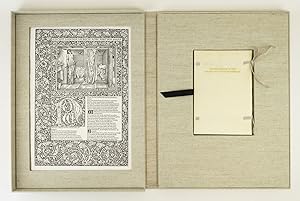
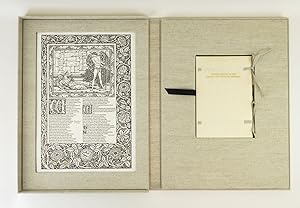
Contact seller3-star sellerText: 244 x 154 mm. (9 1/8 x 6 1/8"); Case: 502 x 372 mm. (19 3/4 x 14 5/8"). ii, 75 pp. Bound in flexible vellum with ties (inspired by Kelmscott Press bindings) by Amy Borezo, who also constructed the case holding the volume and leaves. The book printed letterpress on Zerkall Book Laid Vellum paper by Arthur Larson at Horton T…ank Graphics. Book layout by Jill Mann. EACH COPY WITH FIVE LEAVES: ONE FROM THE KELMSCOTT CHAUCER WITH woodcut borders, woodcut beginning word, and A WOODCUT SCENE DESIGNED BY EDWARD BURNE-JONES, AND ONE EACH FROM THE PRESSES OF FOUR GERMAN PRINTERS FROM THE 1470s--PETER SCHOEFFER, JOHANN MENTELIN, G?NTHER ZAINER, AND ANTON KOBERGER, the Zainer leaf featuring at least one woodcut initial. The incunabular leaves consistently excellent, with only minor defects, and the Kelmscott leaves (which were never part of a bound volume) in entirely fine condition. This is a unique leaf book in the way that it combines three elements: a significant private press production involving people at the top of their craft, a scholarly commentary that contributes to a further understanding of the history of printing, and--most important--five leaves: one from the Kelmscott Press "Works" of Geoffrey Chaucer and four from books issued by German printers at work in the 1470s. The book has been printed and bound by hand by gifted professionals; the essay addresses a topic of significance to typophiles in a considerably more thoroughgoing way than has been done before; and the assemblage of leaves represents a powerful visual reinforcement of the text, as well as an opportunity to share in the ownership of four important incunabula, along with the extraordinary Kelmscott Chaucer. The story of the production is heavy on serendipity: in the winter of 2012, after purchasing a very incomplete copy of the Kelmscott Chaucer at auction, we considered the possibility of producing a leaf book, but because the Chaucer--universally considered to be one of the most beautiful books ever printed--had been written about by so many different people in so many different ways, we didn't know what aspect was left for us to explore. The one topic we fastened on as thus far inadequately examined is the origin of the work's typeface. We soon learned that Morris, who is known to have owned more than 500 incunables, most admired--and was, consequently, most likely to have been influenced in his typographic design by--Peter Schoeffer of Mainz, Johann Mentelin of Strassburg, G?nther Zainer of Augsburg, and Anton Koberger of Nuremberg. Over the course of the years succeeding the purchase of the defective Chaucer, we were fortunate beyond all expectation to acquire incomplete books from each of these four eminent printers. As a result, the present leaf book will allow the reader not only to read in the accompanying essay about the influence on Morris of his typographic forebears, but also to compare with his or her own eyes the resemblances between the Kelmscott leaf and the leaves from four centuries earlier. The essay comes in one of three bindings (which reflect the degree of decorative elaboration on the accompanying Kelmscott leaf): linen-backed paper boards in imitation of the small format Kelmscott publications (with a leaf containing text and small initials); floral patterned cloth after a Morris design (with a leaf containing multiple six-line initials); or, in the most deluxe version, as here, in flexible vellum with ties (with a leaf featuring a full woodcut frame, one or more prominent woodcut initials, and a very large and striking Edward Burne-Jones woodcut scene). No. VII OF 47 COPIES (numbered I-XLVII) bound in flexible vellum from a total edition of 165 COPIES. Text: 244 x 154 mm. (9 1/8 x 6 1/8"); Case: 502 x 372 mm. (19 3/4 x 14 5/8").
 More images
LETTERS FROM THE 15TH CENTURY: ON THE ORIGINS OF THE KELMSCOTT CHAUCER TYPEFACE. A STUDY, WITH SPECIMEN LEAVES, OF THE INFLUENCE OF THE EARLY GERMAN PRINTERS ON WILLIAM MORRIS' MASTERPIECE
(LEAF BOOK - KELMSCOTT PRESS AND PRINTING HISTORY). PIRAGES, PHILLIP J.
Published by Phillip J. Pirages, McMinnville, Oregon, 2019
Seller: Phillip J. Pirages Rare Books (ABAA), McMinnville, OR, U.S.A.Phillip J. Pirages Rare Books (ABAA)
Contact seller3-star sellerText: 244 x 154 mm. (9 1/8 x 6 1/8"); Case: 502 x 372 mm. (19 3/4 x 14 5/8"). ii, 75 pp. Bound in linen-backed blue paper boards (inspired by Kelmscott Press bindings) by Amy Borezo, who also constructed the case holding the volume and leaves. The book printed letterpress on Zerkall Book Laid Vellum paper by Arthur Larson at Hor…ton Tank Graphics. Book layout by Jill Mann. EACH COPY WITH FIVE LEAVES: ONE FROM THE KELMSCOTT CHAUCER with multiple 3-line initials AND ONE EACH FROM THE PRESSES OF FOUR GERMAN PRINTERS FROM THE 1470s--PETER SCHOEFFER, JOHANN MENTELIN, GÜNTHER ZAINER, AND ANTON KOBERGER. The incunabular leaves consistently excellent, with only minor defects, and the Kelmscott leaves (which were never part of a bound volume) in entirely fine condition. This is a unique leaf book in the way that it combines three elements: a significant private press production involving people at the top of their craft, a scholarly commentary that contributes to a further understanding of the history of printing, and--most important--five leaves: one from the Kelmscott Press "Works" of Geoffrey Chaucer and four from books issued by German printers at work in the 1470s. The book has been printed and bound by hand by gifted professionals; the essay addresses a topic of significance to typophiles in a considerably more thoroughgoing way than has been done before; and the assemblage of leaves represents a powerful visual reinforcement of the text, as well as an opportunity to share in the ownership of four important incunabula, along with the extraordinary Kelmscott Chaucer. The story of the production is heavy on serendipity: in the winter of 2012, after purchasing a very incomplete copy of the Kelmscott Chaucer at auction, we considered the possibility of producing a leaf book, but because the Chaucer--universally considered to be one of the most beautiful books ever printed--had been written about by so many different people in so many different ways, we didn't know what aspect was left for us to explore. The one topic we fastened on as thus far inadequately examined is the origin of the work's typeface. We soon learned that Morris, who is known to have owned more than 500 incunables, most admired--and was, consequently, most likely to have been influenced in his typographic design by--Peter Schoeffer of Mainz, Johann Mentelin of Strassburg, Günther Zainer of Augsburg, and Anton Koberger of Nuremberg. Over the course of the years succeeding the purchase of the defective Chaucer, we were fortunate beyond all expectation to acquire incomplete books from each of these four eminent printers. As a result, the present leaf book will allow the reader not only to read in the accompanying essay about the influence on Morris of his typographic forebears, but also to compare with his or her own eyes the resemblances between the Kelmscott leaf and the leaves from four centuries earlier. ONE OF 32 COPIES in linen-backed blue paper boards from a total edition of 165 COPIES.
 More images
LETTERS FROM THE 15TH CENTURY: ON THE ORIGINS OF THE KELMSCOTT CHAUCER TYPEFACE. A STUDY, WITH SPECIMEN LEAVES, OF THE INFLUENCE OF THE EARLY GERMAN PRINTERS ON WILLIAM MORRIS' MASTERPIECE
(LEAF BOOK - KELMSCOTT PRESS AND PRINTING HISTORY). PIRAGES, PHILLIP J.
Published by Phillip J. Pirages, McMinnville, Oregon, 2019
Seller: Phillip J. Pirages Rare Books (ABAA), McMinnville, OR, U.S.A.Phillip J. Pirages Rare Books (ABAA)
Contact seller3-star sellerCondition: Used
US$ 2,340.00
US$ 10.00 shippingShips within U.S.A.Quantity: 19 available
Text: 244 x 154 mm. (9 1/8 x 6 1/8"); Case: 502 x 372 mm. (19 3/4 x 14 5/8"). ii, 75 pp. Bound in floral-patterned cloth after a Morris design by Amy Borezo, who also constructed the case holding the volume and leaves. The book printed letterpress on Zerkall Book Laid Vellum paper by Arthur Larson at Horton Tank Graphics. Book l…ayout by Jill Mann. EACH COPY WITH FIVE LEAVES: ONE FROM THE KELMSCOTT CHAUCER with six- and three-line initials AND ONE EACH FROM THE PRESSES OF FOUR GERMAN PRINTERS FROM THE 1470s--PETER SCHOEFFER, JOHANN MENTELIN, GÜNTHER ZAINER, AND ANTON KOBERGER. The incunabular leaves consistently excellent, with only minor defects, and the Kelmscott leaves (which were never part of a bound volume) in entirely fine condition. This is a unique leaf book in the way that it combines three elements: a significant private press production involving people at the top of their craft, a scholarly commentary that contributes to a further understanding of the history of printing, and--most important--five leaves: one from the Kelmscott Press "Works" of Geoffrey Chaucer and four from books issued by German printers at work in the 1470s. The book has been printed and bound by hand by gifted professionals; the essay addresses a topic of significance to typophiles in a considerably more thoroughgoing way than has been done before; and the assemblage of leaves represents a powerful visual reinforcement of the text, as well as an opportunity to share in the ownership of four important incunabula, along with the extraordinary Kelmscott Chaucer. The story of the production is heavy on serendipity: in the winter of 2012, after purchasing a very incomplete copy of the Kelmscott Chaucer at auction, we considered the possibility of producing a leaf book, but because the Chaucer--universally considered to be one of the most beautiful books ever printed--had been written about by so many different people in so many different ways, we didn't know what aspect was left for us to explore. The one topic we fastened on as thus far inadequately examined is the origin of the work's typeface. We soon learned that Morris, who is known to have owned more than 500 incunables, most admired--and was, consequently, most likely to have been influenced in his typographic design by--Peter Schoeffer of Mainz, Johann Mentelin of Strassburg, Günther Zainer of Augsburg, and Anton Koberger of Nuremberg. Over the course of the years succeeding the purchase of the defective Chaucer, we were fortunate beyond all expectation to acquire incomplete books from each of these four eminent printers. As a result, the present leaf book will allow the reader not only to read in the accompanying essay about the influence on Morris of his typographic forebears, but also to compare with his or her own eyes the resemblances between the Kelmscott leaf and the leaves from four centuries earlier. ONE OF 84 COPIES in floral-patterned cloth from a total edition of 165 COPIES.
 More images
LETTERS FROM THE 15TH CENTURY: ON THE ORIGINS OF THE KELMSCOTT CHAUCER TYPEFACE. A STUDY, WITH SPECIMEN LEAVES, OF THE INFLUENCE OF THE EARLY GERMAN PRINTERS ON WILLIAM MORRIS' MASTERPIECE
(LEAF BOOK - KELMSCOTT PRESS AND PRINTING HISTORY). PIRAGES, PHILLIP J.
Published by Phillip J. Pirages, McMinnville, Oregon, 2019
Seller: Phillip J. Pirages Rare Books (ABAA), McMinnville, OR, U.S.A.Phillip J. Pirages Rare Books (ABAA)
Contact seller3-star sellerCondition: Used
US$ 2,496.00
US$ 10.00 shippingShips within U.S.A.Quantity: 13 available
Text: 244 x 154 mm. (9 1/8 x 6 1/8"); Case: 502 x 372 mm. (19 3/4 x 14 5/8"). ii, 75 pp. Bound in floral-patterned cloth after a Morris design by Amy Borezo, who also constructed the case holding the volume and leaves. The book printed letterpress on Zerkall Book Laid Vellum paper by Arthur Larson at Horton Tank Graphics. Book l…ayout by Jill Mann. EACH COPY WITH FIVE LEAVES: ONE FROM THE KELMSCOTT CHAUCER with multiple six-line initials AND ONE EACH FROM THE PRESSES OF FOUR GERMAN PRINTERS FROM THE 1470s--PETER SCHOEFFER, JOHANN MENTELIN, GÜNTHER ZAINER, AND ANTON KOBERGER. ?The incunabular leaves consistently excellent, with only minor defects, and the Kelmscott leaves (which were never part of a bound volume) in entirely fine condition. This is a unique leaf book in the way that it combines three elements: a significant private press production involving people at the top of their craft, a scholarly commentary that contributes to a further understanding of the history of printing, and--most important--five leaves: one from the Kelmscott Press "Works" of Geoffrey Chaucer and four from books issued by German printers at work in the 1470s. The book has been printed and bound by hand by gifted professionals; the essay addresses a topic of significance to typophiles in a considerably more thoroughgoing way than has been done before; and the assemblage of leaves represents a powerful visual reinforcement of the text, as well as an opportunity to share in the ownership of four important incunabula, along with the extraordinary Kelmscott Chaucer. The story of the production is heavy on serendipity: in the winter of 2012, after purchasing a very incomplete copy of the Kelmscott Chaucer at auction, we considered the possibility of producing a leaf book, but because the Chaucer--universally considered to be one of the most beautiful books ever printed--had been written about by so many different people in so many different ways, we didn't know what aspect was left for us to explore. The one topic we fastened on as thus far inadequately examined is the origin of the work's typeface. We soon learned that Morris, who is known to have owned more than 500 incunables, most admired--and was, consequently, most likely to have been influenced in his typographic design by--Peter Schoeffer of Mainz, Johann Mentelin of Strassburg, Günther Zainer of Augsburg, and Anton Koberger of Nuremberg. Over the course of the years succeeding the purchase of the defective Chaucer, we were fortunate beyond all expectation to acquire incomplete books from each of these four eminent printers. As a result, the present leaf book will allow the reader not only to read in the accompanying essay about the influence on Morris of his typographic forebears, but also to compare with his or her own eyes the resemblances between the Kelmscott leaf and the leaves from four centuries earlier. ONE OF 84 COPIES in floral-patterned cloth from a total edition of 165 COPIES.
 More images
LETTERS FROM THE 15TH CENTURY: ON THE ORIGINS OF THE KELMSCOTT CHAUCER TYPEFACE. A STUDY, WITH SPECIMEN LEAVES, OF THE INFLUENCE OF THE EARLY GERMAN PRINTERS ON WILLIAM MORRIS' MASTERPIECE
(LEAF BOOK - KELMSCOTT PRESS AND PRINTING HISTORY). PIRAGES, PHILLIP J.
Published by Phillip J. Pirages, McMinnville, Oregon, 2019
Seller: Phillip J. Pirages Rare Books (ABAA), McMinnville, OR, U.S.A.Phillip J. Pirages Rare Books (ABAA)
Contact seller3-star sellerText: 244 x 154 mm. (9 1/8 x 6 1/8"); Case: 502 x 372 mm. (19 3/4 x 14 5/8"). ii, 75 pp. Bound in flexible vellum with ties (inspired by Kelmscott Press bindings) by Amy Borezo, who also constructed the case holding the volume and leaves. The book printed letterpress on Zerkall Book Laid Vellum paper by Arthur Larson at Horton T…ank Graphics. Book layout by Jill Mann. EACH COPY WITH FIVE LEAVES: ONE FROM THE KELMSCOTT CHAUCER WITH woodcut borders, woodcut beginning word, and A WOODCUT SCENE DESIGNED BY EDWARD BURNE-JONES, AND ONE EACH FROM THE PRESSES OF FOUR GERMAN PRINTERS FROM THE 1470s--PETER SCHOEFFER, JOHANN MENTELIN, GÜNTHER ZAINER, AND ANTON KOBERGER, the Zainer leaf featuring at least one woodcut initial. âThe incunabular leaves consistently excellent, with only minor defects, and the Kelmscott leaves (which were never part of a bound volume) in entirely fine condition. This is a unique leaf book in the way that it combines three elements: a significant private press production involving people at the top of their craft, a scholarly commentary that contributes to a further understanding of the history of printing, and--most important--five leaves: one from the Kelmscott Press "Works" of Geoffrey Chaucer and four from books issued by German printers at work in the 1470s. The book has been printed and bound by hand by gifted professionals; the essay addresses a topic of significance to typophiles in a considerably more thoroughgoing way than has been done before; and the assemblage of leaves represents a powerful visual reinforcement of the text, as well as an opportunity to share in the ownership of four important incunabula, along with the extraordinary Kelmscott Chaucer. The story of the production is heavy on serendipity: in the winter of 2012, after purchasing a very incomplete copy of the Kelmscott Chaucer at auction, we considered the possibility of producing a leaf book, but because the Chaucer--universally considered to be one of the most beautiful books ever printed--had been written about by so many different people in so many different ways, we didn't know what aspect was left for us to explore. The one topic we fastened on as thus far inadequately examined is the origin of the work's typeface. We soon learned that Morris, who is known to have owned more than 500 incunables, most admired--and was, consequently, most likely to have been influenced in his typographic design by--Peter Schoeffer of Mainz, Johann Mentelin of Strassburg, Günther Zainer of Augsburg, and Anton Koberger of Nuremberg. Over the course of the years succeeding the purchase of the defective Chaucer, we were fortunate beyond all expectation to acquire incomplete books from each of these four eminent printers. As a result, the present leaf book will allow the reader not only to read in the accompanying essay about the influence on Morris of his typographic forebears, but also to compare with his or her own eyes the resemblances between the Kelmscott leaf and the leaves from four centuries earlier. ONE OF 47 COPIES (numbered I-XLVII) bound in flexible vellum from a total edition of 165 COPIES.
 More images
LETTERS FROM THE 15TH CENTURY: ON THE ORIGINS OF THE KELMSCOTT CHAUCER TYPEFACE. A STUDY, WITH SPECIMEN LEAVES, OF THE INFLUENCE OF THE EARLY GERMAN PRINTERS ON WILLIAM MORRIS' MASTERPIECE
(LEAF BOOK - KELMSCOTT PRESS AND PRINTING HISTORY). PIRAGES, PHILLIP J.
Published by Phillip J. Pirages, McMinnville, Oregon, 2019
Seller: Phillip J. Pirages Rare Books (ABAA), McMinnville, OR, U.S.A.Phillip J. Pirages Rare Books (ABAA)
Contact seller3-star sellerCondition: Used
US$ 4,160.00
US$ 10.00 shippingShips within U.S.A.Quantity: 17 available
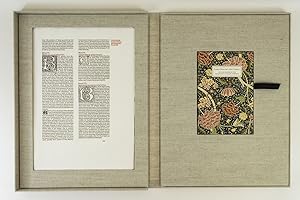
Text: 244 x 154 mm. (9 1/8 x 6 1/8"); Case: 502 x 372 mm. (19 3/4 x 14 5/8"). ii, 75 pp. Bound in flexible vellum with ties (inspired by Kelmscott Press bindings) by Amy Borezo, who also constructed the case holding the volume and leaves. The book printed letterpress on Zerkall Book Laid Vellum paper by Arthur Larson at Horton T…ank Graphics. Book layout by Jill Mann. EACH COPY WITH FIVE LEAVES: ONE FROM THE KELMSCOTT CHAUCER WITH woodcut borders and initials and A WOODCUT SCENE DESIGNED BY EDWARD BURNE-JONES AND ONE EACH FROM THE PRESSES OF FOUR GERMAN PRINTERS FROM THE 1470s--PETER SCHOEFFER, JOHANN MENTELIN, GÜNTHER ZAINER, AND ANTON KOBERGER. âThe incunabular leaves consistently excellent, with only minor defects, and the Kelmscott leaves (which were never part of a bound volume) in entirely fine condition. This is a unique leaf book in the way that it combines three elements: a significant private press production involving people at the top of their craft, a scholarly commentary that contributes to a further understanding of the history of printing, and--most important--five leaves: one from the Kelmscott Press "Works" of Geoffrey Chaucer and four from books issued by German printers at work in the 1470s. The book has been printed and bound by hand by gifted professionals; the essay addresses a topic of significance to typophiles in a considerably more thoroughgoing way than has been done before; and the assemblage of leaves represents a powerful visual reinforcement of the text, as well as an opportunity to share in the ownership of four important incunabula, along with the extraordinary Kelmscott Chaucer. The story of the production is heavy on serendipity: in the winter of 2012, after purchasing a very incomplete copy of the Kelmscott Chaucer at auction, we considered the possibility of producing a leaf book, but because the Chaucer--universally considered to be one of the most beautiful books ever printed--had been written about by so many different people in so many different ways, we didn't know what aspect was left for us to explore. The one topic we fastened on as thus far inadequately examined is the origin of the work's typeface. We soon learned that Morris, who is known to have owned more than 500 incunables, most admired--and was, consequently, most likely to have been influenced in his typographic design by--Peter Schoeffer of Mainz, Johann Mentelin of Strassburg, Günther Zainer of Augsburg, and Anton Koberger of Nuremberg. Over the course of the years succeeding the purchase of the defective Chaucer, we were fortunate beyond all expectation to acquire incomplete books from each of these four eminent printers. As a result, the present leaf book will allow the reader not only to read in the accompanying essay about the influence on Morris of his typographic forebears, but also to compare with his or her own eyes the resemblances between the Kelmscott leaf and the leaves from four centuries earlier. We have additional copies of this binding available at different price points. Please contact us directly for more details. ONE OF 47 COPIES (numbered I-XLVII) bound in flexible vellum from a total edition of 165 COPIES.
 More images
LETTERS FROM THE 15TH CENTURY: ON THE ORIGINS OF THE KELMSCOTT CHAUCER TYPEFACE. A STUDY, WITH SPECIMEN LEAVES, OF THE INFLUENCE OF THE EARLY GERMAN PRINTERS ON WILLIAM MORRIS' MASTERPIECE
(LEAF BOOK - KELMSCOTT PRESS AND PRINTING HISTORY). PIRAGES, PHILLIP J.
Published by Phillip J. Pirages, McMinnville, Oregon, 2019
Seller: Phillip J. Pirages Rare Books (ABAA), McMinnville, OR, U.S.A.Phillip J. Pirages Rare Books (ABAA)
Contact seller3-star sellerCondition: Used
US$ 2,600.00
US$ 10.00 shippingShips within U.S.A.Quantity: Over 20 available
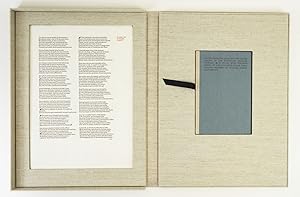
Text: 244 x 154 mm. (9 1/8 x 6 1/8"); Case: 502 x 372 mm. (19 3/4 x 14 5/8"). ii, 75 pp. Bound in floral-patterned cloth after a Morris design by Amy Borezo, who also constructed the case holding the volume and leaves. The book printed letterpress on Zerkall Book Laid Vellum paper by Arthur Larson at Horton Tank Graphics. Book l…ayout by Jill Mann. EACH COPY WITH FIVE LEAVES: ONE FROM THE KELMSCOTT CHAUCER with one or more 10-line initials, multiple six- and/or three-line initials, AND ONE EACH FROM THE PRESSES OF FOUR GERMAN PRINTERS FROM THE 1470s--PETER SCHOEFFER, JOHANN MENTELIN, GÜNTHER ZAINER, AND ANTON KOBERGER. âThe incunabular leaves consistently excellent, with only minor defects, and the Kelmscott leaves (which were never part of a bound volume) in entirely fine condition. This is a unique leaf book in the way that it combines three elements: a significant private press production involving people at the top of their craft, a scholarly commentary that contributes to a further understanding of the history of printing, and--most important--five leaves: one from the Kelmscott Press "Works" of Geoffrey Chaucer and four from books issued by German printers at work in the 1470s. The book has been printed and bound by hand by gifted professionals; the essay addresses a topic of significance to typophiles in a considerably more thoroughgoing way than has been done before; and the assemblage of leaves represents a powerful visual reinforcement of the text, as well as an opportunity to share in the ownership of four important incunabula, along with the extraordinary Kelmscott Chaucer. The story of the production is heavy on serendipity: in the winter of 2012, after purchasing a very incomplete copy of the Kelmscott Chaucer at auction, we considered the possibility of producing a leaf book, but because the Chaucer--universally considered to be one of the most beautiful books ever printed--had been written about by so many different people in so many different ways, we didn't know what aspect was left for us to explore. The one topic we fastened on as thus far inadequately examined is the origin of the work's typeface. We soon learned that Morris, who is known to have owned more than 500 incunables, most admired--and was, consequently, most likely to have been influenced in his typographic design by--Peter Schoeffer of Mainz, Johann Mentelin of Strassburg, Günther Zainer of Augsburg, and Anton Koberger of Nuremberg. Over the course of the years succeeding the purchase of the defective Chaucer, we were fortunate beyond all expectation to acquire incomplete books from each of these four eminent printers. As a result, the present leaf book will allow the reader not only to read in the accompanying essay about the influence on Morris of his typographic forebears, but also to compare with his or her own eyes the resemblances between the Kelmscott leaf and the leaves from four centuries earlier. We have additional copies of this binding available at different price points. Please contact us directly for more details. ONE OF 84 COPIES in floral-patterned cloth from a total edition of 165 COPIES.
 More images
LETTERS FROM THE 15TH CENTURY: ON THE ORIGINS OF THE KELMSCOTT CHAUCER TYPEFACE. A STUDY, WITH SPECIMEN LEAVES, OF THE INFLUENCE OF THE EARLY GERMAN PRINTERS ON WILLIAM MORRIS' MASTERPIECE
(LEAF BOOK - KELMSCOTT PRESS AND PRINTING HISTORY). PIRAGES, PHILLIP J.
Published by Phillip J. Pirages, McMinnville, Oregon, 2019
Seller: Phillip J. Pirages Rare Books (ABAA), McMinnville, OR, U.S.A.Phillip J. Pirages Rare Books (ABAA)
Contact seller3-star sellerCondition: Used
US$ 2,028.00
US$ 10.00 shippingShips within U.S.A.Quantity: 15 available
Text: 244 x 154 mm. (9 1/8 x 6 1/8"); Case: 502 x 372 mm. (19 3/4 x 14 5/8"). ii, 75 pp. Bound in linen-backed blue paper boards (inspired by Kelmscott Press bindings) by Amy Borezo, who also constructed the case holding the volume and leaves. The book printed letterpress on Zerkall Book Laid Vellum paper by Arthur Larson at Hor…ton Tank Graphics. Book layout by Jill Mann. EACH COPY WITH FIVE LEAVES: ONE FROM THE KELMSCOTT CHAUCER with text only AND ONE EACH FROM THE PRESSES OF FOUR GERMAN PRINTERS FROM THE 1470s--PETER SCHOEFFER, JOHANN MENTELIN, GÜNTHER ZAINER, AND ANTON KOBERGER. âThe incunabular leaves consistently excellent, with only minor defects, and the Kelmscott leaves (which were never part of a bound volume) in entirely fine condition. This is a unique leaf book in the way that it combines three elements: a significant private press production involving people at the top of their craft, a scholarly commentary that contributes to a further understanding of the history of printing, and--most important--five leaves: one from the Kelmscott Press "Works" of Geoffrey Chaucer and four from books issued by German printers at work in the 1470s. The book has been printed and bound by hand by gifted professionals; the essay addresses a topic of significance to typophiles in a considerably more thoroughgoing way than has been done before; and the assemblage of leaves represents a powerful visual reinforcement of the text, as well as an opportunity to share in the ownership of four important incunabula, along with the extraordinary Kelmscott Chaucer. The story of the production is heavy on serendipity: in the winter of 2012, after purchasing a very incomplete copy of the Kelmscott Chaucer at auction, we considered the possibility of producing a leaf book, but because the Chaucer--universally considered to be one of the most beautiful books ever printed--had been written about by so many different people in so many different ways, we didn't know what aspect was left for us to explore. The one topic we fastened on as thus far inadequately examined is the origin of the work's typeface. We soon learned that Morris, who is known to have owned more than 500 incunables, most admired--and was, consequently, most likely to have been influenced in his typographic design by--Peter Schoeffer of Mainz, Johann Mentelin of Strassburg, Günther Zainer of Augsburg, and Anton Koberger of Nuremberg. Over the course of the years succeeding the purchase of the defective Chaucer, we were fortunate beyond all expectation to acquire incomplete books from each of these four eminent printers. As a result, the present leaf book will allow the reader not only to read in the accompanying essay about the influence on Morris of his typographic forebears, but also to compare with his or her own eyes the resemblances between the Kelmscott leaf and the leaves from four centuries earlier. We have additional copies of this binding available at different price points. Please contact us directly for more details. ONE OF 32 COPIES in linen-backed blue paper boards from a total edition of 165 COPIES.


