
March 1981 (11 results)
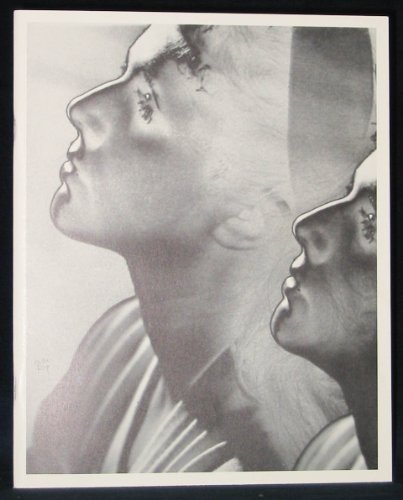
Transfixed by Light: Photographs from the Menil Foundation Collection
Houston, TX: Rice Museum, Institute for the Arts, Rice University, March 21 to May 24, 1981
- Softcover
Seller: Mullen Books, ABAA, Marietta, PA, U.S.A.Mullen Books, ABAA
Contact seller4-star sellerCondition: Used
US$ 17.00
US$ 12.99 shippingShips within U.S.A.Quantity: 2 available
Softcover. Condition: VG+ appearsto be a new copy. White ill. stapled wraps. 46 pp. Profuse bw plates. Comprised mostly of illustrations of notable photographs and brief annotations.

- Softcover
Seller: Mullen Books, ABAA, Marietta, PA, U.S.A.Mullen Books, ABAA
Contact seller4-star sellerCondition: Used
US$ 29.97
US$ 12.99 shippingShips within U.S.A.Quantity: 1 available
Softcover. Condition: G, exlib with stamp to cover. White ill. tri-fold. No ills.

Published by NY: Sidney Janis Gallery, 1981, 1981
- Softcover
Seller: WellRead Books, Shamong, NJ, U.S.A.WellRead Books
Contact seller5-star sellerAssociation member: IOBA
Small 4to.; stiff wraps with stapled binding, softcover; 8 unnumbered pages; black and white photographic illustrations; wraps are lightly rubbed else very good.

Published by Religious Research Association, 1981
- Softcover
Seller: Book Express (NZ), Shannon, New ZealandBook Express (NZ)
Contact seller4-star sellerCondition: Used - Very good
US$ 5.29
US$ 31.00 shippingShips from New Zealand to U.S.A.Quantity: 1 available
Paperback. Condition: Very Good.

- Softcover
Seller: Mullen Books, ABAA, Marietta, PA, U.S.A.Mullen Books, ABAA
Contact seller4-star sellerSoftcover. Condition: VG (fading to front cover). Blue stapled wraps. [4] pp. 3 bw ills.

C | A Biography of Sir Maurice Oldfield
Deacon, Richard [Sir Maurice Oldfield GCMG CBE (16 November 1915 - 11 March 1981) was a British intelligence officer and espionage administrator. He served as the seventh director of the Secret Intelligence Service (MI6), from 1973 to 1978].
Published by Published by Macdonald & Co. (Publishers) Ltd., London and Sydney First UK Edition . 1985., 1985
- Hardcover
- First Edition
Seller: Little Stour Books PBFA Member, Canterbury, United KingdomLittle Stour Books PBFA Member
Contact seller5-star sellerAssociation member: PBFA
Condition: Used - Near fine
US$ 20.63
US$ 40.06 shippingShips from United Kingdom to U.S.A.Quantity: 1 available
Condition: Near Fine. First edition hard back binding in publisher's original green cloth covers, gilt title and author lettering to the spine. 8vo. 9'' x 5½''. Contains [vii] 279 printed pages of text with monochrome photographs. Slightest hint of tanning to the text block edges. Near Fine condition book in near Fine condition…dust wrapper, not price clipped. Dust wrapper supplied in archive acetate film protection. Member of the P.B.F.A. ISBN 0356104001 ESPIONAGE (Clandestine).
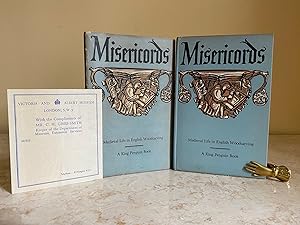
Misericords, Medieval Life in English Woodcarving | The King Penguin Book Series (Number K72) + Victoria and Albert Museum Compliments Slip
Anderson, M. D. [Charles Harvard Gibbs-Smith (22 March 1909 - 3 December 1981) was a British polymath historian of aeronautics and aviation, between 1947 and 1971 he was Keeper of the Department of Public Relations at the Victoria and Albert Museum in London]
Published by Published by Penguin Books Ltd., Harmondsworth, Middlesex First Edition . 1954., 1954
- Hardcover
- First Edition
Seller: Little Stour Books PBFA Member, Canterbury, United KingdomLittle Stour Books PBFA Member
Contact seller5-star sellerAssociation member: PBFA
Condition: Used - Very good
US$ 24.08
US$ 40.06 shippingShips from United Kingdom to U.S.A.Quantity: 1 available
Condition: Very Good. First edition hard back binding in publisher's original colour illustrated paper covered boards. Small 8vo. 7¼'' x 5''. Contains 30 pp followed by 48 full-page monochrome plates. Very Good condition book, in Good condition dust wrapper with age darkening and rubbing to the spine ends and edges, not price cl…ipped 3/6. Victoria and Albert Museum Compliments Slip from Charles Harvard Gibbs-Smith (Victoria and Albert Museum), loosely inserted. Dust wrapper supplied in archive acetate film protection. Member of the P.B.F.A. KING PENGUIN (Series).

Published by Published by Dusty Bookcase First Edition not dated.
Seller: Little Stour Books PBFA Member, Canterbury, United KingdomLittle Stour Books PBFA Member
Contact seller5-star sellerAssociation member: PBFA
Condition: Used - Near fine
US$ 20.63
US$ 40.06 shippingShips from United Kingdom to U.S.A.Quantity: 1 available
Condition: Near Fine. Publisher's original illustrated card wrap covers [softback]. 8vo. 9½'' x 6''. Contains 171 printed pages of text. In very near Fine clean unopened condition, no dust wrapper as published. Member of the P.B.F.A. LITERATURE 1900-1925.
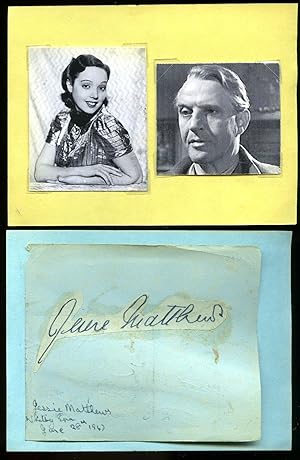
Eric Portman and Jessie Matthews Double Signed Card + Two Photographs
Eric Harold Portman (13 July 1901 - 7 December 1969) was an English stage and film actor. He is probably best remembered for his roles in several films for Michael Powell and Emeric Pressburger during the 1940s. Jessie Matthews, OBE (11 March 1907 - 19 August 1981) was an English actress, dancer and singer of the 1920s and 1930s, whose career continued into the post-war period. After a string of hit stage musicals and films in the mid-1930s, Matthews developed a following in the USA, where she was dubbed "The Dancing Divinity". Her British studio was reluctant to let go of its biggest name, which resulted in offers for her to work in Hollywood being repeatedly rejected.
Published by and 1948. 1947/1948., 1947
- Signed
Seller: Little Stour Books PBFA Member, Canterbury, United KingdomLittle Stour Books PBFA Member
Contact seller5-star sellerAssociation member: PBFA
Condition: Used
US$ 27.51
US$ 40.06 shippingShips from United Kingdom to U.S.A.Quantity: 1 available
4'' x 5'' back to back double SIGNED card. One side is SIGNED 'Jessie Matthews' Whitby Spa, June 28th 1947', the reverse is SIGNED 'Best Wishes Eric Portman' Whitby Spa, March 27th 1948. With two small corner mounted period monochrome photographs of Jessie Matthews and Eric Portman. Member of the P.B.F.A. STAGE & THEATRE.
 More images
SHIRIM : shire herev, haholkhi be-hoshekh
Ratosh, Yonathan Jonathan (Warsaw, Poland November 18, 1908 - March 25, 1981)
Language: Hebrew
Published by Hadar publishing Ltd., Tel Aviv, Israel, 1977
- Hardcover
Seller: Meir Turner, New York, NY, U.S.A.Meir Turner
Contact seller5-star sellerCondition: Used - Very good
US$ 80.00
US$ 8.00 shippingShips within U.S.A.Quantity: 1 available
Hardcover. Condition: Very Good. Dust Jacket Condition: Very Good. 185 x 110 mm. 112 pages. Yonatan Ratosh is the pen name of Uriel Shelach whose name was originally Uriel Heilperin (Warsaw, Poland November 18, 1908 - March 25, 1981). He was an Israeli poet and the founder of the Canaanite movement. Born to a Zionist family, to…a Hebraist educator, Yechiel, who raised Uriel and his siblings in Hebrew. In 1921, the family immigrated to Mandatory Palestine. Uriel changed his last name from Heilperin to Halperin, then to Shelakh. Later he used the pseudonym Yonatan Ratosh in poetic and political writing. He attended the Hebrew University of Jerusalem and the Sorbonne, and published his first poem in 1926. In the mid-1930s, he edited the Revisionist movement's newspaper and was active in right-wing underground organizations. Ratosh was awarded the Prime Minister's Prize. His son Saharon Shelah, a mathematician, won the Israel Prize. Another son, Hamman Shelah, was a magistrate judge who was killed along with wife and daughter in the RAS BURQA MASSACRE. One of his brothers was linguist Uzzi Ornan. Ratosh died in 1981. In the late 1920s, Ratosh (using his birth name, Heilperin) embraced Revisionist Zionism, becoming close friends with Eliyahu Bet-Zuri and Avraham Stern. A talented writer, Halperin became the editor of the official publication of the Irgun, "Ba-Cherev" ("By the Sword"). In 1937, Jabotinsky demoted Halperin for the extremism of his views. Frustrated, he travelled to Paris to meet with another disillusioned Revisionist, Semitic language scholar Adia Gurevitch (A.G. Horon). Heilperin and Gurevitch formulated "a new Hebrew consciousness" combining the former's political ideas with the latter's historical outlook. In their minds, the Jewish People were a part of a larger Hebrew civilization bound together by Canaanite languages and nationhood in Canaan. With the outbreak of World War II began writing (as Ratosh) for Haaretz. Adopting the pseudonym of Yonatan Ratosh, he began to write poetry that "ritsha" "tore apart" existing conventions of style, language, and culture. In 1939, he founded the Canaanite movement, which rejected both religion and Jewish nationalism. This group promoted the theory of a shared cultural heritage for the entire Middle East. The literary output of the movement was strongly influenced by an ancient, pre-biblical mythology and vocabulary. Ratosh's own work is closely linked to the movement's political theory. His early poems are very structured, and play with rhyme and repetition to create an almost hypnotic effect. His later work employs colloquial diction and more contemporary style. While the movement founded by Ratosh was never broad, T. Carmi wrote that "its emphasis on myth and its stylistic mannerisms had considerable impact on contemporary poetry." In an essay entitled "Ketav el ha-No'ar ha-'Ivri" "Epistle to the Hebrew Youth") from 1943, Heilperin/Ratosh presented his new ideas to the Hebrew-speaking public. This and other essays called for the community of the Yishuv to divorce themselves from their Jewish roots and embrace a new identity as "Hebrews". The "Young Hebrews" became known as the Canaanites, a mocking name coined by Haaretz editor Avraham Shlonsky. In 1950, Ratosh founded and co-edited the literary journal Alef which published translations of the work of Stendhal, Camus, Shaw and O'Neill. Ratosh continued publishing poetry and enjoyed a brief renaissance as an ideologue after the Six Day War. His political philosophy had an impact across the political spectrum: sharing the Right's irredentism and advocating a secular (in lieu of Jewish) state like post-Zionists, particularly radical peace advocate Uri Avnery. His last poem in book form was Hava ("Eve"), published in 1963. In it, he reinterprets the story of the Garden of Eden as the coronation of a Rain God. Ratosh is considered among the pioneers of Hebrew Science Fiction, having translated in 1952 the anthology "Adventures in tomorrow" edited by Kendell Foster Crossen . . .
 More images
YOKHEMED shirim khupa shkhora, ba'argaman, yokhemed
Ratosh, Yonathan Jonathan (Warsaw, Poland November 18, 1908 - March 25, 1981)
Language: Hebrew
Published by Makhbarot Lesafrut, Tel Aviv, Israel, 1952
- Hardcover
Seller: Meir Turner, New York, NY, U.S.A.Meir Turner
Contact seller5-star sellerCondition: Used - Very good
US$ 180.00
US$ 8.00 shippingShips within U.S.A.Quantity: 1 available
Hardcover. Condition: Very Good. Dust Jacket Condition: Good. 185 x 110 mm. 112 pages. Yonatan Ratosh is the pen name of Uriel Shelach whose name was originally Uriel Heilperin (Warsaw, Poland November 18, 1908 - March 25, 1981). He was an Israeli poet and the founder of the Canaanite movement. Born to a Zionist family, to a Heb…raist educator, Yechiel, who raised Uriel and his siblings in Hebrew. In 1921, the family immigrated to Mandatory Palestine. Uriel changed his last name from Heilperin to Halperin, then to Shelakh. Later he used the pseudonym Yonatan Ratosh in poetic and political writing. He attended the Hebrew University of Jerusalem and the Sorbonne, and published his first poem in 1926. In the mid-1930s, he edited the Revisionist movement's newspaper and was active in right-wing underground organizations. Ratosh was awarded the Prime Minister's Prize. His son Saharon Shelah, a mathematician, won the Israel Prize. Another son, Hamman Shelah, was a magistrate judge who was killed along with wife and daughter in the RAS BURQA MASSACRE. One of his brothers was linguist Uzzi Ornan. Ratosh died in 1981. In the late 1920s, Ratosh (using his birth name, Heilperin) embraced Revisionist Zionism, becoming close friends with Eliyahu Bet-Zuri and Avraham Stern. A talented writer, Halperin became the editor of the official publication of the Irgun, "Ba-Cherev" ("By the Sword"). In 1937, Jabotinsky demoted Halperin for the extremism of his views. Frustrated, he travelled to Paris to meet with another disillusioned Revisionist, Semitic language scholar Adia Gurevitch (A.G. Horon). Heilperin and Gurevitch formulated "a new Hebrew consciousness" combining the former's political ideas with the latter's historical outlook. In their minds, the Jewish People were a part of a larger Hebrew civilization bound together by Canaanite languages and nationhood in Canaan. With the outbreak of World War II began writing (as Ratosh) for Haaretz. Adopting the pseudonym of Yonatan Ratosh, he began to write poetry that "ritsha" "tore apart" existing conventions of style, language, and culture. In 1939, he founded the Canaanite movement, which rejected both religion and Jewish nationalism. This group promoted the theory of a shared cultural heritage for the entire Middle East. The literary output of the movement was strongly influenced by an ancient, pre-biblical mythology and vocabulary. Ratosh's own work is closely linked to the movement's political theory. His early poems are very structured, and play with rhyme and repetition to create an almost hypnotic effect. His later work employs colloquial diction and more contemporary style. While the movement founded by Ratosh was never broad, T. Carmi wrote that "its emphasis on myth and its stylistic mannerisms had considerable impact on contemporary poetry." In an essay entitled "Ketav el ha-No'ar ha-'Ivri" "Epistle to the Hebrew Youth") from 1943, Heilperin/Ratosh presented his new ideas to the Hebrew-speaking public. This and other essays called for the community of the Yishuv to divorce themselves from their Jewish roots and embrace a new identity as "Hebrews". The "Young Hebrews" became known as the Canaanites, a mocking name coined by Haaretz editor Avraham Shlonsky. In 1950, Ratosh founded and co-edited the literary journal Alef which published translations of the work of Stendhal, Camus, Shaw and O'Neill. Ratosh continued publishing poetry and enjoyed a brief renaissance as an ideologue after the Six Day War. His political philosophy had an impact across the political spectrum: sharing the Right's irredentism and advocating a secular (in lieu of Jewish) state like post-Zionists, particularly radical peace advocate Uri Avnery. His last poem in book form was Hava ("Eve"), published in 1963. In it, he reinterprets the story of the Garden of Eden as the coronation of a Rain God. Ratosh is considered among the pioneers of Hebrew Science Fiction, having translated in 1952 the anthology "Adventures in tomorrow" edited by Kendell Foster Crossen . . .


