
Navy Division Naval Intelligence (8 results)
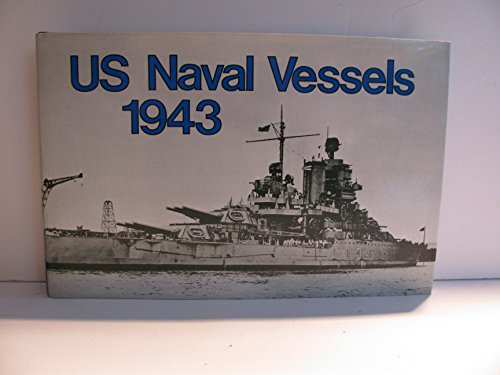
- Hardcover
Seller: Chaparral Books, Portland, U.S.A.Chaparral Books
Contact seller5-star sellerCondition: Used - Very good
US$ 15.00
US$ 7.50 shippingShips within U.S.A.Quantity: 1 available
Hardcover. Condition: Very Good. Dust Jacket Condition: Very Good. Binding clean & crisp. Small piece of dj has attached to spine with corresponding water damage on dj. Otherwise dj in very good condition. Dust Jacket protected by mylar cover.
 More images
Language: English
Published by U.S. Government Printing Office 1944
- Hardcover
Seller: Chaparral Books, Portland, U.S.A.Chaparral Books
Contact seller5-star sellerCondition: Used - Good
US$ 65.00
US$ 7.50 shippingShips within U.S.A.Quantity: 1 available
Hardcover. Condition: Good. Nine booklets cord-bound into red cloth covers. Some wear to the edges and corners. Rubbing along spine with a short split along front joint. Some light soiling and smudges are noted. Oblong 8vo.

Axis Submarine Manual; O. N. I. 220-M, NOT FOR SALE
United States Navy, Division of Naval Intelligence, Identification and Characteristics Section
Published by United States Navy, Division of Naval Intelligence, Identification and Characteristics Section, Washington DC 1942
- Softcover
- First Edition
Seller: Ground Zero Books, Ltd., Silver Spring, U.S.A.Ground Zero Books, Ltd.
Contact seller5-star sellerCondition: Used - Good
US$ 55.00
US$ 5.00 shippingShips within U.S.A.Quantity: 1 available
Wraps. Condition: Good. Presumed First Edition, First printing. The format is approximately 10 inches by 6 inches. Unpaginated (32 pages, plus covers) Illustrated covers. Illustrations (photographs, drawings, silhouettes). Tabular data. O. N. I. 220-M--Axis Submarine Manual--was designed primarily for the masters and seamen of o…ur merchant marine and for armed guard crews. This publication is deliberately nontechnical. Its purpose is to acquaint seafaring men with some of the characteristics and tactics of the raider which approaches unseen and strikes without warning. There are included in this publication the principal types of Axis submarines. Vichy French submarines are included as well so that the coverage of the leading continental naval powers will be more complete. The techniques described are largely from what we know of German methods. However, it is believed that the principles discussed apply to the submarine forces of Italy and Japan, with due consideration for national traits--caution and prudence in the case of Italy; reckless fanaticism in the case of Japan. The principal methods which are available to the master of a ship for thwarting his attacker are those of concealment and evasion. Thus, strict adherence to sailing instructions with regard to darkening ship, zigzagging, and similar precautions is clearly indicated. This publication is an unclassified public document. Distribution should be made of its contents so that those men who must the the gauntlet of a worldwide submarine blockade will know the nature to the enemy that seeks to destroy them. Submarines can proceed on the surface at a speed of 18 knots or better. The submarine carries sufficient fuel to travel around the world. She also carries food and supplies for a cruise of several months' duration. Consequently, the German submarine operating along the American littoral does not need to be refueled or serviced by "mother ships." There have been press reports that German submarines operating off the Atlantic seaboard have been refueled and have obtained supplies from disguised supply ships. This is quite possible. What definitely sends the submarine back home, if she is not sunk or damaged by her enemy, is the expenditure of her torpedoes. When the last bolt has been shot, she must return home to get a new supply. Torpedoes and the human factor determine the endurance of the submarine. This second fact, which may be easily overlooked by even seafaring men who are not accustomed to the cramped quarters of a submarine, is one of considerable important. Submarine crews are likely to be tough and courageous, but under the continual stress of war conditions, unless frequently relieved and given comparatively long periods of rest and relaxation, their morale may show signs of deterioration. The loss of several famous U-boat captains who were an inspiration to the entire German submarine service has, no doubt, had its effect on the less experienced commanders. One or two torpedo hits, if properly placed, will sink a large merchant vessel, although there are many instances of tankers and other ships which have come home after sustaining a torpedo attack from an enemy submarine. Submarines are equipped with very efficient underwater sound devices which permit them to discover the presence and bearings of large surface vessels within a range of 5 miles. This equipment also permits a submerged submarine to keep an accurate track of the position of attacking destroyers and other antisubmarine units. Evasive maneuvers are facilitated by the high maneuverability and the relatively small turning circle of the submarine. The German submarines are reputed to have made considerable progress in reducing the noise of their own machinery, and a submarine proceeding submerged at a speed of less than 3 knots is very difficult to pick up by even the best and most modern listening gear. To destroy a modern submarine by means of depth charges the charge must be exploded very near the submarine's hull. To open up that hull a 100-pound d.
Ship Shapes; Anatomy and Types of Naval Vessels. O. N. I. 223 For Official Use Only [Stated as RESTRICTED on first page]
United States Navy, Division of Naval Intelligence, Identification and Characteristics Section
Published by United States Navy, Division of Naval Intelligence, Identification and Characteristics Section, Washington DC 1943
- Softcover
Seller: Ground Zero Books, Ltd., Silver Spring, U.S.A.Ground Zero Books, Ltd.
Contact seller5-star sellerCondition: Used - Good
US$ 65.00
US$ 5.00 shippingShips within U.S.A.Quantity: 1 available
Wraps. Condition: Good. Revised Edition. The format is approximately 10 inches by 6 inches. Unpaginated (32 pages, plus covers) Illustrated front cover. Illustrations (drawings, silhouettes). Terminology. Technical data. Dated December 9, 1942 on the first page but GPO printing date on last page is 1943. O. N. I 223 has been pre…pared in answer to a growing demand for a more generalized treatment of the subject of warship identification. Since the outbreak of war the Division of Naval Intelligence had issues a considerable number of publications dealing with the appearance of our own naval vessels, with those of allied and neutral nationals and the fleets of our opponents. Written and illustrated by the officers and civilian personnel who have prepared material for O. N. I. Standard Navy Manuals, O. N. I 223 represents an effort to simplify ship recognition for personnel in training and for the fighting forces. The first section of this publication may be regarded as a primer for those whose knowledge of the elements that constitute a fighting fleet is limited. This section describes briefly the functions of the more important combatant types and auxiliaries and their characteristics. It also contains a glossary of common marine terminology and illustrates the salient elements of warship design, with the names and common variations. Additional sections of O. N. I. 223 were planned to be published as material was completed.
Language: English
Published by Division of Naval Intelligence Identification and Characteristics Section 1942
- Softcover
- First Edition
Seller: WORLD WAR BOOKS, TUNBRIDGE WELLS, United KingdomWORLD WAR BOOKS
Contact seller5-star sellerCondition: Used - Very good
US$ 151.49
US$ 17.18 shippingShips from United Kingdom to U.S.A.Quantity: 1 available
Soft cover. Condition: Very Good. No Jacket. 1st Edition. Orange card covers, neatly laced.Original and excellent, very comprehensive Restricted reference on all Japanese Naval Vessels as known at the time. First published November 1942. Includes Battleships, Heavy cruisers, light cruisers, Aircraft carries, Destroyers, Auxiliar…ies etc. c.300pp., photographs and very high quality silhouettes together with data on each vessel including armament and protection. Errata sheet at rear issued March 1943 and index to all Japanese naval vessels issued 12/ 44. Some blemishes to covers and rear of errata sheet. Overall still very good condition.
U. S. Destroyers; ONI 54-D Restricted
United States Navy, Division of Naval Intelligence, Identification and Characteristics Section
Published by United States Navy, Division of Naval Intelligence, Identification and Characteristics Section, Washington DC 1943
- Softcover
- First Edition
Seller: Ground Zero Books, Ltd., Silver Spring, U.S.A.Ground Zero Books, Ltd.
Contact seller5-star sellerCondition: Used - Good
US$ 75.00
US$ 5.00 shippingShips within U.S.A.Quantity: 1 available
Wraps. Condition: Good. Presumed First Edition, First printing. The format is approximately 10 inches by 6 inches. Cover is three hole punched and has some wear and soiling. Unpaginated (32 pages, plus covers) Illustrations (photographs, drawings, silhouettes). Terminology. Technical data. This is part of the ONI 54 series of wa…rship recognition manuals. It includes information on the Fletcher Class, Farragut Class, Mahan Class, Sims Class, Benson Class, Livermore Class, Sumner Class of Destroyers, along with information on other Destroyer classes with fewer associated ships. In 1941, the US Navy began building a fleet of large destroyers, its first design to rival the Japanese "special type" destroyers that had first entered service more than a decade before. These 175 flush-deck "2,100-tonners" became, "in retrospect . . . the most successful of all American destroyers: fast, roomy, capable of absorbing enormous punishment, and yet fighting on."2 Thanks to postwar service in the US plus fourteen foreign navies, they remained a familiar sight around the world into the 1990s. The fourth of June 1942 was a significant day for the US Navy. In the mid-Pacific, its aircraft sank four of Japan's six front-line aircraft carriers while turning back the invasion fleet at the Battle of Midway. Meanwhile, at nearly the same hour seven time zones to the east, the first of the 2,100-ton Fletcher-class destroyers was commissioned at the Boston Navy Yard. Their design was a fine achievement, balancing ruggedness and seaworthiness, armament, speed and protection on a classically-proportioned 376½-foot flush deck hull. Known at first as "US Destroyer No. 445" for the hull number of the lead ship, the design incorporated ten torpedo tubes in two quintuple centerline mounts plus five 5-inch/38 caliber dual purpose guns, anti-aircraft weapons and depth charges. At 2,050 tons standard displacement and approximately 2,900 tons fully loaded, the Fletchers were significantly larger than any preceding American destroyer classes. Authorized for fiscal year 1941, construction of the first ships was already under way when the United States entered the war. In an emergency program to expand capacity, some shipyards were upgraded and other new ones were brought on line. Eventually, eleven shipyards launched 175 ships over the next 32 monthsâ"the most numerous class of destroyer completed by any navy. They were also the first US destroyers fitted with radar as built. The pace of US destroyer construction accelerated with the wartime Fletcher class. Laid down beginning in 1941, all 175 Fletchers were completed between June 1942 and February 1945, launched an average of 212 days after keel laying and commissioned after an average of 152 days more or 364 days totalâ"nearly 10 per cent faster than the repeat Bensons and Gleaves that preceded them. The Fletchers are remembered as the signature US Navy destroyer class of the Pacific war. There, the earliest ones saw action in the nighttime surface battles in the Solomon Islands, many fought at Leyte and all completed in time for fleet screening and shore bombardment assignments and the notorious anti-kamikaze radar picket duty at Okinawa. While 19 were lost and six damaged beyond repair, 44 earned ten or more service stars, 19 were awarded the Navy Unit Commendation and 16 received the Presidential Unit Citation.
Published by Division of Naval Intelligence [Printed by the U.S. Government Printing Office], Washington DC 1945
- First Edition
Seller: Ground Zero Books, Ltd., Silver Spring, U.S.A.Ground Zero Books, Ltd.
Contact seller5-star sellerCondition: Used - Good
US$ 150.00
US$ 5.00 shippingShips within U.S.A.Quantity: 1 available
Condition: Good. Presumed First Edition, First printing. Single sheet, printed on both sides. RARE surviving copy/ephemera. The format is approximately 21 inches by 10 inches, tri-folded, resulting in six panels (3 per side). This has been further folded in half. First panel presents the Fleet Train, with Passenger, Passenger-Ca…rgo, and Cargo Types. Other panels present U.S. Warships, British Warships, Minor Combatant Craft, and Two panels on Allied Aircraft. This is a guide for the recognition of U.S. and Allied warships and aircraft operating in the Pacific Theaters during WWII. Single sheet, printed on both sides.
Published by United States Navy Department, Office of the Chief of Naval Operations, Division of Naval Intelligence, Identification and Characteristics Section, Washington DC 1942
- First Edition
Seller: Ground Zero Books, Ltd., Silver Spring, U.S.A.Ground Zero Books, Ltd.
Contact seller5-star sellerCondition: Used - Good
US$ 350.00
US$ 5.00 shippingShips within U.S.A.Quantity: 1 available
Loose-leaf, string tied. Condition: Good. The format is approximately 10.25 inches by 6 inches. 102 pages Illustrated index. Alphabetical Index. It is three-hole punched and held together by cord tied between the first and third hole. Stiff blue card stock for front and back covers. Guide to Russian Merchant ships during World W…ar II, with major vessels identified by name, others by class. Includes photos of each as well as some profiles, specifications and descriptions. A loose-leaf arrangement has been adopted to facilitate the addition and substitution of sheets as issued. In order to permit free and general use of O. N. I. 54-R by the Forces Afloat, a low classification has been assigned to it. The purpose for which O. N. I. 208-R has been prepared is for use of United States armed forces in the Pacific. Many of the vessels illustrated may be encounters in areas in which United States naval forces are now operating against the merchant marine of Japan. O. N. I. 208-R is intended as an aid to our submarines and other forces in the Pacific in avoiding errors of identification in this area. This work includes photographs, silhouettes, drawings, and technical information. International radio signals accompany ships' names. Vessel tonnages shown herein are gross tonnage Waterline lengths are shown throughout. Drafts given represent mean loaded drafts, with vessels fully loaded and down to official loadline. Normal cruising speeds as given are the known or estimated operating speeds. In the majority of cases horsepower figures are NHP or nominal horsepower. Where available BHP or brake horsepower figures have been shown. The Office of Naval Intelligence (ONI) is the military intelligence agency of the United States Navy. Established in 1882 primarily to advance the Navy's modernization efforts,[4] it is the oldest member of the U.S. Intelligence Community and serves as the nation's premier source of maritime intelligence. Since the First World War, ONI's mission has broadened to include real-time reporting on the developments and activities of foreign navies; protecting maritime resources and interests; monitoring and countering transnational maritime threats; providing technical, operational, and tactical support to the U.S. Navy and its partners; and surveying the global maritime environment. ONI employs over 3,000 military and civilian personnel worldwide and is headquartered at the National Maritime Intelligence Center in Suitland, Maryland. William H. Hunt, who served briefly as Secretary of the Navy under President James Garfield, formed a Naval Advisory Board tasked with rebuilding the Navy and bringing it up to par to global standards. Largely in response to Mason's recommendations, on March 23, 1882, Hunt issued General Order No. 292, which read: "An "Office of Intelligence" is hereby established in the Bureau of Navigation for the purpose of collecting and recording such naval information as may be useful to the Department in time of war, as well as in peace. To facilitate this work, the Department Library will be combined with the "Office of Intelligence," and placed under the direction of the Chief of the Bureau of Navigation. Commanding and all other officers are directed to avail themselves of all opportunities which may arise to collect and to forward to the "Office of Intelligence" professional matters likely to serve the object in view." The new Office of Naval Intelligence would be headquartered in the State, War and Navy Building (now the Old Executive Office Building), with Mason appointed as its first "Chief Intelligence Office".[note 1] As originally conceived, ONI assisted in the Navy's advancement by dispatching naval attachés around the world to acquire data and resources related to the latest in naval warfare. These findings would be analyzed, interpreted, and disseminated to Navy leaders and government officials, helping to inform policies and programs related to naval development. The Second World War would see another expansion of ONI's duti.

