
Printing Silk (9 results)

Published by Sällskapet Bokvännerna, (Stockholm 1969
- Softcover
Seller: Oak Knoll Books, ABAA, ILAB, NEW CASTLE, DE, U.S.A.Oak Knoll Books, ABAA, ILAB
Contact seller5-star sellerstiff paper wrappers. 12mo. stiff paper wrappers. 74-107 pages. Text in Swedish. Offprint from Boken i vårt jhärta, dedicated to Thure Nyman, Stockholm, 1969. A study of Swedish silk printing. Includes a listing of 72 Swedish examples from 1635 to 1868. Synopsis of the work in English laid in. Two black and white plates. Printin…g on Silk (illustrator).

Language: English
Published by St Martins Press, Gordonsville, Virginia, U.S.A. 1994
- Hardcover
Seller: GREAT PACIFIC BOOKS, Ventura, CA, U.S.A.GREAT PACIFIC BOOKS
Contact seller5-star sellerCondition: Used - Very good
US$ 94.95
US$ 10.99 shippingShips within U.S.A.Quantity: 1 available
Hard Back. Condition: Very Good. Dust Jacket Condition: Dj is Mylar Protected. Minor Ex-Library Marks. Quality Hardback : hard cover edition in Very Good condition in Good Dust Jacket, some slight wear to edges, as normal for age of book and dj. Some scuff marks on ffep. Excellent read. A good book to enjoy and keep on hand. Or…would make a great GIFT IDEA for the fan / reader in your life. Fully Illustrated (illustrator). Book.

Published by Nishida Gallery 1982
- Softcover
Seller: Sunny Day Bookstore, SINGAPORE, , SingaporeSunny Day Bookstore
Contact seller4-star sellerCondition: Used - Fine
US$ 76.00
US$ 15.00 shippingShips from Singapore to U.S.A.Quantity: 1 available
Condition: Fine. Number of books: 1.
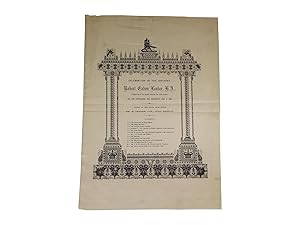
Published by No Publisher, No Place 1860
- Softcover
- First Edition
Seller: Temple Rare Books, Oxford, , United KingdomTemple Rare Books
Contact seller5-star sellerCondition: Used - Good
US$ 102.21
US$ 33.08 shippingShips from United Kingdom to U.S.A.Quantity: 1 available
Unbound. Condition: Good+. First Edition. Single-sided silk printing, approximately 220mm x 315mm in size. Very slightly soiled and creased minor fraying to top edge, generally in good order. Celebrating the twenty-first birthday of Robert Eadon Leader with a dinner at the Black Swan Hotel. With an attractive vignette of a print…ing press to head of the decorative frame, which exemplifies his and his family's trade as he was the son of Robert Leader, who was the proprietor of the Sheffield and Rotherham Independent, and he himself was a journalist who published many books on the history of Sheffield Size: Folio. Silk Printing.

Published by c. 1850. 1850
Seller: Michael S. Kemp, Bookseller, Sheerness, KENT, United KingdomMichael S. Kemp, Bookseller
Contact seller5-star sellerCondition: Used
US$ 68.68
US$ 52.93 shippingShips from United Kingdom to U.S.A.Quantity: 1 available
95 x 70 mm. poem printed on silk in elaborate die-cut and pressed paper mount. This item may have at some time been mounted and will bear traces on the reverse of adhesive or removal of mounts.
Published by N.p. [C. 1970], [Russia] 1970
Seller: Nat DesMarais Rare Books, ABAA, Portland, OR, U.S.A.Nat DesMarais Rare Books, ABAA
Contact seller4-star sellerEach icon is printed on a different color of silk. Two images in duplicate. Very good condition.

Published by [ca. 1840-45]. 1840
Seller: Deborah Coltham Rare Books, Worcester, United KingdomDeborah Coltham Rare Books
Contact seller5-star sellerCondition: Used
US$ 170.35
US$ 15.02 shippingShips from United Kingdom to U.S.A.Quantity: 1 available
Single sheet, 23 cm x 13 cm, printed on silk on one side; some very minor fraying to edges, and very slightly darkened, but otherwise in fine condition. A celebrated pianist, composer and inventor, Henri Herz (1803-1888), Austrian by birth but French by nationality and domicile, travelled world-wide, including tours in Europe, R…ussia, Mexico, South America, and the United States. In 1839 he founded his own piano factory where he made many important developments in piano design. This luxuriously produced announcement, printed on silk, seems to be for a performance by some sort of mechanical musical instrument, using cylinders which were "changed through the medium of the patent dials." According to the flier, the two cylinders were capable of performing "8 operatic airs," and "5 quadrilles and 3 waltzes." We have so far been able to identify the machine in question, although Herz made improvements, and patented designs for various sostenente (or sostinente) pianos - the name given to keyboard instruments on which the duration of sounds is artificially lengthened by methods such as compressed air, the quick striking of hammers, free sounding reeds, or by other clockwork or mechanical devices. The first known example was invented by Henry Robert Mott of Brighton in 1817. Herz worked upon sostenente piano mechanisms using both compressed air (obtained by means of bellows moved by pedals or a motor and which is directed upon already vibrating strings in order to prolong the vibration), notably his 'pianoeolique', as well as a 'melopiano', a method of sustaining tones through the repeated and quick striking of hammers. Fast rotating cylinders were one way of achieving this. This appealing silk promotional flier has been printed by the artist and engraver George Phillips Johnson (1807?-1848).

- Hardcover
Seller: Ken Sanders Rare Books, ABAA, Salt Lake City, UT, U.S.A.Ken Sanders Rare Books, ABAA
Contact seller5-star sellerCondition: Used - Very good
US$ 450.00
US$ 7.50 shippingShips within U.S.A.Quantity: 1 available
Condition: Very Good. Silk scarf measuring 12" x 12". Two fold lines (one horizontal, one vertical) through the center. 1" split in the cloth to the surface. A sporty design by John Held Jr. Utah Artist John Held Jr. (1889-1958) was a prominent illustrator of the 1920s and 1930s. He began by drawing sports and political drawings… for The Salt Lake Tribune when he was just 16 years old. Held moved to New York City in 1910, where he went on to gain notoriety for his drawings in the popular magazines "Life," "The New Yorker," "Vanity Fair," "Judge," and "College Humor." His work epitomized the Jazz Age. He is most recognized for creating the short-haired "flapper.".
 More images
Published by no printer, Prentzlau 1816
Seller: Editio Altera, Bronxville, NY, U.S.A.Editio Altera
Contact seller5-star sellerBroadside printed on pale green silk, 29 x 5.7 cm, with Romantic head- and tailpieces and decoratively-tufted lateral edges. From the neatly sewn lateral edges and the rather frayed and unadorned upper and lower edges, it seems likely that the item was printed in serial impressions on a single long, pre-prepared strip of silk, a…nd then cut into individual sheets. Issued in honor of Abraham Beccü's 57th birthday, this is a very charming piece of amateur poetry, celebrating the joy in Beccü's life and his relationship with his children (nowhere is a wife or mother referred to). Beccü's unusual name suggests that his ancestors were among the French Huguenot refugees who settled in Prenzlau, on the border with Poland, in the late 17th century. Between 1806 and 1813, the region was occupied by Napoleon's troops.


