

Order Total (1 Item Items):
Shipping Destination:

Ryan Thomas Schaus Richard (29 results)
Skip to main search results
Search filters
Product Type
- All Product Types
- Books (29)
- Magazines & Periodicals (No further results match this refinement)
- Comics (No further results match this refinement)
- Sheet Music (No further results match this refinement)
- Art, Prints & Posters (No further results match this refinement)
- Photographs (No further results match this refinement)
- Maps (No further results match this refinement)
- Manuscripts & Paper Collectibles (No further results match this refinement)
Condition Learn more
- New (20)
- As New, Fine or Near Fine (4)
- Very Good or Good (4)
- Fair or Poor (No further results match this refinement)
- As Described (1)
Binding
Collectible Attributes
Language (2)
Price
- Any Price
- Under US$ 25
- US$ 25 to US$ 50
- Over US$ 50 (No further results match this refinement)
Free Shipping
Seller Location
Seller Rating
-
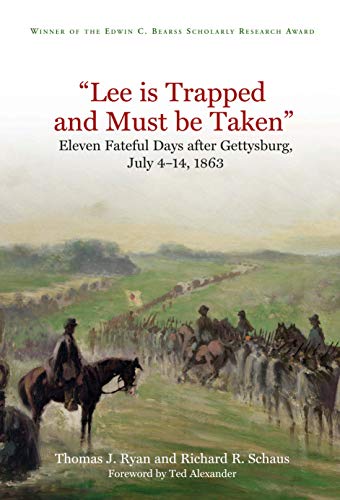
"Lee is Trapped, and Must be Taken": Eleven Fateful Days after Gettysburg: July 4 - 14, 1863
Seller: BASEMENT BOOKS, Albuquerque, NM, U.S.A.
Association Member: IOBA
Seller rating 4 out of 5 stars

Cloth. Condition: Near Fine. Dust Jacket Condition: Fine. First Edition, First Printing (stated). First Edition, First Printing stated. Hard cover 8vo in black cloth w./gold spine titles. Near Fine book in Fine unclipped DJ. Front cloth stained, else book Fine and unmarked. 342pp; illustrated in maps, photos. 384 p. Book.
-
hardcover. Condition: Very Good. h.
-
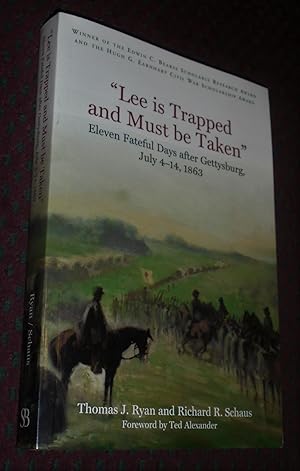
Soft cover. Condition: Fine. Nice bright and crisp copy that does not appear to have been used. No creasing, markings or bumping.
-

"Lee is trapped and Must be taken"; Eleven Fateful Days After Gettysburg, July 4-14, 1863
Seller: Rod's Books & Relics, Sand springs, OK, U.S.A.
Seller rating 3 out of 5 stars

Trade Paper. Condition: Fine. Clean and unmarked trade paperback. U-6443.
-
Condition: New. Brand New.
-
Paperback. Condition: New. *Brand new* Ships from USA.
-
Condition: Good. Former library copy. Pages intact with minimal writing/highlighting. The binding may be loose and creased. Dust jackets/supplements are not included. Includes library markings. Stock photo provided. Product includes identifying sticker. Better World Books: Buy Books. Do Good.
-
"Lee is Trapped and Must be Taken": Eleven Fateful Days after Gettysburg, July 4?14, 1863
Seller: Military History Books, El Dorado Hills, CA, U.S.A.
Seller rating 5 out of 5 stars

Soft cover. Condition: New. SIGNED AUTHOR BOOKPLATE INCLUDED Thousands of books and articles examine nearly every aspect of the Civil War, but the important retreat of the armies from the Gettysburg battlefield to the Potomac River has been but little covered. Until now, no one had produced a critical analysis of the command decisions made during that fateful time based upon available intelligence. "Lee is Trapped and Must be Taken": Eleven Fateful Days after Gettysburg, July 4 to July 14, 1863, by Thomas J. Ryan and Richard R. Schaus, now available in paperback, rectifies this oversight. This comprehensive day-by-day account, which begins after the end of the Gettysburg battle, examines how Maj. Gen. George G. Meade organized and motivated his Army of the Potomac in response to President Abraham Lincoln's mandate to bring about the "literal or substantial destruction" of Gen. Robert E. Lee's defeated and retreating Army of Northern Virginia. As far as Lincoln was concerned, if Meade aggressively pursued and confronted Lee before he could escape across the flooded Potomac River, "the rebellion would be over." The long and bloody three-day battle exhausted both armies. Both commanders faced the difficult tasks of rallying their troops for more marching and fighting. Lee had to keep his army organized and motivated enough to conduct an orderly withdrawal into Virginia. Meade faced the same organizational and motivational challenges with the added expectation of catching and defeating a still-dangerous enemy. Central to their decision-making was the information they received from their intelligence gathering resources about the movements, intentions, and capability of the enemy. The eleven-day period after Gettysburg was a battle of wits to determine which commander better understood the information he received and directed his army accordingly. Prepare for some surprising revelations. Ryan and Schaus rely on a host of primary sources to craft their study, including letters, memoirs, diaries, official reports, newspapers, and telegrams. The threading of these intelligence gems creates a gripping narrative with a significant amount of new informationwhich the authors use to offer their own direct and often damning conclusions. "Lee is Trapped and Must be Taken" is a sequel to Thomas Ryan's Spies, Scouts, and Secrets in the Gettysburg Campaign (Savas Beatie, 2015), the recipient of the Bachelder-Coddington Literary Award and Gettysburg Civil War Round Table Distinguished Book Award.
-
Hardcover. Condition: New. 1st Edition. 2019. 8vo. Hardcover. First edition, first printing. Fine in fine DJ. New.
-
Condition: New. Brand New.
-

Paperback. Condition: New. Thousands of books and articles examine nearly every aspect of the Civil War, but the important retreat of the armies from the Gettysburg battlefield to the Potomac River has been but little covered. Until now, no one had produced a critical analysis of the command decisions made during that fateful time based upon available intelligence. "Lee is Trapped and Must be Taken": Eleven Fateful Days after Gettysburg, July 4 to July 14, 1863, by Thomas J. Ryan and Richard R. Schaus, now available in paperback, rectifies this oversight. This comprehensive day-by-day account, which begins after the end of the Gettysburg battle, examines how Maj. Gen. George G. Meade organized and motivated his Army of the Potomac in response to President Abraham Lincoln's mandate to bring about the "literal or substantial destruction" of Gen. Robert E. Lee's defeated and retreating Army of Northern Virginia. As far as Lincoln was concerned, if Meade aggressively pursued and confronted Lee before he could escape across the flooded Potomac River, "the rebellion would be over." The long and bloody three-day battle exhausted both armies. Both commanders faced the difficult tasks of rallying their troops for more marching and fighting. Lee had to keep his army organized and motivated enough to conduct an orderly withdrawal into Virginia. Meade faced the same organizational and motivational challenges with the added expectation of catching and defeating a still-dangerous enemy. Central to their decision-making was the information they received from their intelligence gathering resources about the movements, intentions, and capability of the enemy. The eleven-day period after Gettysburg was a battle of wits to determine which commander better understood the information he received and directed his army accordingly. Prepare for some surprising revelations. Ryan and Schaus rely on a host of primary sources to craft their study, including letters, memoirs, diaries, official reports, newspapers, and telegrams. The threading of these intelligence gems creates a gripping narrative with a significant amount of new information-which the authors use to offer their own direct and often damning conclusions. "Lee is Trapped and Must be Taken" is a sequel to Thomas Ryan's Spies, Scouts, and Secrets in the Gettysburg Campaign (Savas Beatie, 2015), the recipient of the Bachelder-Coddington Literary Award and Gettysburg Civil War Round Table Distinguished Book Award.
-
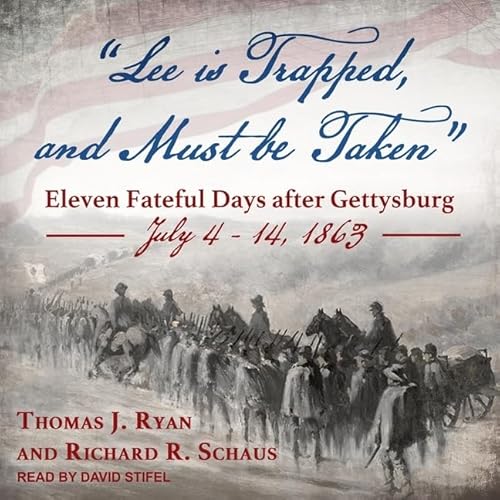
audioCD. Condition: Very Good. Connecting readers with great books since 1972! Used books may not include companion materials, and may have some shelf wear or limited writing. We ship orders daily and Customer Service is our top priority!
-
Hardcover. Condition: New. *Brand new* Ships from USA.
-

"Lee is Trapped and Must be Taken"
Seller: Rarewaves.com USA, London, LONDO, United Kingdom
Seller rating 5 out of 5 stars
US$ 32.34
Free Shipping
Ships from United Kingdom to U.S.A.Quantity: Over 20 available
Add to basketPaperback. Condition: New. Thousands of books and articles examine nearly every aspect of the Civil War, but the important retreat of the armies from the Gettysburg battlefield to the Potomac River has been but little covered. Until now, no one had produced a critical analysis of the command decisions made during that fateful time based upon available intelligence. "Lee is Trapped and Must be Taken": Eleven Fateful Days after Gettysburg, July 4 to July 14, 1863, by Thomas J. Ryan and Richard R. Schaus, now available in paperback, rectifies this oversight. This comprehensive day-by-day account, which begins after the end of the Gettysburg battle, examines how Maj. Gen. George G. Meade organized and motivated his Army of the Potomac in response to President Abraham Lincoln's mandate to bring about the "literal or substantial destruction" of Gen. Robert E. Lee's defeated and retreating Army of Northern Virginia. As far as Lincoln was concerned, if Meade aggressively pursued and confronted Lee before he could escape across the flooded Potomac River, "the rebellion would be over." The long and bloody three-day battle exhausted both armies. Both commanders faced the difficult tasks of rallying their troops for more marching and fighting. Lee had to keep his army organized and motivated enough to conduct an orderly withdrawal into Virginia. Meade faced the same organizational and motivational challenges with the added expectation of catching and defeating a still-dangerous enemy. Central to their decision-making was the information they received from their intelligence gathering resources about the movements, intentions, and capability of the enemy. The eleven-day period after Gettysburg was a battle of wits to determine which commander better understood the information he received and directed his army accordingly. Prepare for some surprising revelations. Ryan and Schaus rely on a host of primary sources to craft their study, including letters, memoirs, diaries, official reports, newspapers, and telegrams. The threading of these intelligence gems creates a gripping narrative with a significant amount of new information-which the authors use to offer their own direct and often damning conclusions. "Lee is Trapped and Must be Taken" is a sequel to Thomas Ryan's Spies, Scouts, and Secrets in the Gettysburg Campaign (Savas Beatie, 2015), the recipient of the Bachelder-Coddington Literary Award and Gettysburg Civil War Round Table Distinguished Book Award.
-
"Lee is Trapped, and Must be Taken": Eleven Fateful Days after Gettysburg: July 4 - 14, 1863
Seller: Military History Books, El Dorado Hills, CA, U.S.A.
Seller rating 5 out of 5 stars
First Edition
Hardcover. Condition: New. Dust Jacket Condition: New. 1st Edition. Thousands of books and articles examine nearly every aspect of the Civil War, but the important retreat of the armies from the Gettysburg battlefield to the Potomac River has been but little covered. Until now, no one had produced a critical analysis of the command decisions made during that fateful time based upon available intelligence. "Lee is Trapped and Must be Taken": Eleven Fateful Days after Gettysburg, July 4 to July 14, 1863, by Thomas J. Ryan and Richard R. Schaus rectifies this oversight. This comprehensive day-by-day account, which begins after the end of the Gettysburg battle, examines how Maj. Gen. George G. Meade organized and motivated his Army of the Potomac in response to President Abraham Lincoln's mandate to bring about the "literal or substantial destruction" of Gen. Robert E. Lee's defeated and retreating Army of Northern Virginia. As far as Lincoln was concerned, if Meade aggressively pursued and confronted Lee before he could escape across the flooded Potomac River, "the rebellion would be over." The long and bloody three-day battle exhausted both armies. Both commanders faced the difficult tasks of rallying their troops for more marching and fighting. Lee had to keep his army organized and motivated enough to conduct an orderly withdrawal into Virginia. Meade faced the same organizational and motivational challenges with the added expectation of catching and defeating a still-dangerous enemy. Central to their decision-making was the information they received from their intelligence-gathering resources about the movements, intentions, and capability of the enemy. The eleven-day period after Gettysburg was a battle of wits to determine which commander better understood the information he received and directed his army accordingly. Prepare for some surprising revelations. Ryan and Schaus rely on a host of primary sources to craft their study, including letters, memoirs, diaries, official reports, newspapers, and telegrams. The threading of these intelligence gems creates a gripping narrative with a significant amount of new informationwhich the authors use to offer their own direct and often damning conclusions. "Lee is Trapped and Must be Taken" is a sequel to SIGNED AUTHOR BOOKPLATE, mint new unread first edition. Thomas Ryan's Spies, Scouts, and Secrets in the Gettysburg Campaign (Savas Beatie, 2015), the recipient of the Bachelder-Coddington Literary Award and Gettysburg Civil War Round Table Distinguished Book Award.
-

Hardback. Condition: New. Countless books have examined the battle of Gettysburg, but the retreat of the armies to the Potomac River and beyond has not been as thoroughly covered. "Lee is Trapped, and Must be Taken": Eleven Fateful Days after Gettysburg: July 4 to July 14, 1863, by Thomas J. Ryan and Richard R. Schaus goes a long way toward rectifying this oversight.This comprehensive study focuses on the immediate aftermath of the battle and addresses how Maj. Gen. George G. Meade organized and motivated his Army of the Potomac in response to President Abraham Lincoln's mandate to bring about the "literal or substantial destruction" of Gen. Robert E. Lee's retreating Army of Northern Virginia. As far as the president was concerned, if Meade aggressively pursued and confronted Lee before he could escape across the flooded Potomac River, "the rebellion would be over."The long and bloody three-day battle exhausted both armies. Their respective commanders faced difficult tasks, including the rallying of their troops for more marching and fighting. Lee had to keep his army organized and motivated enough to conduct an orderly withdrawal away from the field. Meade faced the same organizational and motivational challenges, while assessing the condition of his victorious but heavily damaged army, to determine if it had sufficient strength to pursue and crush a still-dangerous enemy. Central to the respective commanders' decisions was the information they received from their intelligence-gathering resources about the movements, intentions, and capability of the enemy. The eleven-day period after Gettysburg was a battle of wits to determine which commander better understood the information he received, and directed the movements of his army accordingly. Prepare for some surprising revelations.Woven into this account is the fate of thousands of Union prisoners who envisioned rescue to avoid incarceration in wretched Confederate prisons, and a characterization of how the Union and Confederate media portrayed the ongoing conflict for consumption on the home front.The authors utilized a host of primary sources to craft their study, including letters, memoirs, diaries, official reports, newspapers, and telegrams, and have threaded these intelligence gems in an exciting and fast-paced narrative that includes a significant amount of new information. "Lee is Trapped, and Must be Taken" is a sequel to Thomas Ryan's Spies, Scouts, and Secrets in the Gettysburg Campaign, the recipient of the Bachelder-Coddington Literary Award and Gettysburg Civil War Round Table Distinguished Book Award.
-

Condition: As New. Unread book in perfect condition.
-

"Lee is Trapped, and Must be Taken"
Seller: Rarewaves.com USA, London, LONDO, United Kingdom
Seller rating 5 out of 5 stars
US$ 40.38
Free Shipping
Ships from United Kingdom to U.S.A.Quantity: Over 20 available
Add to basketHardback. Condition: New. Countless books have examined the battle of Gettysburg, but the retreat of the armies to the Potomac River and beyond has not been as thoroughly covered. "Lee is Trapped, and Must be Taken": Eleven Fateful Days after Gettysburg: July 4 to July 14, 1863, by Thomas J. Ryan and Richard R. Schaus goes a long way toward rectifying this oversight.This comprehensive study focuses on the immediate aftermath of the battle and addresses how Maj. Gen. George G. Meade organized and motivated his Army of the Potomac in response to President Abraham Lincoln's mandate to bring about the "literal or substantial destruction" of Gen. Robert E. Lee's retreating Army of Northern Virginia. As far as the president was concerned, if Meade aggressively pursued and confronted Lee before he could escape across the flooded Potomac River, "the rebellion would be over."The long and bloody three-day battle exhausted both armies. Their respective commanders faced difficult tasks, including the rallying of their troops for more marching and fighting. Lee had to keep his army organized and motivated enough to conduct an orderly withdrawal away from the field. Meade faced the same organizational and motivational challenges, while assessing the condition of his victorious but heavily damaged army, to determine if it had sufficient strength to pursue and crush a still-dangerous enemy. Central to the respective commanders' decisions was the information they received from their intelligence-gathering resources about the movements, intentions, and capability of the enemy. The eleven-day period after Gettysburg was a battle of wits to determine which commander better understood the information he received, and directed the movements of his army accordingly. Prepare for some surprising revelations.Woven into this account is the fate of thousands of Union prisoners who envisioned rescue to avoid incarceration in wretched Confederate prisons, and a characterization of how the Union and Confederate media portrayed the ongoing conflict for consumption on the home front.The authors utilized a host of primary sources to craft their study, including letters, memoirs, diaries, official reports, newspapers, and telegrams, and have threaded these intelligence gems in an exciting and fast-paced narrative that includes a significant amount of new information. "Lee is Trapped, and Must be Taken" is a sequel to Thomas Ryan's Spies, Scouts, and Secrets in the Gettysburg Campaign, the recipient of the Bachelder-Coddington Literary Award and Gettysburg Civil War Round Table Distinguished Book Award.
-
US$ 28.01
US$ 16.69 shipping
Ships from United Kingdom to U.S.A.Quantity: 1 available
Add to basketPaperback. Condition: Brand New. 372 pages. 9.00x6.00x1.00 inches. In Stock.
-

-
US$ 43.62
US$ 16.69 shipping
Ships from United Kingdom to U.S.A.Quantity: 1 available
Add to basketHardcover. Condition: Brand New. 342 pages. 9.00x6.00x1.00 inches. In Stock.
-

"Lee is Trapped and Must be Taken" - Eleven Fateful Days after Gettysburg, July 4-14, 1863
Published by Savas Beatie. California., 2019
Signed
Hardcover. Condition: Very Good. Hardcover with dust jacket. Bound in black paper over boards with gold lettering on spine. Pictorial DJ is clean and glossy with minimal wear. Binding is tight and secure. Pages are clean, crisp, and bright. Printed in B&W with illustrations throughout. 342 pages. Copyright page dated 2019. Stated Second Edition, First Printing. Signed by Thomas J. Ryan in black ink on title page, just above his printed name, inscribed "Dennis, all the best." A very nice copy. Please email with questions or to request photos. Note: if there is a photo beside this listing, it is a STOCK photo that ABE put there (for reasons that we cannot understand or control) and might not match this actual book. Signed by Author(s).
-

Paperback. Condition: New. Thousands of books and articles examine nearly every aspect of the Civil War, but the important retreat of the armies from the Gettysburg battlefield to the Potomac River has been but little covered. Until now, no one had produced a critical analysis of the command decisions made during that fateful time based upon available intelligence. "Lee is Trapped and Must be Taken": Eleven Fateful Days after Gettysburg, July 4 to July 14, 1863, by Thomas J. Ryan and Richard R. Schaus, now available in paperback, rectifies this oversight. This comprehensive day-by-day account, which begins after the end of the Gettysburg battle, examines how Maj. Gen. George G. Meade organized and motivated his Army of the Potomac in response to President Abraham Lincoln's mandate to bring about the "literal or substantial destruction" of Gen. Robert E. Lee's defeated and retreating Army of Northern Virginia. As far as Lincoln was concerned, if Meade aggressively pursued and confronted Lee before he could escape across the flooded Potomac River, "the rebellion would be over." The long and bloody three-day battle exhausted both armies. Both commanders faced the difficult tasks of rallying their troops for more marching and fighting. Lee had to keep his army organized and motivated enough to conduct an orderly withdrawal into Virginia. Meade faced the same organizational and motivational challenges with the added expectation of catching and defeating a still-dangerous enemy. Central to their decision-making was the information they received from their intelligence gathering resources about the movements, intentions, and capability of the enemy. The eleven-day period after Gettysburg was a battle of wits to determine which commander better understood the information he received and directed his army accordingly. Prepare for some surprising revelations. Ryan and Schaus rely on a host of primary sources to craft their study, including letters, memoirs, diaries, official reports, newspapers, and telegrams. The threading of these intelligence gems creates a gripping narrative with a significant amount of new information-which the authors use to offer their own direct and often damning conclusions. "Lee is Trapped and Must be Taken" is a sequel to Thomas Ryan's Spies, Scouts, and Secrets in the Gettysburg Campaign (Savas Beatie, 2015), the recipient of the Bachelder-Coddington Literary Award and Gettysburg Civil War Round Table Distinguished Book Award.
-

Kartoniert / Broschiert. Condition: New. This comprehensive study focuses on the immediate aftermath of the battle and addresses how Maj. Gen. George G. Meade organized and motivated his Army of the Potomac in response to President Abraham Lincoln s mandate to bring about the literal or substanti.
-

Hardback. Condition: New. Countless books have examined the battle of Gettysburg, but the retreat of the armies to the Potomac River and beyond has not been as thoroughly covered. "Lee is Trapped, and Must be Taken": Eleven Fateful Days after Gettysburg: July 4 to July 14, 1863, by Thomas J. Ryan and Richard R. Schaus goes a long way toward rectifying this oversight.This comprehensive study focuses on the immediate aftermath of the battle and addresses how Maj. Gen. George G. Meade organized and motivated his Army of the Potomac in response to President Abraham Lincoln's mandate to bring about the "literal or substantial destruction" of Gen. Robert E. Lee's retreating Army of Northern Virginia. As far as the president was concerned, if Meade aggressively pursued and confronted Lee before he could escape across the flooded Potomac River, "the rebellion would be over."The long and bloody three-day battle exhausted both armies. Their respective commanders faced difficult tasks, including the rallying of their troops for more marching and fighting. Lee had to keep his army organized and motivated enough to conduct an orderly withdrawal away from the field. Meade faced the same organizational and motivational challenges, while assessing the condition of his victorious but heavily damaged army, to determine if it had sufficient strength to pursue and crush a still-dangerous enemy. Central to the respective commanders' decisions was the information they received from their intelligence-gathering resources about the movements, intentions, and capability of the enemy. The eleven-day period after Gettysburg was a battle of wits to determine which commander better understood the information he received, and directed the movements of his army accordingly. Prepare for some surprising revelations.Woven into this account is the fate of thousands of Union prisoners who envisioned rescue to avoid incarceration in wretched Confederate prisons, and a characterization of how the Union and Confederate media portrayed the ongoing conflict for consumption on the home front.The authors utilized a host of primary sources to craft their study, including letters, memoirs, diaries, official reports, newspapers, and telegrams, and have threaded these intelligence gems in an exciting and fast-paced narrative that includes a significant amount of new information. "Lee is Trapped, and Must be Taken" is a sequel to Thomas Ryan's Spies, Scouts, and Secrets in the Gettysburg Campaign, the recipient of the Bachelder-Coddington Literary Award and Gettysburg Civil War Round Table Distinguished Book Award.
-

Condition: New. This comprehensive study focuses on the immediate aftermath of the battle and addresses how Maj. Gen.KlappentextCountless books have examined the battle of Gettysburg, but the retreat of the armies to the Potomac River and beyond has.
-

US$ 36.49
US$ 86.79 shipping
Ships from United Kingdom to U.S.A.Quantity: Over 20 available
Add to basketPaperback. Condition: New. Thousands of books and articles examine nearly every aspect of the Civil War, but the important retreat of the armies from the Gettysburg battlefield to the Potomac River has been but little covered. Until now, no one had produced a critical analysis of the command decisions made during that fateful time based upon available intelligence. "Lee is Trapped and Must be Taken": Eleven Fateful Days after Gettysburg, July 4 to July 14, 1863, by Thomas J. Ryan and Richard R. Schaus, now available in paperback, rectifies this oversight. This comprehensive day-by-day account, which begins after the end of the Gettysburg battle, examines how Maj. Gen. George G. Meade organized and motivated his Army of the Potomac in response to President Abraham Lincoln's mandate to bring about the "literal or substantial destruction" of Gen. Robert E. Lee's defeated and retreating Army of Northern Virginia. As far as Lincoln was concerned, if Meade aggressively pursued and confronted Lee before he could escape across the flooded Potomac River, "the rebellion would be over." The long and bloody three-day battle exhausted both armies. Both commanders faced the difficult tasks of rallying their troops for more marching and fighting. Lee had to keep his army organized and motivated enough to conduct an orderly withdrawal into Virginia. Meade faced the same organizational and motivational challenges with the added expectation of catching and defeating a still-dangerous enemy. Central to their decision-making was the information they received from their intelligence gathering resources about the movements, intentions, and capability of the enemy. The eleven-day period after Gettysburg was a battle of wits to determine which commander better understood the information he received and directed his army accordingly. Prepare for some surprising revelations. Ryan and Schaus rely on a host of primary sources to craft their study, including letters, memoirs, diaries, official reports, newspapers, and telegrams. The threading of these intelligence gems creates a gripping narrative with a significant amount of new information-which the authors use to offer their own direct and often damning conclusions. "Lee is Trapped and Must be Taken" is a sequel to Thomas Ryan's Spies, Scouts, and Secrets in the Gettysburg Campaign (Savas Beatie, 2015), the recipient of the Bachelder-Coddington Literary Award and Gettysburg Civil War Round Table Distinguished Book Award.
-

US$ 44.86
US$ 86.79 shipping
Ships from United Kingdom to U.S.A.Quantity: Over 20 available
Add to basketHardback. Condition: New. Countless books have examined the battle of Gettysburg, but the retreat of the armies to the Potomac River and beyond has not been as thoroughly covered. "Lee is Trapped, and Must be Taken": Eleven Fateful Days after Gettysburg: July 4 to July 14, 1863, by Thomas J. Ryan and Richard R. Schaus goes a long way toward rectifying this oversight.This comprehensive study focuses on the immediate aftermath of the battle and addresses how Maj. Gen. George G. Meade organized and motivated his Army of the Potomac in response to President Abraham Lincoln's mandate to bring about the "literal or substantial destruction" of Gen. Robert E. Lee's retreating Army of Northern Virginia. As far as the president was concerned, if Meade aggressively pursued and confronted Lee before he could escape across the flooded Potomac River, "the rebellion would be over."The long and bloody three-day battle exhausted both armies. Their respective commanders faced difficult tasks, including the rallying of their troops for more marching and fighting. Lee had to keep his army organized and motivated enough to conduct an orderly withdrawal away from the field. Meade faced the same organizational and motivational challenges, while assessing the condition of his victorious but heavily damaged army, to determine if it had sufficient strength to pursue and crush a still-dangerous enemy. Central to the respective commanders' decisions was the information they received from their intelligence-gathering resources about the movements, intentions, and capability of the enemy. The eleven-day period after Gettysburg was a battle of wits to determine which commander better understood the information he received, and directed the movements of his army accordingly. Prepare for some surprising revelations.Woven into this account is the fate of thousands of Union prisoners who envisioned rescue to avoid incarceration in wretched Confederate prisons, and a characterization of how the Union and Confederate media portrayed the ongoing conflict for consumption on the home front.The authors utilized a host of primary sources to craft their study, including letters, memoirs, diaries, official reports, newspapers, and telegrams, and have threaded these intelligence gems in an exciting and fast-paced narrative that includes a significant amount of new information. "Lee is Trapped, and Must be Taken" is a sequel to Thomas Ryan's Spies, Scouts, and Secrets in the Gettysburg Campaign, the recipient of the Bachelder-Coddington Literary Award and Gettysburg Civil War Round Table Distinguished Book Award.
-
US$ 13.38 10% off
US$ 12.05
US$ 120.98 shipping
Ships from Germany to U.S.A.Quantity: 1 available
Add to basketCondition: Hervorragend. Zustand: Hervorragend | Seiten: 372 | Sprache: Englisch | Produktart: Bücher | This comprehensive study focuses on the immediate aftermath of the battle and addresses how Maj. Gen. George G. Meade organized and motivated his Army of the Potomac in response to President Abraham Lincoln's mandate to bring about the "literal or substantial destruction" of Gen. Robert E. Lee's retreating Army of Northern Virginia.


