

Order Total (1 Item Items):
Shipping Destination:

Sadeler, Signed (21 results)
Author:
sadeler
Refine with Advanced Search
Skip to main search results
Search filters
Product Type
- All Product Types
- Books (20)
- Magazines & Periodicals (No further results match this refinement)
- Comics (No further results match this refinement)
- Sheet Music (No further results match this refinement)
- Art, Prints & Posters (1)
- Photographs (No further results match this refinement)
- Maps (No further results match this refinement)
- Manuscripts & Paper Collectibles (No further results match this refinement)
Condition Learn more
- New (No further results match this refinement)
- As New, Fine or Near Fine (2)
- Very Good or Good (3)
- Fair or Poor (1)
- As Described (15)
Binding
- All Bindings
- Hardcover (6)
- Softcover (No further results match this refinement)
Collectible Attributes
- First Edition (1)
- Signed (21)
- Dust Jacket (No further results match this refinement)
- Seller-Supplied Images (15)
- Not Print on Demand (21)
Language (1)
Price
- Any Price
- Under US$ 25 (No further results match this refinement)
- US$ 25 to US$ 50 (No further results match this refinement)
- Over US$ 50
Free Shipping
Seller Location
Seller Rating
-
VESTIGI DELLE ANTICHITA DI ROMA TIVOLI POZZVOLO ET ALTRI LUOCHI. CON PRIVILEGIO DI SUA SAC. CES. MAE. STAMPATI IN PRAGA DA AEGIDIO SADELER SCULTORE DI ESSA MAE 1606
Published by Iacomo Di Rossi,, Rome, 1660
Seller: Burwood Books, Wickham Market, United Kingdom
Association Member: PBFA
Seller rating 5 out of 5 stars

Signed
US$ 1,660.48
US$ 30.23 shipping
Ships from United Kingdom to U.S.A.Quantity: 1 available
Add to basketHardcover. Condition: Very Good. Second Edition. Hardback. Wide oblong 4to. 39 by 27 cms. Half cream parchment over marbled boards, title inked in sepia on parchment spine. Second edition(first printed in 1606). With an engraved allegorical title with the main title incised within a wolf's hide hung on a monument; also an engraved dedication page to Matthaeus Wacker von Wackenfels (numbered '1' but actually the third page), with the text incised on a stone tablet between flanking obelisks and with two putti supporting the dedicatee's arms; and 49 full-paged engraved plates (ca. 170 x 270 mm), all numbered and signed 'Marco Sadeler excudit', with descriptive captions in Italian. Decent clean sound copy with plates unfoxed, title page only sl foxed, ink number to the corner of each plate probably contemporary with the book. The number is close to top right corner of each plate but not affecting any image. Other than Rome, views also include a series of seaside views and some of the Golfo di Napoli and its dintorni: the Golfo di Baia, Cuma, the Lake of Averno, the Campi Flegrei, Capo Miseno and the Villa Agrippina a Oplontis, and Pozzuoli.
-
Fables d'Esope, Avec Les Figures De Sadeler. Traduction Nouvell
Published by Pierre Aubouyn, Pierre Emery et Charles Clouzier. Printed By Laurent Rondet, Paris, 1689
Seller: Resource Books, LLC, East Granby, CT, U.S.A.
Association Member: SNEAB
Seller rating 5 out of 5 stars
Signed
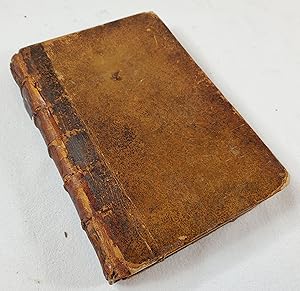
Hardcover. Condition: Fair. Paris: Pierre Aubouyn, Pierre Emery et Charles Clouzier. Printed By Laurent Rondet, 1689. In French. Worn. New edition, title page dated 1689. Beautifully illustrated, includes 139 fables, each with the written fable on the left hand page and a wood engraving on the right with the moral below. Full brown leather, frontis, [12], 279p, two page colophon, errata, 1 page advertisement. Rear cover and rear free endpaper detached, covers work, spine dried but stabilized, front hinge cracked, front free endpaper and frontis loosened but not detached, pages lightly age-toned but clean, old dampstain to lower inner margins of first 100 pages and then again toward the end of the book (not affecting printed areas), different bookplates on either side of front free endpaper (second one is from E. Coster Wilmerding), name of Richard Creed, Paris 1700 inside front cover with an 1814 notation that the book belonged to Richard Creed who was slain at the Battle of Blenheim and was being presented to Miss Katherine Simcoe, signed Wililam Walcot (names may actually be different, that is what we could make out) from the handwriting. Hard Cover. Fair. 8vo - over 7¾" - 9¾" tall.
-
Vestigi delle antichita di Roma Tivoli Pozzvolo et altri luochi. Con privilegio di sua Sac. Ces. Mae. Stampati in Praga da Aegidio Sadeler scultore di essa mae 1606
Published by Aegidius Sadeler, Prague, 1606
Seller: Liber Antiquus Early Books & Manuscripts, Chevy Chase, MD, U.S.A.
Seller rating 5 out of 5 stars
First Edition Signed
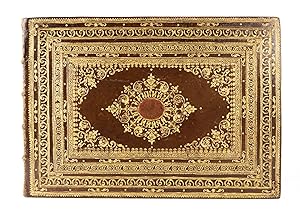
Hardcover. Condition: Fine. FIRST EDITION. A very fine, broad-margined copy with very rich and clear impressions of the plates. Occ. marginal soiling, a few pin-prick wormholes in the margins of a few leaves. Bound in contemporary morocco, richly tooled in gold. With an engraved allegorical title with the main title incised within a wolf's hide hung on a monument; an engraved dedication to Matthaeus Wacker von Wackenfels (numbered'1'), with the text incised on a stone tablet between flanking obelisks and with two putti supporting the dedicatee's arms; and 49 full-paged engraved plates (ca. 170 x 270 mm), all numbered and signed 'Marco Sadeler excudit', with descriptive captions in Italian. This is the first edition. Thirty-six of these images were copied by Aegidius Sadeler from Etienne Du Pérac's " Vestigi dell'Antichità di Roma" (Rome 1575). For the other images, Sadeler drew on drawings by Jan Breughel the elder and Pieter Stevens. Marco Sadeler, whose name appears on the plates, was an engraver and print seller in Prague in the early 1600's and probably the nephew of Aegidius. In the middle of the 17th century, a copy of the 1606 edition found its way to Rome where it was copied for Giovanni Giacomo de' Rossi by Girolamo Ferri and published in 1660. In this series, the artists have depicted the ancient monuments of Rome, Tivoli and Pozzuoli as they appeared in the late sixteenth- and early seventeenth-century: crowned with vegetation, half-buried by the rising ground level and encroached upon by a host of post-Roman structures. The scenes are alive with Rome's inhabitants: herdsmen, mule-drivers, cattle, sheep, and every manner of citizen. The images, in which the ruins are depicted in their un-restored state and within the context of their early modern environments, serve as a record of the monuments as they appeared in this period and evoke the atmosphere of daily life in early modern Rome. Sadeler and The Bay of Naples: In addition to the views of Rome, the Sadeler series also includes a number of plates of ruins and views of the Bay of Naples and its environs: the Gulf of Baiae, Cuma, Lago Averno, the Campi Flegrei, Capo Miseno, and the Villa Agrippina at Oplontis, and other places within the confines of Pozzuoli. Signed.
-
Vestigi delle antichita di Roma Tivoli Pozzvolo et altri luochi. Con privilegio di sua Sac. Ces. Mae. Stampati in Praga da Aegidio Sadeler scultore di essa mae 1606
Published by Giovanni Giacomo de Rossi, Rome, 1660
Seller: Liber Antiquus Early Books & Manuscripts, Chevy Chase, MD, U.S.A.
Seller rating 5 out of 5 stars
Signed
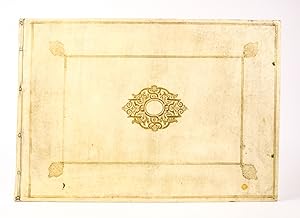
Hardcover. Condition: Fine. SECOND EDITION (first printed in 1606). With an engraved allegorical title with the main title incised within a wolf's hide hung on a monument; an engraved dedication to Matthaeus Wacker von Wackenfels (numbered'1'), with the text incised on a stone tablet between flanking obelisks and with two putti supporting the dedicatee's arms; and 49 full-paged engraved plates (ca. 170 x 270 mm), all numbered and signed 'Marco Sadeler excudit', with descriptive captions in Italian. An extremely fine, broad-margined copy with very rich and clear impressions of the plates. In an attractive contemporary binding of stiff ivory vellum, the boards with large central arabesques in gold, framed by a double gilt rule, and with floral tools at the angles and along the spine. Thirty-six of these images were copied by Aegidius Sadeler from Etienne Du Pérac's " Vestigi dell'Antichità di Roma" (Rome 1575). For the other images, Sadeler drew on drawings by Jan Breughel the elder and Pieter Stevens. Marco Sadeler, whose name appears on the plates, was an engraver and print seller in Prague in the early 1600's and probably the nephew of Aegidius. In the middle of the 17th century, a copy of the 1606 edition found its way to Rome where it was copied for Giovanni Giacomo de' Rossi by Girolamo Ferri, with the "Marco Sadeler excudit" preserved on each plate (late variants appeared towards 1677, at the end of the career of Giacomo de' Rossi, with "Marco Sadeler/ sculpsit" in place of "excudit".) The monograms indicating the reworking of Ferri are visible on the plates no. 10, 19, 37, 42 and 46. In our copy the series of views is in its earliest state as the plates 4 and 45 are unnumbered. The title plate bears the wording Marco Sadeler's ?excudit.? This state is not recorded in Bartsch (1978). In this series, the artists have depicted the ancient monuments of Rome, Tivoli and Pozzuoli as they appeared in the late sixteenth- and early seventeenth-century: crowned with vegetation, half-buried by the rising ground level and encroached upon by a host of post-Roman structures. The scenes are alive with Rome's inhabitants: herdsmen, mule-drivers, cattle, sheep, and every manner of citizen. The images, in which the ruins are depicted in their un-restored state and within the context of their early modern environments, serve as a record of the monuments as they appeared in this period and evoke the atmosphere of daily life in early modern Rome. Sadeler and The Bay of Naples: In addition to the views of Rome, the Sadeler series also includes a number of plates of ruins and views of the Bay of Naples and its environs: the Gulf of Baiae, Cuma, Lago Averno, the Campi Flegrei, Capo Miseno, and the Villa Agrippina at Oplontis, and other places within the confines of Pozzuoli. Signed.
-

Sadeler, Raphael d.Ä. Die Prüfung der heiligen Kunigunde. S. Chunegundis Augusta
Published by 1590-1593, 1590
Signed
Condition: mangelhafter Zustand. Sadeler, Raphael d.Ä. Die Prüfung der heiligen Kunigunde. S. Chunegundis Augusta.1590-1593. Kupferstich / Linienstich. Originale Künstlergrafik, von Raphael Sadeler d.Ä., nach Johann Matthias Kager. 24,5 x 19,2 cm (Darstellung), 27,9 x 19,5 cm (Blatt), 37 x 27 cm (Passepartout).Aus: Matthäus Rader, Bavaria Sancta (München: Anna Berg & Raphael Sadeler 1615). Dargestellt ist die heiliggesprochene Kunigunde von Luxemburg, Gattin Kaiser Heinrichs II., bei dem Gottesurteil über glühende Pflugscharen gehen zu müssen. In der Platte beschnitten, schmaler Rändchem um die Einfassungslinie der Darstellung die Schrift. Oberflächlich stärker berieben. Diverse ältere Knickspuren geglättet. Mit Papiergelenken frei im Passepartout montiert. Insgesamt mäßiger Zustand.Raphael Sadeler d.Ä. (1560/61 Antwerpen - 1628/32 München). Niederländischer Kupferstecher, Mitglied der weiter verzweigten Maler- und Kupferstecher-Familie der Sadeler in Antwerpen, bedeutender Vertreter des Manierismus. Erlernte das Kupferstechen in Antwerpen. Arbeitete zunächst zusammen mit dem älteren Bruder Johann Sadeler d.Ä. Ging mit diesem um 1579 nach Köln. Nach der Belagerung von Antwerpen im Jahre 1585 arbeiteten beide in verschiedenen deutschen Städten wie Mainz, Frankfurt am Main oder München. 1593 reisten sie zusammen über Verona nach Venedig, wo sie 1596/97 ein Geschäft unterhielten. 1604 Rückkehr nach München, wo er sich dauerhaft nierderließ.Johann Matthias Kager (1575 München - 1634 Augsburg). Deutscher Maler und Baumeister. Ab 1588 Lehre bei Jacob Jelle, danach beim Miniaturmaler Jörg Karl sowie bei Friedrich Sustris in München. Es folgte eine Studienreise nach Italien. Im Dienst des Bayerischen Hofs Entwürfe zu Bau und Ausstattung der Münchner Residenz und der Jesuitenkirche. Später Hofmaler Maximilians I. von Bayern. 1597 Meisterrecht in München. 1603 Umsiedelung nach Augsburg, wo zahlreiche Wand- und Tafelbilder teils in öffentlichem Auftrag entstanden. Daneben Miniaturen, Kupferstiche sowie architektonische Entwürfe. Im Jahr 1611 wurde er Mitglied des Großen Rats und 1615 Stadtmaler. Ab 1631 bis zur Besetzung durch Schweden Bürgermeister der Stadt Augsburg. Am unteren Rand der Platte signiert: Sereniss. Bavar. Ducis Maximiliani chalcographus Raph. Sadeler sculpsit Monchij. Oberhalb der Darstellung betitelt: S. CHVNEGVNDIS AVGVSTA. / IGNE ME EXAMINASTI, ET NON EST INVENT IN ME INIQVITAS. Rechts unten in der Darstellung bezeichnet: M. Kager figur. Unterhalb der Darstellung die Unterschrift: Dum premeret feruens pedibus Chunegundis ahenu[.], / Inque fidem flammis virgo probaret, ait: // Testetur cunctis, me non violasse pudorem, / Ante virum corpus, spiritus ante Deum. 24,5 x 19,2 cm (Darstellung), 27,9 x 19,5 cm (Blatt), 37 x 27 cm (Passepartout).
-
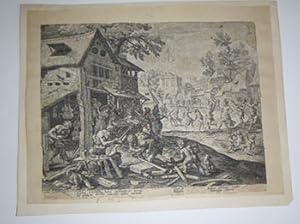
Jubal and his musical instruments with Dancers from The Story of the First Men. Original engraving.
Published by Antwerp: circa 1583, 1583
Seller: Wittenborn Art Books, San Francisco, CA, U.S.A.
Seller rating 5 out of 5 stars
Art / Print / Poster Signed
Condition: Good. Engraving on laid paper. 22 x 28.3cm. mounted at corners; stabilized tears in lower margin. References: Hollstein / Dutch and Flemish etchings, engravings and woodcuts c.1450-1700 (27); British Museum, D,6.140.Inscription content: Signed in lower part of impression: "Ioa: Sadl: inue: / et sculps:" and "M. de Vos figur." and "GENES. IIII". Lettered in Latin in lower margin, two lines in two columns: "Musica tractabat . / . hilaresque choreas.".Plate 11: Jubal and his musical instruments. Landscape with Jubal seated at a table in front of an instrument workshop at left, several other figures building instruments, a procession of dancing couples in background at right, buildings in background; first state before numbers; after Maarten de Vos. 1583.
-
Trophaeum Vitae Solitariae
Published by Gérard Jollain ca. 1690, Paris, 1690
Seller: Editio Altera, Bronxville, NY, U.S.A.
Seller rating 2 out of 5 stars

Signed
"A COMPLETE SUITE OF EARLY HERMITS. Oblong 4to. [25 x 17.5 cm]. Title and 29 numbered plates, complete; most plates signed by Honervogt. Bound in contemporary limp vellum. A marvelously crisp and fresh copy, free from foxing, likely in its original binding. A lovely, fresh copy of this complete suite of plates illustrating the marvels associated with 29 different desert fathers during the 4th and 5th centuries. Many of the designs are highly imaginative, showing eg. Saint John the Anchorite beset by demons (plate 21); Plate 19 depicts Saint Amatus of Remiremont having his food stolen by a bird; and Plate 14 shows Saint Calupan fending off snakes and other vermin while praying in his cave. "Maarten de Vos (1532-1603) was a prodigious Flemish draftsman whose alluring Mannerist designs were engraved by the hundreds in Northern Europe. Once engraved, these drawings traveled throughout the Spanish empire, serving as models for very many works of art. So many, in fact, that his impact on Spanish Colonial art is considered to be second only to that of Rubens. At the end of the 16th century Maarten de Vos produced more than a hundred drawings of anchorites--men and women who chose to withdraw from society in order to lead a life focused on prayer, penance, and religious study These drawings must have been immensely popular in their day, as they were quickly engraved in Antwerp and in Venice by three of the leading engravers of the timeJohan Sadeler I, Raphael Sadeler I, and Adriaen Collaert. These engravings were then engraved again, this time in reverse, and published in Paris by Thomas de Leu, Jean Leclerc IV, and Jacques Honervogt early in the 17th century." (Blackfriars Gallery and Library). The present edition is unrecorded in OCLC; an earlier edition published by Jollain under the address "rue St Jacque a la ville de Coulongne" is held at the Library of Congress, the BnF, and SMU, and is dated 1654; but other books bearing the imprint found here, "G.Jollain, rue S. Jacques, a? l'Enfant Je?sus" are more commonly dated to ca. 1690.".
-
[The Youth of Christ].
Published by 1579-1582., Cologne and Antwerp, 1579
Seller: Editio Altera, Bronxville, NY, U.S.A.
Seller rating 2 out of 5 stars
Signed
PRINTED IN ANTWERP, AND IN EXILE IN COLOGNE. Complete suite of 12 unnumbered plates, each signed by both de Vos and Sadeler; most dated 1579-1582, from both Cologne and Antwerp. 19.4 x 13.5 cms to platemarks, on sheets ca. 22 x 16.5 cms. Each plate mounted in a portfolio cardboard frame. Two plates (Holy Family in Egypt & the Disputation in the Temple) with discreet closed tears, nearly invisible on rectos; these showing remains of old repairs on versos.Rare, thematically curious complete suite of plates in their only state, engraved during the pinnacle of Counter-Reformation Flemish imagery in the 1580s. The suite, produced while the Dutch Revolt raged on the outskirts of Antwerp, was designed by Maerten de Vos and engraved by the progenitor of the Sadeler artistic dynasty, Johannes/Jan I (ca. 1550 1593). Per the New Hollstein entry, the only complete suite in the US is held at the Metropolitan Museum (although untraced in their online catalog); the British Museum holds, for example, just four of the prints (most of them trimmed or damaged). The unusual theme the childhood of Christ, before his disappearance from the Gospels proved to be a fitting collaboration for de Vos (at the time a Protestant) and Sadeler (a Catholic). Such craftsmen generally churned out multiple, if not dozens of engravings per year but the fact that the present, topically-cohesive suite is variously dated in the plates themselves from 1579-1582, always alongside the signature of both contributors, bears remarkable witness to the fact that both artists one, a Lutheran painter, the other a Catholic engraver sought refuge together in Cologne during this tumultuous period. Commencing with the Annunciation and concluding with the 12-year old Christ's three-day disputation in the Temple, De Vos' designs are often truly charming in detail: for example, in the Holy Family's Flight to Nazareth, the donkey accompanying the family in their boat is being tenderly fed from the hand of the infant Christ. The varying imprints also betray a truly rustic grasp of orthography: for example, the Flight into Egypt is signed 'Mertin de vos / Joan. Sadeler schulpsit Coloniae" while the Disputation in the Temple is signed "J. Sadler scalpsit Colloniae". Born in Brussels, "Jan was in Antwerp by 1572; it was then the centre of the printmaking world, with hugely productive workshops producing work for publishers with excellent distribution arrangements throughout Europe. In that year he became a master of the artists' Guild of Saint Luke, and married in Antwerp Cathedral. By 1569 or 1570 he was doing work for the publisher Christopher Plantin. His younger brother Rafael I joined him there, and they continued to work closely together, moving to Cologne in about 1579, but continuing to visit Antwerp. The disruptions of the Dutch Revolt scattered all the Antwerp artists across Northern Europe, and after the siege of Antwerp in 1585 Jan and Rafael worked in several German cities - Mainz, Frankfurt-am-main, Munich without settling for long, before they went to Italy in 1593, where Jan may have died." (Colección Gelonch-Viladegut). For his part, De Vos is thought to have converted to Lutheranism in the early 1570s, following his appointment as Dean of the Guild of St Luke; but following the Fall of Antwerp in 1585 he re-embraced Catholicism. In historical order, the plates depict: The Annunciation (no place, 1579); The Visitation (Cologne, 1582); The Nativity, with three angels (no place, 1582); The Annunciation to the Shepherds (no place, 1579); The Circumcision (no place, 1581); The Presentation in the Temple (no place, 1580); The Flight into Egypt (Cologne, no date); The Massacre of the Innocents (no place, no date); The Holy Family in Egypt, served by angels (no place, dated 1581); The Holy Family on their Way to Nazareth (Antwerp, 1582); The 12-Year Old Jesus in the Temple (dated Cologne, 1582). But the imprints demonstrate that the designs were engraved in a very different order. * New Hollstein 256-267 (de Vos); Old Hollstein 160-171 (Sadeler).
-

Bonorum et Malorum consensio & horum praemia, illorum poena. Ad serenissimum & illustrissimum Principem D.D. Ferdinandum , Archiducem Austriie.
Seller: Antiquariaat Wim de Goeij, Kalmthout, ANTW, Belgium
Association Member: ILAB
Seller rating 5 out of 5 stars
Signed
Antwerpen - Mainz ( Coeptum Antverp: Absolutum Moguntiae), I Sadeler auct. et sculpsit. (Martin de Vos figuravit), 1586. Complete suite of 15 engravings (title page + 14 engravings). Bound in contemporary full calf, gilt decorated spine. Expertly rebacked ( early restoration), The engravings measure 223 x 273 mm. The leaves, mounted on guards measure 270 x 360 mm. Some marginal dustsoiling at some plates but on the whole in fine condition . The engravings depict scenes from ''Genesis''. All the plates except the title plate are signed by I. Sadeler as engraver and Martin de Vos as designer. De Vos' name is omitted from the title plate which might be an indication that I. Sadeler was also the designer of the title plate. As indicated on the title page the work was started in Antwerp and finished in Mainz. Joannes ( Jan ) Sadeler ( Brussel 1550 - Venezia 1600) had left Antwerp around 1580. See Holstein 1980 , XXI, p. 89 and following.
-
Boni et Mali scientia & quid ex horum cognitione, a condito Mundo sucraeverit declaratio.
Seller: Antiquariaat Wim de Goeij, Kalmthout, ANTW, Belgium
Association Member: ILAB
Seller rating 5 out of 5 stars
Signed
Antwerpen, Ioann. Sadler excud. 1583. Complete suite of 12 engravings (title page + 11 engravings); loose plates, kept in a modern full cloth portfolio within a similar slipcase. The engravings measure 193 x 270 mm. Printed on strong paper without a watermark. Some marginal dustsoiling at the plates, (more so at the title plate), some small marginal brown spots (due to paper impurities), but on the whole in good condition . The engravings depict scenes from ''Genesis''. ( Adam & Eve; Kain & Abel.) All the prints are signed in the plate I. Sadeler (Brussel 1550 - Venezia 1600) as engraver and Martin de Vos (Antwerpen 1532 -1603) as designer. New Hollstein XLV 25-36.
-
View on a harbour with rough sea, harbour on the right. Lettered below eight lines of Latin text:'Fluctiuago. aquas' Signed on the bottom right:'P. Stephan. in / . Raph. Sadeler ex' l Engraving on paper, trimmed to platemark; total: 209 x 277 mm; damages along the margins, spots, mold on the right margin; only state; Hollstein 55, W 127 (as R. Sadeler I).
-
The baptism of Christ in a river landscape. Signed on the bottomleft:'HBol' and in the center:'Ioha Sadel excu' l Etching on paper trimmed to platemark; total: 190 x 260 mm; only state; left margin damaged and some dirt; Hollstein 569.
-

Sadeler d. Ä., Johann. Heilung eines Gelähmten (Mk. 2,3-4). nach Marten de Vos. Potestas
Publication Date: 1585
Signed
Condition: guter Zustand. Sadeler d. Ä., Johann. Heilung eines Gelähmten (Mk. 2,3-4). nach Marten de Vos. Potestas.1585. Kupferstich. Von Johann Sadeler d.Ä., nach Marten de Vos. 18,2 x 13,5 cm (Blatt), 17,0 x 13,3 cm (Darstellung).Bartsch 5. III. Blatt aus der Folge Die Geschichte Jesu von der Geburt bis zur Himmelfahrt mit den Symbolen oder Werken der trefflichen Eigenschaften. Blatt bis auf den Plattenrand beschnitten. Sonst guter Zustand.Johann Sadeler d.Ä. (1550 Brüssel - 1600 Venedig). Auch Johannes Sadeler I. Niederländischer Zeichner, Kupferstecher und Verleger, Bruder von Egidius und Raphael Sadeler. Wurde 1572 in die St.-Lukas-Gilde von Antwerpen als Kupfertecher aufgenommen. Arbeitete für den Verlag von Christoph Plantin und die Reformierte Kirche. Stach nach den flämischen Malern Crispin van den Broeck und Michiel Coxcie. Mit Marten de Vos als Zeichner seiner Kupferstiche verband ihn viele Jahre lang eine engste Zusammenarbeit. Arbeitete wechselweise in Antwerpen, Köln und Frankfurt am Main. Ab 1589 in München als Hofkupferstecher angestellt. Ging 1595 nach Verona und Venedig.Marten de Vos (1532 Antwerpen - 1603 Antwerpen). Flämischer Maler des niederländischen Manierismus. Wohl von seinem Vater Peeter de Vos und Frans Floris ausgebildet. Danach Studienreise nach Rom, Florenz und Venedig. In Venedig Mitarbeit in der Werkstatt von Jacopo Tintoretto. 1558 Meister der Lukasgilde in Antwerpen. Gehörte neben Frans Floris zu den begehrtesten Malern der Stadt. Rechts unten signiert: Sadler sclpt: excud:. Unterhalb der Darstellung betitelt. 18,2 x 13,5 cm (Blatt), 17,0 x 13,3 cm (Darstellung).
-

Christ blessing the little children, after a drawing by Joos van Winghe (Brussels 1542/1544-Frankfurt a.M. 1603).
Seller: Ludwig Rosenthal's Antiquariaat, Leidschendam, Netherlands
Seller rating 5 out of 5 stars
Signed
Frankfurt a.M., 1588. Very large engraving. Christ with a child on his lap is sitting in front of an obelisk, around him mothers with children and the Apostles. Buildings in the background, in front a dog. In lower left corner signed and dated in the plate "Iodocos a Winge Bruxelensis inventur figurauit - Ioannes Sadeler (Bruxelensis) sculptor excudit. Francofurt ad Moenum 1588". 52,3 x 41,7 cm.*Hollstein, Dutch, XXII, 122, No. 196. Wurzbach (Sadeler) II, 539, No. 63: "Hauptblatt". Wurzbach (Winghe), II, 888, No. 13. Nagler XV, 553, No. 84: "schöne Komposition . Haupblatt". Main work of the Flemish engraver and publisher Jan Sadeler I, also known as Johannes Sadeler, who worked in Antwerp, Köln, München, Verona and Venice. The Flemish painter Joos van Winghe, also known as Jodocus/Jost van Winghe(n), worked in Parma, Rome and Paris, 1568 settled in Brussels where he became court painter to Alexander Farnese, count of Parma; in 1585 he moved to Frankfurt, where he died. - Lettering below image cut off: ("Sinite pueros, et ne prohibeatis eos ad me venire: talium est eni regnum coelorum"). Trimmed within plate-mark, outside image. A large and several smaller tears, some repaired. Some brown spots.[(6025)].
-
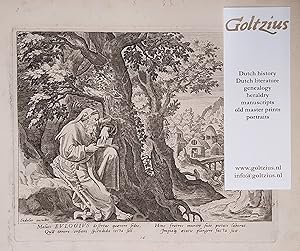
Eulogius in the wildness, under a tree on the left, eading the Bible; on the right a landscape with houses and figures. Late impression. Nr. 16 from the series. Signed on the bottom left: 'Sadeler excudit' Lettered in latin below:'Malui EVLOGIVS desertas quaerere sedes, / Qua terere urbani splendida tecta soli. / Hinc fratres munire suos pietate laborat / Impiaq. plangere facta suae.' Hollstein, de Vos 980. l Engraving on paper; broad margins; platemark: 176 x 216 mm; total: 221 x 272 mm. Close to the top margin holes for previous binding PB01SS(Eulogius).
-
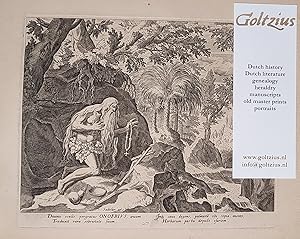
Onofrius in the wlderness, kneeling on the rocks and praying after the Bible. Late impression. Signed on the bottom left, close to the center: 'Sadeler excudit' Lettered in latin below: 'Divinis oculis pergratus ONOFRIUS, aeuum / Traduxit rara sobrietate suum. / Inq[ue] cavo degens, palmaru ubi copia, monte, / Herbarum pastu depusit esuriem' Hollstein, de Vos 991. l Engraving on paper; broad margins; platemark: 178 x 215 mm; total: 226 x 276 mm. PB01SS(Onofrius).
-

Wooded landscape with a birdcatcher in the foreground. On the right a fortified construction and on the left between the trees a village. Lettered below in Latin, eight lines in four columns:'Auceps dum . velle redire, deest' signed on the bottom:'Raph. Sadeler Iunior fecit. P Stephanus Inuent.' l Engraving on paper, trimmed to platemark; total: 210 x 275 mm; damages along the margins, traces of folding in the middle; only state; Hollstein 54, W 127 (as R. Sadeler I).
-
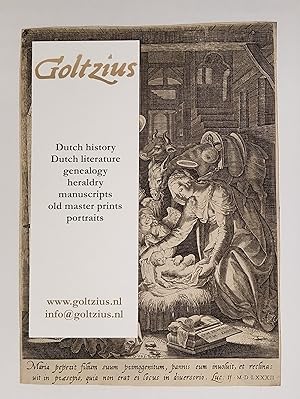
The Nativity with three angels. Lettered below:'Maria peperit filium suum. non erat ei locus in diuersorio. Luc: II MDLXXXII' signed on the bottom center:'DVOS inuentor' and on the lid of the box in the foreground:'CVM PRIVIL / CM SADLE' l Engraving on paper trimmed within platemark; total: 181 x 130 mm; only state; nice impression; Hollstein 162, W. 25/29/35/57.
-
View on a harbour with sailing boats. Ascending land on the left. Fishermen in the center. Signed on the bottom right:'Paulus Bril inventor Raphael Sadeler sculp.' l Engraving on paper, trimmed to platemark; total: 197 x 269 mm; some dirt but good impression; only state; Hollstein 217, W 125, 1.
-
Landscape with large galleys and harbour on the left. Rising sun. Fishermen in the left foreground. Signed on the bottom left:'Petrus Stephani Jnuent' l Engraving on paper, trimmed to platemark; total: 200 x 265 mm; state I/2; Hollstein 258.
-
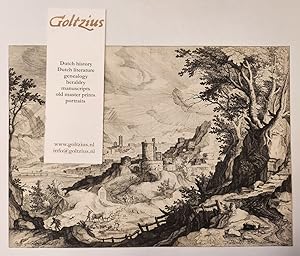
Landscape with town in the background. High trees on the right Signed on the bottom left:'Iusto sadeler excud' and on the lower right corner:'Paulus Bril inuentor' l Engraving on paper, trimmed within platemark; total: 193 x 270 mm; only state; small stains otherwise in great conditions; Hollstein 69, W. 102? (Aegidius Sadeler).




![Seller image for [The Youth of Christ]. for sale by Editio Altera](https://pictures.abebooks.com/inventory/md/md32263124201.jpg)
