
Saint Memin (15 results)
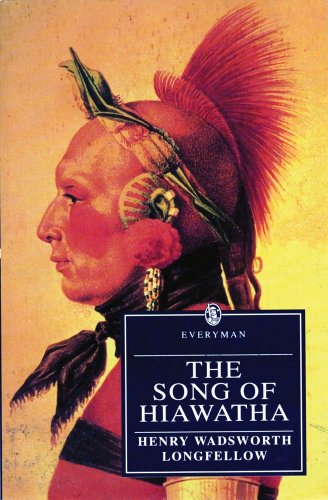
Language: English
Published by J. M. Dent & Sons, Ltd., London, United Kingdom 2004
- Softcover
Seller: The Shop Around The Corner, Elgin, IL, U.S.A.The Shop Around The Corner
Contact seller5-star sellerCondition: Used - Very good
US$ 4.50
US$ 6.75 shippingShips within U.S.A.Quantity: 1 available
Soft cover. Condition: Very Good. No Jacket. box29 5"x7¾"; 171 pages; The binding and pages are clean, tight and square. There is no underlining, highlighting or margin notes. A used copy with normal reading wear. If you order multiple titles, I will combine them in order to reduce postage costs. If you have any questions, conta…ct me before ordering for details. Charles Saint-Memin (Cover illustration) (illustrator).
 More images
Published by The Valentine Museum, Publisher, Richmond, VA 1941
- Softcover
Seller: Mare Booksellers ABAA, IOBA, Dover, NH, U.S.A.Mare Booksellers ABAA, IOBA
Contact seller5-star sellerCondition: Used - Good
US$ 25.00
US$ 5.00 shippingShips within U.S.A.Quantity: 1 available
Wraps. Condition: Good. Dull pink printed wraps. 68 pp. Black and white reproductions of art throughout. A work issued in conjunction with an exhibition of the art of Saint-Memin, focusing on his portraits of Virginians. With an introductory essay as well as explanatory descriptions of much of the art included within. Saint-Memi…n was a French born artist, moving with his family to the United States in the late 1700s. He taught himself the art of portraiture to help earn a living for his family, and ended up producing portraits of George Washington, Thomas Jefferson and others. He moved back to France in 1814. GOOD+ condition. Uneven fading to the wrappers. Minor soiling. Minor bumping, scuffing and creasing along the edges.

Published by New York: 19th century
- Art Print
Seller: Wittenborn Art Books, San Francisco, CA, U.S.A.Wittenborn Art Books
Contact seller4-star sellerCondition: Used - Good
US$ 40.00
US$ 10.00 shippingShips within U.S.A.Quantity: 2 available
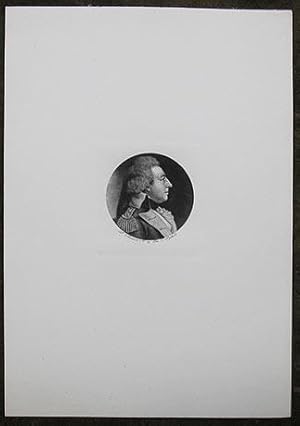
Condition: Good. Photogravure on rag paper 2.25 circular inches on sheet size 10 x 7 inches. Described at no. 61 in Saint-Memin and the Neoclassical Profile Portrait in America by Ellen G. Miles. However Miles does not illustrate this rare work. "Throughout his life, Bloomfield combined a military career with service as an elect…ed official. A veteran of the battles of Valley Forge and Brandywine, he later became a major general in the New Jersey militia. From 1795to 1800 he was the mayor of Burlington ,]ersey, where Saint-Mémin moved in the fallof 1798. Bloomfield, a ]effersonian, was governor of New ]ersey in 1801 and from 1803 to 1812. As governor, he was responsible for the entering of a nolle prosequi to Burr's indictment for shooting Alexander Hamilton . In 1812, he was appointed brigadier general inthe United 5tates Army: Bloomfield laterserved in Congress, from 1817 to 1821."Bloomfield, N.J. is named after him.
Seller: William Matthews/The Haunted Bookshop, Sidney, BC, CanadaWilliam Matthews/The Haunted Bookshop
Contact seller5-star sellerCondition: Used
US$ 32.56
US$ 18.00 shippingShips from Canada to U.S.A.Quantity: 1 available
A circular portrait, 2.25 inches in diameter, on a 10 x 7 inch sheet. This is a 19th century photogravure of this portrait. Fine condition. Saint-Memin was a celebrated portraitist who lived in the USA from 1793 - 1814. His subjects included George Washington and Thomas Jefferson. The subject of this portrait, Joseph Bloomfield,… was the Governor of New Jersey, and the man for whom Bloomfield, NJ is named. It is printed on a wove paper, quite fine, with no watermark. The imprint: "St. Memin No. 27 Pine St. N. York" is that usually found on Saint-Memin's productions from 1796-98. The New York Historical Society Museum & Library finding aid to the Saint-Memin Print Collection mentions the Bloomfield portrait, giving a date of 1798.

Portrait of James Jackson. (1757-1806, Georgia War Militia, Senator, and Governor).
De Saint-Memin, C. B. J. F. (After); W. A. Wilmer (Engraver).
Published by [Philadelphia, Pa.: Herring's - The National Portrait Gallery of Distinguished Americans, circa 1834]. 1834
- Art Print
Seller: Wittenborn Art Books, San Francisco, CA, U.S.A.Wittenborn Art Books
Contact seller4-star sellerCondition: Used - Good
US$ 75.00
US$ 10.00 shippingShips within U.S.A.Quantity: 1 available
Condition: Good. Stipple and steel engraving. 28 x 19 cm (sheet). With the blindstamp of Teachers College, Bryson Library, New York, in upper right sheet corner. With facsimile signature. Very Good, sheet lightly toned.
Language: French
- Hardcover
- Print on Demand
Seller: S N Books World, Delhi, IndiaS N Books World
Contact seller5-star sellerLeatherBound. Condition: NEW. BOOKS ARE EXEMPT FROM IMPORT DUTIES AND TARIFFS; NO EXTRA CHARGES APPLY. Leatherbound edition. Condition: New. Leather Binding on Spine and Corners with Golden leaf printing on spine. Bound in genuine leather with Satin ribbon page markers and Spine with raised gilt bands. Pages: 54. A perfect gift…for your loved ones. Reprinted from 1841 edition. NO changes have been made to the original text. This is NOT a retyped or an ocr'd reprint. Illustrations, Index, if any, are included in black and white. Each page is checked manually before printing. As this print on demand book is reprinted from a very old book, there could be some missing or flawed pages, but we always try to make the book as complete as possible. Fold-outs, if any, are not part of the book. If the original book was published in multiple volumes then this reprint is of only one volume, not the whole set. IF YOU WISH TO ORDER PARTICULAR VOLUME OR ALL THE VOLUMES YOU CAN CONTACT US. Resized as per current standards. Sewing binding for longer life, where the book block is actually sewn (smythe sewn/section sewn) with thread before binding which results in a more durable type of binding. Language: French Pages: 54.

Published by Museum 1941
- Softcover
Seller: BWS BKS, Ferndale, NY, U.S.A.BWS BKS
Contact seller1-star sellerCondition: Used - As new
US$ 1,976.00
US$ 3.00 shippingShips within U.S.A.Quantity: 2 available
Paperback. Condition: As New.
Published by New York 1800
Seller: Antipodean Books, Maps & Prints, ABAA, Garrison, NY, U.S.A.Antipodean Books, Maps & Prints, ABAA
Contact seller4-star sellerCondition: Used - Fine
US$ 105.00
US$ 10.00 shippingShips within U.S.A.Quantity: 1 available
Condition: Fine condition. A portrait of Pierre Van Cortlandt in profile, with text below the image 'St. Memin & Valdenuit No.n. Fair St .N.York'. Pierre Van Cortlandt [1721 - 1814] was an American politician and trusted friend and ally to George Washington. As 'Lieutenant Governor of New York he had charge of the revolutionary…government of the state and directed its entire war effort.' (wikipedia dot com) Copper engraving, 2 1/2 x 2 1/2" laid down on a page 9 3/8 x 12", image is clean, larger page is foxed on outer edges.

Language: French
- Hardcover
- Print on Demand
Seller: S N Books World, Delhi, IndiaS N Books World
Contact seller5-star sellerLeatherbound. Condition: NEW. BOOKS ARE EXEMPT FROM IMPORT DUTIES AND TARIFFS; NO EXTRA CHARGES APPLY. Leatherbound edition. Condition: New. Leather Binding on Spine and Corners with Golden leaf printing on spine. Bound in genuine leather with Satin ribbon page markers and Spine with raised gilt bands. Pages: 84. A perfect gift…for your loved ones. Reprinted from 1880 edition. NO changes have been made to the original text. This is NOT a retyped or an ocr'd reprint. Illustrations, Index, if any, are included in black and white. Each page is checked manually before printing. As this print on demand book is reprinted from a very old book, there could be some missing or flawed pages, but we always try to make the book as complete as possible. Fold-outs, if any, are not part of the book. If the original book was published in multiple volumes then this reprint is of only one volume, not the whole set. IF YOU WISH TO ORDER PARTICULAR VOLUME OR ALL THE VOLUMES YOU CAN CONTACT US. Resized as per current standards. Sewing binding for longer life, where the book block is actually sewn (smythe sewn/section sewn) with thread before binding which results in a more durable type of binding. Language: French Pages: 84.

Published by [Richmond] 1808
Seller: BLACK SWAN BOOKS, INC., ABAA, ILAB, Richmond, VA, U.S.A.BLACK SWAN BOOKS, INC., ABAA, ILAB
Contact seller5-star sellerA Saint-Memin profile mezzotint engraving of Nicholas Cabell, done in 1808. The image has been trimmed to the plate; the circular portrait is 2 1/4" across. ~~The biographical note for Nicholas Cabell, Jr. in Norfleet's Saint Memin in Virginia is as follows: "Born at 'Liberty Hall,' Nelson Co.; son of Col. Nicholas Cabell, Sr.,…and his wife Hannah Carrington.; brother of William H. Cabell .; educated at Hampden-Sydney, 1798-1799, and at William and Mary, 1800-1801; married Oct. 20, 1802, Margaret Read Venable (1782-1857), daughter of Samuel Woodson and Mary Carrington Venable, of Prince Edward Co.; after his marriage he lived at 'Liberty Hall,' which he inherited at his father's death in 1803; father of Nicholas Francis Cabell; captain of Nelson County militia, 1805; justice of the peace, 1808; died June 25, 1809, and was buried at 'Liberty Hall'." [Norfleet, Saint-Memin in Virginia, p. 148]. ~~French artist Saint-Memin arrived in the United States in 1793, and promptly began to learn the arts of engraving and painting. He developed a process of making chalk portrait drawings, and then employing a pantograph to trace the drawing, making a line engraving on a copper plate, He invented a "roulette" to produce shading on the engraving. The sitter, for his fee -- generally around $25 for a gentleman -- received the drawing, the copper plate, and a dozen engravings of the portrait. [Norfleet, pp, 13-49] (Norfleet p. 148; Miles 260,261).

Published by [N.p. N.d., but ca.1904-1910]. 1910
Seller: William Reese Company, New York, NY, U.S.A.William Reese Company
Contact seller5-star sellerA fine aquatint photogravure of Saint-Mémin's famed portrait of Thomas Jefferson, made from one of the original engraved plates. The original was drawn in November 1804, just after Jefferson was elected to his second term as President. Jefferson agreed to sit for the portrait partly at the request of his daughters, and distribut…ed copies of the likeness to his friends. Saint-Mémin's work would go on to serve as the source for several later portraits by other artists, such as Thomas Gimbrede. The portrait shows the sixty-one year old President in profile. "Th. Jefferson" appears below the portrait, and Saint-Memin's name is printed in the lower left corner of the print. Charles Saint-Mémin immigrated to the United States from France in 1793, his family having lost its lands and money in the French Revolution. He taught himself the techniques of engraving and drawing in New York, and in 1796 began making profile portraits with a physiognotrace. Over the next fourteen years he travelled throughout the United States, making profile portraits, both original drawings and in the form of small engravings. The present printing of Jefferson's portrait is undated, but was likely created in 1904 for the sale catalogue of Hampton Carson's collection of Saint-Mémin portraits, or for an unrealized 1910 publication project (using the same portraits once owned by Carson) by William H. Jenks of Philadelphia (see Miles, p.212 for details). The original copperplate is now in the collection of the University of Virginia Library. A fine copy of an important portrait of Thomas Jefferson. Miles, SAINT-MÉMIN (Washington, 1994), pp.212, 326, and item 446. Bush, THE LIFE PORTRAITS OF THOMAS JEFFERSON, pp.51-53 and item 16. Adams, EYE OF JEFFERSON, pp.75, 361, and item 125. Cunningham, IMAGE OF THOMAS JEFFERSON IN THE PUBLIC EYE, pp.79-86. Howard C. Rice, Jr., "Saint-Memin's Portrait of Jefferson" in THE PRINCETON UNIVERSITY LIBRARY CHRONICLE, Volume XX, Number 4 (Summer 1959), pp.182-92. Aquatint photogravure portrait, 4 x 3 inches, on a 10 x 7¼-inch sheet. Fine.

Published by P. Price, Jr., Philadelphia 1816
Seller: James Cummins Bookseller, ABAA, New York, NY, U.S.A.James Cummins Bookseller, ABAA
Contact seller5-star sellerStipple engraved portrait, engraved by William Strickland. 8-1/4x4-7/8 inches. Published in the Analectic Magazine and Naval Chronicle. Stauffer 3050 Corner mounted to a sheet of blue paper. Horizontal fold, toned Stipple engraved portrait, engraved by William Strickland. 8-1/4x4-7/8 inches.
 More images
Published by [Richmond, VA. ca. 1807 or 1808]. 1808
Seller: William Reese Company, New York, NY, U.S.A.William Reese Company
Contact seller5-star sellerCondition: Used
US$ 16,500.00
US$ 14.00 shippingShips within U.S.A.Quantity: 1 available
A superb portrait by the well-known French-American artist, Charles Saint-Mémin, of diplomat and soldier William Eaton, created in Richmond, Virginia circa 1808, when Eaton was in the city to testify in the treason trial of Aaron Burr. Charles Saint-Mémin (17701852) immigrated to the United States from France in 1793. Refugees o…f the French Revolution, he and his family had lost their lands and money with the abolition of the hereditary nobility in 1790. Saint-Mémin taught himself the techniques of engraving and drawing in New York, and in 1796 began making profile portraits with a physiognotrace. Over the next fourteen years he travelled throughout the United States, making profile portraits, both original drawings and in the form of small engravings. During this time, he executed portraits of many of the leading figures of the day, from United States Presidents down. As Ellen Miles points out, Saint-Mémin's "profile portraits have come to epitomize Federal America." Miles' extensive work on Saint-Mémin, published by the National Portrait Gallery, describes every aspect of his career, and lists almost a thousand known portraits by the artist. Saint-Mémin spent less than a year in Richmond (18071808), but it was an incredibly productive period for him, as he made more than 120 portraits while in the city. At the time of his stay, Richmond was in the midst of Aaron Burr's trial for treason, and the city was crowded with notables. Saint-Mémin executed the portraits of many of the principals in the trial, including presiding judge John Marshall. Miles observes that "Saint-Mémin's Richmond portraits are executed in a broader, looser technique than his earlier work. The chalk strokes are long, bold, and strong, notably in the rendering of the men's coats. This slight change in style did not affect the facial profiles, which remain precise and detailed. The change is not surprising, given the large number of portraits Saint-Mémin made in so short a time." Like many of Saint-Mémin's Richmond subjects, the sitter for the present portrait, William Eaton, was there for the trial of Aaron Burr, having been summoned as one of the prosecution's principal witnesses. Unlike the vast majority of Saint-Mémin's Richmond subjects, however, Eaton was not a native Virginian. A soldier and diplomat, William Eaton (17641811) was born in Woodstock, Connecticut, and served in the Continental Army before attending Dartmouth, taking a degree in 1790. In 1792, he was commissioned a captain in the Legion of the United States and served under Anthony Wayne in the Northwest Territory. He was court-martialed in 1795 but exonerated the following year. In 1798, he was appointed consul to Tunis by President John Adams and was involved in diplomatic negotiations in Tripoli and Tunis leading up to and during the First Barbary War. Eaton is perhaps best known, however, for having led "a mercenary band of nearly 1,000 Arabs, Turks, Egyptians, and assorted European adventurers" on "an epic advance toward Derna (Derne), across some 500 miles of Libyan desert" during the First Barbary War (ANB). The Battle of Derna - the first land battle fought by the United States on foreign soil - is immortalized in the opening verse of the Marine Corps hymn: "From the Halls of Montezuma / To the shores of Tripoli." Eaton arrived in Richmond for Burr's trial in early June of 1807. "In rambling testimony before Chief Justice John Marshall, Eaton recounted his conversations with Burr in Washington prior to embarking for Tunis, and he accused Burr of plotting to seize Louisiana and Mexico and overthrow the U.S. government. The defense lawyers countered by attacking Eaton's credibility, focusing on his court-martial and habitual marital infidelity. Previously an abstemious drinker and relatively discreet womanizer, Eaton spent five months in Richmond gambling recklessly, drinking excessively, and openly consorting with prostitutes. He also lost $5,000 betting on the verdict" - ANB. The engraved portrait of Eaton - though not the present drawing - is recorded as no. 298 in Miles' Saint-Mémin and the Neoclassical Profile Portrait in America, where it is assigned a date of 1808. As Miles explains, Saint-Mémin usually "offered to provide both a large portrait and the dozen or more small engravings copied from it." A wonderful American portrait of the "Hero of Derna," by an artist whose distinctive style was in great demand. Ellen Miles, Saint-Mémin and the Neoclassical Profile Portrait in America (Washington, 1994), 298 (engraving). Fillmore Norfleet, Saint-Mémin in Virginia: Portraits and Biographies (Richmond, VA: Dietz Press, 1942), pp.159-60. ANB 7, pp.267-69. DAB V, p.613. Moderately foxed and tanned. Dark chalk suggesting shadow behind figure and white chalk at upper right and lower left corners possibly added by a later hand to conceal damage. Blue tint to eye and ruddy tint to hair ribbon may also be later additions. Period (though not original) gilt frame (24 × 18 inches) in Saint-Mémin's distinctive style, later matte and plexiglass. Very good. Not examined outside of frame.

Published by Philadelphia. March 8, 1801. 1801
Seller: William Reese Company, New York, NY, U.S.A.William Reese Company
Contact seller5-star sellerA receipt from celebrated French-American profile portraitist, Charles St. Mémin for "a profile in crayons, a plate engraved, and twelve impressions" for $25. Mr. Read is also charged for "two dozen extra impressions.a large burnished frame.[and] two small round frames." His total expenditure was $37. This was almost certainly N…athan Read, at that time a member of the House of Representatives from Massachusetts, and the only person of that last name in Miles' catalogue of St. Mémin's works. A Harvard graduate, Read was a pioneering inventor in steam navigation and iron ship's materials. He served two terms in Congress and would have been in Philadelphia just before the government moved to Washington. During a career that spanned fourteen years, from 1796 to 1810, itinerant French artist Charles St. Mémin captured the profiles of an astounding number of influential Americans. His miniature engravings were in great demand among the wealthy and powerful, and he travelled from New York to Washington, Alexandria, Georgetown, Annapolis, Richmond, Norfolk, Charleston, and other cultural centers, executing commissions in his distinctive style. An interesting document recording what was likely a typical transaction for the artist, selling to the sitter the original crayon portrait, the engraved plate based upon it, a number of engravings for distribution to family and friends, and a few frames. MILES, ST. MÉMIN 686. [1]p. Old fold lines. Minor foxing and wear. Very good.
 More images
Published by [Various places, including Baltimore, New York, Philadelphia, & Washington, D.C. 1797-1809]. 1809
Seller: William Reese Company, New York, NY, U.S.A.William Reese Company
Contact seller5-star sellerCondition: Used
US$ 19,000.00
US$ 14.00 shippingShips within U.S.A.Quantity: 1 available
An extraordinary collection of neoclassical profile portraits drawn and engraved by famed French-American portraitist Charles B.J.F. de Saint-Mémin. Forty-one prominent Americans of the Federal period are represented (there are several duplicates, see below), including such major figures as George Clinton, William Bradford, Col.… William Duane, and Thomas Jefferson, who sat for the artist in 1804. All but one of the portraits are executed in Saint-Mémin's characteristic profile view and framed in a roundel. The single exception is Saint-Mémin's unusual oval-shaped engraving of Charles Willson Peale's front-view portrait of William Bradford. All of the engravings are matted and contained in a gilt morocco case. Charles Balthazar Julien Févret de Saint-Mémin was a young, aristocratic military officer when he fled France during the Revolution in 1790. In 1793 he arrived in New York with his father and soon began pursuing a career in the arts. Applying early training he had received in drawing and an eye for precision, Saint-Mémin quickly taught himself the techniques of engraving and printing, and began producing plans and landscapes of New York. In 1796 he co-founded a business creating profile portraits with the aid of a physiognotrace, a recently invented drafting device that allowed portraitists to capture their sitters' profiles with extreme accuracy. After tracing a subject's profile with the physiognotrace, Saint-Mémin would complete a portrait in chalk, reduce and copy it to a copper plate using a pantograph, and finally engrave the plate and produce a series of prints. Each patron would receive the original drawing, the plate, and, typically, a dozen engravings. Saint-Mémin's business was wildly successful, and for fourteen years it sustained him as he traveled through the eastern U.S. capturing the likenesses of many leading American figures of the day. Ellen G. Miles' extensive work on Saint-Mémin, published by the National Portrait Gallery, describes every aspect of his career and lists nearly a thousand of his known portraits. The portraits in the present collection are as follows, listed with Miles' catalogue number accompanying each sitter's name: William Barton (42), William Bradford (78), Claude Amable Brasier (81), Jacob Burnet (111), Martha Round Caldwell (127), Mary M. Caldwell (128), George Clinton (174), John Coles III (189), Henry Alexander Scammell Dearborn (230), Asbury Dickins (268), William Drayton (275), William Duane (277; two prints: 1802 and after 1808 [with caption, "Col. Wm. Duane"]), Louisa DuPonceau (288), Peter Stephen DuPonceau (289), Catherine M. Dutilh (291), Stephen (Étienne) Dutilh (294), David Montagu Erskine (306), Frances Cadwalader Erskine (307), Walter Franklin (334), Theodore Hunt (429), Thomas Jefferson (446), John Lincklaen (510), James McHenry (539), Neil MacNeal (547), John Mayo II (568), Maria Sophia Kemper Morton (595), Joseph Hopper Nicholson (619), Davis Old (627), Thomas Parke (642), Nathan Read (686), John Reynolds (691), Thomas Bolling Robertson (701), Charles Sterett (788; three copies), St. George Tucker (840), Waggaman (911), Samuel Purviance Walker (915), William Augustine Washington III (924), and William Hill Wells (937). A remarkable collection, spanning nearly the entire course of Saint-Mémin's career as a portraitist, rare in its volume and quality. Miles, SAINT-MÉMIN (Washington, 1994). Forty-four engravings. All engraved images except one are circular, with a diameter of approximately 2¼ inches; the engraving of William Bradford is oval and approximately 3 x 2½ inches. Each image is printed on a slightly larger sheet of paper, mounted to 8½ x 11-inch leaves and matted. 20th-century red morocco hinged pull-off case, cover stamped and lettered in gilt. Case lightly worn at edges and front hinge neatly separated, else fine. Most portraits identified in upper left corner of matting in modern ink; some misidentified, most of which have notes with correct identification attached. Minor foxing and/or wear to a few portraits. Small pink stain in lower margin of Frances Cadwalader Erskine portrait, not affecting image. Most portraits in fine or near fine condition.


