
Serge Demailly (9 results)

- Softcover
Seller: Ammareal, Morangis, , FranceAmmareal
Contact seller5-star sellerCondition: Used - As new
US$ 4.77
US$ 18.93 shippingShips from France to U.S.A.Quantity: 1 available
Softcover. Condition: Comme neuf. Ammareal reverse jusqu'à 15% du prix net de cet article à des organisations caritatives. ENGLISH DESCRIPTION Book Condition: Used, As new. Ammareal gives back up to 15% of this item's net price to charity organizations.
- Softcover
Seller: Ammareal, Morangis, , FranceAmmareal
Contact seller5-star sellerCondition: Used - As new
US$ 4.77
US$ 18.93 shippingShips from France to U.S.A.Quantity: 1 available
Softcover. Condition: Comme neuf. Ammareal reverse jusqu'à 15% du prix net de cet article à des organisations caritatives. ENGLISH DESCRIPTION Book Condition: Used, As new. Ammareal gives back up to 15% of this item's net price to charity organizations.
- Softcover
Seller: Ammareal, Morangis, , FranceAmmareal
Contact seller5-star sellerCondition: Used - As new
US$ 4.77
US$ 18.93 shippingShips from France to U.S.A.Quantity: 1 available
Softcover. Condition: Comme neuf. Ammareal reverse jusqu'à 15% du prix net de cet article à des organisations caritatives. ENGLISH DESCRIPTION Book Condition: Used, As new. Ammareal gives back up to 15% of this item's net price to charity organizations.
- Softcover
Seller: Ammareal, Morangis, , FranceAmmareal
Contact seller5-star sellerCondition: Used - As new
US$ 4.77
US$ 18.93 shippingShips from France to U.S.A.Quantity: 1 available
Softcover. Condition: Comme neuf. Ammareal reverse jusqu'à 15% du prix net de cet article à des organisations caritatives. ENGLISH DESCRIPTION Book Condition: Used, As new. Ammareal gives back up to 15% of this item's net price to charity organizations.
- Hardcover
Seller: Emmanuelle Morin, MARSEILLE, , FranceEmmanuelle Morin
Contact seller4-star sellerCondition: Used - Very good
US$ 29.55
US$ 19.51 shippingShips from France to U.S.A.Quantity: 1 available
Condition: Very Good. Bon Etat. in4. 2005. Cartonné jaquette. 60 pages. Very Good.
Language: English
Published by Stuttgart/London: Edition Axel Menges, 2005. 2005
- Hardcover
Seller: Antiquariat Im Seefeld / Ernst Jetzer, Zürich, SwitzerlandAntiquariat Im Seefeld / Ernst Jetzer
Contact seller4-star sellerCondition: Used - Fine
US$ 51.05
US$ 40.16 shippingShips from Switzerland to U.S.A.Quantity: 1 available
Condition: Sehr gut. 59 pp., quarto, cloth, with dust jacket, with b/w and colour ill. Sprache(n)/language(s): en, frVery good condition.
 More images
- Hardcover
- First Edition
Seller: BIBLIOPE by Calvello Books, Oakland, CA, U.S.A.BIBLIOPE by Calvello Books
Contact seller4-star sellerCondition: Used - As new
US$ 86.00
US$ 4.99 shippingShips within U.S.A.Quantity: 1 available
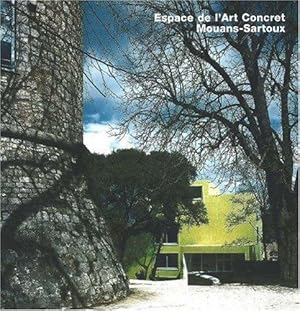
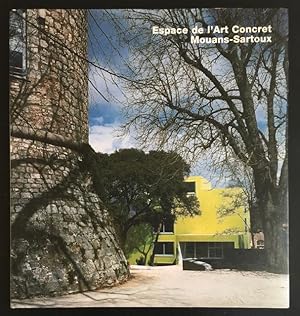
Hardcover. Condition: As New. Quarto with off-white boards and silver spine title in blue and grey pictorial jacket; 59 pages: illustrations (chiefly color); 31 cm. In Egnlish and French. Talks about Mouans-Sartoux, a small community near Cannes, that has become a Mecca for concrete art. Since 1990, two collectors from Switzerla…nd, Sybil Albers and Gottfried Honegger, have been working to establish the Espace de l'Art Concret (EAC). This institution is located in the Chateau de Mouans and in two buildings in its large parkContents: Axel Sowa: The Espace de l'Art Concret in Mouans-Sartoux; The Site; The Ch?teau of Mouans; The Aelieres p?dagogiques; The Pr?au des enfants; The Donation Albers-Honegger. Language Notes: French and English.?? **Somewhat large item. Additional shipping fees may be needed for expedited or international orders. Please inquire**. As new, now in archival mylar. First Edition (presumed; no prior editions or printings cited).
Published by Cazaubon, Fenouillet 2007
Seller: LibrairieLaLettre2, Villefranche de Lauragais, , FranceLibrairieLaLettre2
Contact seller5-star sellerCondition: Used - Fair
US$ 11.82
US$ 40.16 shippingShips from France to U.S.A.Quantity: 1 available
Agrafé. Condition: Etat moyen. in-4 Description :50 pp. Couverture piquée. Langue : français Nb de volumes : 1.

Language: French
Published by Stuttgart, Edition Axel Menges 2005
- Hardcover
Seller: antiquariat peter petrej - Bibliopolium AG, Zürich, ZH, Switzerlandantiquariat peter petrej - Bibliopolium AG
Contact seller5-star sellerCondition: Used
US$ 58.71
US$ 83.20 shippingShips from Switzerland to U.S.A.Quantity: 1 available
4°, 59 S., zahlr., tlw. farb. Abb. u. Pläne., OLwd. m. OU, Tadellos. (= Opus 58). Text frz./engl. «Mouans-Sartoux, a small community near Cannes, has become a Mecca for concrete art. Since 1990 two collectors from Switzerland, Sybil Albers and the artist Gottfried Honegger, have been working to establish the Espace de l? Art Con…cret (EAC). Neither a museum nor a municipal gallery, this institution is located in the Chateau de Mouans and in two new buildings in its large park.In 2000 Albers and Honegger decided to donate their collections to the French state, on the understanding that it would finance a building to house the nearly 500 works of art. A competition was launched and was won by the Zurich architects Annette Gigon and Mike Guyer.The building, which opened its doors in 2004, stands on a steeply sloping wooded terrain. As one enters the park, one sees its yellowish-green hues through the branches of the trees. The monochrome colour unifies the five levels of the building that give no clue as to what it contains. While the outside of the building looks artificial, independent, sculptural, its interior is set up in accordance with Honeggers special instructions. He wanted the building that was to house his collection to be distinct from the official and sterile museums that are often laid out on the gallery model, passageways for contemplation, internal streets with overhead lighting. Honegger prefers an interior that is like a private home rather than a public institution. The domestic framework of the rooms must reflect a principle dear to the donors: that the works are to be lived with.» 1100 gr. Schlagworte: Architektur - Allgemein.


