

Order Total (1 Item Items):
Shipping Destination:

9780226325583 - After the Beautiful: Hegel and the Philosophy of Pictorial Modernism by Pippin, Robert B (27 results)
Skip to main search results
Search filters
Product Type
- All Product Types
- Books (27)
- Magazines & Periodicals (No further results match this refinement)
- Comics (No further results match this refinement)
- Sheet Music (No further results match this refinement)
- Art, Prints & Posters (No further results match this refinement)
- Photographs (No further results match this refinement)
- Maps (No further results match this refinement)
- Manuscripts & Paper Collectibles (No further results match this refinement)
Condition Learn more
- New (22)
- As New, Fine or Near Fine (2)
- Very Good or Good (2)
- Fair or Poor (1)
- As Described (No further results match this refinement)
Binding
- All Bindings
- Hardcover (No further results match this refinement)
- Softcover (27)
Collectible Attributes
- First Edition (No further results match this refinement)
- Signed (No further results match this refinement)
- Dust Jacket (No further results match this refinement)
- Seller-Supplied Images (12)
- Not Print on Demand (27)
Language (1)
Free Shipping
Seller Location
Seller Rating
-
After the Beautiful: Hegel and the Philosophy of Pictorial Modernism
Language: English
Published by University of Chicago Press, 2015
ISBN 10: 022632558X ISBN 13: 9780226325583
Paperback. Condition: Good. No Jacket. Pages can have notes/highlighting. Spine may show signs of wear. ~ ThriftBooks: Read More, Spend Less.
-
After the Beautiful: Hegel and the Philosophy of Pictorial Modernism
Language: English
Published by University of Chicago Press, 2015
ISBN 10: 022632558X ISBN 13: 9780226325583
Seller: Midtown Scholar Bookstore, Harrisburg, PA, U.S.A.
Seller rating 5 out of 5 stars

Paperback. Condition: Good. Good - Bumped and creased book with tears to the extremities, but not affecting the text block, may have remainder mark or previous owner's name - GOOD Standard-sized.
-

After the Beautiful: Hegel and the Philosophy of Pictorial Modernism
Language: English
Published by University of Chicago Press, 2015
ISBN 10: 022632558X ISBN 13: 9780226325583
Condition: acceptable. This book is in Acceptable condition. All pages are intact, but may have lots of notes, water damage or other issues and be ex library.
-
After the Beautiful Format: Paperback
Language: English
Published by University of Chicago press, 2015
ISBN 10: 022632558X ISBN 13: 9780226325583
Condition: New. Brand New.
-

After the Beautiful : Hegel and the Philosophy of Pictorial Modernism
Language: English
Published by University of Chicago Press, 2015
ISBN 10: 022632558X ISBN 13: 9780226325583
Condition: New.
-

After the Beautiful
Language: English
Published by The University of Chicago Press, US, 2015
ISBN 10: 022632558X ISBN 13: 9780226325583
Seller: Rarewaves.com USA, London, LONDO, United Kingdom
Seller rating 5 out of 5 stars
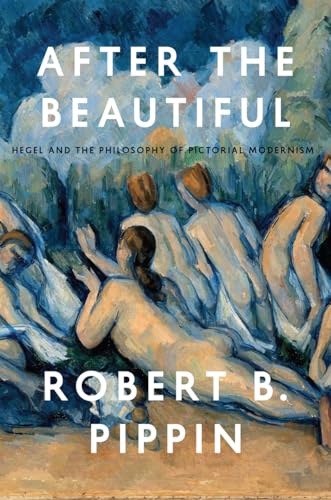
Paperback. Condition: New. In his Berlin lectures on fine art, Hegel argued that art involves a unique form of aesthetic intelligibility-the expression of a distinct collective self-understanding that develops through historical time. Hegel's approach to art has been influential in a number of different contexts, but in a twist of historical irony Hegel would die just before the most radical artistic revolution in history: modernism. In After the Beautiful, Robert B. Pippin, looking at modernist paintings by artists such as Edouard Manet and Paul Cezanne through Hegel's lens, does what Hegel never had the chance to do. While Hegel could never engage modernist painting, he did have an understanding of modernity, and in it, art-he famously asserted-was "a thing of the past," no longer an important vehicle of self-understanding and no longer an indispensable expression of human meaning. Pippin offers a sophisticated exploration of Hegel's position and its implications. He also shows that had Hegel known how the social institutions of his day would ultimately fail to achieve his own version of genuine equality, a mutuality of recognition, he would have had to explore a different, new role for art in modernity.After laying this groundwork, Pippin goes on to illuminate the dimensions of Hegel's aesthetic approach in the path-breaking works of Manet, the "grandfather of modernism," drawing on art historians T. J. Clark and Michael Fried to do so. He concludes with a look at Cezanne, the "father of modernism," this time as his works illuminate the relationship between Hegel and the philosopher who would challenge Hegel's account of both modernity and art-Martin Heidegger. Elegantly inter-weaving philosophy and art history, After the Beautiful is a stunning reassessment of the modernist project. It gets at the core of the significance of modernism itself and what it means in general for art to have a history. Ultimately, it is a testament, via Hegel, to the distinctive philosophical achievements of modernist art in the unsettled, tumultuous era we have inherited.
-
After the Beautiful
Language: English
Published by University of Chicago Press, 2015
ISBN 10: 022632558X ISBN 13: 9780226325583
PAP. Condition: New. New Book. Shipped from UK. Established seller since 2000.
-

After the Beautiful : Hegel and the Philosophy of Pictorial Modernism
Language: English
Published by University of Chicago Press, 2015
ISBN 10: 022632558X ISBN 13: 9780226325583
Condition: As New. Unread book in perfect condition.
-
After the Beautiful: Hegel and the Philosophy of Pictorial Modernism (eng)
Language: English
Published by University of Chicago Press, 2015
ISBN 10: 022632558X ISBN 13: 9780226325583
Condition: new.
-
After the Beautiful
Language: English
Published by University of Chicago Press, 2015
ISBN 10: 022632558X ISBN 13: 9780226325583
Seller: PBShop.store UK, Fairford, GLOS, United Kingdom
Seller rating 4 out of 5 stars

PAP. Condition: New. New Book. Shipped from UK. Established seller since 2000.
-
AFTER THE BEAUTIFUL HEGEL AND T
Language: English
Published by University of Chicago Press, 2015
ISBN 10: 022632558X ISBN 13: 9780226325583
Condition: NEW.
-

After the Beautiful (Paperback)
Language: English
Published by The University of Chicago Press, Chicago, IL, 2015
ISBN 10: 022632558X ISBN 13: 9780226325583
Paperback. Condition: new. Paperback. In his Berlin lectures on fine art, Hegel argued that art involves a unique form of aesthetic intelligibilitythe expression of a distinct collective self-understanding that develops through historical time. Hegels approach to art has been influential in a number of different contexts, but in a twist of historical irony Hegel would die just before the most radical artistic revolution in history: modernism. In After the Beautiful, Robert B. Pippin, looking at modernist paintings by artists such as Edouard Manet and Paul Cezanne through Hegels lens, does what Hegel never had the chance to do.While Hegel could never engage modernist painting, he did have an understanding of modernity, and in it, arthe famously assertedwas a thing of the past, no longer an important vehicle of self-understanding and no longer an indispensable expression of human meaning. Pippin offers a sophisticated exploration of Hegels position and its implications. He also shows that had Hegel known how the social institutions of his day would ultimately fail to achieve his own version of genuine equality, a mutuality of recognition, he would have had to explore a different, new role for art in modernity. After laying this groundwork, Pippin goes on to illuminate the dimensions of Hegels aesthetic approach in the path-breaking works of Manet, the grandfather of modernism, drawing on art historians T. J. Clark and Michael Fried to do so. He concludes with a look at Cezanne, the father of modernism, this time as his works illuminate the relationship between Hegel and the philosopher who would challenge Hegels account of both modernity and artMartin Heidegger.Elegantly inter-weaving philosophy and art history, After the Beautiful is a stunning reassessment of the modernist project. It gets at the core of the significance of modernism itself and what it means in general for art to have a history. Ultimately, it is a testament, via Hegel, to the distinctive philosophical achievements of modernist art in the unsettled, tumultuous era we have inherited. Shipping may be from multiple locations in the US or from the UK, depending on stock availability.
-
After the Beautiful: Hegel and the Philosophy of Pictorial Modernism
Language: English
Published by University Of Chicago Press, 2015
ISBN 10: 022632558X ISBN 13: 9780226325583
Seller: Kennys Bookshop and Art Galleries Ltd., Galway, GY, Ireland
Seller rating 5 out of 5 stars
Condition: New. Num Pages: 176 pages. BIC Classification: ABA; HPN. Category: (G) General (US: Trade). Dimension: 155 x 229 x 35. Weight in Grams: 264. . 2015. Paperback. . . . .
-
US$ 30.01
US$ 13.37 shipping
Ships from United Kingdom to U.S.A.Quantity: 2 available
Add to basketPaperback. Condition: Brand New. reprint edition. 159 pages. 9.00x6.00x0.25 inches. In Stock.
-
After the Beautiful: Hegel and the Philosophy of Pictorial Modernism
Language: English
Published by University Of Chicago Press, 2015
ISBN 10: 022632558X ISBN 13: 9780226325583
Condition: New. Num Pages: 176 pages. BIC Classification: ABA; HPN. Category: (G) General (US: Trade). Dimension: 155 x 229 x 35. Weight in Grams: 264. . 2015. Paperback. . . . . Books ship from the US and Ireland.
-
After the Beautiful: Hegel and the Philosophy of Pictorial Modernism
Language: English
Published by University of Chicago Press, 2015
ISBN 10: 022632558X ISBN 13: 9780226325583
US$ 27.05
US$ 20.71 shipping
Ships from United Kingdom to U.S.A.Quantity: 2 available
Add to basketpaperback. Condition: New.
-
After the Beautiful: Hegel and the Philosophy of Pictorial Modernism
Language: English
Published by University of Chicago Press, 2015
ISBN 10: 022632558X ISBN 13: 9780226325583
Seller: Ria Christie Collections, Uxbridge, United Kingdom
Seller rating 5 out of 5 stars
US$ 32.54
US$ 16.02 shipping
Ships from United Kingdom to U.S.A.Quantity: 2 available
Add to basketCondition: New. In.
-

After the Beautiful : Hegel and the Philosophy of Pictorial Modernism
Language: English
Published by University of Chicago Press, 2015
ISBN 10: 022632558X ISBN 13: 9780226325583
Seller: GreatBookPricesUK, Woodford Green, United Kingdom
Seller rating 5 out of 5 stars
US$ 29.10
US$ 20.05 shipping
Ships from United Kingdom to U.S.A.Quantity: 1 available
Add to basketCondition: New.
-
After the Beautiful: Hegel and the Philosophy of Pictorial Modernism
Language: English
Published by The University of Chicago Press, 2015
ISBN 10: 022632558X ISBN 13: 9780226325583
Seller: THE SAINT BOOKSTORE, Southport, United Kingdom
Seller rating 5 out of 5 stars
US$ 34.33
US$ 18.25 shipping
Ships from United Kingdom to U.S.A.Quantity: 3 available
Add to basketPaperback / softback. Condition: New. New copy - Usually dispatched within 4 working days.
-

After the Beautiful : Hegel and the Philosophy of Pictorial Modernism
Language: English
Published by University of Chicago Press, 2015
ISBN 10: 022632558X ISBN 13: 9780226325583
Seller: GreatBookPricesUK, Woodford Green, United Kingdom
Seller rating 5 out of 5 stars
US$ 33.70
US$ 20.05 shipping
Ships from United Kingdom to U.S.A.Quantity: 1 available
Add to basketCondition: As New. Unread book in perfect condition.
-
AFTER THE BEAUTIFUL HEGEL AND T
Language: English
Published by University of Chicago Press, 2015
ISBN 10: 022632558X ISBN 13: 9780226325583
US$ 27.41
US$ 54.81 shipping
Ships from United Kingdom to U.S.A.Quantity: 2 available
Add to basketCondition: NEW.
-

After the Beautiful (Paperback)
Language: English
Published by The University of Chicago Press, Chicago, IL, 2015
ISBN 10: 022632558X ISBN 13: 9780226325583
US$ 34.41
US$ 49.47 shipping
Ships from United Kingdom to U.S.A.Quantity: 1 available
Add to basketPaperback. Condition: new. Paperback. In his Berlin lectures on fine art, Hegel argued that art involves a unique form of aesthetic intelligibilitythe expression of a distinct collective self-understanding that develops through historical time. Hegels approach to art has been influential in a number of different contexts, but in a twist of historical irony Hegel would die just before the most radical artistic revolution in history: modernism. In After the Beautiful, Robert B. Pippin, looking at modernist paintings by artists such as Edouard Manet and Paul Cezanne through Hegels lens, does what Hegel never had the chance to do.While Hegel could never engage modernist painting, he did have an understanding of modernity, and in it, arthe famously assertedwas a thing of the past, no longer an important vehicle of self-understanding and no longer an indispensable expression of human meaning. Pippin offers a sophisticated exploration of Hegels position and its implications. He also shows that had Hegel known how the social institutions of his day would ultimately fail to achieve his own version of genuine equality, a mutuality of recognition, he would have had to explore a different, new role for art in modernity. After laying this groundwork, Pippin goes on to illuminate the dimensions of Hegels aesthetic approach in the path-breaking works of Manet, the grandfather of modernism, drawing on art historians T. J. Clark and Michael Fried to do so. He concludes with a look at Cezanne, the father of modernism, this time as his works illuminate the relationship between Hegel and the philosopher who would challenge Hegels account of both modernity and artMartin Heidegger.Elegantly inter-weaving philosophy and art history, After the Beautiful is a stunning reassessment of the modernist project. It gets at the core of the significance of modernism itself and what it means in general for art to have a history. Ultimately, it is a testament, via Hegel, to the distinctive philosophical achievements of modernist art in the unsettled, tumultuous era we have inherited. Shipping may be from our UK warehouse or from our Australian or US warehouses, depending on stock availability.
-
After the Beautiful (Paperback)
Language: English
Published by The University of Chicago Press, Chicago, IL, 2015
ISBN 10: 022632558X ISBN 13: 9780226325583
Paperback. Condition: new. Paperback. In his Berlin lectures on fine art, Hegel argued that art involves a unique form of aesthetic intelligibilitythe expression of a distinct collective self-understanding that develops through historical time. Hegels approach to art has been influential in a number of different contexts, but in a twist of historical irony Hegel would die just before the most radical artistic revolution in history: modernism. In After the Beautiful, Robert B. Pippin, looking at modernist paintings by artists such as Edouard Manet and Paul Cezanne through Hegels lens, does what Hegel never had the chance to do.While Hegel could never engage modernist painting, he did have an understanding of modernity, and in it, arthe famously assertedwas a thing of the past, no longer an important vehicle of self-understanding and no longer an indispensable expression of human meaning. Pippin offers a sophisticated exploration of Hegels position and its implications. He also shows that had Hegel known how the social institutions of his day would ultimately fail to achieve his own version of genuine equality, a mutuality of recognition, he would have had to explore a different, new role for art in modernity. After laying this groundwork, Pippin goes on to illuminate the dimensions of Hegels aesthetic approach in the path-breaking works of Manet, the grandfather of modernism, drawing on art historians T. J. Clark and Michael Fried to do so. He concludes with a look at Cezanne, the father of modernism, this time as his works illuminate the relationship between Hegel and the philosopher who would challenge Hegels account of both modernity and artMartin Heidegger.Elegantly inter-weaving philosophy and art history, After the Beautiful is a stunning reassessment of the modernist project. It gets at the core of the significance of modernism itself and what it means in general for art to have a history. Ultimately, it is a testament, via Hegel, to the distinctive philosophical achievements of modernist art in the unsettled, tumultuous era we have inherited. Shipping may be from our Sydney, NSW warehouse or from our UK or US warehouse, depending on stock availability.
-

After the Beautiful
Language: English
Published by The University of Chicago Press, 2015
ISBN 10: 022632558X ISBN 13: 9780226325583
Condition: New. KlappentextIn his Berlin lectures on fine art, Hegel argued that art involves a unique form of aesthetic intelligibility-the expression of a distinct collective self-understanding that develops through historical time. Hegel s approach t.
-
After the Beautiful : Hegel and the Philosophy of Pictorial Modernism
Language: English
Published by The University Of Chicago Press Okt 2015, 2015
ISBN 10: 022632558X ISBN 13: 9780226325583
Taschenbuch. Condition: Neu. Neuware - In his Berlin lectures on fine art, Hegel argued that art involves a unique form of aesthetic intelligibility-the expression of a distinct collective self-understanding that develops through historical time. Hegel's approach to art has been influential in a number of different contexts, but in a twist of historical irony Hegel would die just before the most radical artistic revolution in history: modernism. In After the Beautiful, Robert B. Pippin, looking at modernist paintings by artists such as Edouard Manet and Paul Cezanne through Hegel's lens, does what Hegel never had the chance to do. While Hegel could never engage modernist painting, he did have an understanding of modernity, and in it, art-he famously asserted-was 'a thing of the past,' no longer an important vehicle of self-understanding and no longer an indispensable expression of human meaning. Pippin offers a sophisticated exploration of Hegel's position and its implications. He also shows that had Hegel known how the social institutions of his day would ultimately fail to achieve his own version of genuine equality, a mutuality of recognition, he would have had to explore a different, new role for art in modernity. After laying this groundwork, Pippin goes on to illuminate the dimensions of Hegel's aesthetic approach in the path-breaking works of Manet, the 'grandfather of modernism,' drawing on art historians T. J. Clark and Michael Fried to do so. He concludes with a look at Cezanne, the 'father of modernism,' this time as his works illuminate the relationship between Hegel and the philosopher who would challenge Hegel's account of both modernity and art-Martin Heidegger. Elegantly inter-weaving philosophy and art history, After the Beautiful is a stunning reassessment of the modernist project. It gets at the core of the significance of modernism itself and what it means in general for art to have a history. Ultimately, it is a testament, via Hegel, to the distinctive philosophical achievements of modernist art in the unsettled, tumultuous era we have inherited.
-

After the Beautiful
Language: English
Published by The University of Chicago Press, US, 2015
ISBN 10: 022632558X ISBN 13: 9780226325583
US$ 29.12
US$ 86.90 shipping
Ships from United Kingdom to U.S.A.Quantity: 2 available
Add to basketPaperback. Condition: New. In his Berlin lectures on fine art, Hegel argued that art involves a unique form of aesthetic intelligibility-the expression of a distinct collective self-understanding that develops through historical time. Hegel's approach to art has been influential in a number of different contexts, but in a twist of historical irony Hegel would die just before the most radical artistic revolution in history: modernism. In After the Beautiful, Robert B. Pippin, looking at modernist paintings by artists such as Edouard Manet and Paul Cezanne through Hegel's lens, does what Hegel never had the chance to do. While Hegel could never engage modernist painting, he did have an understanding of modernity, and in it, art-he famously asserted-was "a thing of the past," no longer an important vehicle of self-understanding and no longer an indispensable expression of human meaning. Pippin offers a sophisticated exploration of Hegel's position and its implications. He also shows that had Hegel known how the social institutions of his day would ultimately fail to achieve his own version of genuine equality, a mutuality of recognition, he would have had to explore a different, new role for art in modernity.After laying this groundwork, Pippin goes on to illuminate the dimensions of Hegel's aesthetic approach in the path-breaking works of Manet, the "grandfather of modernism," drawing on art historians T. J. Clark and Michael Fried to do so. He concludes with a look at Cezanne, the "father of modernism," this time as his works illuminate the relationship between Hegel and the philosopher who would challenge Hegel's account of both modernity and art-Martin Heidegger. Elegantly inter-weaving philosophy and art history, After the Beautiful is a stunning reassessment of the modernist project. It gets at the core of the significance of modernism itself and what it means in general for art to have a history. Ultimately, it is a testament, via Hegel, to the distinctive philosophical achievements of modernist art in the unsettled, tumultuous era we have inherited.
-

After the Beautiful | Hegel and the Philosophy of Pictorial Modernism
Language: English
Published by University of Chicago Press, 2015
ISBN 10: 022632558X ISBN 13: 9780226325583
Taschenbuch. Condition: Neu. After the Beautiful | Hegel and the Philosophy of Pictorial Modernism | Robert B Pippin | Taschenbuch | Einband - flex.(Paperback) | Englisch | 2015 | University of Chicago Press | EAN 9780226325583 | Verantwortliche Person für die EU: Libri GmbH, Europaallee 1, 36244 Bad Hersfeld, gpsr[at]libri[dot]de | Anbieter: preigu.

